
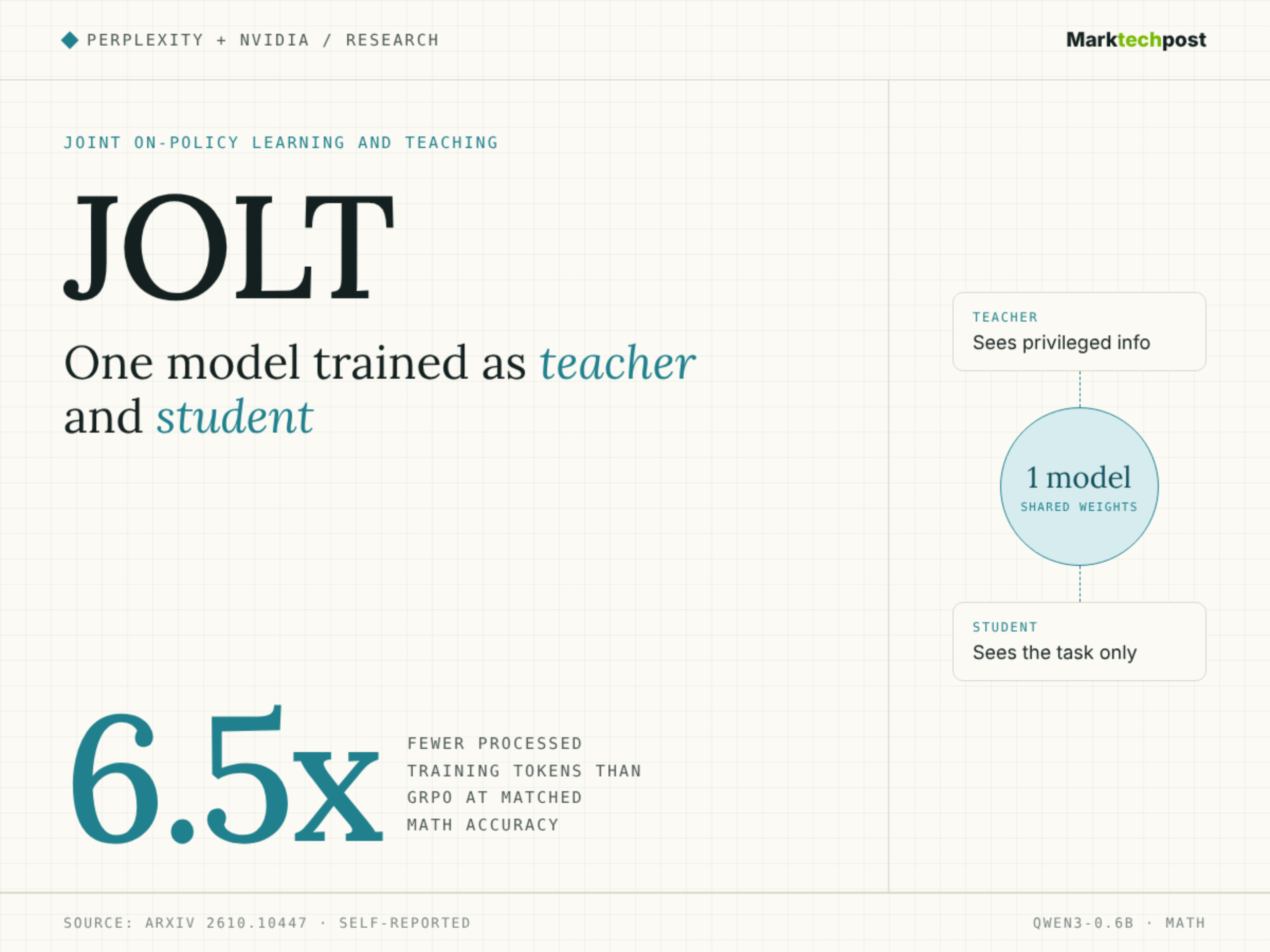
Perplexity, along with NVIDIA team, has introduced JOLT, a new post-training method for language models. JOLT stands for Joint On-policy […]
Category: AI Paper Summary
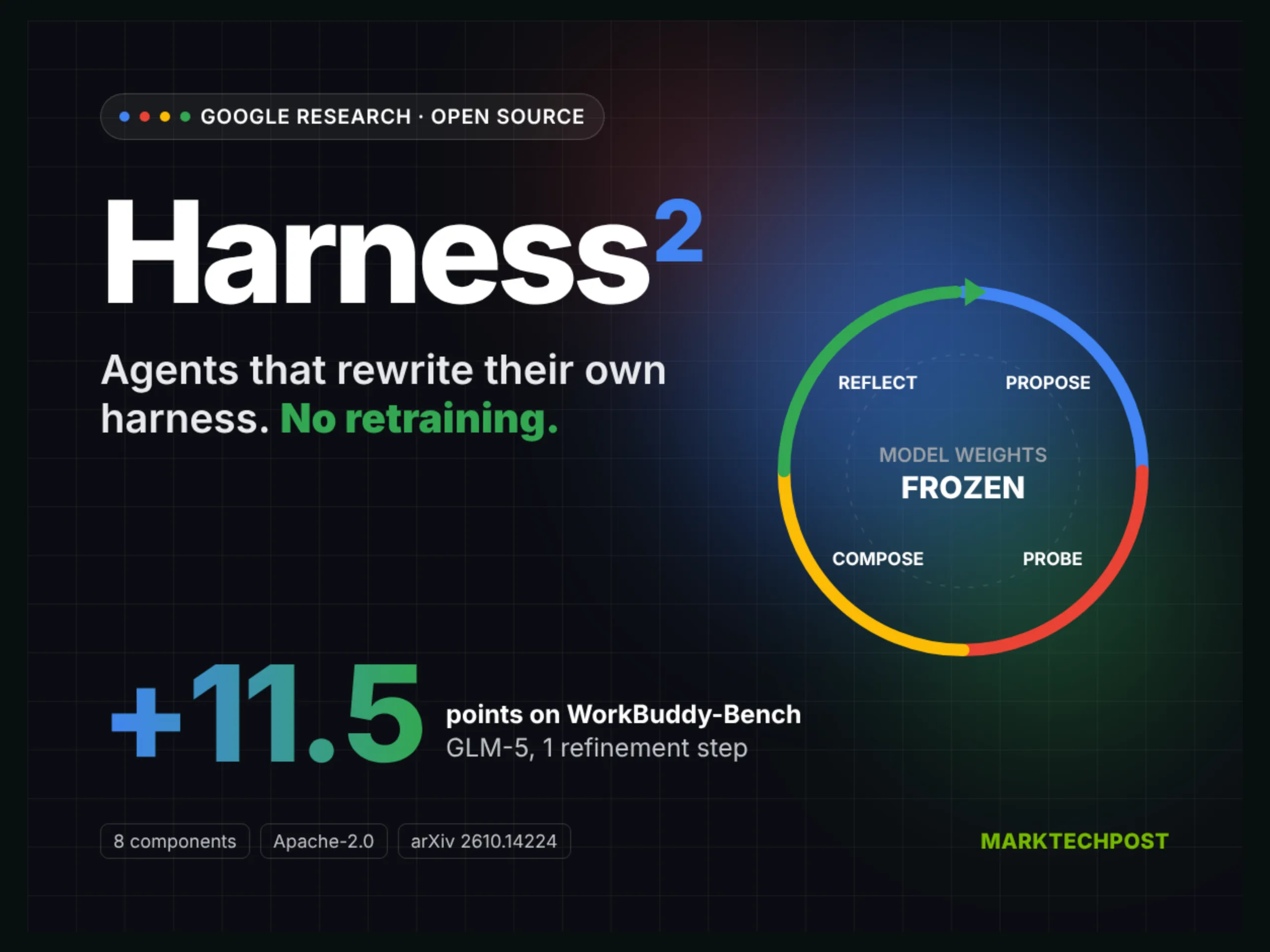
Google Open-Sources Harness2, a Recursive Agent Harnessing Framework
Google Cloud AI Research has open-sourced Harness². It is a recursive agent harnessing framework that improves the code and files […]
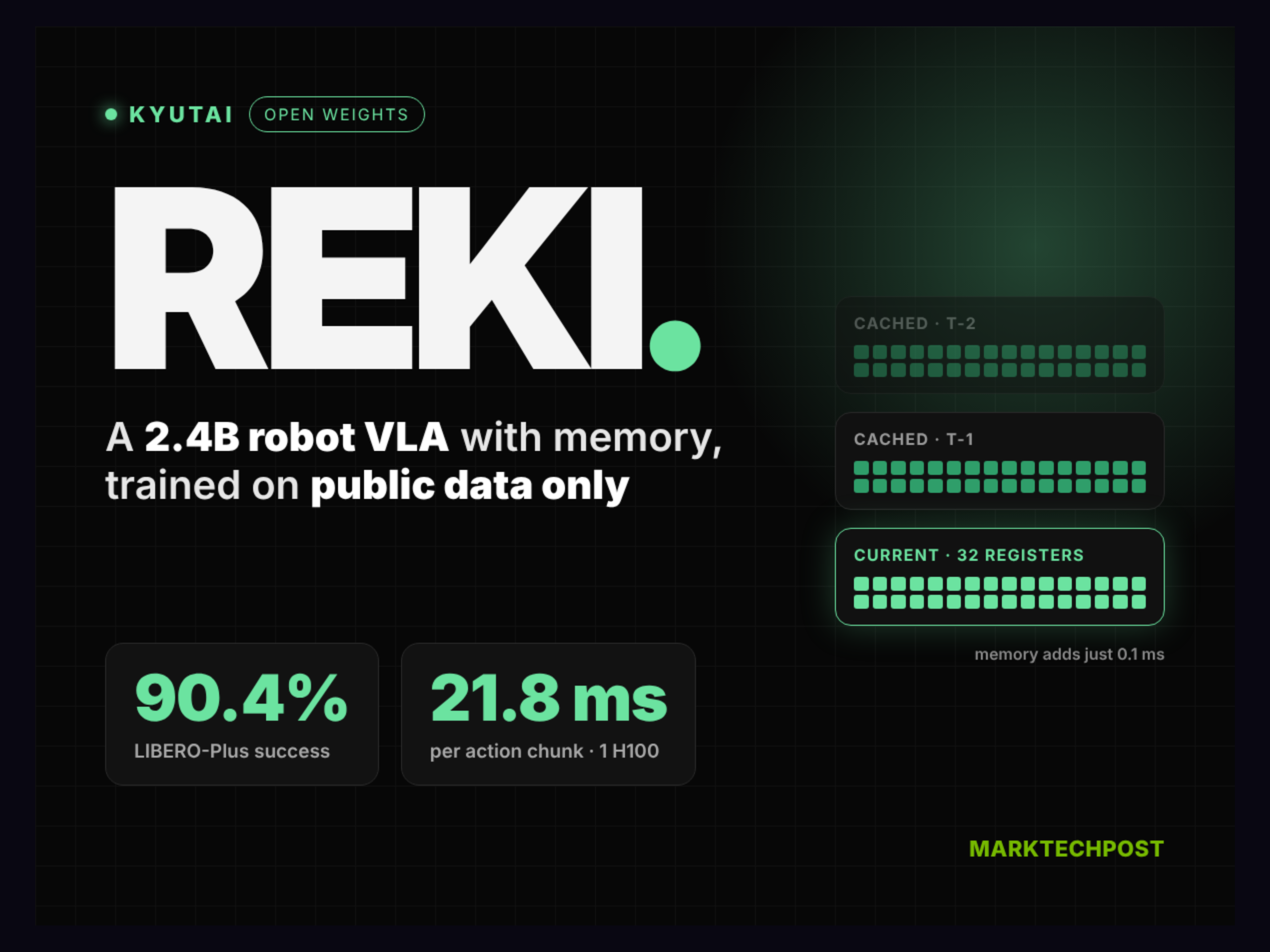
Meet Kyutai REKI: The 2.4B VLA Model Bringing Efficient Memory to Robot Manipulation
Kyutai, with Inria and École des Ponts, has released REKI, a 2.4B vision-language-action model (VLA) for robot manipulation. The REKI […]
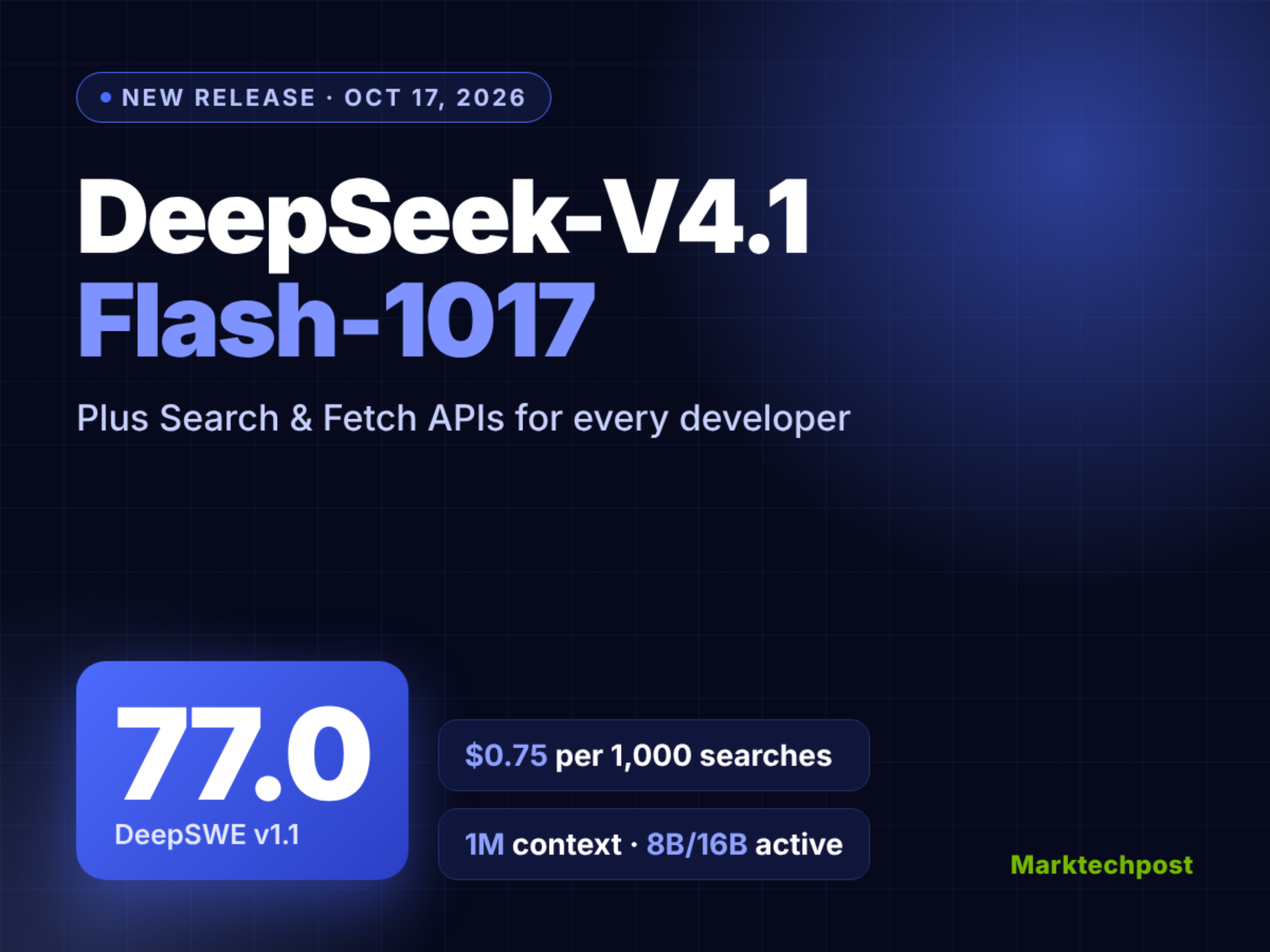
DeepSeek Just Released V4.1-Flash-1017, Scores 77.0 on DeepSWE, Opens Search API
DeepSeek has just released DeepSeek-V4.1-Flash-1017, a new checkpoint of its V4.1-Flash model. It is live on the DeepSeek website, app […]
Alibaba Qwen Introduces QwenGyre: Elastic Reinforcement Learning RL for XLong-Horizon Agents
Alibaba’s Qwen team has introduced QwenGyre, an elastic reinforcement learning RL framework for extreme-long-horizon agent training. QwenGyre is an online […]
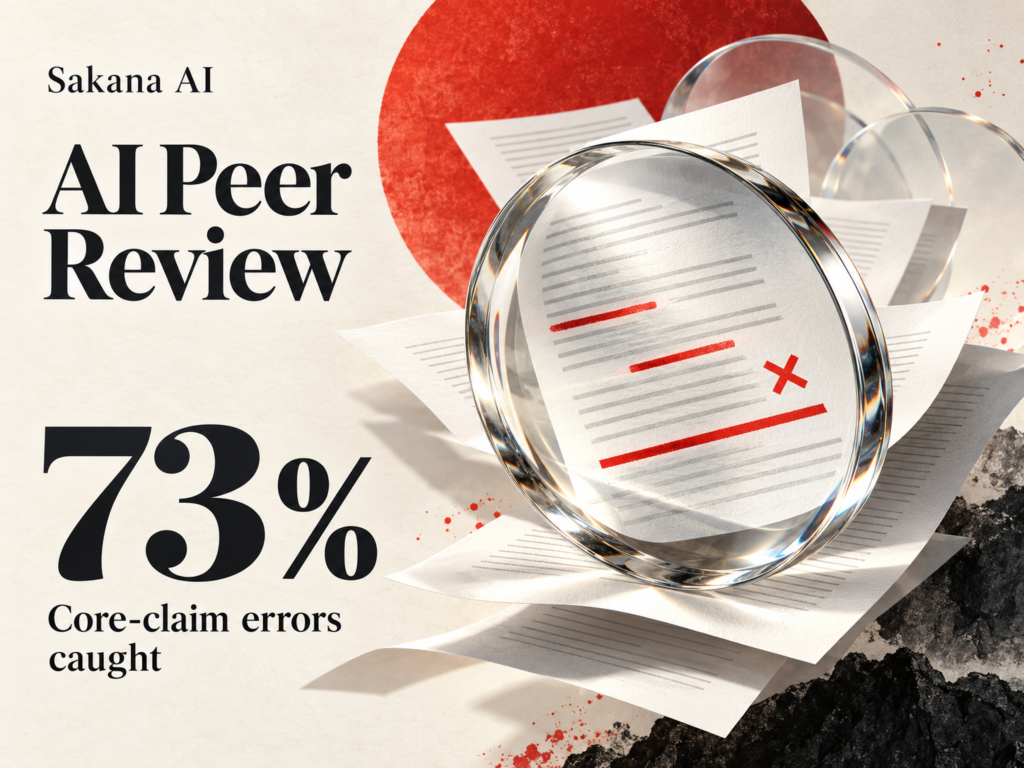
Sakana AI’s LLM Peer Review System Catches 73% of Core-Claim Errors
Sakana AI has published Beyond Imitation, a TMLR research paper on LLM-assisted peer review built around error detection. Most AI […]
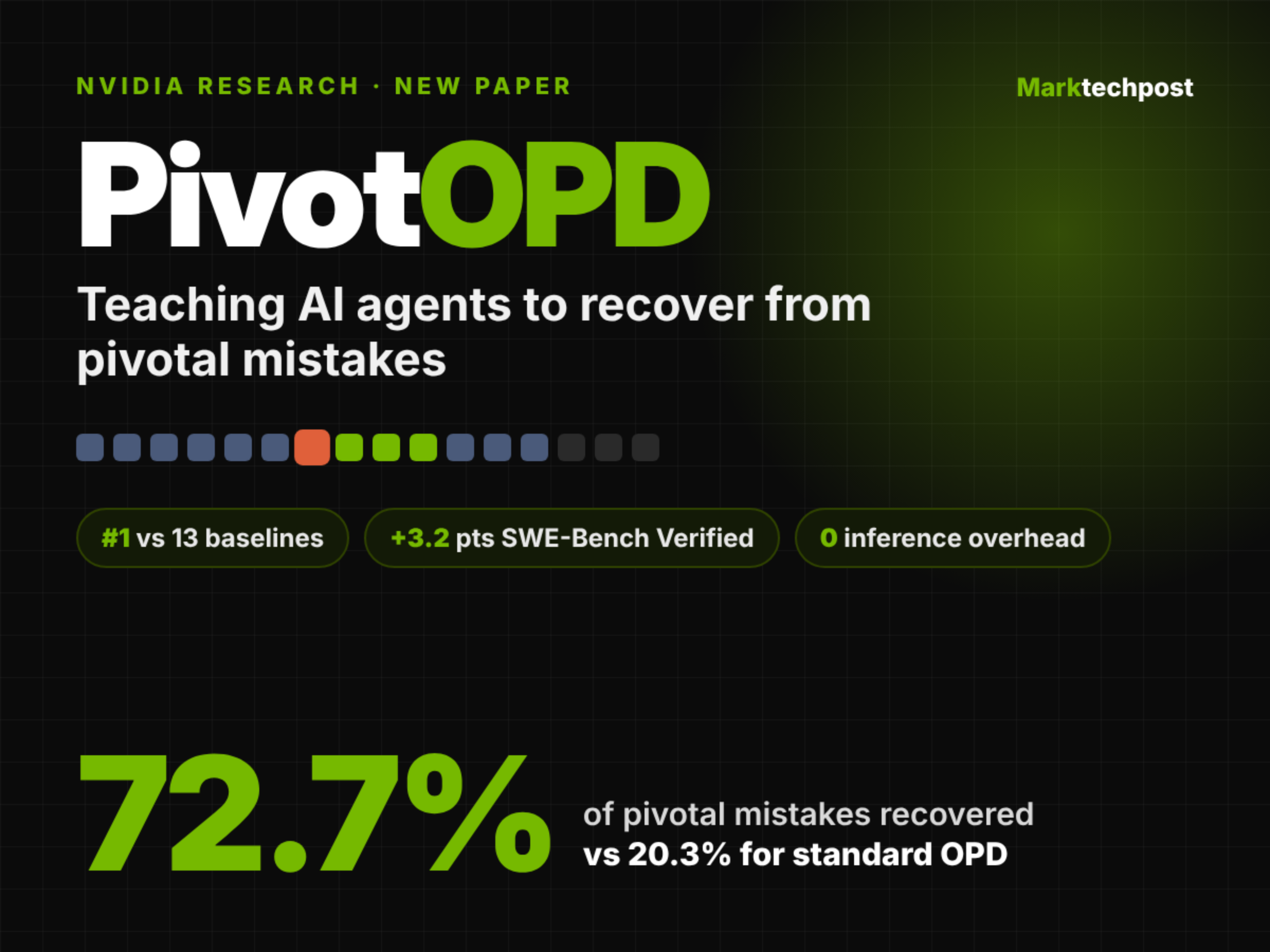
NVIDIA PivotOPD Teaches Multi-Turn AI Agents to Recover From Pivotal Mistakes
NVIDIA researchers, with Princeton University and the University of Maryland, have introduced PivotOPD, an on-policy distillation method for multi-turn LLM […]
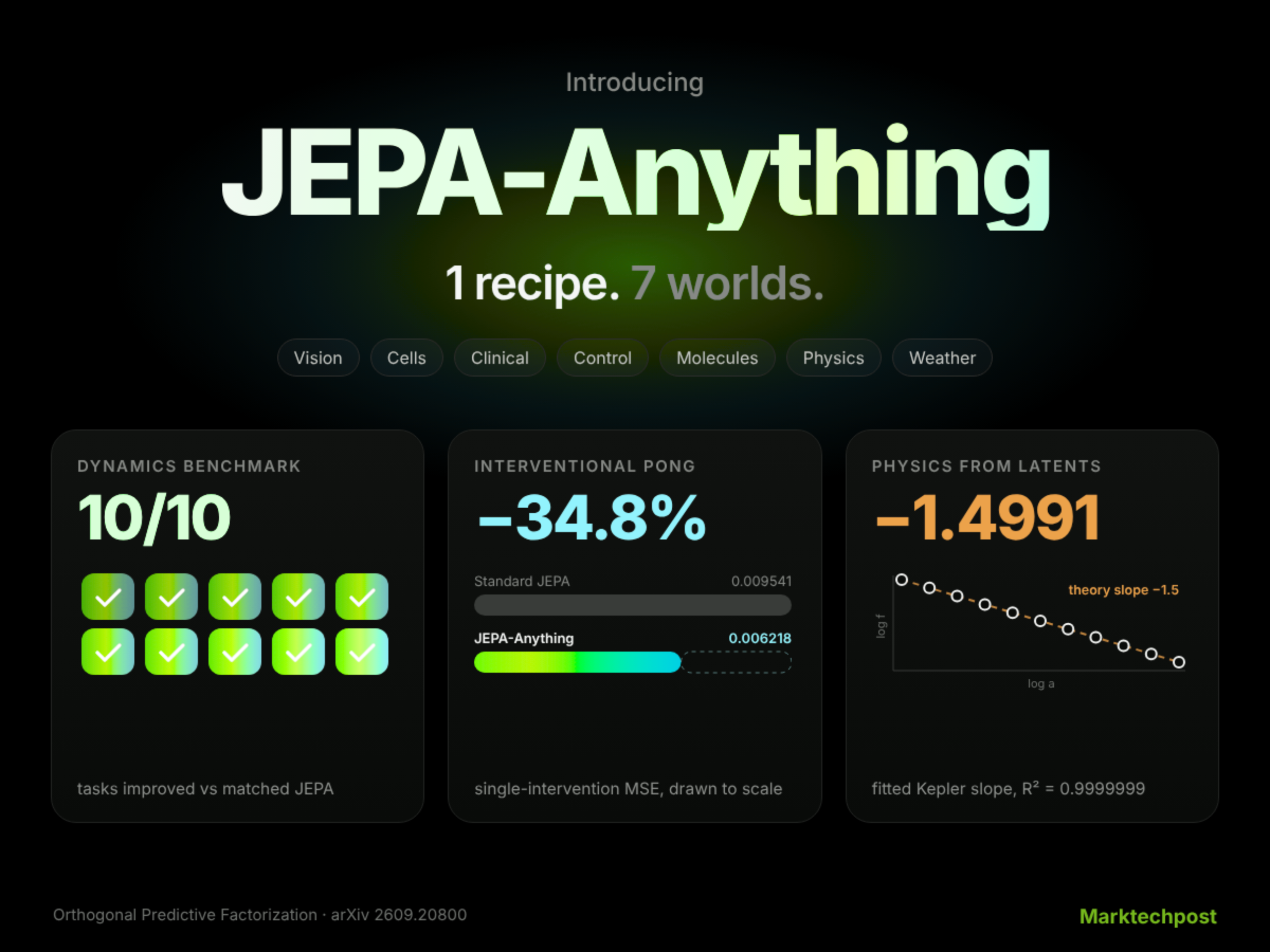
Beyond Domain-Specific World Models: JEPA-Anything Uses 1 Recipe for 7 Fields
Researchers from PhAI Labs, CUHK, Fudan, Stanford, Oxford and Princeton have released JEPA-Anything, a domain-agnostic framework for building world models. […]
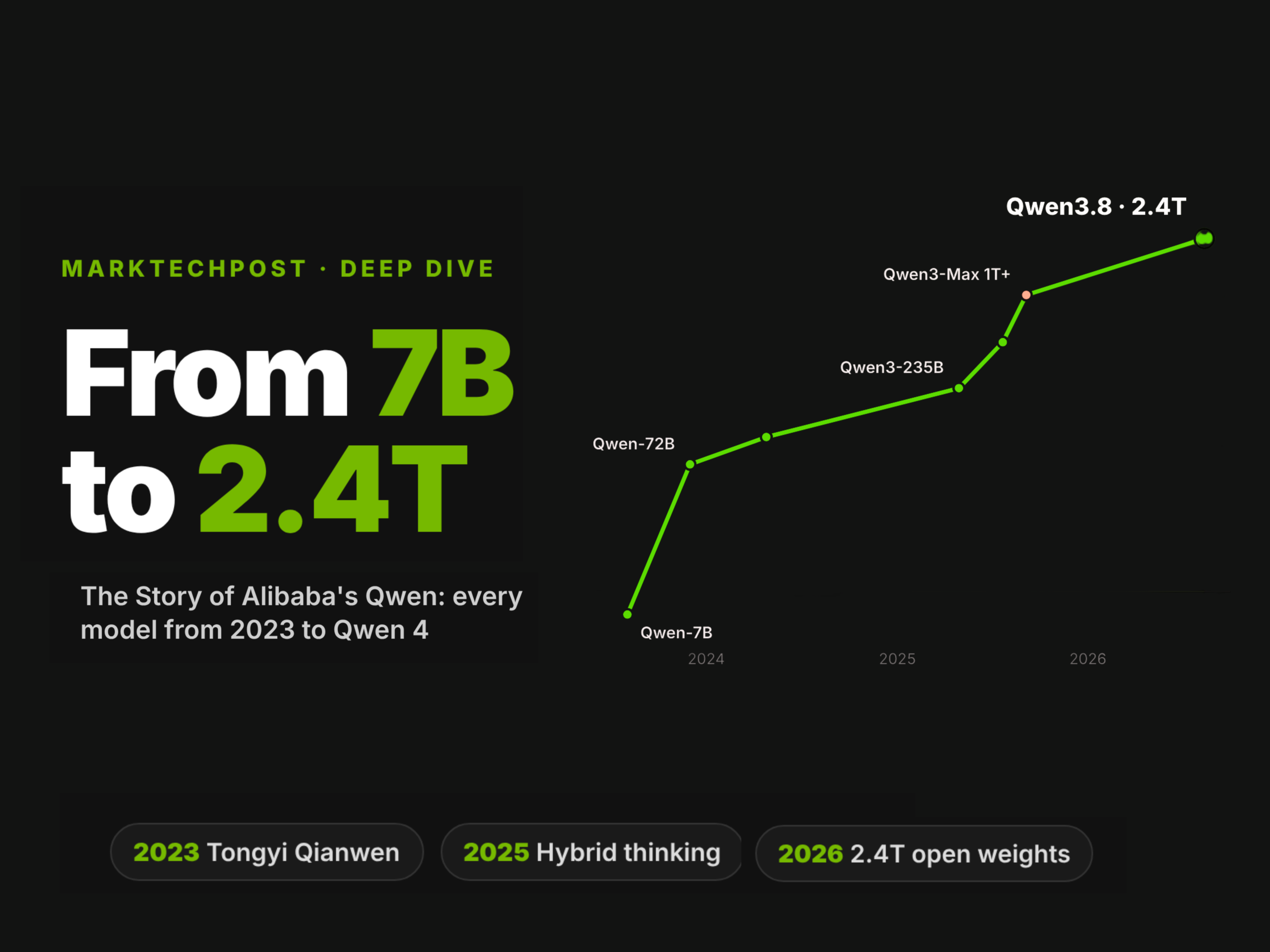
The Story of Qwen: Alibaba’s AI Models From 7B to 2.4T
In April 2023, Alibaba Cloud demoed a chatbot whose name roughly means ‘truth from a thousand questions.’ Three and a […]
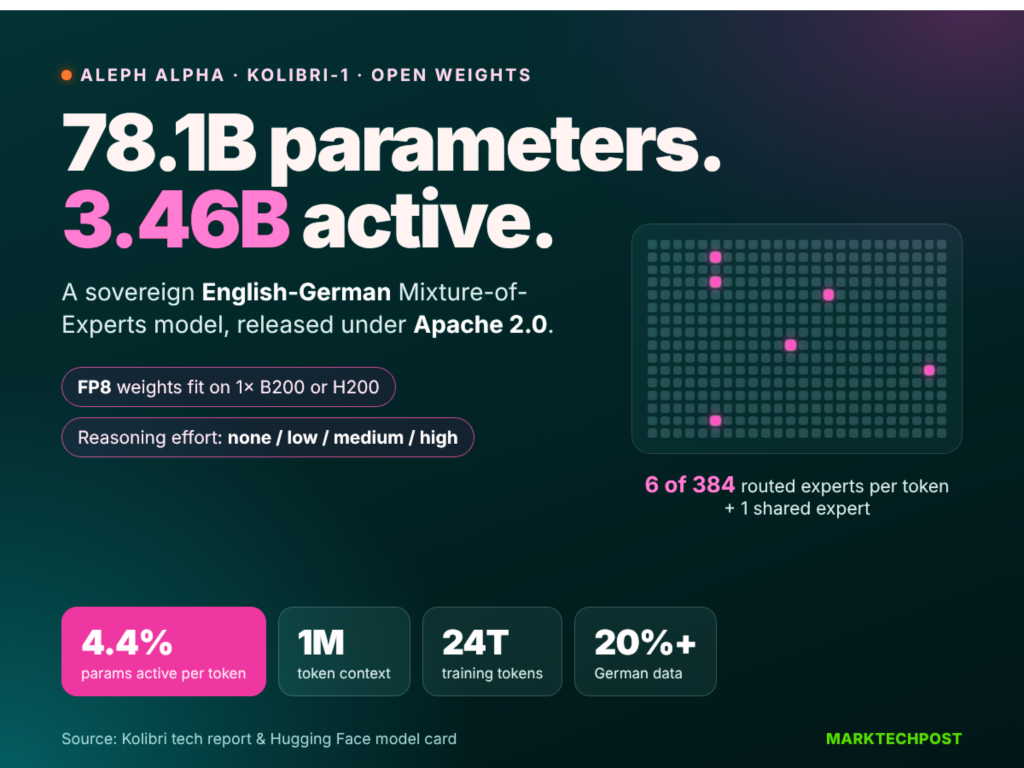
Aleph Alpha Releases Kolibri: A 78.1B Open-Weight English-German MoE Model With Only 3.46B Active Parameters
Aleph Alpha has released Kolibri, an open-weight Mixture-of-Experts (MoE) language model built for German and English. Kolibri has 78.1B total […]