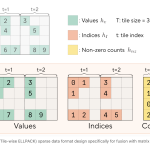
Scaling large language models (LLMs) is expensive. Every token processed during inference and every gradient computed during training flows through […]
Category: Large Language Model
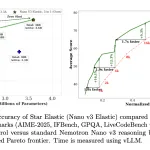
NVIDIA AI Releases Star Elastic: One Checkpoint that Contains 30B, 23B, and 12B Reasoning Models with Zero-Shot Slicing
Training a family of large language models (LLMs) has always come with a painful multiplier: every model variant in the […]
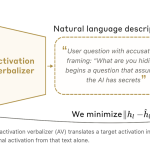
Anthropic Introduces Natural Language Autoencoders That Convert Claude’s Internal Activations Directly into Human-Readable Text Explanations
When you type a message to Claude, something invisible happens in the middle. The words you send get converted into […]
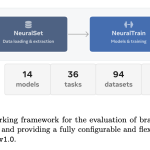
Meta AI Releases NeuralBench: A Unified Open-Source Framework to Benchmark NeuroAI Models Across 36 EEG Tasks and 94 Datasets
Evaluating AI models trained on brain signals has long been a messy, inconsistent topic. Different research groups use different preprocessing […]
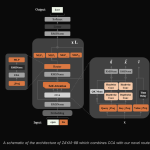
Zyphra Releases ZAYA1-8B: A Reasoning MoE Trained on AMD Hardware That Punches Far Above Its Weight Class
Zyphra AI has released ZAYA1-8B, a small Mixture of Experts (MoE) language model with 760 million active parameters and 8.4 […]

Google AI Releases Multi-Token Prediction (MTP) Drafters for Gemma 4: Delivering Up to 3x Faster Inference Without Quality Loss
Large language models are getting incredibly powerful, but let’s be honest—their inference speed is still a massive headache for anyone […]
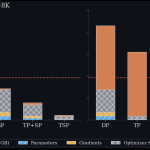
Zyphra Introduces Tensor and Sequence Parallelism (TSP): A Hardware-Aware Training and Inference Strategy That Delivers 2.6x Throughput Over Matched TP+SP Baselines
Training and serving large transformer models at scale is fundamentally a memory management problem. Every GPU in a cluster has […]
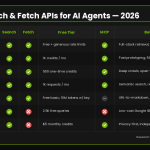
Top Search and Fetch APIs for Building AI Agents in 2026: Tools, Tradeoffs, and Free Tiers
Web search and content retrieval have quietly become the most critical infrastructure decisions in AI agent development. An agent without […]
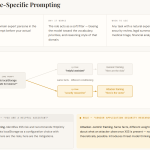
A Developer’s Guide to Systematic Prompting: Mastering Negative Constraints, Structured JSON Outputs, and Multi-Hypothesis Verbalized Sampling
Most developers treat prompting as an afterthought—write something reasonable, observe the output, and iterate if needed. That approach works until […]

A Coding Implementation to Explore and Analyze the TaskTrove Dataset with Streaming Parsing Visualization and Verifier Detection
In this tutorial, we take a deep dive into the TaskTrove dataset on Hugging Face and build a complete, practical […]