
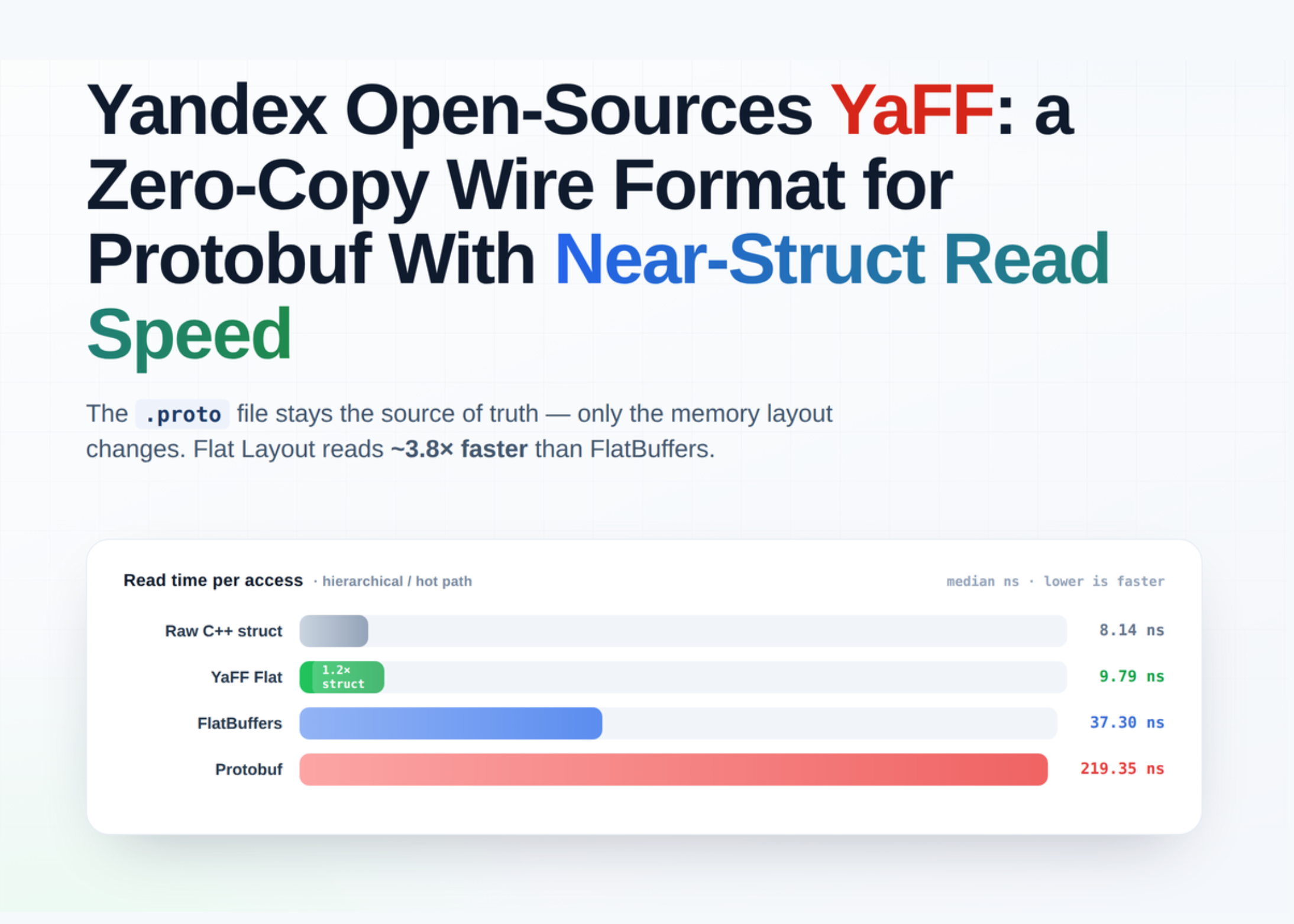
TLDR YaFF is Yandex’s open-source zero-copy wire format for Protobuf — Apache 2.0, currently C++, v0.1.0. The .proto file stays […]
Category: Artificial Intelligence
NVIDIA AI Introduce SpatialClaw: A Training-Free Agent That Treats Code as the Action Interface for Spatial Reasoning
NVIDIA Research has released SpatialClaw, a training-free framework for spatial reasoning. It targets a persistent weakness in vision-language models (VLMs). […]
VibeThinker-3B: A 3B Dense Reasoning Model Built on Qwen2.5-Coder-3B With the Spectrum-to-Signal Post-Training Pipeline
While recent breakthroughs in AI reasoning have largely been driven by massive scale, pouring in billions of parameters to cross […]
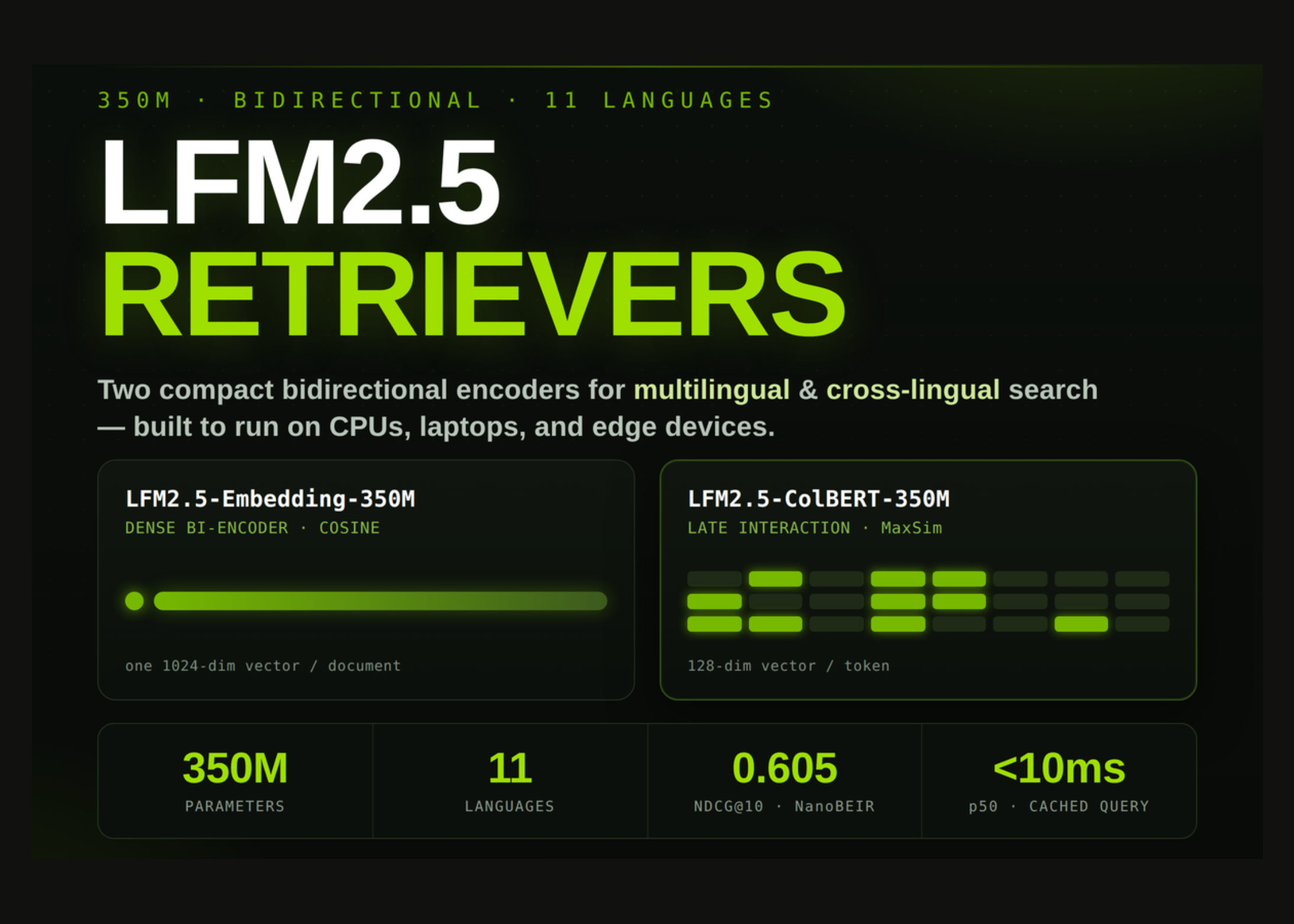
Liquid AI Introduces LFM2.5-Embedding-350M and LFM2.5-ColBERT-350M: Dense Bi-Encoder and Late-Interaction Models for Fast Multilingual Search Across 11 Languages
This week, Liquid AI released two new retrieval models. They are LFM2.5-ColBERT-350M and LFM2.5-Embedding-350M. Both hold 350M parameters. Both are […]

Salesforce CodeGen Tutorial: Generate, Validate, and Rerank Python Functions With Unit Tests and Safety Checks
In this tutorial, we implement an end-to-end workflow for Salesforce CodeGen. We load a CodeGen model from Hugging Face, prepare […]

Perplexity Launches Brain, a Self-Improving Memory System That Builds a Context Graph of an Agent’s Work and Learns Overnight
Most AI memory remembers the user. It stores your preferences, your tastes, and your role. Perplexity is taking a different […]
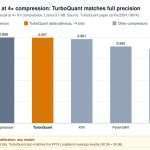
The KV Cache Compression Race: TurboQuant vs OSCAR vs EpiCache
Long-context large language models (LLMs) face a memory bottleneck that has nothing to do with model weights. During decoding, transformers […]
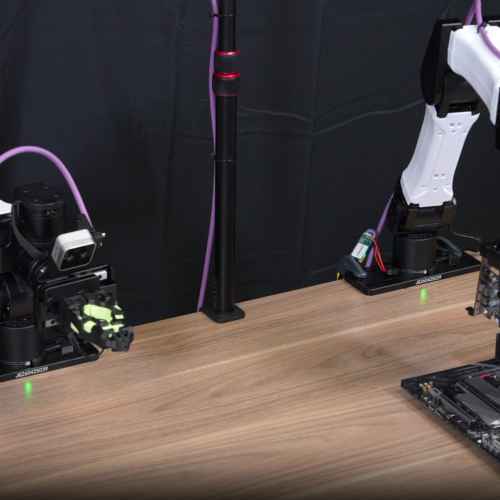
AI coding agents taught robots how to install GPUs and cut zip ties
What happens when you give AI coding agents a lab full of robotic arms, some compute resources, and a “generous […]
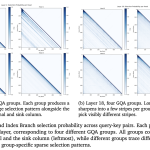
MiniMax Sparse Attention (MSA): a Two-Branch Block-Sparse Attention Trained on a 109B-Parameter MoE With a 3T-Token Budget
MiniMax released MSA (MiniMax Sparse Attention), a sparse attention method built directly on Grouped Query Attention (GQA). It targets one […]
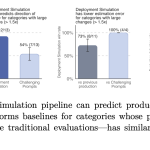
OpenAI’s Deployment Simulation Extends Pre-Deployment Risk Assessment to Agentic Coding Through Simulated Tool Calls
OpenAI published a new pre-deployment safety method called Deployment Simulation. The idea is direct. Before a model ships, simulate its […]