A new survey from Malwarebytes finds that growing use of AI tools is colliding with deepening public distrust, as 90 percent of respondents say they are concerned about how AI handles their personal data. The survey draws on responses from more than 1,200 people and points to changing online habits driven mostly by privacy fears.
Concern around data use led to 88 percent of respondents saying they do not freely share personal information with AI tools such as ChatGPT and Gemini. That hesitation is already affecting behavior, as 43 percent say they have stopped using ChatGPT, while 42 percent say the same about Gemini.
The figures suggest that even as AI becomes more common, a large portion of users are pulling away rather than leaning in.
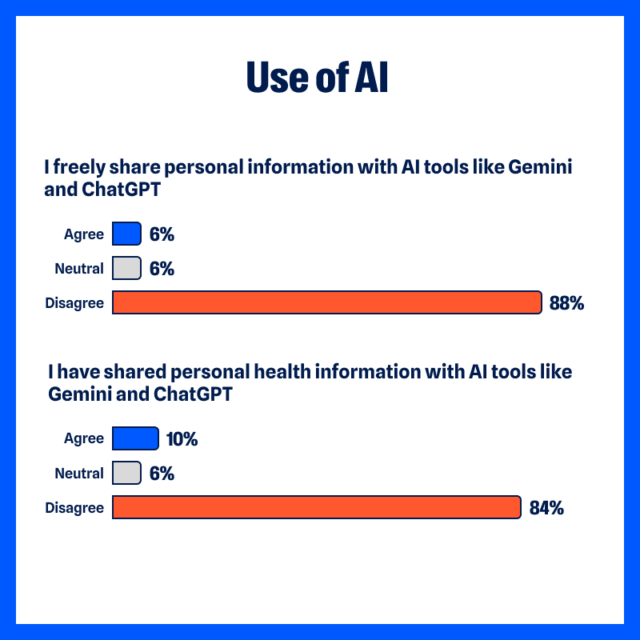
Malwarebytes survey
The survey also shows that skepticism toward AI is part of a wider erosion of trust in how companies handle their personal data. Ninety-two percent of respondents say they are concerned about corporations using their data inappropriately, while 74 percent express similar concerns about government access.
These concerns follow years of data breaches, tracking practices, and misuse of personal information, and AI appears to be intensifying those existing worries rather than replacing them.
David Ruiz, Senior Privacy Advocate at Malwarebytes, said: “The tools that can do almost anything are now inviting pushback from the public… we still don’t know what they can do with our data.”
Changes in user behavior extend beyond AI tools and into social media platforms. Nearly half of respondents, 49 percent, say they have stopped using TikTok due to privacy concerns, while 44 percent report leaving Instagram and 37 percent say they have given up on Facebook. These decisions reveal a change in how much personal information people are willing to share across digital services.
Although concerns remain high, Malwarebytes data suggests a gradual shift away from resignation. Sixty-three percent of respondents say they feel their personal data is already out there and beyond their control, down from 74 percent the previous year.
Privacy measures are increasingly being adopted, with 76 percent saying they now use multi-factor authentication, 82 percent opt out of data collection where possible, and 71 percent use ad blockers. Other actions include using VPNs, reading privacy policies, and even submitting false information to limit exposure.
This combination of caution and action reflects a more engaged approach to personal data, where users aren’t just aware of risks, they are actively trying to reduce them.
Support for regulation is also nearly universal, with 91 percent of respondents backing national laws governing how personal data is collected, stored, and used.
You can access the full Malwarebytes report here.
What do you think about the growing distrust in AI tools? Let us know in the comments.