
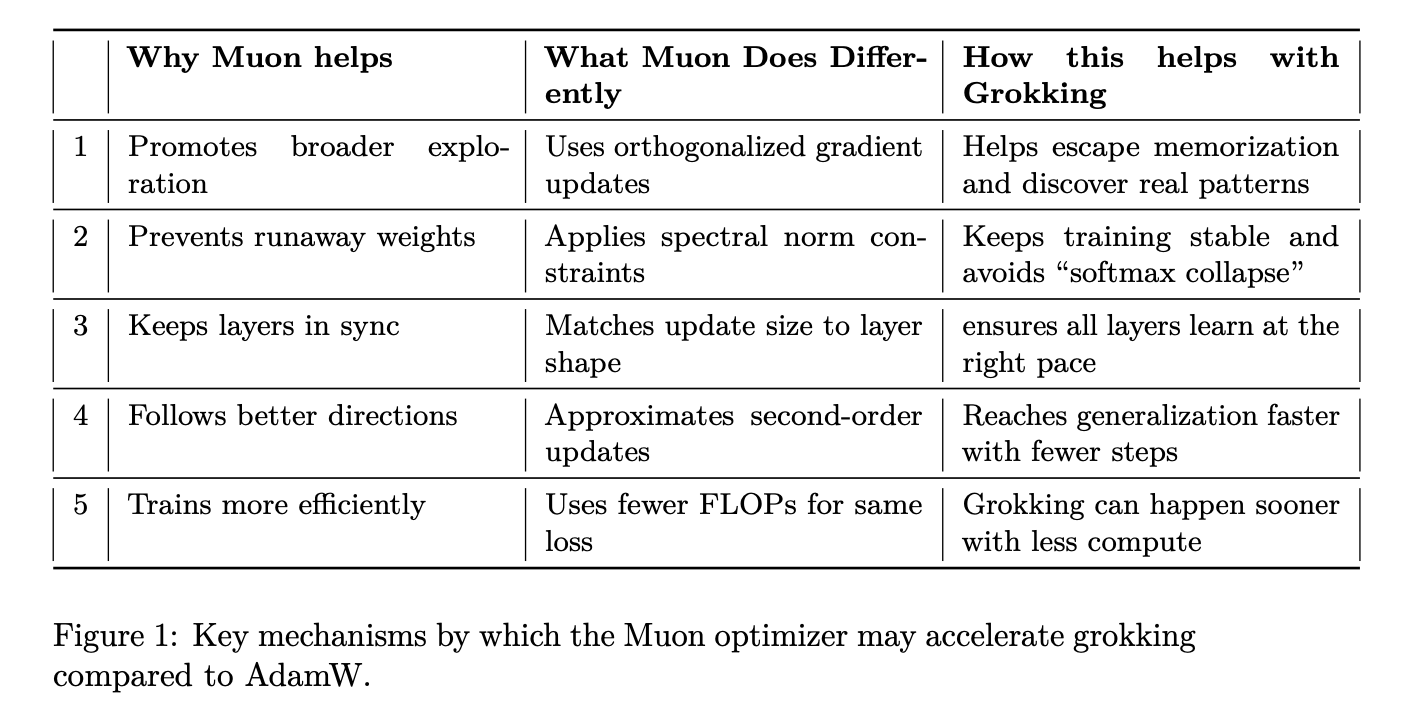
Revisiting the Grokking Challenge In recent years, the phenomenon of grokking—where deep learning models exhibit a delayed yet sudden transition […]
Category: Applications

LLMs Can Now Learn without Labels: Researchers from Tsinghua University and Shanghai AI Lab Introduce Test-Time Reinforcement Learning (TTRL) to Enable Self-Evolving Language Models Using Unlabeled Data
Despite significant advances in reasoning capabilities through reinforcement learning (RL), most large language models (LLMs) remain fundamentally dependent on supervised […]

Meet VoltAgent: A TypeScript AI Framework for Building and Orchestrating Scalable AI Agents
VoltAgent is an open-source TypeScript framework designed to streamline the creation of AI‑driven applications by offering modular building blocks and […]

Decoupled Diffusion Transformers: Accelerating High-Fidelity Image Generation via Semantic-Detail Separation and Encoder Sharing
Diffusion Transformers have demonstrated outstanding performance in image generation tasks, surpassing traditional models, including GANs and autoregressive architectures. They operate […]

LLMs Can Now Retain High Accuracy at 2-Bit Precision: Researchers from UNC Chapel Hill Introduce TACQ, a Task-Aware Quantization Approach that Preserves Critical Weight Circuits for Compression Without Performance Loss
LLMs show impressive capabilities across numerous applications, yet they face challenges due to computational demands and memory requirements. This challenge […]

Long-Context Multimodal Understanding No Longer Requires Massive Models: NVIDIA AI Introduces Eagle 2.5, a Generalist Vision-Language Model that Matches GPT-4o on Video Tasks Using Just 8B Parameters
In recent years, vision-language models (VLMs) have advanced significantly in bridging image, video, and textual modalities. Yet, a persistent limitation […]

LLMs Still Struggle to Cite Medical Sources Reliably: Stanford Researchers Introduce SourceCheckup to Audit Factual Support in AI-Generated Responses
As LLMs become more prominent in healthcare settings, ensuring that credible sources back their outputs is increasingly important. Although no […]

Stanford Researchers Propose FramePack: A Compression-based AI Framework to Tackle Drifting and Forgetting in Long-Sequence Video Generation Using Efficient Context Management and Sampling
Video generation, a branch of computer vision and machine learning, focuses on creating sequences of images that simulate motion and […]

OpenAI Releases a Practical Guide to Identifying and Scaling AI Use Cases in Enterprise Workflows
As the deployment of artificial intelligence accelerates across industries, a recurring challenge for enterprises is determining how to operationalize AI […]

LLMs Can Think While Idle: Researchers from Letta and UC Berkeley Introduce ‘Sleep-Time Compute’ to Slash Inference Costs and Boost Accuracy Without Sacrificing Latency
Large language models (LLMs) have gained prominence for their ability to handle complex reasoning tasks, transforming applications from chatbots to […]