
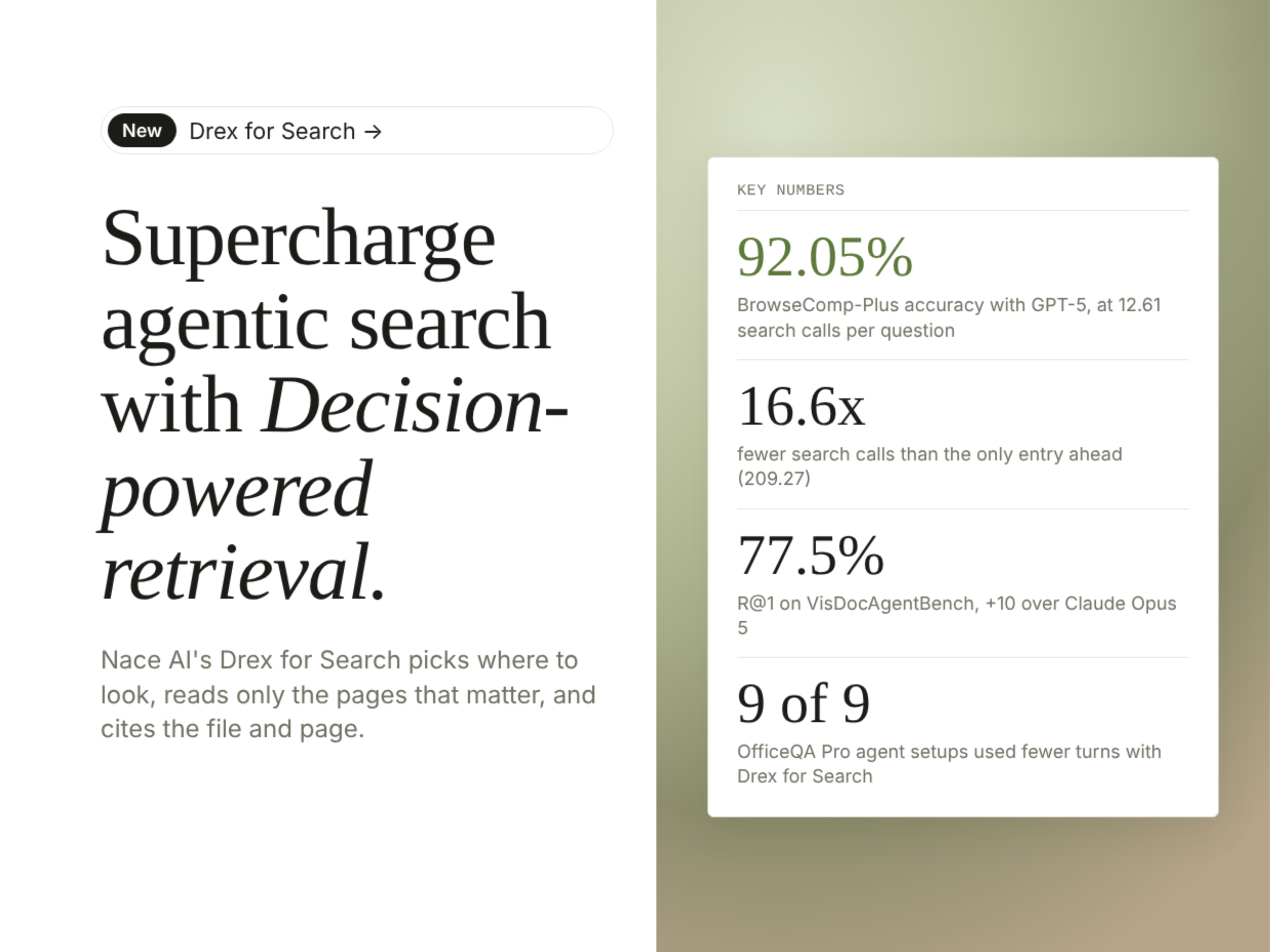
Nace AI has released Drex for Search, which brings its Drex decision models to document search. Drex for Search is […]
Category: Applications
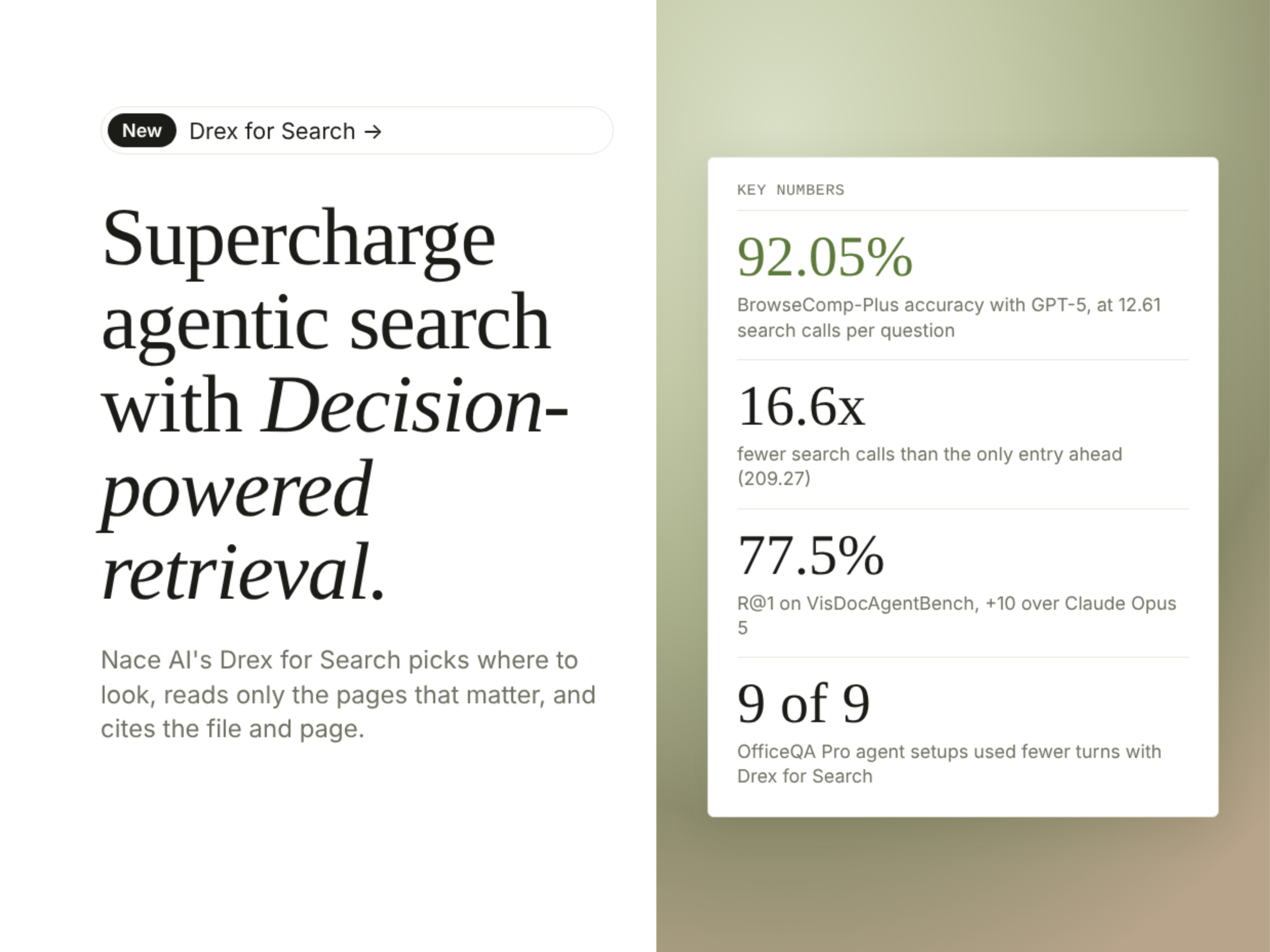
Nace AI Releases Drex for Search for AI Agents: 92.05% on BrowseComp-Plus With 12.6 Search Calls
Nace AI has released Drex for Search, which brings its Drex decision models to document search. Drex for Search is […]
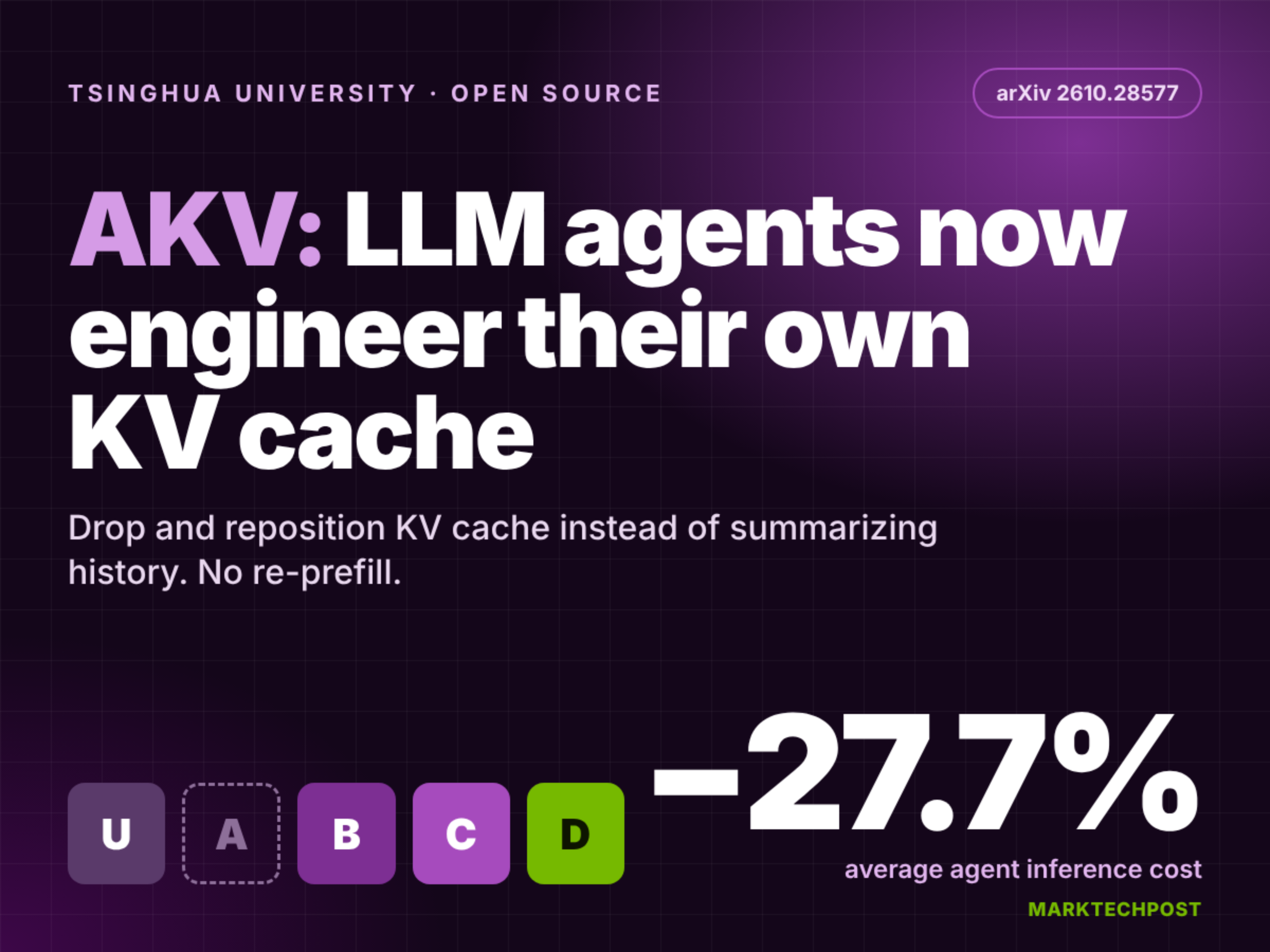
Tsinghua AI Open-Sources AKV, a Cache Engineering Server for LLM Agents on SGLang
Tsinghua University and CUHK researchers open-sourced AKV, a serving system for KV cache engineering in LLM agents. Instead of summarizing […]
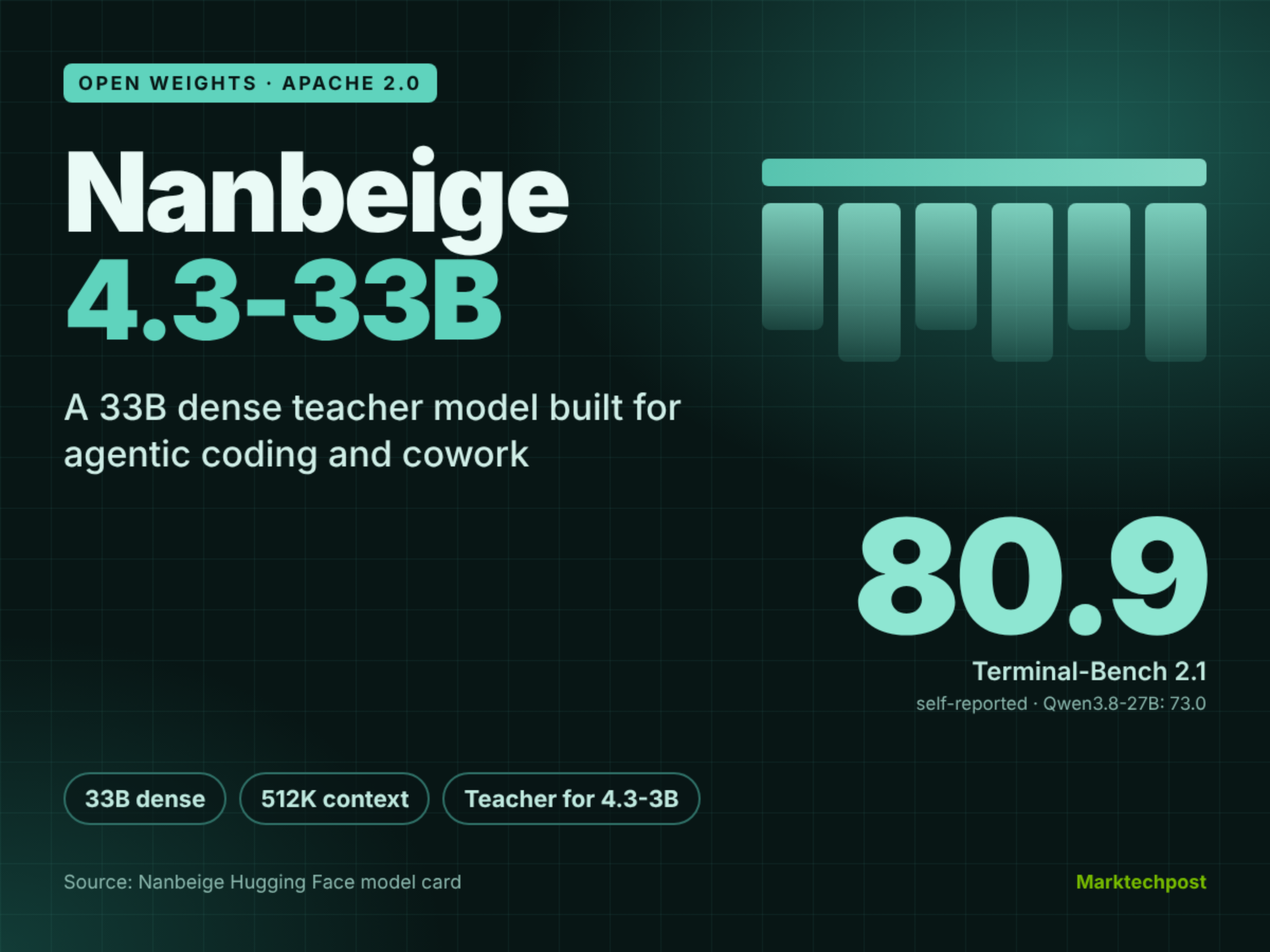
Nanbeige Releases Nanbeige4.3-33B, a 33B Open Agentic Coding Model
Nanbeige LLM Lab has released Nanbeige4.3-33B on Hugging Face under the Apache 2.0 license. Nanbeige4.3-33B is a 33B dense language […]
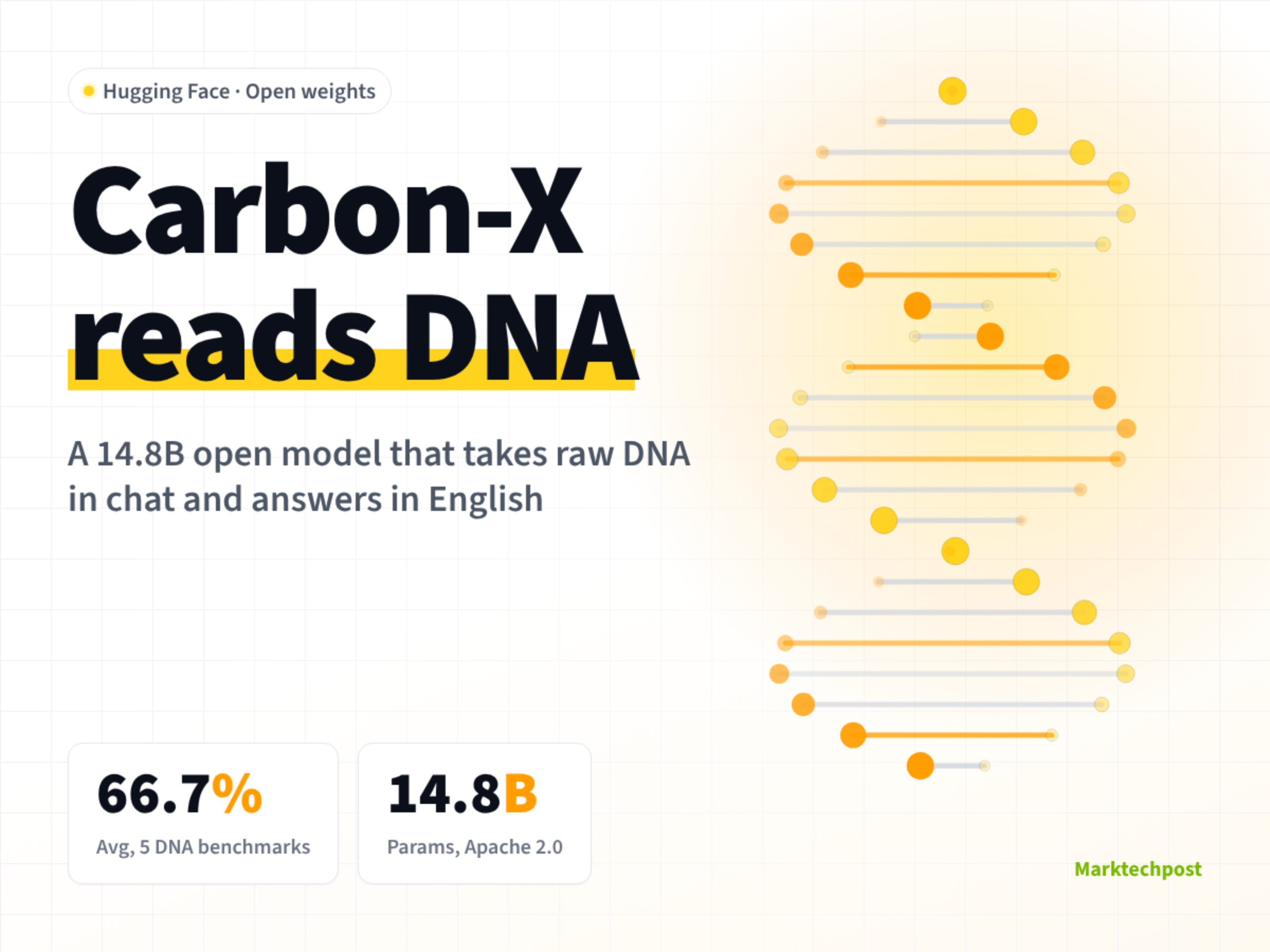
Hugging Face Releases Carbon-X, a 14B Open DNA Language Model that Brings DNA and Natural Language Together for the First Time
Hugging Face has released Carbon-X, an open DNA language model with 14.8B parameters. Carbon-X is a decoder-only model from Hugging […]
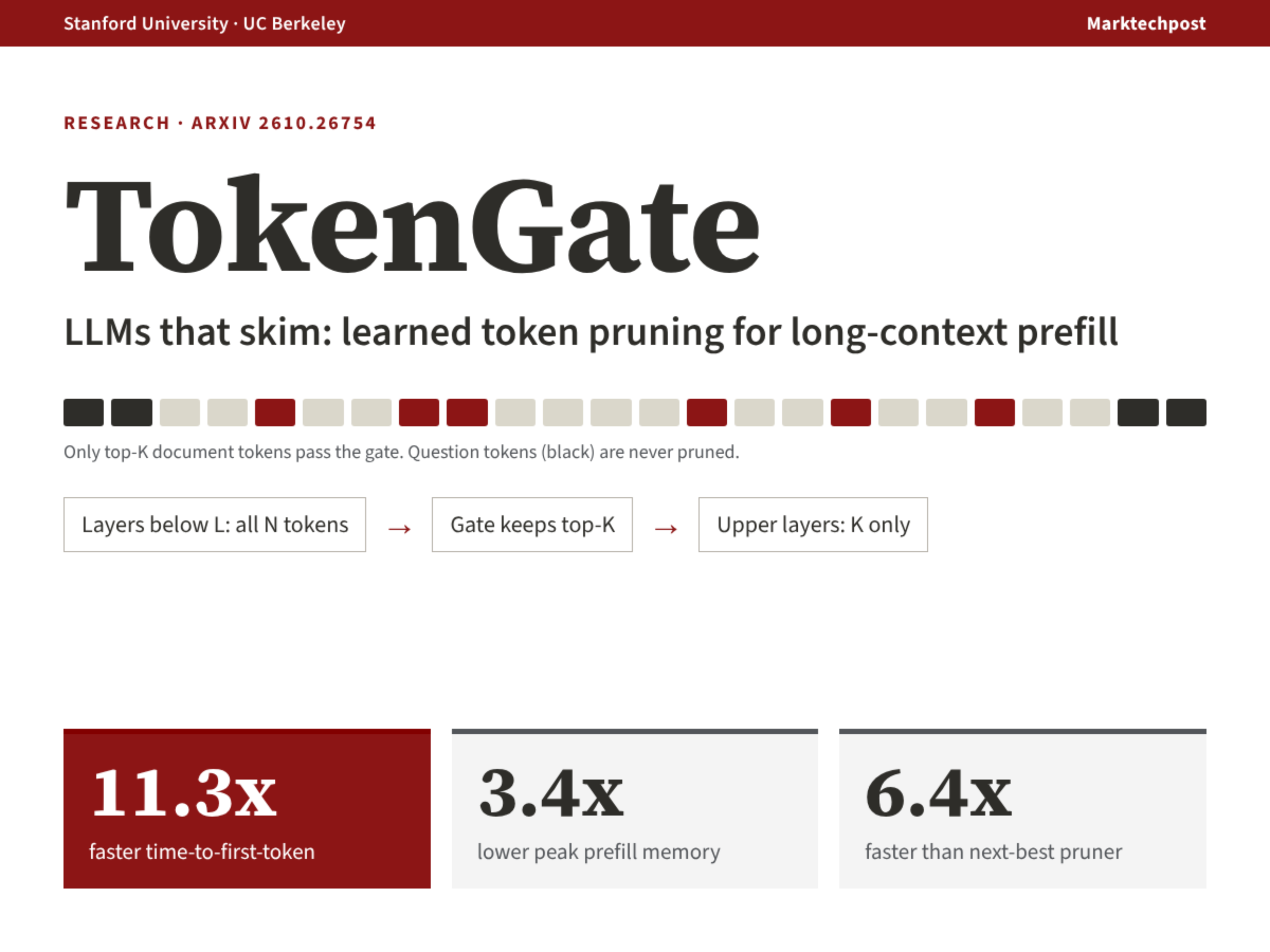
Researchers from Stanford and UC Berkeley Introduce TokenGate: Token-Gated Attention Makes Long-Context Prefill Up to 11.3x Faster
Stanford and UC Berkeley researchers released TokenGate, a module for long-context prefill. TokenGate learned token pruning lets an existing LLM […]
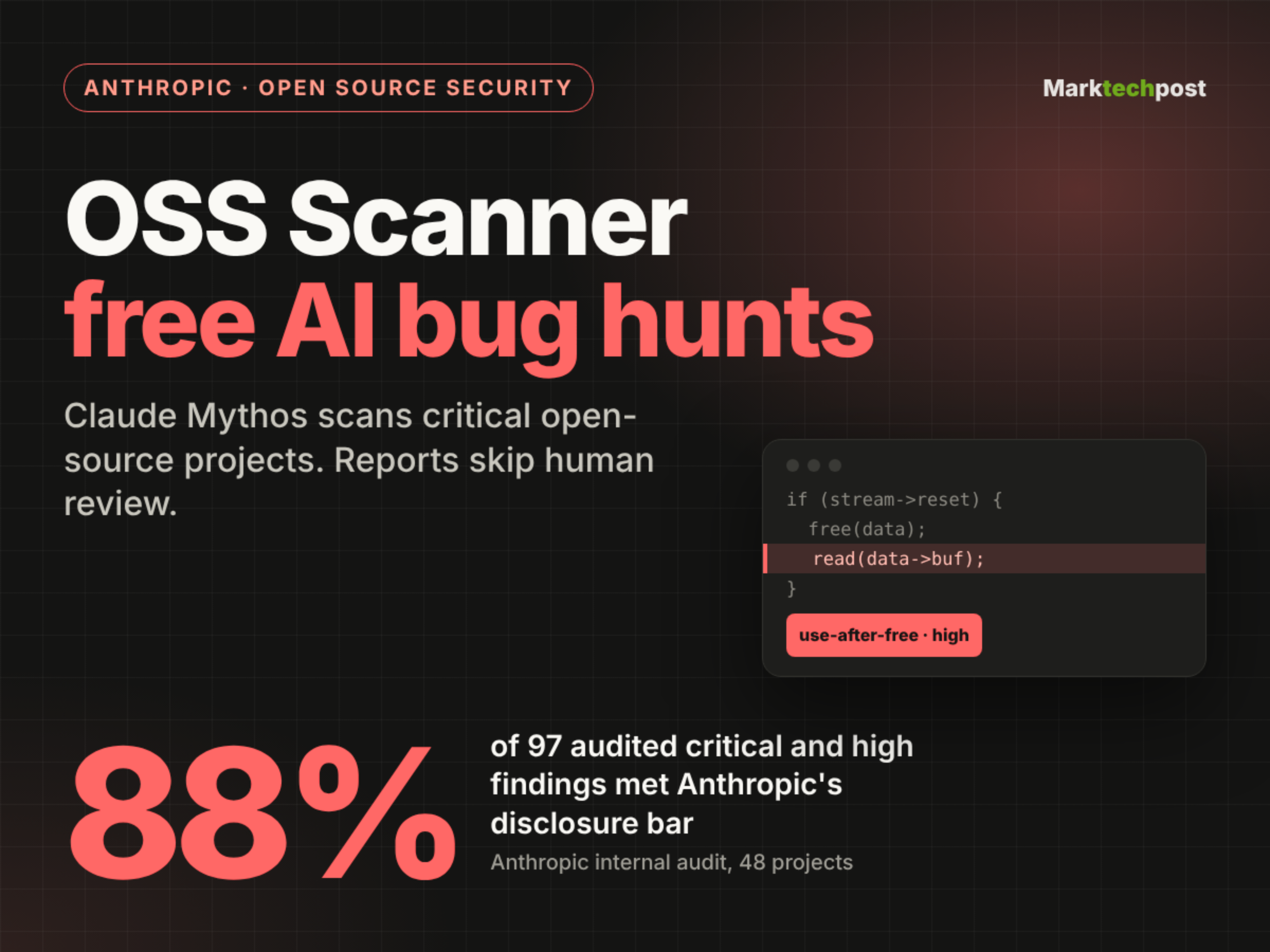
Anthropic Launches OSS Scanner, a Free AI Vulnerability Scanner
Anthropic has launched OSS Scanner, a free, opt-in vulnerability scanner for critical open-source projects. The Anthropic OSS Scanner runs the […]

Microsoft Open-Sources Agensh: A Multi-Agent Harness for 1,024 Agents
Microsoft Research has open-sourced Agensh, a decentralized harness for large teams of coding agents. The Agensh multi-agent harness removes the […]
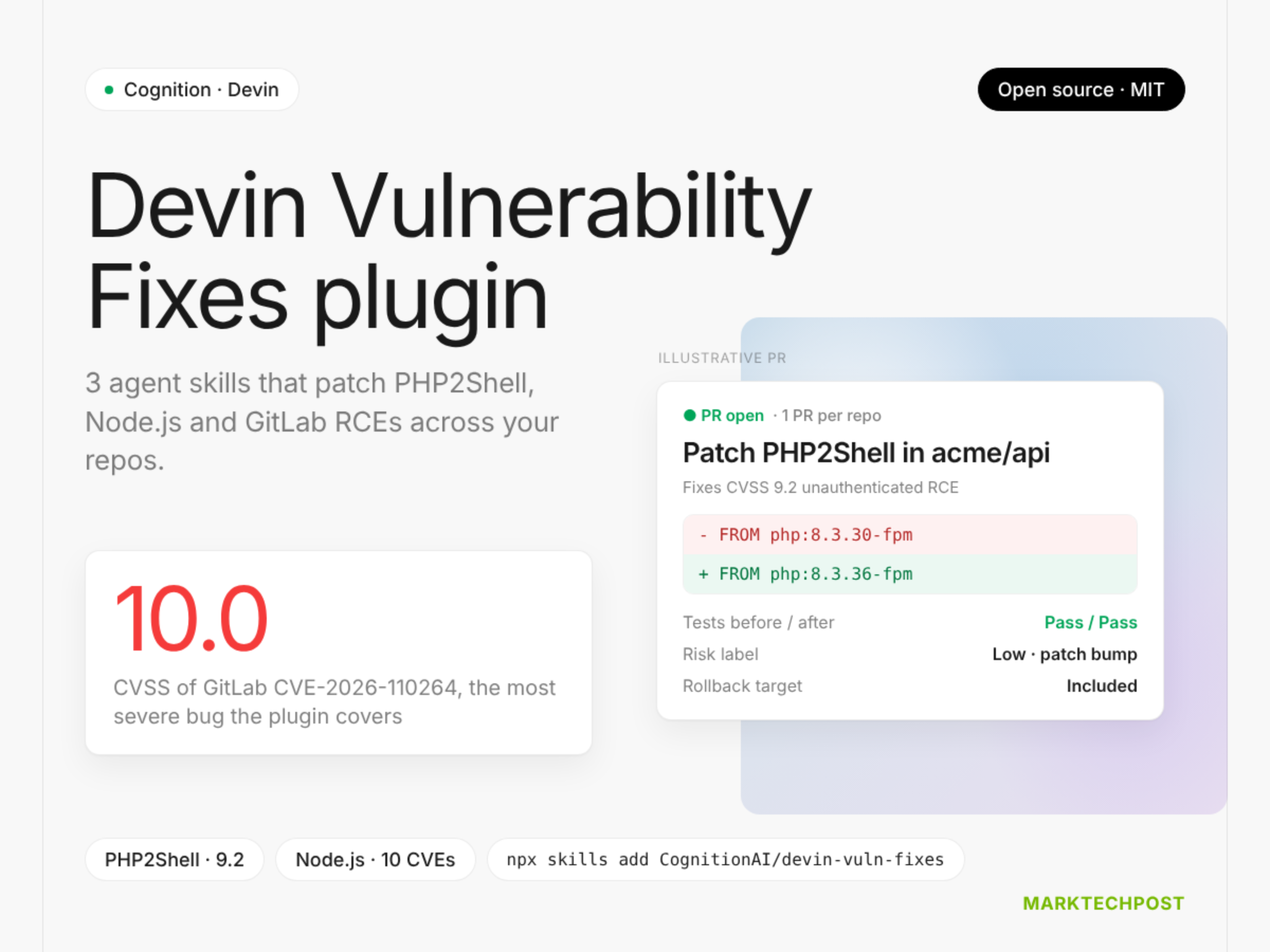
Cognition Open-Sources an Agent Plugin that Helps Secure Systems against Recent Cybersecurity Threats
Cognition has released the Devin Vulnerability Fixes plugin, a free, open-source set of agent skills. It targets three critical remote […]

Meet Anthropic’s sandbox-runtime: OS-Level Sandboxing for AI Agents, No Containers
In this article, we will discuss newly trending open sourced Anthropic’s sandbox-runtime (srt), the OS-level sandbox behind Claude Code’s sandboxed […]