A growing number of US workers say fixing poor-quality AI output — workslop — is becoming a routine part of their jobs, adding hours of extra work each week. A new report from resume templates service Zety says this is affecting productivity, morale, and stress levels as companies adopt AI tools more widely.
The Rise of Workslop Report surveyed 1,000 US employees who said they had encountered low-quality AI-generated work. According to the findings, 66 percent of workers spend up to six hours or more each week correcting errors linked to AI output. Nearly half, 49 percent, say they fix these issues themselves rather than escalate or reject the work.
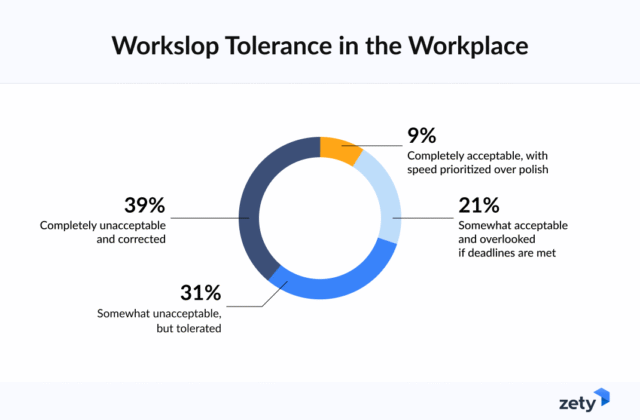
Zety defines “workslop” as low-quality AI-generated output that requires additional human correction. While outright acceptance remains limited, tolerance appears to be increasing. 39 percent of employees say such output is completely unacceptable and corrected. Another 31 percent describe it as somewhat unacceptable but tolerated.
21 percent say it is somewhat acceptable and overlooked if deadlines are met, and 9 percent say it is completely acceptable, with speed prioritized over polish.
One in five respondents say low-quality AI work is often overlooked when deadlines are met. Nearly one-third say it is noticed but tolerated. More than half of workers, 53 percent, believe younger generations are more tolerant of “workslop” than older colleagues.
Employees report that the impact extends beyond time loss. 70 percent say “workslop” significantly or moderately harms stress levels. 67 percent say it affects productivity, 65 percent cite lower morale, and 53 percent point to increased burnout risk. 29 percent say it contributes directly to higher stress, while 25 percent link it to lower morale and reduced productivity. 21 percent associate it with burnout.
Workslop labor
“Workslop creates a layer of invisible labor that rarely shows up in job descriptions or performance reviews,” said Jasmine Escalera, career expert for Zety. “Employees are quietly fixing mistakes just to keep work moving, often outside their core responsibilities. Over time, that extra, unrecognized work adds up to exhaustion, frustration, and disengagement.”
Beyond individual strain, respondents also see organizational risks. 36 percent cite wasted time and lost productivity as a key concern. 30 percent point to the spread of misleading or false information, and 24 percent warn of potential damage to professional or organizational reputation.
The findings are based on a nationally representative survey conducted by Zety using Pollfish on January 8, 2026. The sample included 49 percent female, 50 percent male, and 1 percent nonbinary respondents, spanning 12 percent Gen Z, 30 percent Millennials, 32 percent Gen X, and 26 percent Baby Boomers.
The data suggests that as AI tools accelerate output, many workers feel they are absorbing the quality costs.
What do you think about the rise of “workslop” at work? Let us know in the comments.
Photo Credit: sunabesyou/Shutterstock