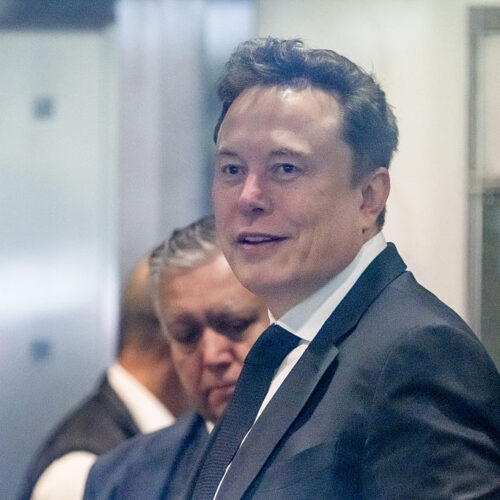
Elon Musk spent three days testifying as the first witness in his trial against OpenAI.
Elon Musk seems tired and cranky. On Thursday, he took the stand for the third day in a four-week trial stemming from his lawsuit alleging that OpenAI abandoned its mission and should be blocked from taking the company public later this year. If Musk plays his cards right, Sam Altman could be ousted and OpenAI would remain a nonprofit forever.
But Musk stumbled at least seven times in ways that possibly put his chances at winning in jeopardy. Most notable, 1) OpenAI’s lawyer managed to get him to make several concessions over his own lawyer’s objections. 2) He also lost a fight to keep xAI’s safety record off the table, calling his reputation as a supposed AI savior defending OpenAI’s mission into question. 3) He repeatedly appeared dishonest, as OpenAI’s lawyer showed documents contradicting his testimony. And he twice appeared disingenuous, 4) first when confronted with calling OpenAI’s safety team “jackasses,” 5) and then again when admitting that he didn’t know what “safety cards” are, even though his own AI firm issues them. Perhaps most embarrassing, 6) he testified that he never loses his temper before raising his voice at OpenAI’s lawyer. And finally, 7) his lawyers failed to keep his ties to Donald Trump off the record, with the judge agreeing to hear discussions that might further discredit Musk’s testimony.
Musk faced Altman while testifying
Since he was called as the trial’s first witness, Musk has spent more than seven hours over the past two days testifying that OpenAI made a “fool” out of him. He repeatedly claimed that OpenAI executives “stole a charity” after accepting $38 million in donations. Musk insists he was conned into giving “free funding” to start a nonprofit that Altman supposedly always intended to turn into an $800 billion company—not for the benefit of humanity, but to enrich Altman and his co-conspirators.
On the other side, Altman and OpenAI—along with Microsoft, OpenAI’s biggest investor—have argued that Musk is merely jealous. He walked away from OpenAI and now, his own AI company, xAI, lags behind OpenAI. As OpenAI defends its founders and their plan for an initial public offering in the last quarter of 2026, they claim that Musk filed the litigation in a desperate move to slow down his biggest rival so that his firm can catch up. Further, Musk is accused of using the litigation as part of a harassment campaign trolling Altman.
Musk’s time on the stand was contentious over three days. According to a live feed from The New York Times, within minutes of the third day starting, Judge Yvonne Gonzalez Rogers had to reproach Musk, instructing him to stop being sarcastic and evasive. Prior to that, Musk had petulantly refused to answer any questions with a response other than saying, “You just can’t steal a charity.”
Altman did not bother to show up for Musk’s first day of testimony, but he apparently wanted to watch Musk’s cross-examination.
Grilling Musk was William Savitt, an OpenAI lawyer who previously helped Musk with a Tesla case before helping Twitter executives win the lawsuit forcing Musk to buy the social media platform. The tension between them was palpable, and Musk likely felt more exposed on the stand facing a former insider.
So far, Savitt has proven to be good at pushing Musk’s buttons. Promptly showing emails, documents, deposition testimony, and social media posts that contradict Musk’s testimony, the lawyer pushed the billionaire to make concessions before the jury on many topics Musk tried to deflect.
That includes getting Musk to acknowledge that he left the company after the other co-founders refused to give him control over a proposed for-profit arm. Musk agreed that at the time he thought it was necessary to create that arm for the good of the nonprofit, which is exactly how OpenAI positions its for-profit shift today.
Overall, Savitt’s tactics have elicited responses that The Verge reported made Musk appear dishonest and hot-tempered to the jury. Savitt is hoping that at the end of the trial, the judge and jury will agree with his opening statements, which said that “we’re here because Mr. Musk didn’t get his way at OpenAI. Because he’s a competitor, Mr. Musk will do anything to attack OpenAI.”
While Musk struggled to keep his temper, the whole time, Altman “largely remained stone-faced,” the NYT reported. That composure may change when Altman eventually takes the stand and faces Musk’s lawyer, of course.
Although he’s off the hot seat now, Musk’s temper could become a persistent problem, as multiple reports indicate it damaged his credibility with the judge and jury.
Musk lashed out at Savitt frequently, seemingly bent on making his cross-examination as difficult as possible. In one heated exchange after Savitt noted that Musk’s testimony on his OpenAI donations shifted depending on who was asking the questions, Musk accused Savitt of trying to “trick” him with yes-or-no questions that “aren’t so simple.”
At times, Musk’s avoidance tactics shut down lines of questioning, ruffling Savitt’s feathers. And Gonzalez Rogers was not always sympathetic to the lawyer. After Savitt complained to the judge about “how difficult it is to get concise answers” out of Musk, the judge reminded Savitt, “That is the challenge you have,” the NYT reported.
Musk lost his temper
To defeat Musk, Savitt appears laser-focused on calling Musk’s credibility into question after Musk’s legal team painted him as a passionate advocate for AI safety. The lawyer seemed particularly successful during a moment when Musk confessed that he didn’t know what OpenAI’s “safety cards” were, even though his own firm, xAI, releases such cards for Grok, The Washington Post reported.
Similarly, Musk was questioned after calling OpenAI’s safety team “jackasses” while he was still involved with the company. Musk downplayed the incident, testifying that any insults were intended in the spirit of “don’t be a jackass,” The Verge reported, rather than personal insults.
“I don’t lose my temper,” and “I don’t yell at people,” Musk said.
He further justified his actions, NBC News reported, as a management tactic to help safety efforts, saying, “sometimes you have to use language that gets people out of their comfort zone. If we’re going in the wrong direction… you have to use strong language to get them back on course.”
Later, The Verge noted that Savitt “baited” Musk into losing his temper in a display for the jury that Musk’s testimony perhaps can’t be trusted. After Musk insisted he didn’t read the “fine print” and only read the “headline” of a 2018 email outlining a proposed corporate structure, Savitt flagged the response as different from his deposition, where Musk claimed he read the first paragraph of the four-page document.
The needling seemingly worked, The Verge reported, with Musk “raising his voice and effectively undermining his claims from the morning that he doesn’t lose his temper (lol) or yell at people (lmao),” while seemingly doubling down on his inconsistencies.
“I said I didn’t look closely! I read the headline!” Musk yelled.
Musk explained why he’s not a hypocrite
While the angry flashes may stick with the jury, Musk’s apparent hypocrisy, as painted by OpenAI’s lawyers, could be what loses him the trial.
Several times, Savitt alleged that Musk lied about his feelings about AI safety and charities.
After Musk testified that Tesla was not pursuing artificial general intelligence—where computers can function like human brains—Savitt confronted Musk with an X post where Musk claimed that “Tesla will be one of the companies to make AGI.” Other X posts where Musk “criticized charitable and tax-exempt organizations” as “scams” were also shared in hopes of demonstrating that Musk does not have faith in charities.
Savitt hasn’t always had to be aggressive. Early on, Savitt took a quieter approach to interrogating Musk, asking the billionaire to agree that a 2016 email showed that early on, he’d warned that setting OpenAI up as a nonprofit may be “the wrong move,” since better-funded rivals seemed to be racing ahead.
“Deepmind is moving very fast,” Musk’s email said. “I am concerned that OpenAI is not on a path to catch up. Setting it up as non-profit might, in hindsight, have been the wrong move. Sense of urgency is not as high.”
Likely, Savitt wanted the jury to question why Musk’s AI doomsday scenarios under Altman-led OpenAI would be any less plausible if the company had transitioned to a for-profit under Musk. The lawyer won a fight to talk about xAI’s safety record before the jury, and he emphasized that Musk founded xAI as a for-profit company, despite Musk’s supposed fears that structure would be untenable for the public good. Now, OpenAI is allowed to pick apart Musk’s safety record at xAI—including its chatbot Grok, which has prompted lawsuits after reportedly generating child sex abuse materials.
“You do not get to have grandiose proclamations on safety without some measure of cross-examination,” the judge told Musk, overruling his lawyer’s objections.
Savitt also got Musk to agree that he wanted to control OpenAI, but Musk maintained that his plan was to quickly relinquish that control after more investors got involved. Likening himself to a sort of AI babysitter, Musk said he needed control in case “there was a decision that I thought was very bad.” Only then could he “stop it from happening,” NYT reported.
“It’s like if you had a very smart child—at the end of the day, when the child grows up, you can’t really control that child, but you can try to instill the right values,” Musk testified, describing his role at OpenAI. “Honesty, integrity, caring about humanity—being good, essentially.”
He claimed that he started xAI as a for-profit company simply because that’s how he starts all his companies, but that he “deliberately” started OpenAI as a “nonprofit for the public good.”
That’s precisely why he considers Altman shifting the company’s infrastructure since then to be a “bait-and-switch,” despite previously pitching to OpenAI that Tesla could be used as a “cash cow” if it absorbed the nonprofit, Musk explained.
Musk testified on Trump ties
Musk’s lawyers have attempted to object to several lines of questioning after a failed attempt to exclude some topics that Musk wanted deemed irrelevant—like his ties to Trump or his ketamine use at Burning Man.
“Absolutely none of Musk’s political activity relates to any fact that ‘is of consequence in determining the action,’” Musk’s team argued ahead of the trial. Additionally, “any implication that music festivals or drugs have any relevance to this case is outlandish, and how Musk spends his free time is equally irrelevant.”
However, OpenAI countered that these topics are relevant and speak to Musk’s “bias and credibility.”
“Musk’s activities and state of mind during these discussions is squarely at issue,” OpenAI’s team argued, while noting that Musk has not denied allegations that drug use may have damaged his memories of events.
Musk has claimed that OpenAI only brings up Trump to sway jurors who perhaps are Democrats or dislike the president. But his ties to Trump are particularly relevant, OpenAI argued, because Musk supposedly used his power as an advisor to influence the White House on OpenAI contracts.
“At deposition, Musk testified that, while he served as a ‘special government employee’ he ‘complained to White House officials’ about OpenAI’s ‘Stargate’ project to benefit his own AI company, xAI,” OpenAI argued. “Evidence that Musk used his government position to benefit his company at OpenAI’s expense is relevant to Musk’s bias and motive and thus to his overall credibility.”
The judge seems to agree with OpenAI that some of that context is relevant. During Musk’s time on the stand, she allowed for discussion of AI safety and Trump without the jury present, The Washington Post reported.
Importantly, the judge will make the final call in both phases of litigation, with the jury’s opinion in the first phase underway now considered advisory.
Whether Musk blew it on the stand has yet to be seen, as the trial continues. On the final day of questioning, Musk’s attorney got a chance to make up for any harm to his credibility by asking a few more questions that NYT reported offered Musk the opportunity “come off as more personable and comfortable.”
Musk may still be called to testify further over the next three weeks, NYT reported.
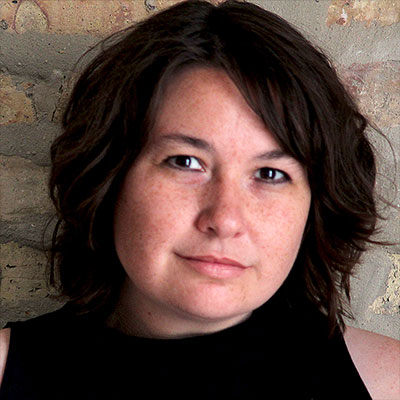
Ashley is a senior policy reporter for Ars Technica, dedicated to tracking social impacts of emerging policies and new technologies. She is a Chicago-based journalist with 20 years of experience.