Meta on Wednesday announced Spark, the first AI model in the Muse family that it says represents “a ground-up overhaul of our AI efforts.”
Muse Spark is the first release of Meta’s Superintelligence Labs, formed a little less than a year ago with the grandiose goal of “deliver[ing] on the promise of personal superintelligence for everyone.” The release represents a clean break from Meta’s previous work on the open source Llama model family, which has received a middling reaction both from users and on independent LLM rankings. And while Spark will be a proprietary model, Meta founder and CEO Mark Zuckerberg said in a post on Threads that the Muse family will “includ[e] new open source models” in the future.
Meta said that Muse Spark will take advantage of content posted across platforms like Instagram, Facebook, and Threads, much as xAI’s Grok is integrated with content posted on X. Currently, this means Muse Spark can link to public posts related to a location or trending topic that you ask about, for instance. In the future, Meta says this will expand to “new features that cite recommendations and content people share” and “Reels, photos, and posts woven directly into your answers, with credit back to the content creators.”
Contemplation and compression
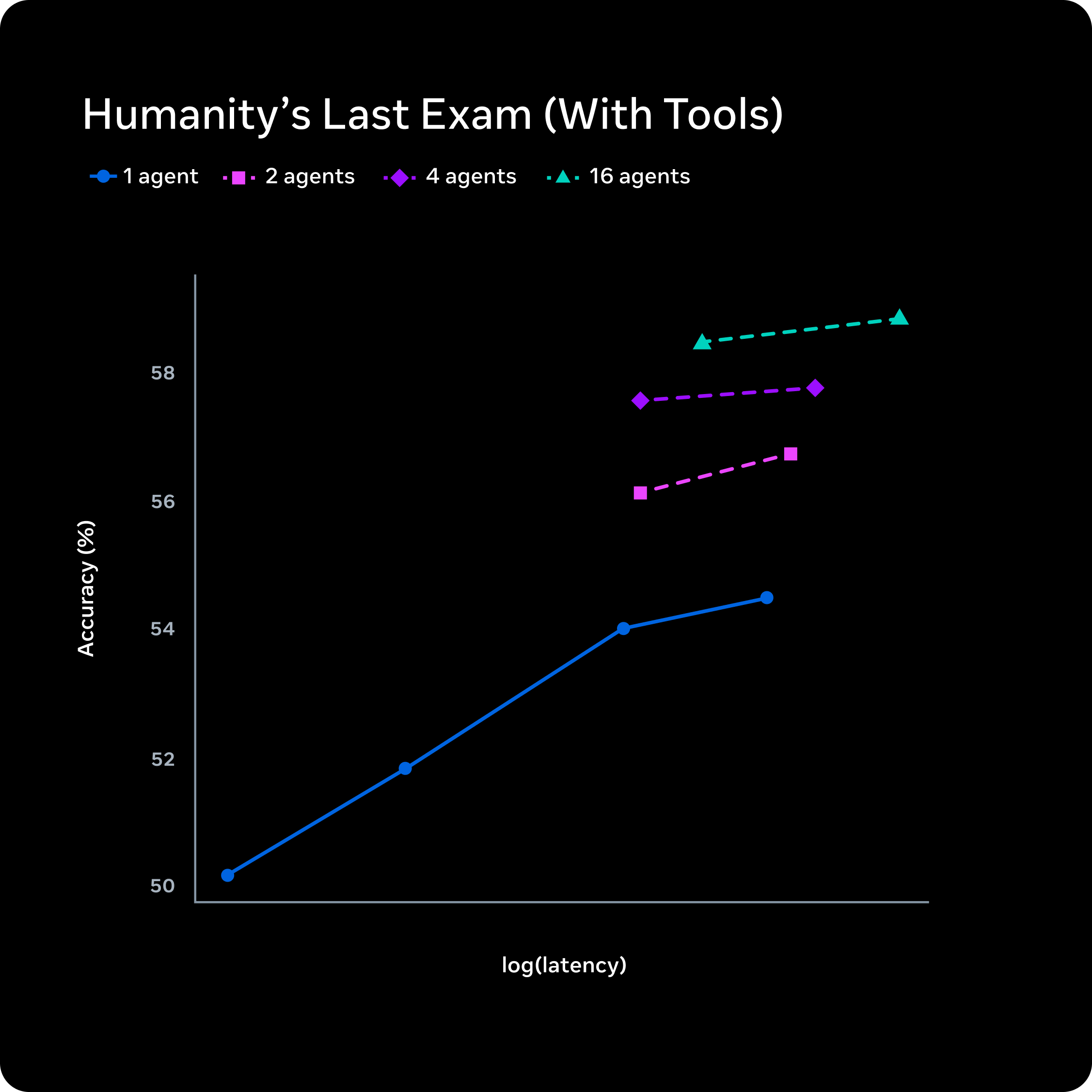
Meta says Muse Spark’s contemplation mode “enables superior performance with comparable latency.”
Meta says Muse Spark’s contemplation mode “enables superior performance with comparable latency.” Credit: Meta
In a somewhat technical blog post accompanying the Spark announcement, Meta includes the by now routine laundry list of AI benchmarks, in which Muse Spark’s standard thinking mode ranks comparable or better than competing models from OpenAI, Anthropic, Google, and xAI. But that post also sheepishly acknowledges that “we continue to invest in areas with current performance gaps, such as long-horizon agentic systems and coding workflows.”