This hybrid V8 has organic-looking 3D-printed components and shatters lap records.
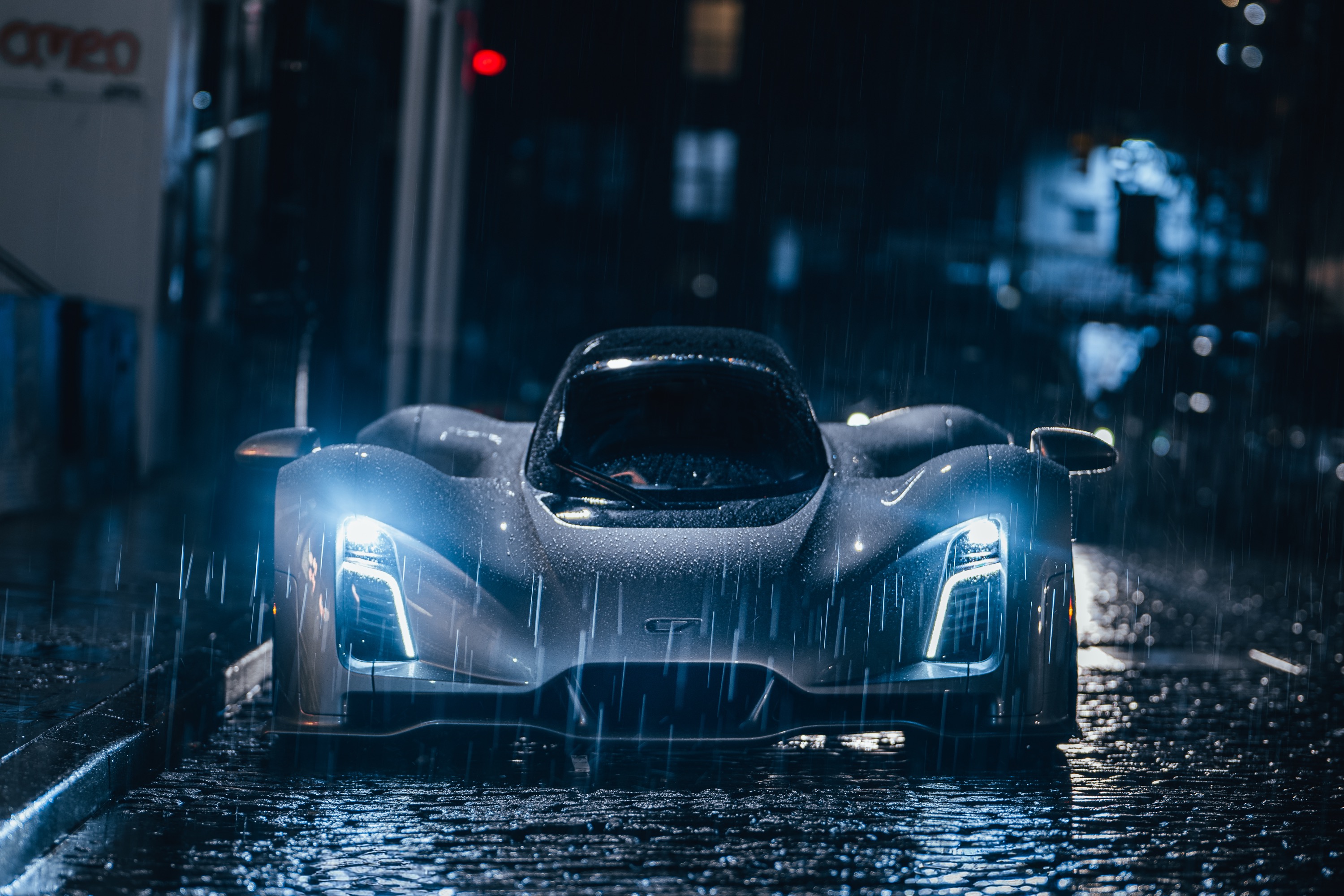
We’ve been following the work of Kevin and Lucas Czinger for some time here at Ars, and now we’ve finally driven their 21C hypercar. Credit: Czinger
We’ve been following the work of Kevin and Lucas Czinger for some time here at Ars, and now we’ve finally driven their 21C hypercar. Credit: Czinger
The temptation with a car like the Czinger 21C is to treat it as a collection of extreme specifications, and to be fair, it’s certainly not lacking in that department.
At its most basic level, the carbon-fiber-bodied 21C is a hybrid hypercar built around a bespoke 2.88-liter twin-turbocharged flat-plane crank V8 that revs to a searing 11,000 rpm. This power plant is matched up with a three-motor electric system—one electric motor drives each front wheel while a third serves as a crank-driven starter-generator. Combined output is rated at 1,250 hp (932 kW) and 691 lb-ft (937 Nm) of torque.
A seven-speed automated manual transaxle handles gear changes, chosen in part for its low mass and ability to tolerate high torque loads without the packaging penalties of a dual-clutch system. Tipping the scales at under 3,700 lbs (1,678 kg) with fluids, the 21C Vmax is capable of hitting 60 mph (97 km/h) from rest in 1.92 seconds on its way to an 8.6 second quarter mile and a 253 mph (378 km/h) top speed, while the road course-focused 21C High Downforce model recently secured lap records at no less than five different California racetracks during a thousand-mile (1,600 km) road trip.
Both its performance and its $2,350,000 price tag put the Czinger 21C in league with the likes of the Koenigsegg Jesko and Aston Martin Valkyrie. But focusing on these figures overlooks what might be the 21C’s most interesting aspect—not what it can do, but how it does it.
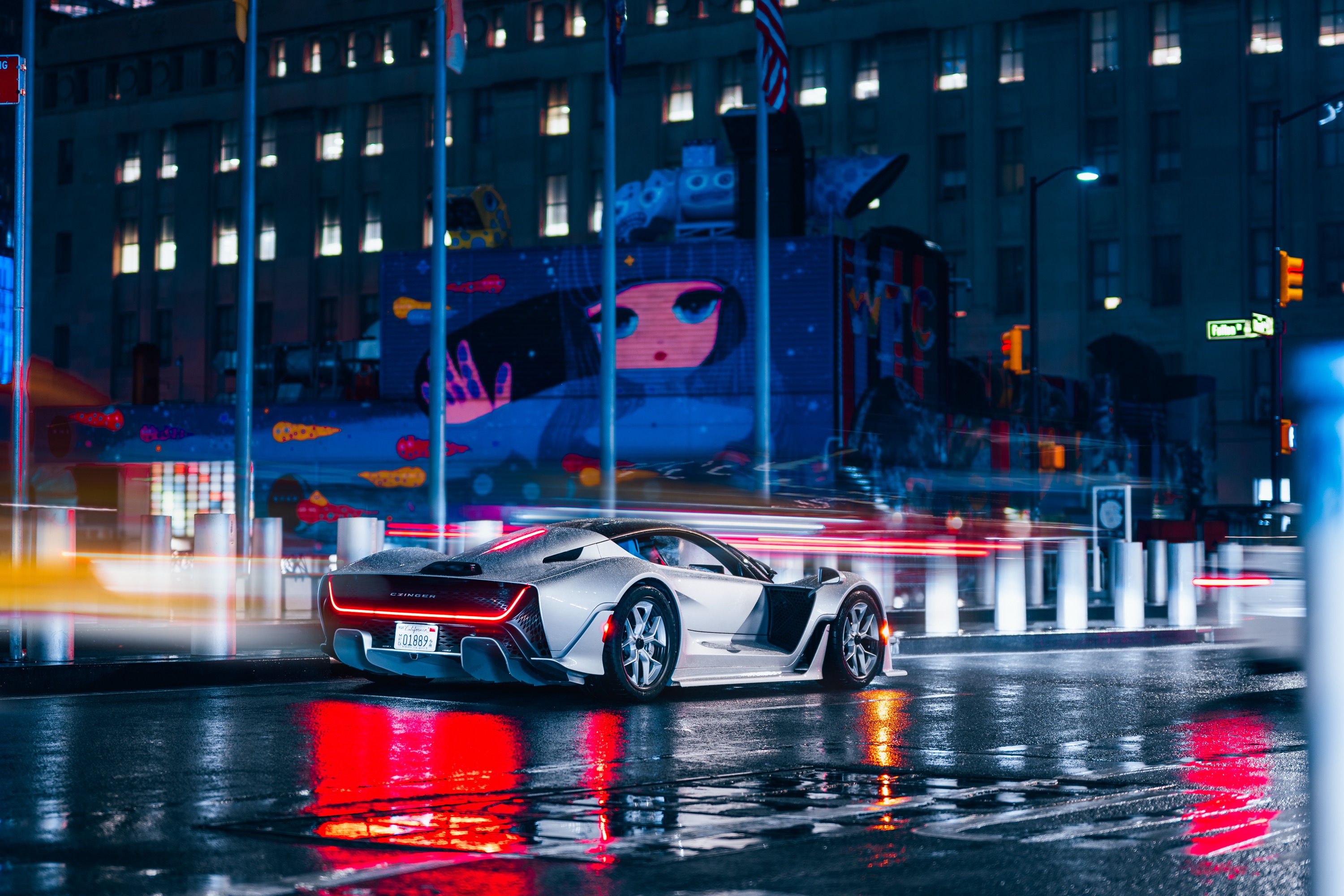
The 21C is as much a business card for Divergent and its low-volume design and fabrication business as it is a hypercar.
Credit: Czinger
The 21C is as much a business card for Divergent and its low-volume design and fabrication business as it is a hypercar. Credit: Czinger
Flipping the script
Czinger Vehicles was founded in 2019 by the father-and-son team of Kevin and Lukas Czinger as an extension of parent company Divergent Technologies, a Los Angeles-based engineering firm that specializes in generative design software, large-scale metal additive manufacturing, and reconfigurable automated assembly systems. Divergent’s patented technologies have been leveraged by defense and aerospace organizations, including Lockheed Martin, Raytheon, and the US Department of Defense, as well as high-end automakers like Bugatti and McLaren.
To understand what makes this fledgling automaker’s hypercar different from virtually every other high-performance machine on the road, consider how conventional automotive engineering works. Traditionally, a vehicle begins as a set of performance targets and packaging constraints. Engineers then develop components that satisfy those requirements within the limitations of established manufacturing processes.
Those processes—casting, forging, stamping, and machining—impose constraints of their own, particularly around geometry. Complex shapes tend to be costly or impossible to produce using these methods, and mass reduction is typically achieved through iterative refinement rather than holistic optimization.
With the 21C, Divergent’s generative software and additive manufacturing capabilities are used to effectively reverse the order of operations. The process begins with software-driven optimization that defines the structure of a component based on parameters such as load requirements, stiffness targets, crash performance, and packaging constraints. The software iterates through millions of potential geometries, converging on solutions that distribute material only where it is structurally necessary.
The result is a design methodology often referred to as Pareto optimization, in which gains in one area inevitably come at the expense of another until a balanced solution is reached. In practice, this means components are developed to a point where any reduction in material would compromise structural integrity, and any addition would be unnecessary mass. The resulting geometries often resemble branching lattice structures or organic skeletal forms that are more reminiscent of biological growth patterns than machined metal parts. Once a design has been finalized, massive printers can then construct the component from powdered metals.
This approach is used to produce everything from the 21C’s suspension components to its gearbox case, as well as multi-piece assemblies bonded together using proprietary adhesives. The company says the current generation of printers can produce about a kilogram of printed metal parts per hour, which translates to about two days for something as large and complex as the 21C’s rear subframe.
With production capped at 80 units in total, final assembly of each 21C is performed largely by hand at Czinger’s Area 21 facility in Torrance, California. But Czinger Vehicles’ brand communications head Max Morice noted during a tour of the site that the company intends to move into higher-volume segments further down the road. And thanks to the lack of traditional tooling requirements, that transition should be fairly seamless.
“The goal is for this manufacturing process to be the way everything is built,” Morice said. “It’s vehicle-agnostic, so you can build a Czinger, you can build parts for an Aston Martin, a Bugatti, and so on, all in the same space with zero turnover time. It’s really the golden goose of manufacturing.”
Unbound by the constraints of conventional production, the 21C’s design reflects the benefits of this process, as well as Czinger’s mission to produce a record-setting, road-legal hypercar. The vehicle’s main structure is a single-piece, in-house-developed carbon-fiber safety cell that places the driver in a central position.
The passenger seat is located directly behind the driver in a tandem configuration that owes more to fighter jets than road-going performance cars; the Light Car Company Rocket and Yamaha OX99-11 are the only others we can think of. The suspension setup consists of a pushrod-actuated double wishbone layout with inboard springs and electronically adjustable dampers.
Braking is provided by six-piston calipers and 16.1-inch carbon ceramic discs up front, while four-piston units clamp down on 15.4-inch carbon rotors at the rear. For now, the brake system’s design is fairly conventional by Czinger’s standards, but the company expects to incorporate its new BrakeNode setup into its builds later this year. Also developed using Divergent’s generative design software and additive manufacturing methods, the new component incorporates the mounting point for the brake caliper, the suspension connection, and the brake fluid conduit into one part that’s lighter and more rigid than a typical multi-part assembly.
Czinger says this optimized design also enhances heat dissipation and ensures accurate brake caliper positioning for optimal performance. To be frank, though, I didn’t find the existing setup lacking in stopping power.
Behind the wheel
Getting in and out isn’t particularly dignified. Czinger
My seat time in the 21C Vmax included a mix of city and highway miles, along with a run through the canyon roads of eastern Orange County that cut through the foothills of the Santa Ana Mountains. Before any of that, though, there was the small matter of figuring out how to get into the car. Entry is less “hop in” and more “controlled descent into the cockpit.”
Like most mid-engine designs, the 21C has substantial door sills to clear, but they’re more pronounced here due not only to the car’s central seating layout but also the fact that a 2.2-kWh battery pack is housed within each of those sills. The dihedral doors help by opening up a wide access point, but the process still involves sitting on the sill with your legs outside the car, spinning around on your butt, and swinging your legs in, then ducking your head while yelling “Yee-haw!” as you drop yourself into the seat.
The central seating position provides a forward view similar to a Le Mans Hypercar-class racer but with better outward visibility, and the carbon fiber-laden interior reinforces the notion that this car was designed primarily for track dominance rather than high-speed grand touring. Although comfortable enough for extended stints, the seats prioritize lateral stability over outright plushness, the switchgear is fairly minimal and mainly concentrated on the steering wheel, and the utilitarian central display handles both instrumentation and infotainment duties.
Even around town, the car communicates its purpose-built nature through a layer of mechanical and electrical hums and whirs that are more in line with a competition-derived machine than a conventional road car. The 21C can be motivated purely by electricity at this pace, but the V8 is active from the moment the car is started. Four drive modes are available: Street, Sport, Track, and Track+.
As you would expect, Track+ is the most extreme calibration, increasing suspension stiffness to levels that Czinger says are comparable to GT3 race cars and lowering ride height via hydraulic spring perches by 25 mm. It is, by design, a setting intended for closed-course use, so the drive was conducted primarily in the other three modes.
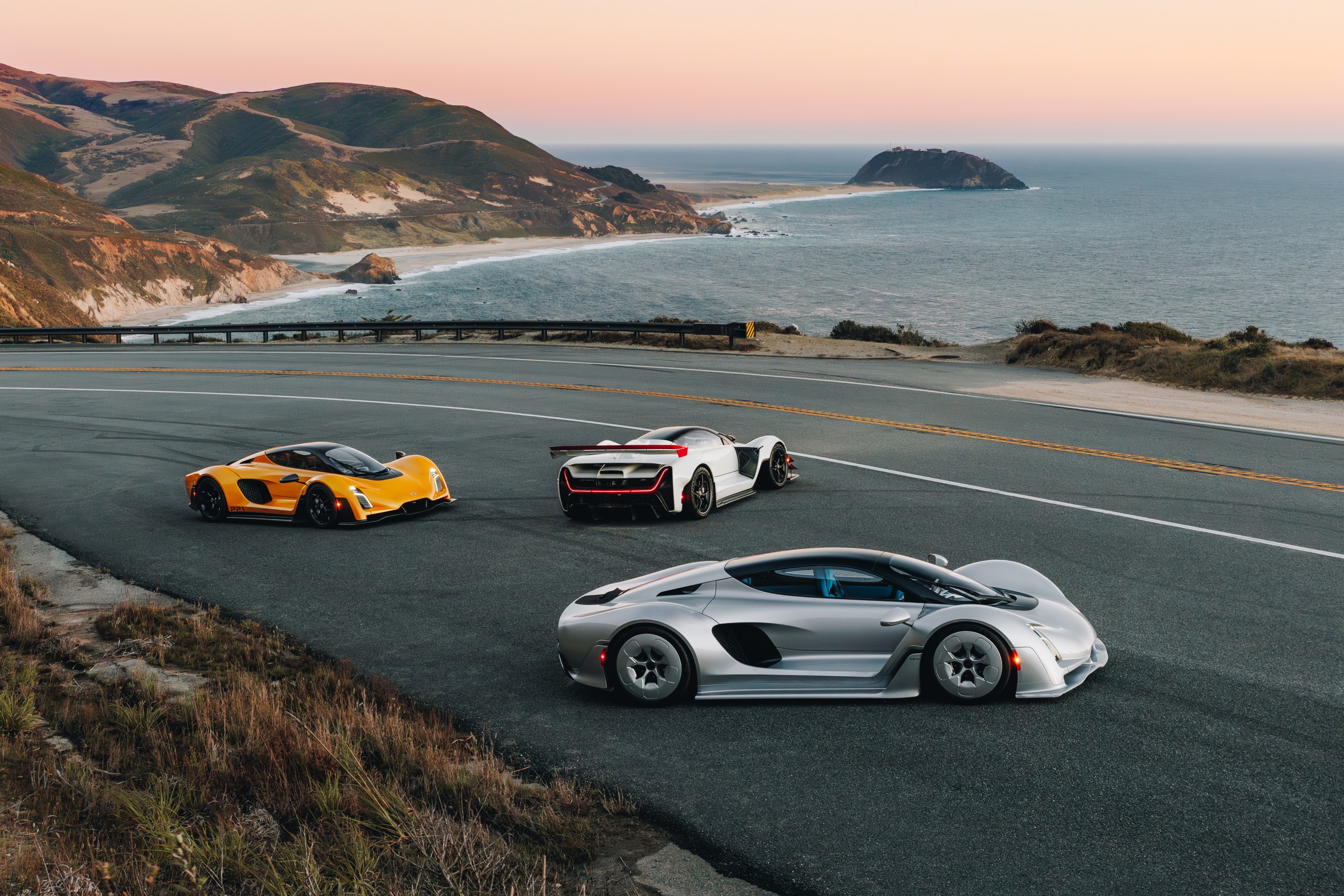
Various configurations of 21C are available.
Credit: Czinger
Various configurations of 21C are available. Credit: Czinger
Street mode prioritizes electric propulsion at lower speeds, with the engine acting largely as a generator. Despite the car’s underlying performance, ride quality in this mode is reasonably compliant on public roads, at least relative to expectations set by the car’s capabilities. Sport mode sits closer to the 21C’s natural operating balance, engaging both the combustion engine and electric systems for full output while firming up the damping and sharpening responses. Track mode builds on this with heavier steering, more immediate throttle calibration, and more aggressive energy recuperation strategies.
On an open stretch of road, the car’s broader character becomes more apparent. The hybrid system smooths some of the drivetrain’s low-speed behavior, but the single-clutch transmission still delivers a hearty shunt on full-throttle upshifts as the V8 screams toward 11,000 rpm. The super bike-esque exhaust note is reminiscent of the Lamborghini Temerario, though it’s even more visceral here thanks to Czinger’s heightened focus on weight reduction (which undoubtedly impacts the amount of sound-deadening material used), as well as this engine’s higher redline.
In a straight line, the 21C Vmax feels every bit as fast as its official figures suggest, and with relatively low mass and wide Michelin Pilot Sport Cup 2 tires, it turns in with immediacy but without feeling darty, a characteristic that makes the car intuitive and predictable when pushed.
The motorsport vibes are further bolstered by Track mode’s properly heavy steering and the brake system’s tuning. Much like a typical race car setup, the pedal has a bit of initial travel before quickly firming up, with braking force then governed mainly by pressure—a calibration that prioritizes precision over ease of use.
But aside from the virtually non-existent rear visibility and my tendency to unconsciously favor the left side of the lane due to the car’s central seating position, the 21C is remarkably easy to acclimate to. And that accessibility matters because it reduces the time required to reach the point where the car’s capabilities begin to feel exploitable rather than theoretical.
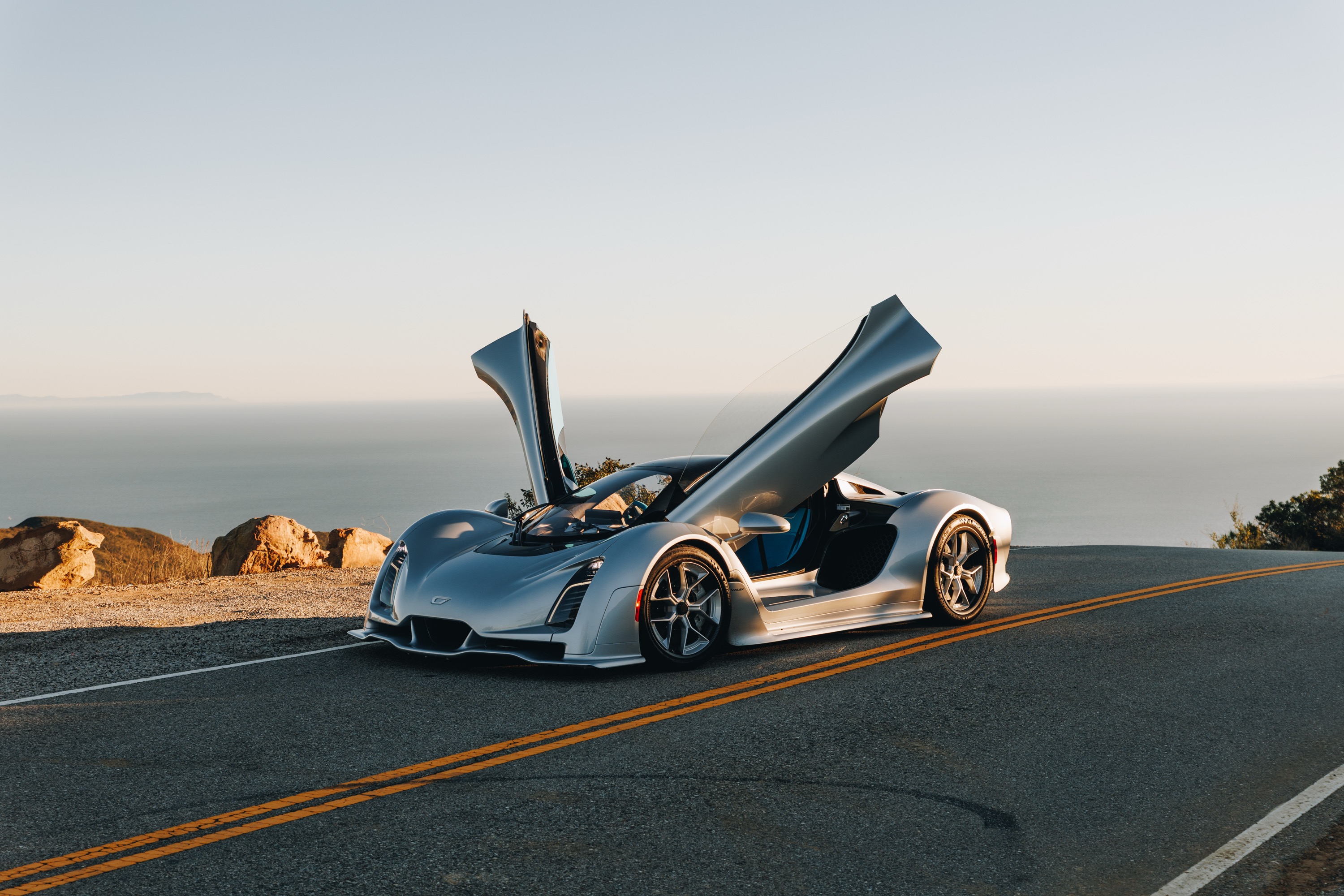
Yes, I guess you would print a car, then.
Credit: Czinger
Yes, I guess you would print a car, then. Credit: Czinger
The Czinger 21C is simultaneously a hypercar in the traditional sense, capable of extraordinary performance and priced accordingly, and a test case for a manufacturing philosophy that challenges assumptions about how vehicles are designed and produced. The lap times and speed figures may be what draw attention, but they are not what ultimately define this car. The 21C’s real significance lies in the technologies that created it and the possibilities that those technologies represent for everything that could come next.