1,139 horsepower, 400 kW charging, brutally fast, and brutally expensive.
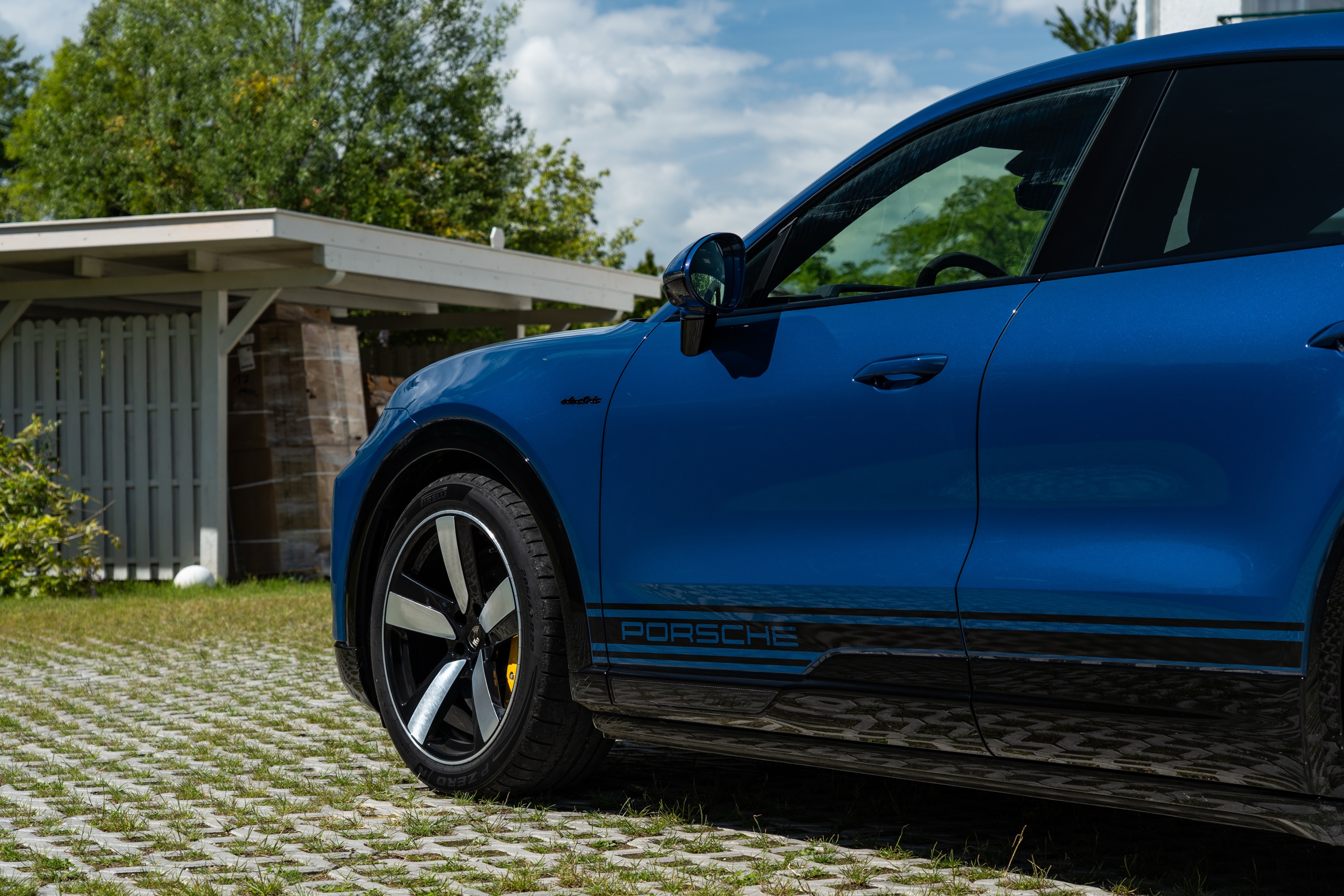
The SUV saved Porsche from ruin, now it’s made a ruinously powerful SUV. Credit: Tim Stevens
The SUV saved Porsche from ruin, now it’s made a ruinously powerful SUV. Credit: Tim Stevens
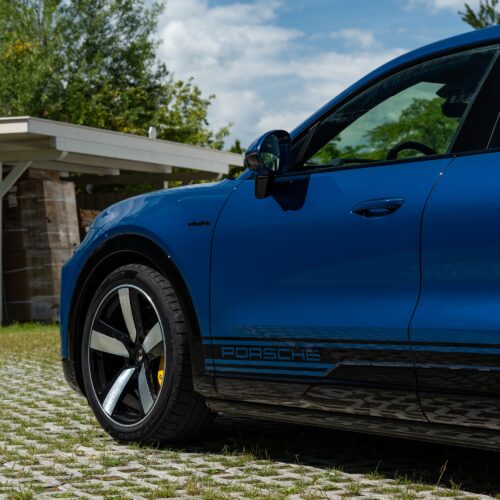
MUNICH, GERMANY—Think about every fast Porsche you’ve ever seen on the road—the ones with big wings, bold colors, and wide wheels. Now get ready for an uncomfortable fact: None of them had more horsepower than the SUV you see pictured here. This is the new Cayenne Turbo Coupe, a fastback, dual-motor, upgraded version of Porsche’s electric SUV.
It makes a whopping 1,139 hp (850 kW) and 1,106 lb-ft of torque (1,500 Nm), enough to drive this 5,637 lb (2,557 kg) machine and its 113-kilowatt-hour battery pack from zero to 60 mph (97 km/h) in 2.4 seconds. That makes it not only Porsche’s most powerful production car ever but also among its quickest, bested only by the Taycan Turbo GT.
But unlike that pared-down, performance-oriented take on Porsche’s sultry electric sedan, the Cayenne Coupe is meant to be an everyday hauler for friends, family, and whatever else you can fit underneath its hatch. Does it succeed? That’s what I went to Munich to find out.
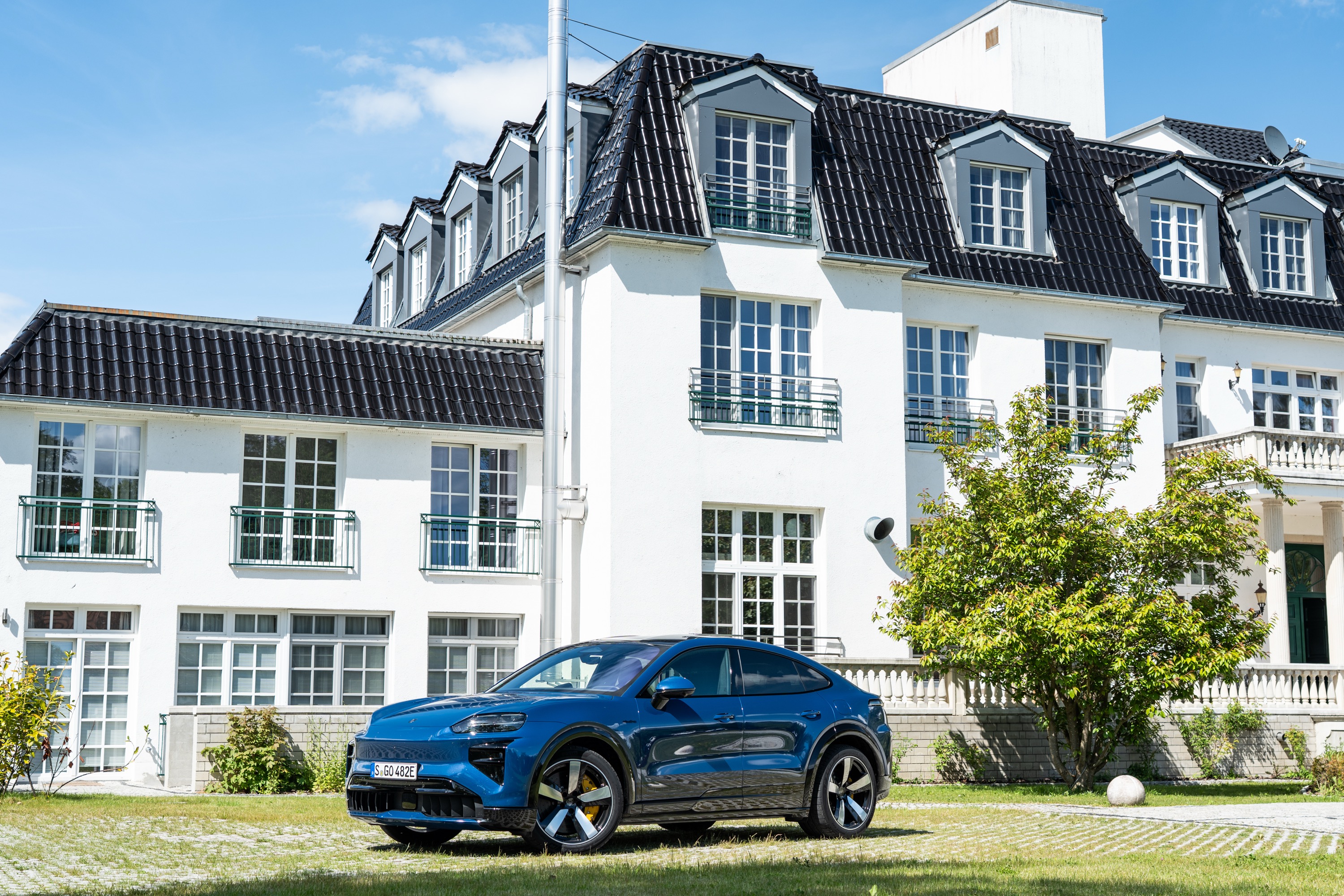
It’s not really the most handsome car, but there are reasons to like the Cayenne Coupe other than its looks.
Credit: Tim Stevens
It’s not really the most handsome car, but there are reasons to like the Cayenne Coupe other than its looks. Credit: Tim Stevens
Formula E-inspired
Manufacturers love trumpeting any track-bred technology that finds its way to the street. With SUVs, such comparisons are generally strained at best, but in its fastest Turbo form, the Cayenne Electric has a legitimate link to Porsche’s efforts in Formula E.
Porsche has been a competitor on the world’s biggest stage for emissions-free motorsport since 2019, winning multiple championships. Much of Formula E has historically been spec-based, meaning manufacturers can’t modify things like chassis or bodywork. They can, however, develop their own motors.
For its Formula E racer, Porsche found a way to insert a cooling system between the stator and the rotor, enabling greater and more consistent power output without running temperatures into the red. That same design is now used on the rear motor of the electric Cayenne’s top-shelf Turbo model.
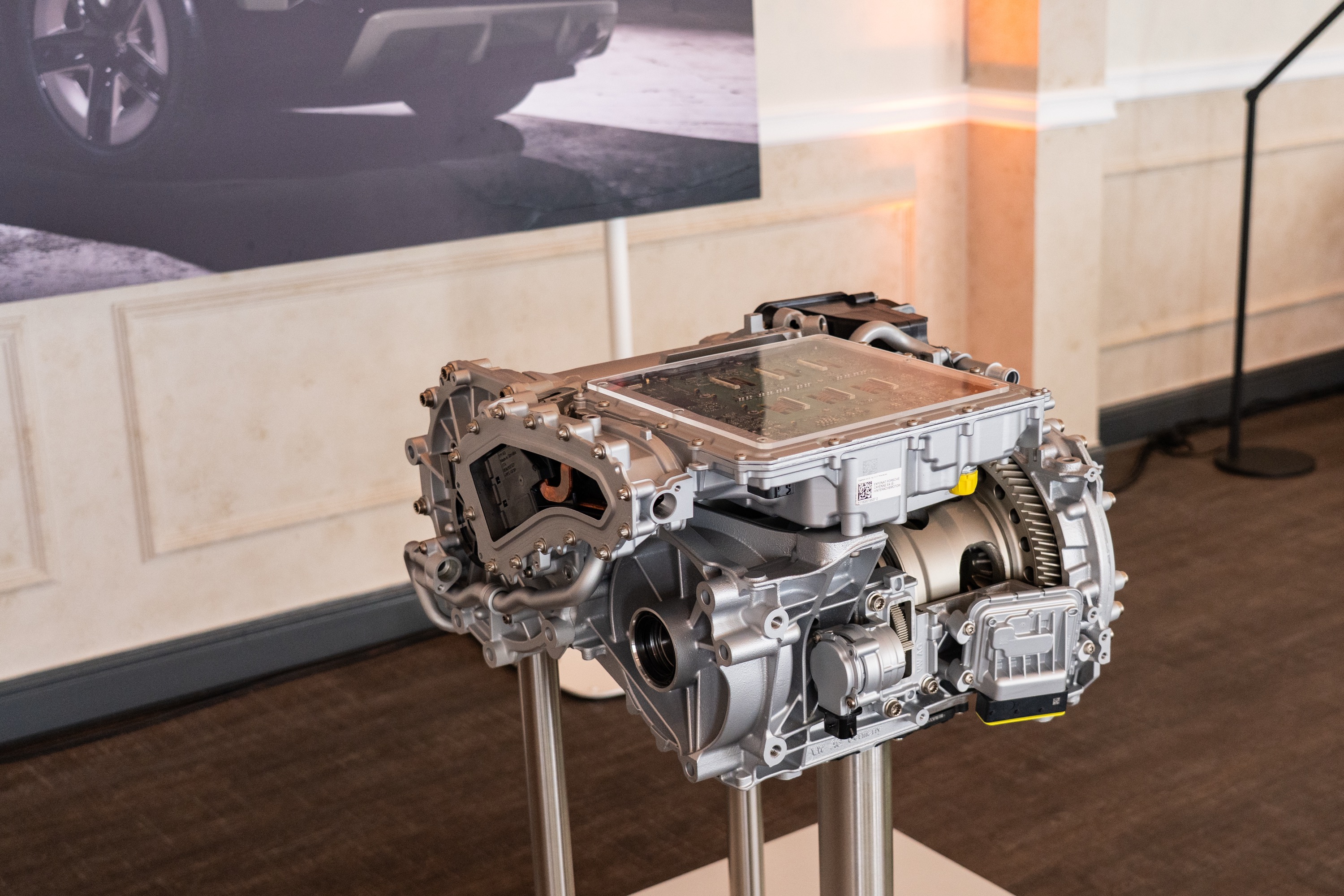
This is the rear drive unit.
Credit: Tim Stevens
This is the rear drive unit. Credit: Tim Stevens
Again, that model delivers 1,139 hp through all four wheels. If that’s a bit more than you need, Porsche will instead gladly sell you a 657 hp (490 kW) Cayenne S or 435 hp (325 kW) base electric model. Unlike on the electric Macan, there is no single-motor, rear-drive version here.
All versions are powered by the same 113-kWh gross battery pack, which charges at an impressive 400 kW. That’s not just a flashy peak. Porsche’s SUV can maintain that rate up until the pack is half-charged, and it doesn’t drop below 250 kW until you hit the 75 percent mark. Many major EVs, like Ford’s Mustang Mach-E, struggle to do half that at peak.
For slower, at-home charging, Porsche offers the best implementation of wireless charging I’ve yet seen on an EV. Buy a wireless charging pad from Porsche (which costs around $8,000), install it in your home, and your Cayenne will automatically identify it as you approach. You’ll then get a visual indicator on the touchscreen to guide you to the correct position. Once there, just walk away, and the car will charge at 11 kW, losing 10 percent efficiency over a wired connection.
Design decisions
In addition to your motor configuration, you can choose your body style: either the more traditional SUV shape or the swoopier Coupe you see here. The Coupe’s coefficient of drag is slightly lower, 0.23 vs. 0.25, which Porsche says results in about 3 percent more range.
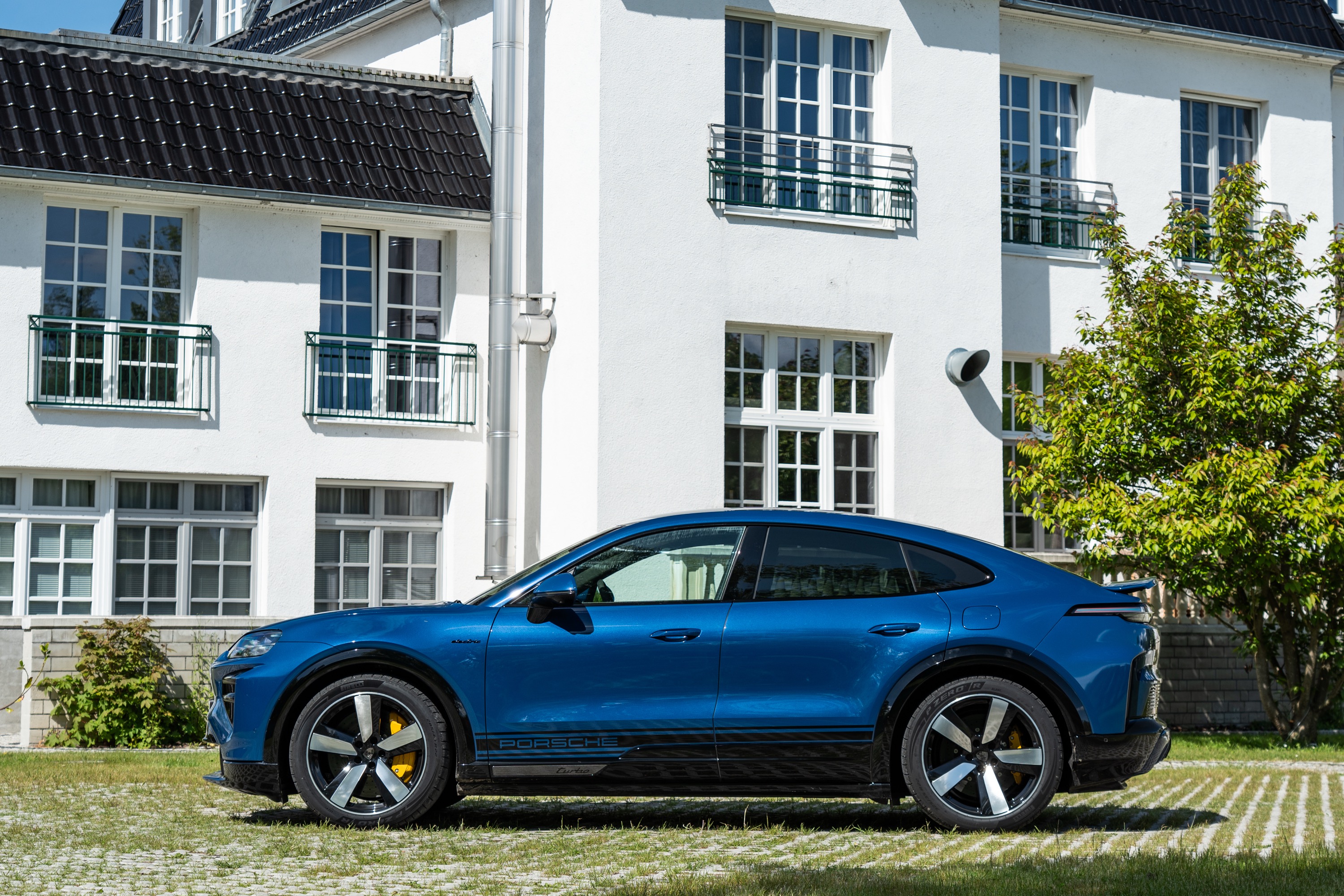
Play “spot the difference” with a non-Coupe Cayenne electric to see where that 0.02 improvement in drag comes from.
Credit: Tim Stevens
Play “spot the difference” with a non-Coupe Cayenne electric to see where that 0.02 improvement in drag comes from. Credit: Tim Stevens
EPA figures are not yet available, but on the European WLTP cycle, the base Cayenne Coupe is rated for 411 miles (661 km), while the S does 415 (668 km) and the Turbo 390 miles (628 km). They should rate somewhere just south of 350 miles in the US, but we’ll have to wait and see.
In exchange for the slight range and style boost of the Coupe, you get a roughly one-third reduction in cargo capacity behind the second row, down to 18.9 cubic feet (535 L) total. Otherwise, the performance of the two models is identical, so choose the one that best fits your aesthetic preferences and capacity needs. While the Coupe is doubtlessly shapelier, I wouldn’t call either particularly endearing. The rear bumper seems needlessly busy, and while the upper-half of the Cayenne Electric’s nose looks familiar and compelling, the rest is likewise a bit much.
Go with the Turbo, and you’ll get a few extra frills and gills. Up front, every model has active aerodynamics to regulate airflow, and the Coupe has a pop-up spoiler at the rear. Down low on the bumper, though, you’ll find a pair of extending, vertical planes exclusively on the Turbo. These subtly extend the car’s aerodynamic profile, helping it achieve that 0.23 drag coefficient.
The interior design is much more familiar than current Porsche designs, with one major exception: the radically curved center display. It’s vertically oriented and has a distinct kick up at the bottom; it’s angled to meet a padded wrist rest.
It’s a curious look, and I was sure I’d hate using it when I first saw it, but I quickly came to love it. Porsche’s software designers put the most frequently used touch controls at the bottom of the display, so you can rest your hand and cycle through playback settings or toggle major options.
The 14.25-inch gauge cluster behind the steering wheel is also curved, but in a more traditional way, as seen on other Porsches. There’s an optional 14.9-inch passenger display, too, on which you can install a plethora of video games (mostly mediocre) and streaming services. Cue up any of those, and the screen appears to go black from the driver’s seat, helping to reduce distraction.
Everything inside the car feels high-quality. I was a big fan of the woven pepita insets in the leather trim, which added some much-needed contrast to the otherwise monotone interior. Headroom in the rear seats was just enough, even on the Coupe, and there’s no shortage of legroom in any chair.
Drive time
Over the course of a lovely day in southern Germany, I got to sample all three motor configurations available in the Cayenne Electric, driving both the SUV and Coupe shapes, and I was surprised by how different they felt.
The 435 hp (325 kW) Cayenne Coupe may have the least power of the three, but it certainly doesn’t feel slow. Cruising on rural roads, it zips up to any legal speed near-instantly. It’s only on the de-restricted sections of Germany’s fabled Autobahn that the throttle response started to get a bit tepid. That, though, was only when I was pushing 100 mph (160 km/h). At speeds legally traveled in the United States, it’s peppy enough to claim any gap in traffic.
It was surprisingly lacking in ride refinement, though. All Cayenne Electric models feature adaptive suspension, but even in Comfort mode, the Coupe felt harsh and nervous on bumpy roads. The optional 22-inch wheels wrapped in Pirelli P Zero R sports tires may be partly to blame, but even so, I expected better.
You have a commanding view of the road from the driver’s seat. Tim Stevens
As I stepped up to the S and Turbo models, it was the increased ride quality that impressed me the most. That’s because of Porsche’s Active Ride suspension. We’ve sampled it before on the Panamera, and it’s available on the Taycan, too. It’s basically an uprated, high-voltage adaptive suspension that can instantly react to road conditions and driver inputs.
It’s a real game-changer here. Even on the same 22-inch wheels and tires, the turbo felt miles more comfortable on the soft end and yet even sharper and more responsive when dialed up to Sport Plus.
And yes, you can definitely feel the extra power. Press the Sport Response button on the Turbo’s steering wheel for 10 seconds of maximum power. Then warn your passengers to put their heads against the headrest. This car will induce whiplash in the unprepared and expletives from those who have been forewarned.
Predictably, the S sits somewhere in the middle, noticeably quicker than the base car but not as terrifying as the Turbo. The base model is quick enough for me, and at a starting price of $113,800 (plus $2,350 destination), it’s $54,200 cheaper than the Turbo to start.
But that’s just to start. The Turbo I drove, the one you see pictured here, included nearly $50,000 in options for a final price of $220,330, including destination fee.
Go big or go home
The base Cayenne Coupe Electric has more than enough power and interior comfort to work as a stellar everyday machine, but it’s let down by a ride quality that feels a bit uncouth in an SUV with a six-figure starting price. The Active Ride suspension is infinitely better and well worth the $7,790 upgrade, but to get that, you’ll need to step up to at least the S, which starts at $131,200.
And the Turbo? If you have the financial means and the maniacal desire, by all means, go for it. It’s not only Porsche’s most powerful car yet; it’s also the company’s first SUV that feels truly as bonkers as some of its most storied sports cars.