- Zhejiang University researchers warned GPU workloads could destabilize local grids and cause blackouts
- Attackers could exploit ~1,000 GPUs to drain current and generate excess heat in systems
- Theoretical attack dubbed Bit2Watt; mitigations include detecting malicious patterns and energy buffering systems
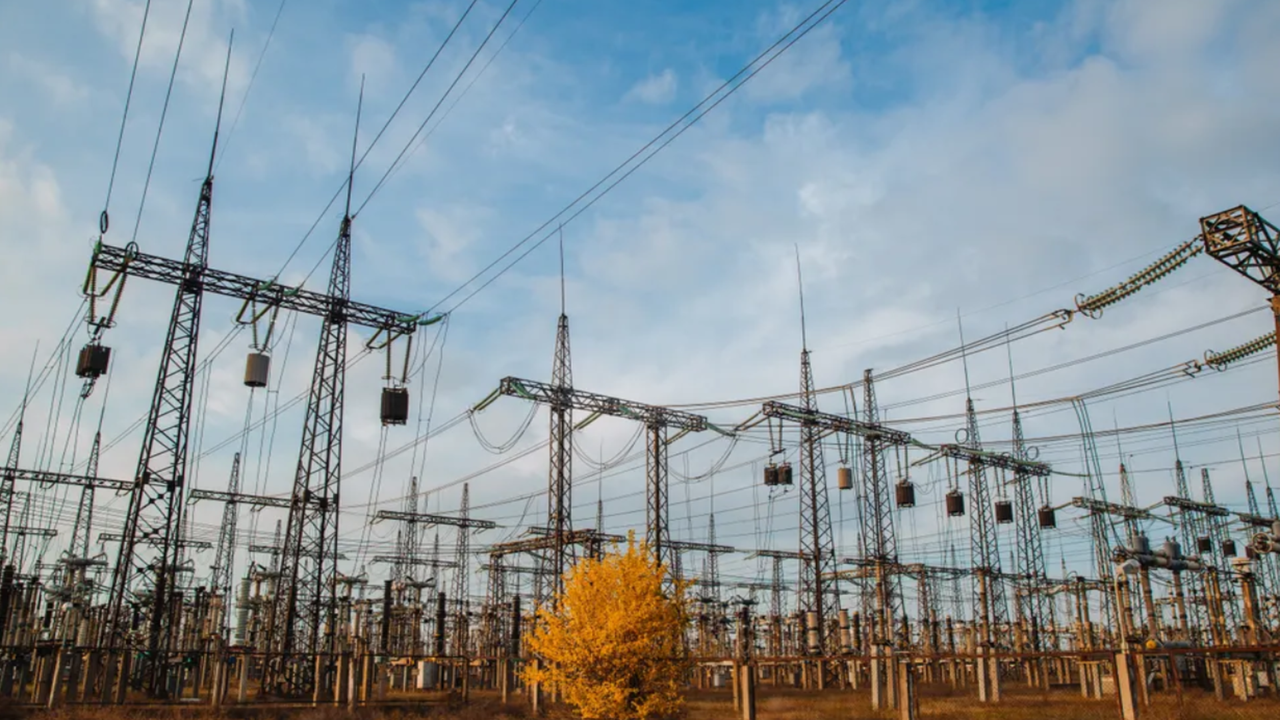
Whenever an AI data center thinks really, really hard, it can increase its power consumption so much to trigger disruptions and possibly even blackouts and gear malfunctions. So, is it possible for a malicious actor to trigger this scenario deliberately, in order to cause physical harm?
Multiple researchers from the Zhejiang University in Hangzhou, China, wrote a research paper titled “Bit2Watt: A Cyber-Physical Vulnerability Exploiting GPU Workloads Across Power and Computing Infrastructures.”
In it, they claim that a malicious cloud tenant is, in theory, capable of launching GPU workloads so intensive that they cause physical damage.
Suggesting mitigations
“Our results indicate that GPU loads can reach modulation frequencies exceeding 6,000 Hz, compared with only a few hertz observed in conventional household loads such as air conditioners,” the team wrote in its research paper.
“Such high-frequency modulations can substantially induce voltage excursions, harmonic distortion, and damping degradation.”
An attacker could use around 1,000 GPUs to target a one-megawatt local power grid consisting primarily of distributed energy sources (such as solar panels), making it lose almost half of the electrical current, while generating around 20% more heat than usual.
“This not only threatens the availability of the computing equipment but also produces a negative damping ratio of -0.27, introducing an unstable mode into the system,” the paper adds.
“Once the protections are triggered and computing loads are shed, it can trigger cascading failures, potentially leading to blackouts exceeding 80 percent in large-scale power systems.”
AI data centers creating huge energy consumption swings is no news, and it’s a challenge some of the brightest minds of today are trying to solve.
Luckily, the attack is (still) purely theoretical, and the researchers published the paper to warn about potential misuse. They also suggested mitigations – defenders could look for malicious computational patterns, while operators should create energy buffering systems for unusual spikes in demand.
Via The Register


Follow TechRadar on Google News and add us as a preferred source to get our expert news, reviews, and opinion in your feeds.