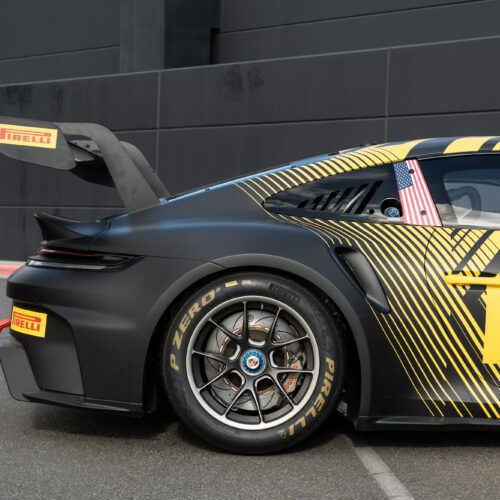
Porsche’s new 911 Cup debuted in iRacing, and then we took it out on the track.
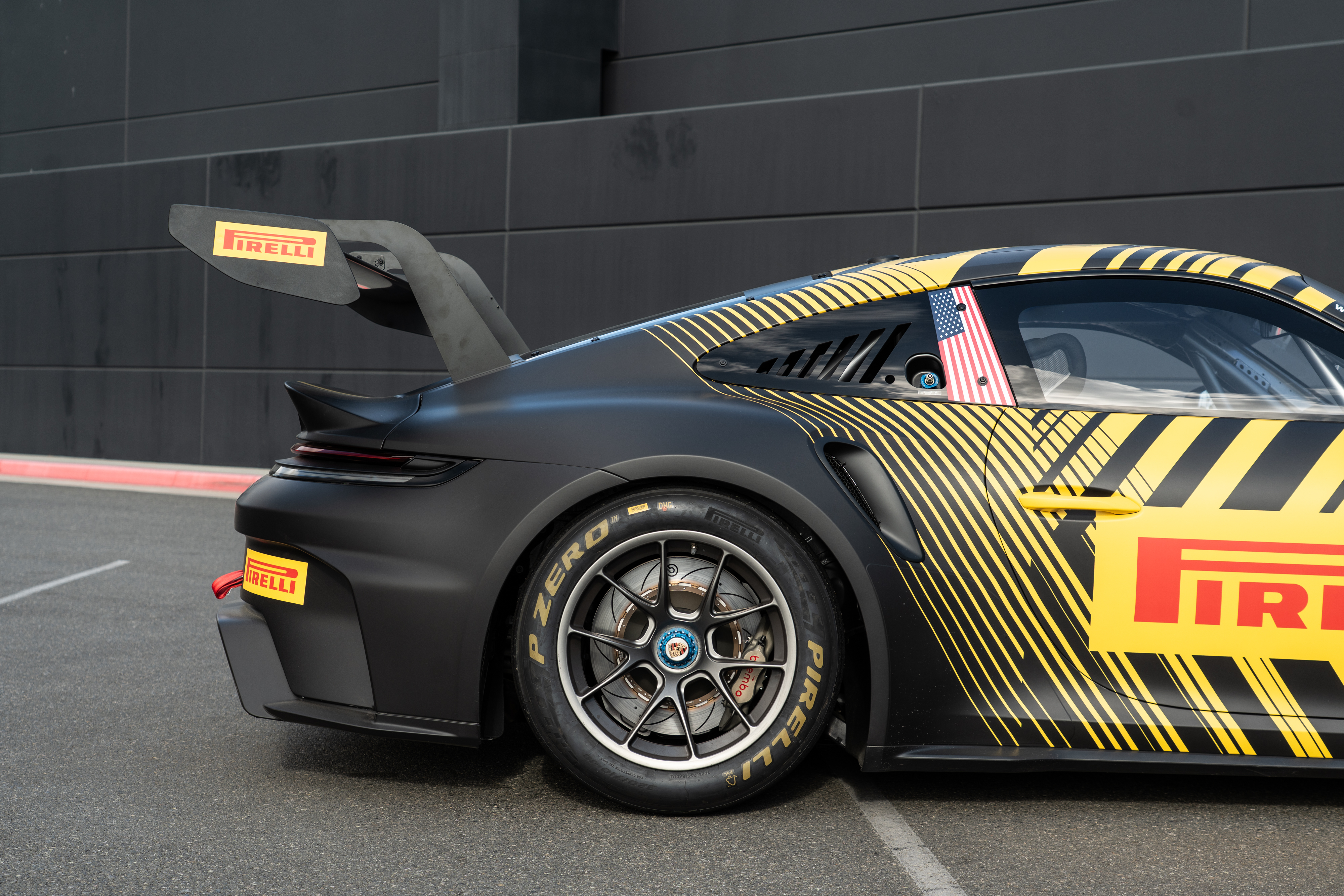
Usually, race cars show up as DLC in racing games, if they’re any good. This one went the other way, appearing in iRacing first. Credit: Tim Stevens
Usually, race cars show up as DLC in racing games, if they’re any good. This one went the other way, appearing in iRacing first. Credit: Tim Stevens
Video game launches for new cars are increasingly common these days—Gran Turismo alone has hosted dozens of “Vision” concepts—but Porsche decided to go a little more serious for the digital debut of its latest model. iRacing, the online driving sim that has been punishing people’s digital driving indiscretions since 2008, was not only the first place anyone could drive the new 911 Cup, but also serves as a sort of digital feeder series to Porsche’s one-make Porsche Carrera Cup.
That sim makes a great venue because the 911 Cup is as hardcore a racer as iRacing is a hardcore racing game. When I was invited to drive that new car for real, I knew exactly where to start.
Making the Cup
While there are faster and more expensive versions of Porsche’s 911, the GT3 has long been the ultimate “racer for the road” spec, riddled with track-focused upgrades yet offering just enough creature comforts for daily driving.
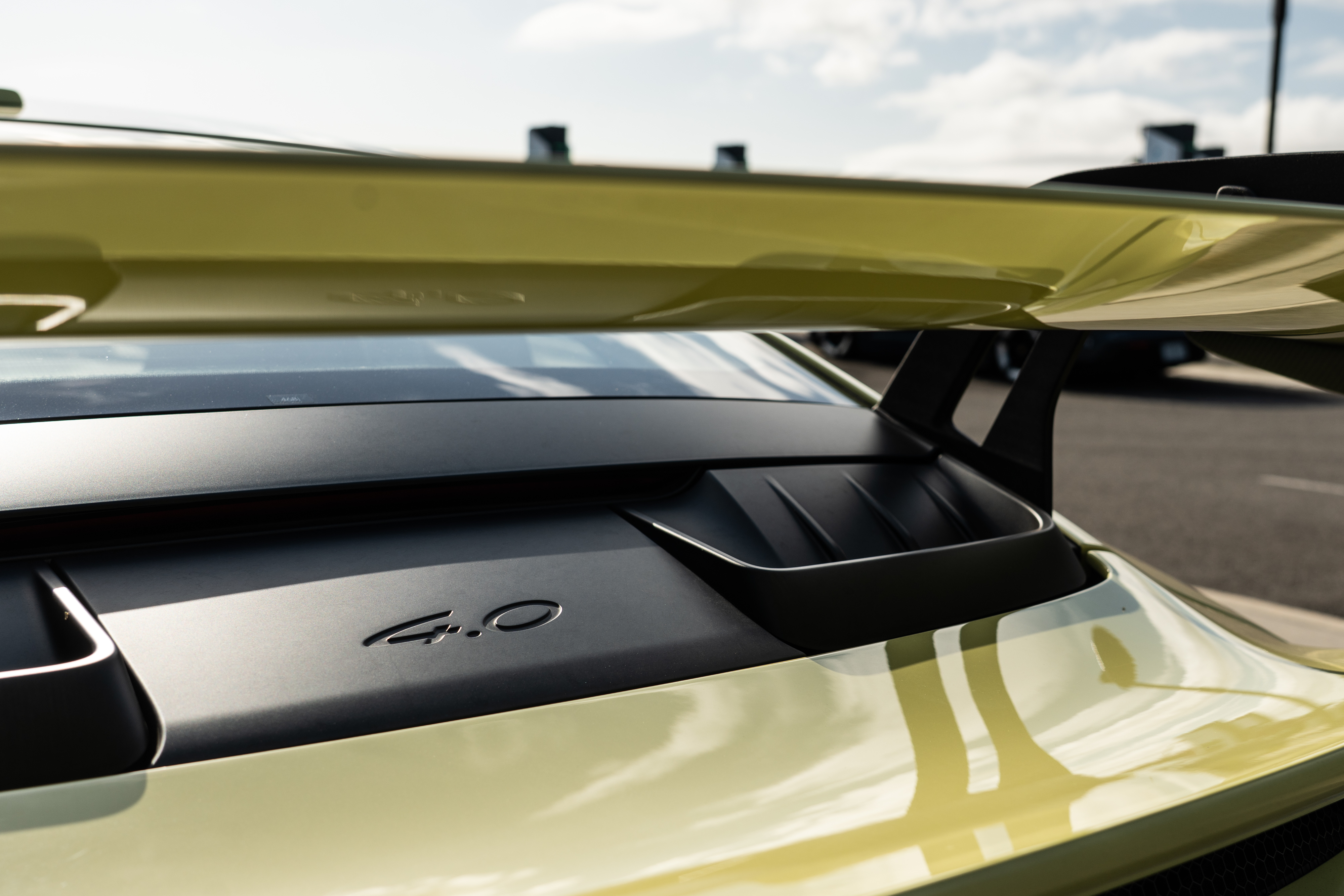
Its 4.0 L flat-six engine makes 502 hp (374 kW) and 331 lb-ft (449 Nm) of torque, available connected to either a six-speed manual transmission or a seven-speed dual-clutch gearbox.
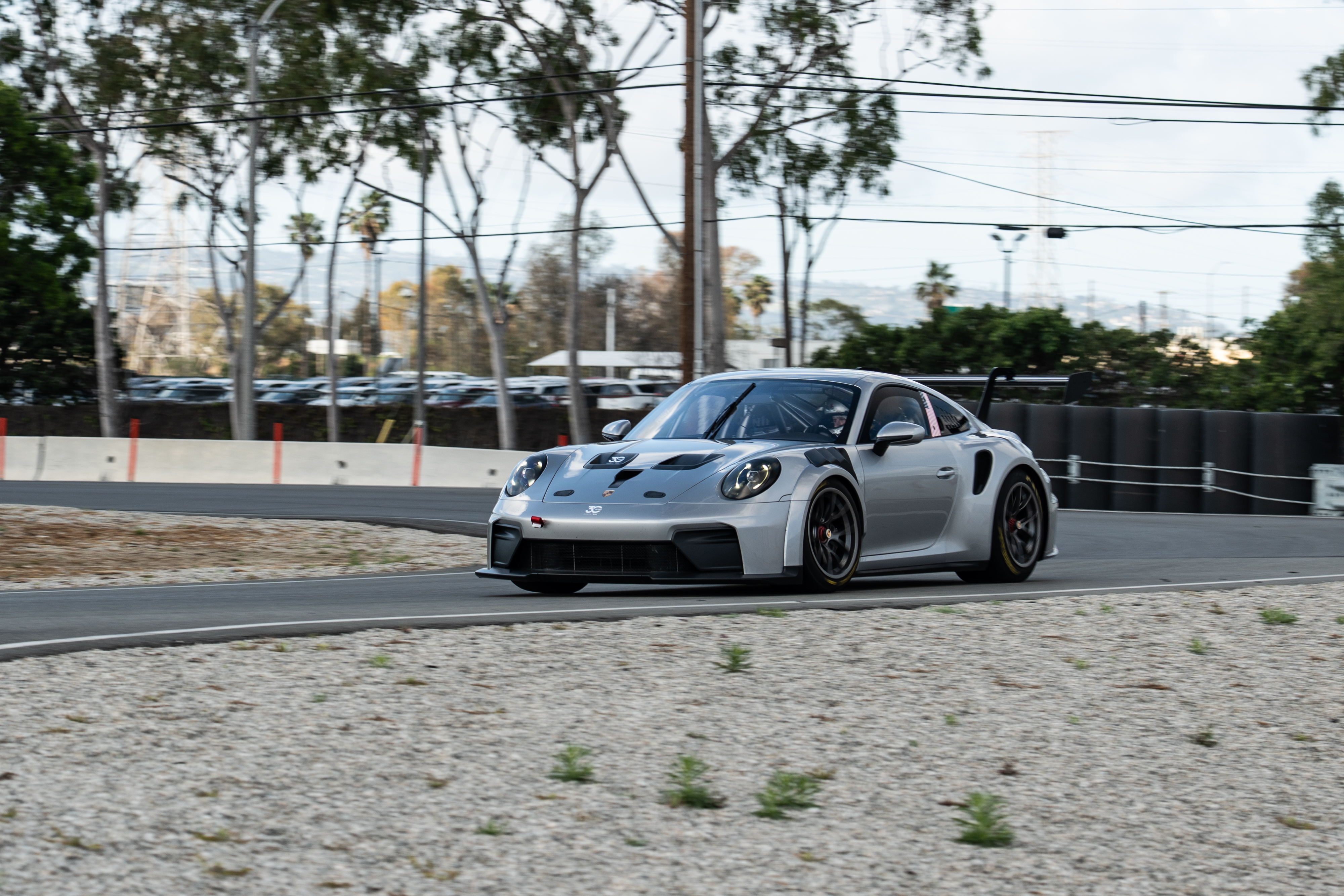
Free of a racing livery, you could be mistaken for thinking this is just another 911 GT3 doing some laps.
Credit: Tim Stevens
Free of a racing livery, you could be mistaken for thinking this is just another 911 GT3 doing some laps. Credit: Tim Stevens
The 911 Cup builds from there, ratcheting up the performance not by adding much more power, but by removing just about everything else. The interior has been gutted, and the bodywork reshaped to add even more downforce.
Interestingly, though, for this new 911 Cup, Porsche made a few concessions in the name of reducing operating costs. The big front splitter is now made of three separate parts, making it cheaper and easier to replace. A simpler front bumper and rear wing likewise make on-track oopsies that much more affordable.
Nothing will ever be more affordable than doing it digitally, however.
A stop by the sim
Before heading to the track, I first stopped by my at-home sim rig, a Fanatec DD1 with Asetek pedals and an HP Reverb G2 headset. A real 911 Cup costs $375,000. In iRacing, it’s $11.95, and within minutes I was running laps around that most bumpy and punishing of courses: Sebring.
I’ve raced plenty of 911s digitally over the years and generally found them a handful. Putting the engine out back makes for a car that wants to come around on you when you get over-eager under braking, an area where I have struggled.
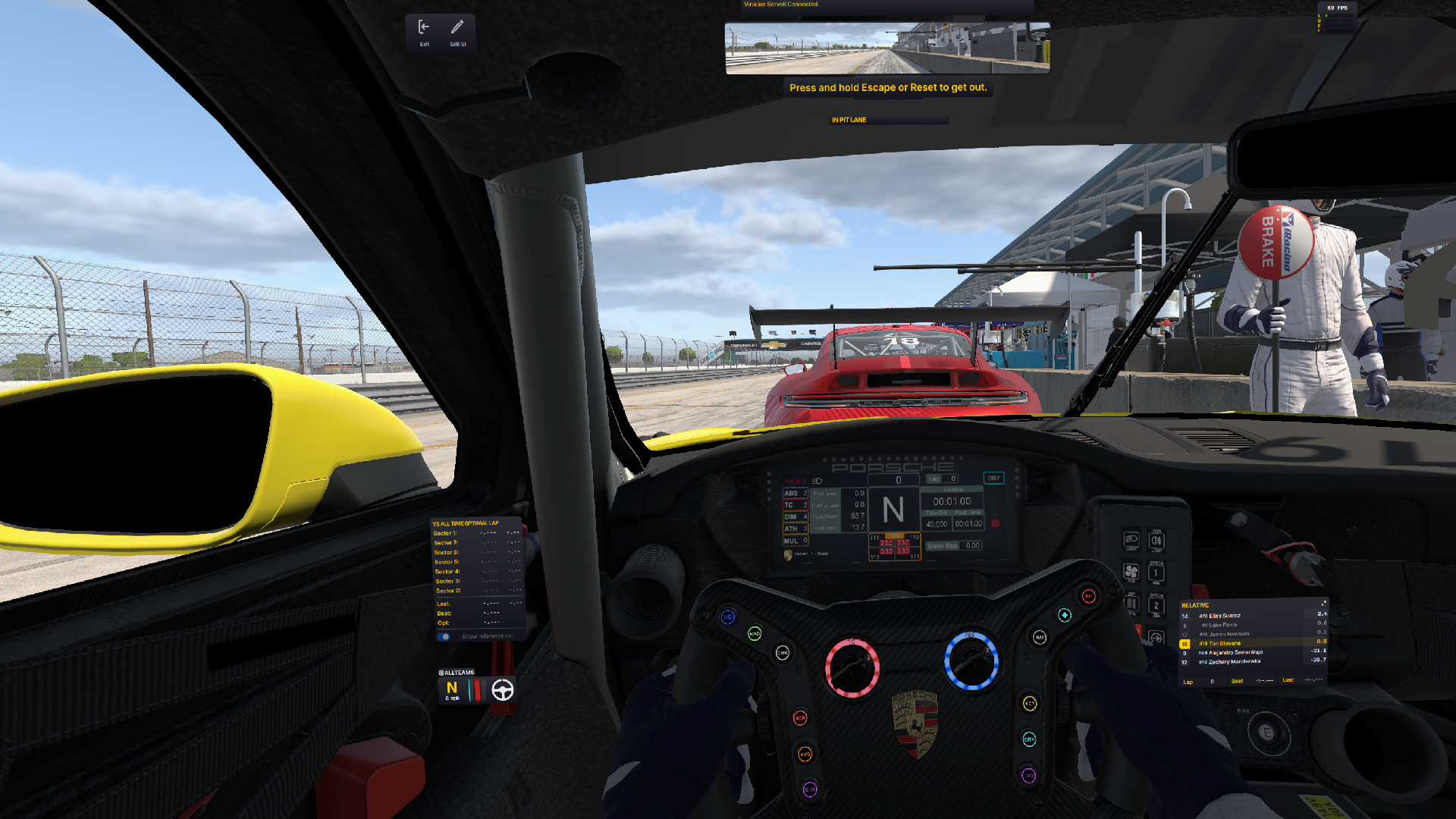
Time to get acquainted.
Credit: iRacing
Time to get acquainted. Credit: iRacing
But this new 911 Cup felt far more settled. It comes along with a number of the latest iRacing game enhancements, making for a car that looks, feels, and sounds far more realistic than the service’s earlier rides.
In action on the track, I got comfortable and up to speed quickly. The new Cup felt far more poised than the game’s previous 911s over the awful asphalt and concrete of Sebring, exactly the kind of trait you want in a newbie-friendly racer. But would that same feel transfer to the real world?
GT3
Dragged out of my den and into the sun, specifically to the Los Angeles Porsche Experience Center (PEC), I was faced with a track slightly smoother than Sebring but far more serpentine. It’s short and narrow, with countless turns, many inches away from the wall. I first had a Cartagena Yellow Metallic 911 GT3 at my disposal as an awesome amuse-bouche.
Though the GT3 is brutally fast, it is equally welcoming. Porsche revised the suspension slightly in this generation to add more travel and feel, both incredibly appreciated on the LA track.
Before the cup car, some warmup in a GT3.
Credit: Tim Stevens
Before the cup car, some warmup in a GT3. Credit: Tim Stevens
The car I drove had a dual-clutch transmission, which meant I could just relax and let the car do the shifting while I figured out which way to go. Though I came in too hot to a few corners and often got a little over-exuberant when accelerating out of them, the car’s top-notch stability and traction control systems made sure I never found any of the PEC’s many and inviting walls.
911 Cup
Firing up the 911 Cup requires a bit of ceremony. There’s a big, chunky master switch that must be pulled out and down to start, and then a separate ignition switch. After that, you’re tempted to stab the shiny red button that’s immediately to the right, but do that, and you’ll only make a very big mess. That button releases the car’s extinguisher system.
The Engine Start button is in the traditional Porsche place to the left of the steering wheel. Press that and, assuming your foot is on the clutch, the engine fires to life with a deafening roar. Yes, there’s a clutch pedal here, despite this being a car with paddle shifters. Unlike the GT3’s dual-clutch unit, it’s a single-clutch sequential gearbox.
That means you need the clutch to get the thing going in first gear, but after that, the car automatically slams from one gear to the next, cutting the throttle on upshifts and auto-blipping it on downshifts. There’s even a function that will quickly restart the engine should you stall it at the launch.
Sadly, I got to test that feature, as I was a little too gentle with the throttle pulling out of the pits. It bucked and stalled, but as soon as I got back on the clutch, the engine re-fired. I was free to shame-facedly head out onto the track.
While the iRacing Cup car has replicated the look and the physics, it predictably doesn’t come anywhere near the raw adrenaline. The whine from that straight-cut gearbox alone is painfully loud, say nothing of the wide-open exhaust on the 4.0 L flat-six. Without a hint of carpet or foam or anything else to deaden the sound, the stark white interior of the GT3 is a delightful acoustic overload.
The dashboard contains a simple multi-function display as a gauge cluster. It’s framed by a series of LEDs. The ones at the top form a sweeping tachometer, blinking blue when it’s time for the next gear. The vertical lights to the sides light up to let you know when the traction control is doing its thing to keep the left or right wheel from spinning.
Traction control comes standard, which you can increase or decrease with knobs on the steering wheel. You can do the same to modulate the racing ABS system, both of which were welcome on the bumpy, undulating circuit as I got up to speed.
The 911 Cup is initially intimidating thanks to the huge noise and the sharpness of the steering. The suspension is stiff, but those generous sidewalls on the new, ultra-sticky Pirelli P Zero DHG slick tires meant the ride wasn’t as punishing as I was expecting. They also offer great feedback, meaning I could tell when I was approaching the limits at the front or the rear of the car.
While pushing the limits in iRacing is easy enough to do, I tried not to push my luck on the extremely narrow confines of the PEC. Still, over three sessions, I ran the car hard enough to start to get a proper feel. Once you get over that ear-opening first impression, you find the 911 Cup is a car that’s just as tractable and composed as its road-going GT3 counterpart. That makes it a stellar introduction to racing for the next generation of endurance racing champions, those with the dedication and the budget to step up from the world of sim racing.
Me? I’m lacking in that second department, so I’ll sadly be sticking with the $11.95 special.