Ars Technica is here to help with a guide to the medium-lift space race.
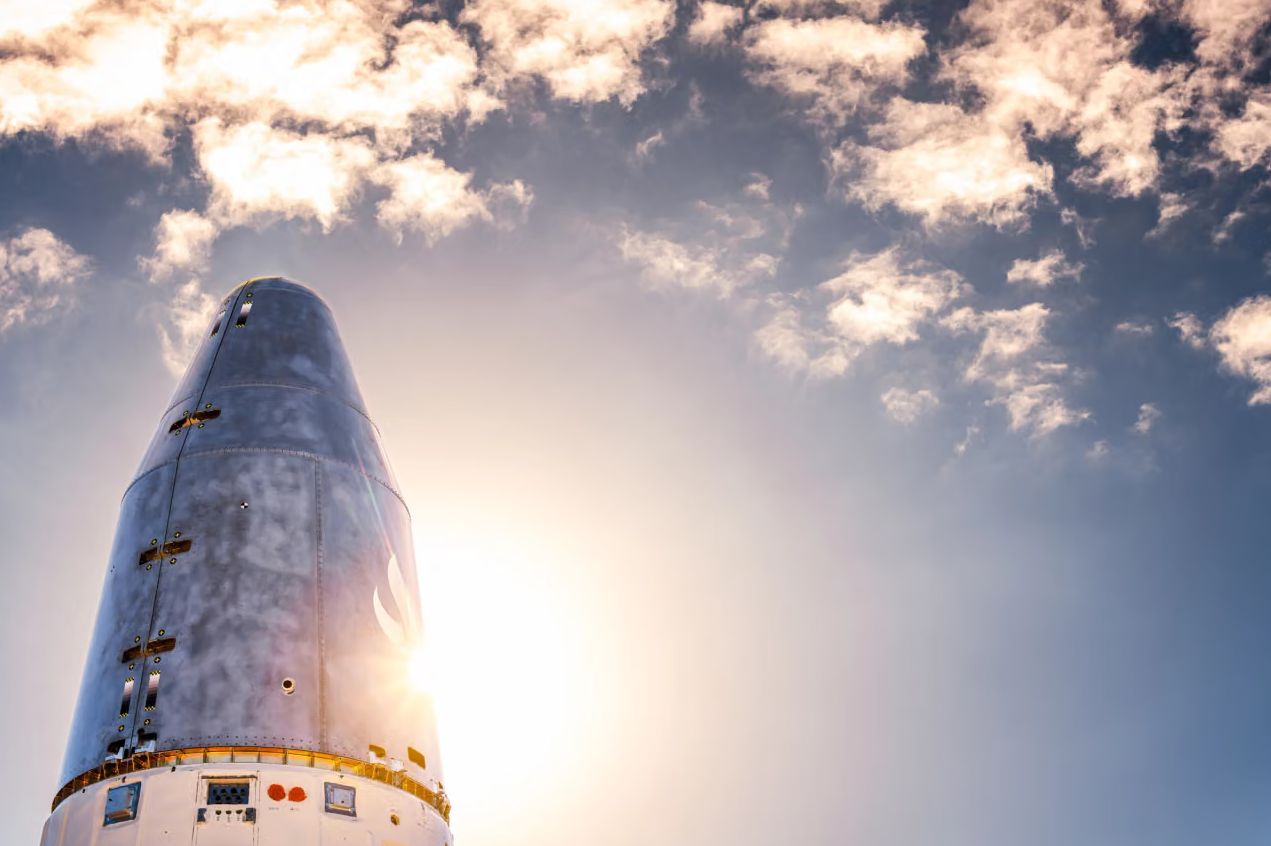
Nova rocket’s upper stage, flight article, during a fit test. Credit: Stoke Space
Nova rocket’s upper stage, flight article, during a fit test. Credit: Stoke Space
It has been 13 years since the debut of a new medium-lift rocket in the United States, the Antares vehicle developed by Orbital Sciences Corporation.
The initial 100-series variant of the Antares rocket was kind of a hot mess. The rocket used old Soviet engines built during the era when Apollo astronauts were landing on the Moon. Decades later, in the 1990s, Aerojet acquired the engines and refurbished them for a rocket that would launch in the 2010s. Predictably, on the fifth launch of an Antares rocket in 2014, it exploded.
The Antares vehicle is the last of a dying breed of medium-lift rockets—defined as having a lift capacity of 2 to 20 metric tons—in the United States. Nearly a decade and a half later there is a new generation of medium-lift vehicles coming online, and they are starkly different from Antares, which had not just Russian engines but a core stage manufactured in Ukraine.
Four forthcoming rockets all have engines built by the rocket’s manufacturer in the United States. Each of these companies has taken various lessons from SpaceX’s successful Falcon 9 rocket, arguably the most important of which is to build as much of one’s rocket, and particularly the engines, in-house as possible to control timelines and costs.
Now, with SpaceX pulling the Falcon 9 rocket from the commercial market as soon as 2028, the “race” to bring new medium-lift capacity into service is for more than bragging rights. There are fortunes to be made, and commercial space startups to be saved.
Satellite operators legitimately don’t know who to book launches with in the 2027 to 2030 timeframe because of uncertainty over which rockets will be available. The Falcon 9 is no longer for sale. The larger Vulcan and New Glenn rockets have stacked manifests and are expensive for small- and medium-sized satellites. And no one really knows which new medium-lift vehicles will be ready and capable of scaling up their launch cadence.
With all of this in mind, Ars Technica is here to help with a guide to the medium-lift space race in the United States, along with some (almost certainly wrong) predictions on when the rockets may debut. The list below is in our expected order of launch. Disagree? Feel free to shame us in the comments. And if you’re an engineer or technician working on one of these projects, keep going. This stuff is really hard and we salute your dedication. Prove us wrong!
Stoke Space: Nova
The smallest of the medium-lift rockets under development, with a capacity of 3 tons in fully reusable mode and 7 tons in expendable mode, the Nova rocket is also arguably the most ambitious.
That’s because the rocket aims for full reusability, with a novel upper stage thruster design and heat shield to solve the difficult problem of protecting a vehicle reentering at orbital velocity. Additionally, the first-stage engines are full-flow staged combustion, which is ambitious for a first engine design.
Despite all of this, the rocket is making credible progress toward liftoff. The Nova rocket’s first stage is nearly complete at its factory in Kent, Washington. Last week Stoke shipped the second stage of Nova to its test site, and if hot-fire tests are successful it will move to the launch site. The launch complex at Cape Canaveral, Florida, is nearly complete.
Recently, for the first time, Stoke began to publicly talk about a date for Nova’s debut. The company is targeting “early” 2027 for launch. That’s probably optimistic, but we could see a late spring or summer debut.
Predicted launch debut: July 2027
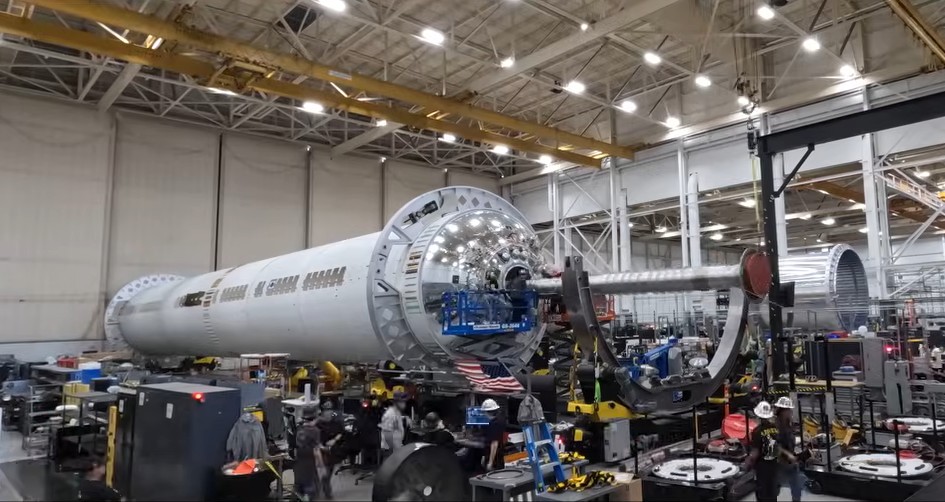
Relativity Space recently installed the “downcomer” into the first stage of the Terran R rocket.
Credit: Relativity Space
Relativity Space recently installed the “downcomer” into the first stage of the Terran R rocket. Credit: Relativity Space
Relativity Space: Terran R
Technically, this is not a medium-lift rocket. The company is advertising up to 33.5 metric tons to low-Earth orbit in fully expendable mode for Terran R. But new rockets rarely hit their advertised lift capacity early in their lifetime, and with a reusable first stage (which is necessary for the economics of Terran R to close), the lift capacity is closer to 20 metric tons.
Nevertheless, this is a large and ambitious project. And it was pretty much left for dead until former Google Chief Executive Eric Schmitt acquired the company a year and a half ago. Schmitt has injected much-needed funding into Relativity, and sources report that morale at the Long Beach, California-based company has improved significantly.
In recent months the company has reported some notable progress. It completed acceptance testing for all 13 of the Aeon R engines that will power its first stage, qualified the first stage structures, and is making progress on assembly of the first stage. Then, last Friday, the company said the Terran R’s second stage had successfully completed its first integrated hot fire test.
Stoke and Relativity are fairly close to one another in their development timelines. Relativity is ahead in second stage testing, but Stoke has a lead in launch site readiness. I am going to give the slight edge to the smaller rocket in terms of being ready for launch.
Predicted launch debut: September 2027
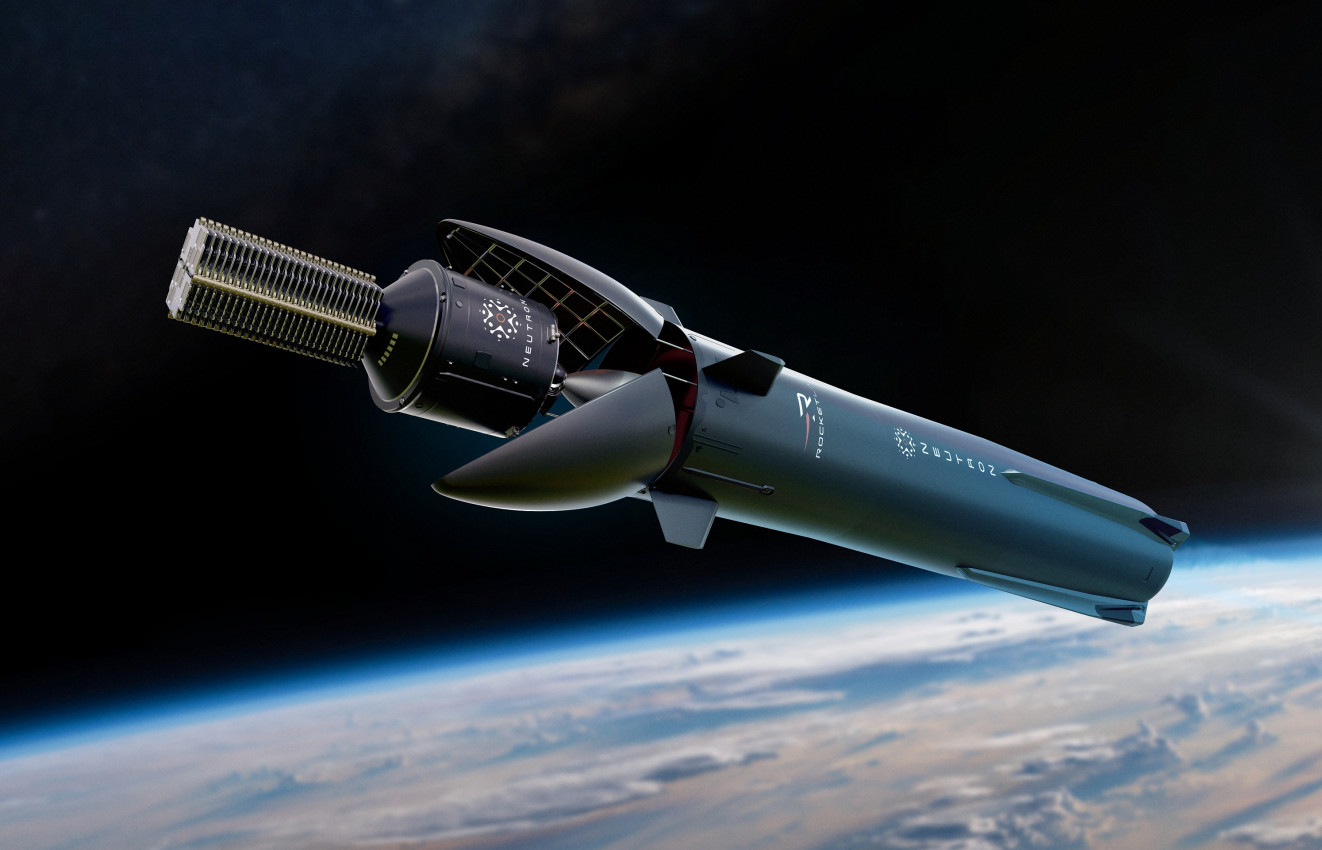
Rocket Lab’s Neutron rocket is shown in this rendering delivering a stack of satellites into orbit.
Credit: Rocket Lab
Rocket Lab’s Neutron rocket is shown in this rendering delivering a stack of satellites into orbit. Credit: Rocket Lab
Rocket Lab: Neutron
With a lift capacity of between 8.5 and 15 metric tons, depending on first stage reuse and landing site, Rocket Lab’s Neutron rocket slots somewhere in between Nova and Terran R.
For a long time it appeared as though Neutron would become the first new medium-lift rocket to debut since Antares, but the vehicle has had some teething pains: Rocket Lab has experienced some problems with the Archimedes engine, and more recently the company revealed some challenges with carbon-fiber domes.
The Neutron rocket’s first stage is the “largest pressurized structure ever made out of carbon composite,” Rocket Lab chief Peter Beck said this month. “Because of its scale, we’ve had to develop new out-of-autoclave processes to build Neutron, and this includes custom cure cycles for the very large pieces, like the forward and aft domes for the propellant tanks on Stage One.”
That doesn’t sound particularly easy. Given the lack of flight hardware in evidence, we’re not sure the company meets its latest launch target, which is now sometime in 2027.
Predicted launch debut: January 2028
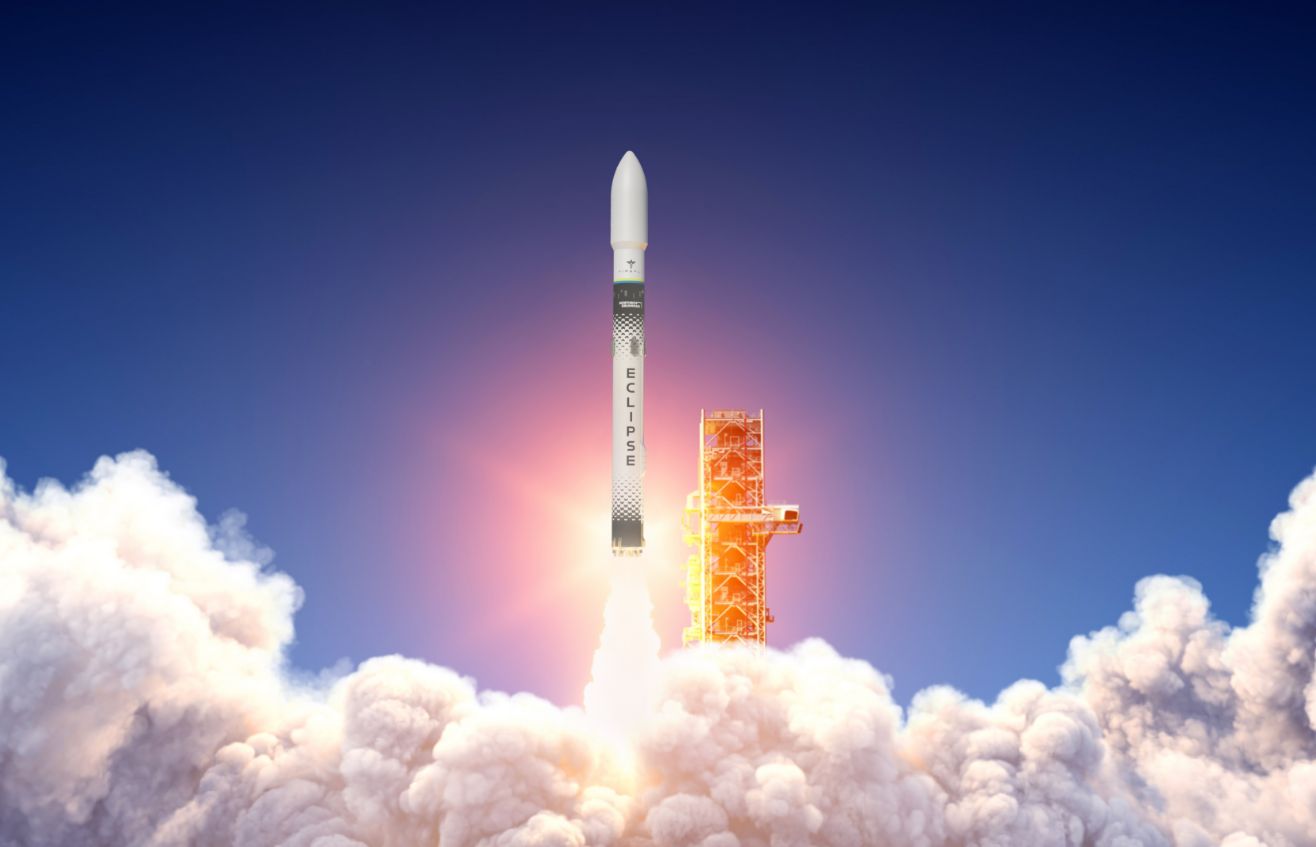
Will we ever see the Eclipse rocket fly?
Credit: Firefly
Will we ever see the Eclipse rocket fly? Credit: Firefly
Firefly/Northrop Grumman: Eclipse
We began this article with the Antares rocket, which was developed by Orbital Sciences. That company was later acquired by Northrop Grumman. A few years ago, seeking a home-grown alternative to Antares, Northrop announced a partnership with Firefly to co-develop the Eclipse rocket.
Firefly is developing the Miranda engines that will power Eclipse’s first stage, and this work appears to be progressing well. But there has been little public talk about development of the first and second stage hardware that will be built around the Miranda engine. Similar to Rocket Lab, Firefly and Northrop are also working with carbon-composite structures, so there may be some challenges there.
The partnership between Firefly, a new space company, and Northrop, a traditional space company, is also likely to produce some friction. It is difficult to make an educated guess on Eclipse because there is so much uncertainty about the rocket’s development. Typically, that means things aren’t going well or quickly. For now, we’re leaning toward pessimism.
Predicted launch debut: NET 2029

Eric Berger is the senior space editor at Ars Technica, covering everything from astronomy to private space to NASA policy, and author of two books: Liftoff, about the rise of SpaceX; and Reentry, on the development of the Falcon 9 rocket and Dragon. A certified meteorologist, Eric lives in Houston.