Despite loss, carriers still claim selling device-location data isn’t illegal.
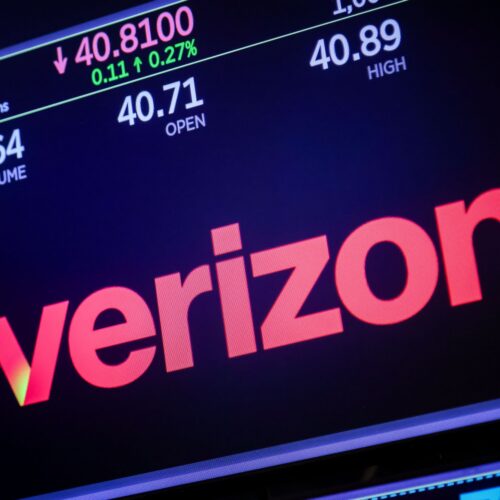
Verizon stock ticker at the New York Stock Exchange on December 31, 2025. Credit: Getty Images | Bloomberg
The Supreme Court today rejected Verizon’s attempt to get a $47 million refund from the Federal Communications Commission. In a list of orders issued by the court, Verizon’s petition was denied without explanation.
The denial apparently ends any possibility of Verizon asking a lower court to review the fine and order the FCC to issue a refund. However, AT&T and T-Mobile are continuing to challenge similar fines on grounds that selling device-location data did not violate US telecom law.
AT&T, T-Mobile, and Verizon were fined a total of $196 million in 2024 for selling mobile users’ real-time location data without their customers’ consent. The carriers sold device-location information to data aggregators, who resold it to other firms.
The carriers paid the fines and sought to have them overturned in courts, claiming their Seventh Amendment right to a jury trial was violated. Challenges by AT&T and Verizon were combined into a single case, and the Supreme Court ruled against the carriers in June of this year.
The court ruled that the FCC penalty process does not violate the Seventh Amendment because the carriers could have obtained jury trials if they refused to pay the fines and waited for the government to try to collect. The ruling against the carriers was 8-1, with Justice Clarence Thomas dissenting.
Verizon wants another appeal
Verizon essentially claims it was tricked into paying the fine and didn’t know it had the option to not pay. In a petition it filed after the Supreme Court loss, Verizon said the FCC presented the fine as binding in 2024 but then “retreated over the course of this proceeding, changing positions and ultimately telling this Court that FCC forfeiture orders do not ‘compel payment.’”
Verizon reported quarterly revenue of $34.3 billion in Q2 2026, along with net income of $3.9 billion. Having lost its attempt to invalidate the FCC’s process for issuing financial penalties, Verizon now wants another chance to argue that the fine itself wasn’t legally justifiable. It complained that the Supreme Court expressed no view on the merits of the fine, yet left Verizon with no recourse to challenge it.
“For Verizon only, this Court’s disposition threatens to foreclose the very question that it purported to leave open,” Verizon’s petition said. “The other three carriers that are subject to nearly verbatim FCC orders, all issued simultaneously, each have paths to argue the question that this Court ‘express[ed] no view on’ in footnote 5 of its opinion. But short of extraordinary relief like recalling the Second Circuit’s mandate, Verizon alone will be out of luck. This Court should amend its disposition to avoid that result.”
As Verizon noted, the FCC also fined AT&T, T-Mobile, and Sprint for the same kind of violation. Verizon said AT&T can keep challenging its fine because the Supreme Court remanded the case to the US Court of Appeals for the 5th Circuit, which previously ruled in AT&T’s favor. T-Mobile and its Sprint subsidiary lost in the District of Columbia Circuit in 2025 and are asking the Supreme Court for a review.
By contrast, Verizon lost in the 2nd Circuit and says it has no path to reopen its case because the Supreme Court affirmed the 2nd Circuit judgment without saying more.
“A tiny dispositional change—affirming, but with a remand—would put Verizon on equal footing with AT&T, T-Mobile, and Sprint, and permit Verizon to ask the Second Circuit to take up the issue that this Court purported to leave open,” Verizon told the Supreme Court.
Carriers still argue data sales were legal
Even if the Supreme Court remanded the case to the 2nd Circuit, Verizon would have a tough time reversing its loss. When a three-judge panel at the 2nd Circuit unanimously ruled against Verizon, it rejected Verizon’s Seventh Amendment claim and its claim that selling the location data was legal.
Verizon claimed the privacy rules in Section 222 of the Communications Act cover only call-location data, and not device-location data. The 2nd Circuit disagreed, pointing to the law’s text stating that Customer Proprietary Network Information (CPNI) includes data that is related to the location of a telecommunications service, and which is made available to the carrier “solely by virtue of the carrier-customer relationship.”
“It thus qualifies as customer proprietary network information and triggers the privacy protections set forth in § 222 of the Communications Act,” the ruling said.
The 2nd Circuit ruling described how Verizon sold location data to two aggregators, LocationSmart and Zumigo, “which in turn contracted with 63 third-party entities.” News reporting showed that Securus Technologies misused the program to let law enforcement officers access location data, and a Missouri sheriff “was able to access customer data with no legal process at all,” the ruling said.
The major carriers have said they discontinued the data-sharing programs the fines related to, but still claim the fines were illegal. AT&T and T-Mobile still have hopes of getting rulings that would invalidate their fines.
T-Mobile asked the Supreme Court to find that the location information protected under the law “refers only to call-location information, not other information about the location of a mobile device.”
The 5th Circuit ruling in AT&T’s favor was decided solely on Seventh Amendment grounds and did not reach AT&T’s other arguments. After its Supreme Court loss, AT&T filed a brief urging the 5th Circuit to find that the customer data it sold is not protected by Section 222.
An AT&T or T-Mobile victory could limit the ability of future FCC chairs to punish carriers for sales of device-location data. No such penalties are likely under the current administration. FCC Chairman Brendan Carr argued against the fines in 2024 when the commission was led by a Democratic majority, agreeing with carriers that only call location information is protected.

Jon is a Senior IT Reporter for Ars Technica. He covers the telecom industry, Federal Communications Commission rulemakings, broadband consumer affairs, court cases, and government regulation of the tech industry.