
![ai-is-still-in-its-infancy,-so-why-trust-it-to-run-your-business?-[q&a]](https://thetechbriefs.com/wp-content/uploads/2026/01/101468-ai-is-still-in-its-infancy-so-why-trust-it-to-run-your-business-qa.jpg)
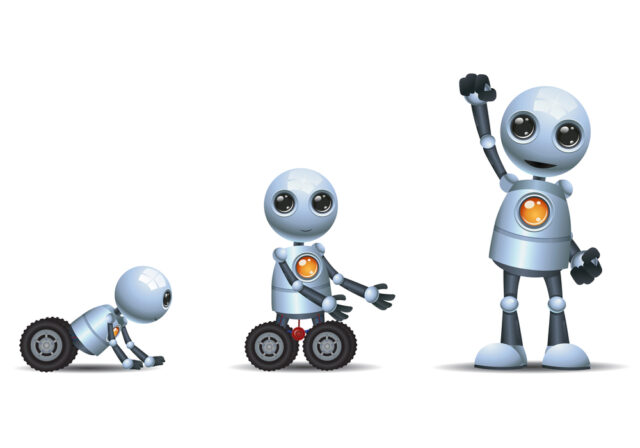
Today’s AI agents are rather like curious children — eager to learn, keen to experiment, but lacking the maturity to truly grasp human intent or deliver business outcomes.
We spoke to Keith Zubchevich, CEO at Conviva, about why today’s AI deployment is like sending a toddler out to get a job: bursting with potential, but nowhere near ready for the real world?
BN: What are the most common ways AI agents demonstrate a lack of ‘maturity’ when trying to execute a complex task?
KZ: Immature agents fail for the same reason immature humans do — they lack grounding in real-world feedback. Most are trained for accuracy in controlled scenarios rather than outcomes in live, dynamic ‘in-the-wild’ environments. Also, most are trained to deliver accurate responses, not successful outcomes. But as the real world is unpredictable, testing agents in production is difficult because every customer interaction introduces new context, tone, and intent. Without the ability to learn continuously from these individual experiences, agents remain brittle, inconsistent, and disconnected from business reality. True maturity comes when performance is defined not just by accurate, timely responses, but by the impact agents deliver across the full spectrum of conversations they engage in and by how efficiently they get to desirable outcomes.
BN: At what point does the need for human supervision over a child-like AI agent make the solution unscalable or not cost-effective?
KZ: If performance requires continuous manual validation, the agent can’t scale. The only path to sustainable autonomy is optimization rooted in true consumer experience patterns connected to business outcomes. This is where human interaction enables agents to continuously learn from the full spectrum of diverse customer conversations and experiences directly connected to the results they generate. When human oversight shifts from manual correction to automated, interactive calibration, cost and confidence scale together. Agents will be hyper-tuned to a business’ consumers and their ‘expectation patterns’, which isn’t possible with human supervision or traditional ML datasets.
BN: What are the key technical and ethical benchmarks a business should establish to define when an AI agent has ‘grown up’ enough for a specific role?
KZ: An agent is ‘grown up’ when its performance can be measured in outcomes, not responses. Technically, that means it operates within defined thresholds for accuracy, reliability, and efficiency across live interactions in production. Ethically, it must demonstrate transparency, which is the ability to explain what it did, why, and its effect on consumers. Maturity isn’t about autonomy; it’s about accountability to real-world business results and human trust.
BN: How can businesses embed deep knowledge and context into their agents, so they move beyond general curiosity to deliver precise, high-value outcomes?
KZ: Agents gain precision the same way humans do, through ‘lived’ experience. Embedding context requires connecting every agent conversation to the broader digital journey, from app to AI agent, website to AI agent, and all other journey combinations. By analyzing full-census client-side telemetry reflecting the experiences of all customers, organizations can see patterns connected to real outcomes and feed that intelligence back into agent configuration, prompt design, and tool use. This closes the loop between behavior, context, and results — transforming curiosity into competence.
BN: As agents become more mature, how will the roles of AI trainers, supervisors, and human collaborators evolve within the organization?
KZ: As agents evolve and conversations scale, human roles shift from control to orchestration. Trainers become designers of feedback loops, supervisors become governors of trust and ethics, and collaborators focus on creativity and innovation. The most advanced organizations won’t just deploy agents; they’ll continuously and automatically optimize them using real-time intelligence that connects consumer and agent behavior to business results. In this new operating model, success isn’t measured in responses, but in amplified human impact.
Image credit: onionime/depositphotos.com

