Museums are embracing data-driven curation and a shifting technology landscape.
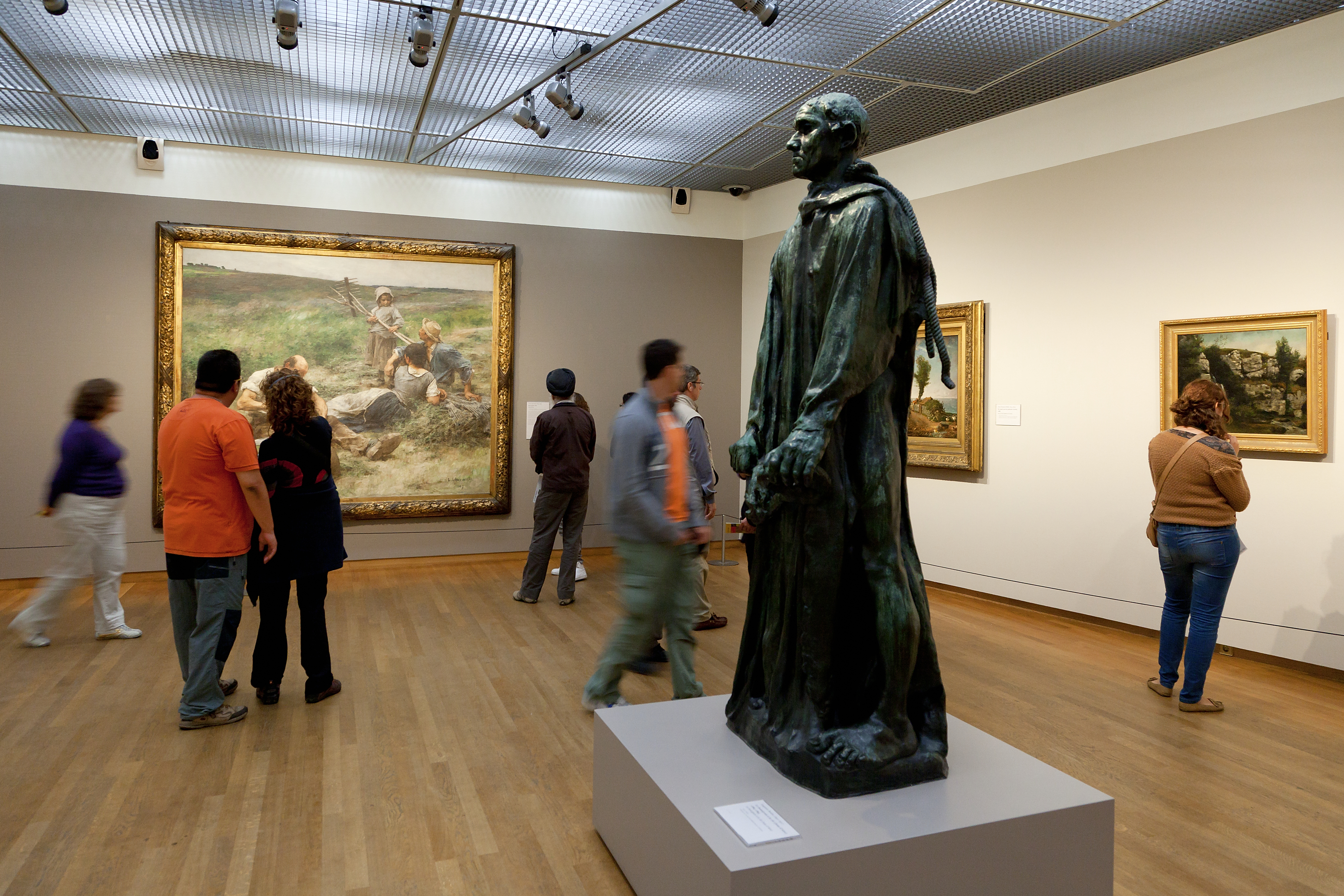
Visitors at the Van Gogh Museum in Amsterdam.
Visitors at the Van Gogh Museum in Amsterdam.
Giovanni Kanter goes to at least one art museum whenever he visits a new city. That’s on top of his regular exploration of galleries in New York, where the 25-year-old ICU nurse lives and studies. He typically discovers new artists and gallery openings through word of mouth, though he has recently started curating his social media feed to serve relevant content (he’s currently in what he terms a “surrealism phase”).
He was raised on visual art; he’s the son of painter Marianne Gargour and nephew of mixed-media artist Heather Hutchison and painter-printmaker Mark Thomas Kanter. His “exposure-oriented education” featured childhood visits to galleries and shows in and around Dallas, where he grew up, and in France, where he spent time with his grandparents.
But Kanter is an exception. Many other young people have a less immersive artistic education, perhaps shaped by occasional school trips or family visits to museums. If they haven’t internalized an instinct for what Kanter calls “moving through the art and absorbing it,” the museum experience is central to how they learn about and understand art.
Museums take this educational role seriously, and many institutions understand the need to sustain and broaden their appeal. “They used to be these big ivory towers of knowledge and history and thought and art,” said Hilary Knight, director of Change& in London and former director of digital at Tate. “Museums themselves are changing their role to be centers for discussion and encounter and to be much more participatory.”
To aid this transition, museums and other cultural institutions are increasingly using data to inform decisions about how to present the works they house. Amsterdam’s Van Gogh Museum (VGM) has embraced this challenge head-on, instituting a yearslong collaboration with academics from leading business schools to explore how using data and analytics can improve visitors’ experiences.
More extensive data use by museums has enabled a new era of individually tailored experiences, and new waves of technology have impacted everything from how art is displayed to how fragile art is preserved. But this active role in shaping museumgoers’ experiences raises questions about how museums shape and nurture cultural engagement at a time when both consumption habits and the technologies surrounding them are evolving rapidly.
Artistic institutions are amassing more and more information about us, and they can now use it to guide nearly every aspect of modern artistic exposure. Museums have always conferred cultural legitimacy and served as tastemakers, but to what extent have they also become—even inadvertently—more strategic stewards of our evolving tastes and interests? And where do we go from here?
Data-informed layouts
As you navigate a museum, data can be generated on which paintings you visit, how long you spend viewing each one, and even where your eyes linger.
Such data can lead to better layout decisions, according to a new study by Ali Aouad, a professor at MIT’s Sloan School of Management; Abhishek Deshmane, a professor at Georgia Institute of Technology’s Scheller College of Business; and Professor Victor Martínez de Albéniz of the University of Navarra’s IESE Business School. In their paper, published in the April 2026 print issue of Management Science, the researchers show that visitors respond to both the physical location of works and their placement on digital guides.
According to the authors, a visitor’s next move—whether to view another painting, change floors, or even end a visit—can be analyzed in terms of the perceived utility, or benefit, of each option, likely weighed subconsciously.
The researchers randomly selected 25,000 out of 1.5 million visits to the VGM between 2019 and 2021 and extracted data from visitor interactions with digital multimedia guides, along with the location and artistic characteristics of the museum’s collection, which contains over 4,600 works (of which approximately 200 are on display at a given time). They used this data to gain insights about visitor movement and identify “optimal” locations for pieces—those that collectively maximized viewer engagement, as measured by the expected number of pieces seen.
The authors’ model, named pathway multinomial logit or “pathway MNL,” does not reveal causal effects, they caution, but the associations they uncover are informative for museum professionals.
Multimedia guide users largely visited recommended artworks in the suggested order. Lisa van den Bos, product manager for digital education at the museum while the study was underway, expressed surprise that even subtle ordering changes on the guide impacted traffic patterns. “We actually have a lot of power in how we move people through,” she said.
Visitors sought variety in time period and size but consistency in subject and theme, the team found. Time pressure also affected choices; as time elapsed within a given visit, people were more likely to prioritize seeing masterpieces.
Perhaps surprisingly, the data revealed that congestion can increase engagement. “When there are more people, at least up to a certain number…people are more likely to go and view artworks that they probably wouldn’t have seen,” said Deshmane. Crowding around a painting may also be seen as a signal of quality.
Rearranging permanent collections can be tricky due to space or thematic constraints, but museums can often experiment with exhibition or gallery spaces, where shorter time frames and lower infrastructural requirements allow easier changes, said Deshmane.
Rather than actually moving pieces, the researchers used a simulation to generate new layouts and predict likely visitor reactions. Based on their simulations, they found that moving highly attractive art from leaky spots (e.g., stairs or lifts) and strategically swapping pieces could lead to visitors seeing more art—and staying for longer—without undermining curatorial aims. Additionally, data-informed planning of digital layouts, even without accompanying physical moves, may help visitors understand art through new perspectives, said Gundy van Dijk, the museum’s head of education and interpretation.
Designing layouts in this way is atypical, according to the authors, but it can enrich the cultural and educational value of visits. When tested on data not used to develop the pathway MNL model, it achieved 63 percent accuracy in predicting transitions between pieces; beyond this improvement over baselines, the authors verified that their results hold even when the modeling approach or assumptions change.
The model was also used to predict visitors’ likelihood of reaching specific pieces (81 percent accuracy) and visitor departure rates (96 percent accuracy). The authors noted that more general forms of the model may be needed for settings with significantly larger collections or more complex physical layouts. Beyond museums, they feel their approach has direct application to other sequential experiences that blend the physical and digital, such as in entertainment, education, and retail.
Following the sequential layouts study at VGM, the research team conducted a follow-on study between 2022 and 2024 that tested different approaches to combat visitor fatigue and information overload, providing digital nudges by experimentally varying actual visitor offerings on the multimedia guide.
A “gold mine” of data
This study took existing but underutilized data, mining it for insights. Audio guides, available since at least the 1950s, remain the main way to supplement a primarily visual experience with minimal distraction, said Sandy Goldberg, who creates content for museums, including the Van Gogh, and described a “pendulum swing” that has seen museums revert to audio after exploring successive waves of more interactive technologies. “Study after study showed that what people wanted was what was called an ‘in-the-pocket’ experience, where they could take their device and just literally put it in their pocket and not think about it anymore,” she said.
Though digital guides—often with multimedia capabilities supplementing audio—are now widely available, most visitors don’t use them, though their uptake has grown over time, said van den Bos. The VGM’s multimedia guide at the time of the study was a standalone device with hardware from Imagineear and software maintained by Tapart, a creative tech agency specializing in digital storytelling. Other museums allow visitors to access visit-related content on personal devices.
Throughout 2023, 36 percent of VGM’s average 4,600 daily visitors booked multimedia guides (up from the 25–31 percent typical during the study). That’s high among peer institutions; sector-wide, uptake during the same period was typically closer to 10 percent for paid tours, said Sietze de Jong, creative and managing director of Tapart—which also partnered with The British Museum on the development of its audio app.
Museums rarely use digital guide data—a “gold mine,” said Deshmane—for decision-making. “Every museum requests us to do analytics and include it in their audio guide… but when we ask them if they reviewed the data, they almost never have,” said de Jong, citing limited institutional capacity for data analysis.
He noted that the situation has begun to change in recent years due to investment in in-house capabilities and external collaborations: “Digital teams are increasing in size, which is a positive development.” Museums also seek to ground longer-term strategic decisions more deeply in data and to measure and communicate their progress using data, according to a 2023 report by McKinsey & Company. That comes in response to expectations from trustees, funders, and governments.
In 2025, the VGM announced a redesigned version of its multimedia tour, with hardware powered by Samsung and software built and maintained by NOUS Digital. The design of the guide was informed by the research teams’ insights into visitors’ actions and desires when using digital guides.
A “duty to expose”?
Museums can use data to manage traffic by adjusting opening hours and providing navigational aids, but digital tools also enable subtler interventions. For example, recommendations can be discreetly varied throughout the day based on real-time congestion levels, said Goldberg.
Perhaps the biggest opportunity created by detailed data is the ability to provide personalized recommendations. Supplementing traditional curation with analytical methods, more recently including machine learning and artificial intelligence, has become more common. The use case for personalization is especially clear within a single institution, but cross-museum applications can now also recommend that visitors explore artwork at other museums within a partner network.
The study’s explicit inclusion of visitors’ perceptions of utility, and particularly the idea that visitors seem to actually respond to recommendations, raises the question of how museums should wield this power over the visitor experience. Given their educational role, do they have a duty to expose visitors to a diverse group of works? Would doing so actually influence artistic “enjoyment”?
While the answer is not straightforward, experts in the field generally believe that curators should make intentional recommendations rather than simply predicting preferences. “Showing people artworks that you think they’re going to like actually is a disservice,” said Knight. “One of the roles of art is to challenge you and to present you with things that you might not like or might not realize you like.”
There’s also a risk of recommendations becoming self-perpetuating—“reinforcing the canon” of what’s considered important, added Knight.
Certain works of art are so renowned that they enter the consciousness long before young people are exposed to any formal art education. These pieces often occupy premium real estate within museums, receive prominent billing during exhibitions, and are the most sought-out for loans and transfers among institutions.
From a business perspective, this emphasis is understandable; these big-name pieces are huge audience draws, both for locals and traveling visitors. However, as museums increasingly use data to improve operations and introduce more personalized offerings, visitors may see themselves encouraged to explore less popular corners of the catalog, whether due to congestion-induced redirection or preference-based recommendations.
We don’t yet know whether these shifts will be significant enough to result in long-term changes to the process of taste formation for individuals or the crowning of “classics” at the societal level, but it seems clear that when a cultural experience truly resonates with a visitor, engagement doesn’t end at the museum exit.
Decision makers must strike a delicate balance as they redefine their roles as custodians of culture in an era when technology empowers them to do so much. Not all visitors enjoy having their experiences shaped externally, of course. Kanter typically prefers “more of an organic experience,” he said, though he noted that he sometimes uses museum audio guides when seeking to gain a new perspective.
Deshmane argued that the solution is to provide an “assortment” of suggestions that enables informed decisions and caters to various tastes and engagement habits. Depending on the context, these suggestions can be as subtle as presenting one piece of artwork before another on a digital guide or as explicit as generating a push notification or other nudge. Deshmane noted that “suggestion assortments” could be organized by how much time visitors have or by narrative threads.
“You as a museum can do a lot more with one physical layout… if you have these digital assortments of layouts,” said Deshmane.
A single “precision” cultural experience has potential downsides. While too many options can empower visitors, overpersonalizing could also create a sense of loss. “You have to make choices [such] that people don’t feel like they’re missing a lot if they’re choosing,” said Rianne van Dam, project coordinator for Digital Education at the VGM.
Kanter is generally fine with museums using the vast and growing amounts of data at their disposal, as long as they address privacy concerns and think carefully about when explicit disclosures are needed. “A lot of tracking is going on in the world…I think it’s interesting that it applies to art,” he said.
Leading with creativity
Leveraging technology is key to staying relevant amid changing expectations, said Birgitte Aga, head of innovation and research at MUNCH, the Oslo museum dedicated to the work of Norwegian painter Edvard Munch. “If we can’t engage and create museum experiences that are both physical and virtual in a way that the next generation of users find engaging, then we’re not going to be a museum in the future.”
The most visible uses of technology involve transforming artistic presentation: virtual reality and augmented reality have been used to reveal layers within art, and AR can restore historical context such as the original colors of ancient artworks, said Goldberg. “Seamless” experiences enabled by tools such as smart glasses or wearables can reduce device friction and enable interactivity.
Some applications seem less likely to see widespread adoption soon. While a handful of museums and standalone services have experimented with conversational and generative AI to help create the experience of “hearing from” or “speaking” to artists, the sector appears to be treading carefully with these tools due to concerns about both accuracy and artistic integrity. Institutions are also shying away from AI playing a curatorial role.
Beyond presentation, AI has also been used to analyze collections databases, visitor records (including survey feedback and social media comments) and operational data, said Elena Villaespesa, head of digital analytics at the Thyssen-Bornemisza National Museum in Madrid and former digital analytics lead at the National Gallery of Art in Washington, DC.
AI can also feature in conservation and virtual restoration efforts, said MUNCH’s Aga, and is helping increase accessibility. For example, machine learning models can learn artistic characteristics from collections data to generate automated textual descriptions. Such techniques can also support personalization efforts.
MUNCH’s New Snow exhibition, available in two waves in 2024 to 2025, allowed visitors to draw their own images and then matched them to the closest item among Edvard Munch’s sketches, thereby creating a channel of interactive engagement with a collection of drawings that are brought out infrequently due to their fragility. Over 70,000 visitor drawings were created through the project.
These examples are far from comprehensive; the range of application areas is expanding rapidly given the rate of advancement in AI capabilities over the last few years. Museum directors are taking note—and sharing notes—as they look ahead. Digitization, personalization, and AI strategy have become staple topics on the agendas of leading cultural industry forums.
Museums are applying discretion in evaluating the dizzying array of options; according to Villaespesa, they’ve become “more mature in the use of digital.” She advises continuing to ground decisions in a user-centered perspective. “Experimentation is great… with evaluation behind it,” she said. “I think museums should test the different trends and technologies available, but I’m always thinking from the user perspective… make sure that there’s a motivation, a need, a type of user that will use it. It’s not just ‘let’s do technology for technology’s sake.’”
For now, given widely varying consumer preferences, museum staff seem to view personalization as an imperative. To van Dam, tailored experiences serve the museum’s goal of disseminating van Gogh’s story. “I don’t think every visitor wants the same,” she said. “So the key, really, to reach our goal… is to personalize.”
Ultimately, though, museums don’t want to become optimization machines. “They are creative spaces in the end,” said van den Bos. “It will always be a place where the story is leading and the creativity is leading.”
Researchers say that data-driven and creativity-driven approaches are compatible—and that insights from tools such as digital guides can lead the way. “Use this tool first to create compelling narratives,” said Deshmane. “And then use the data that is generated for future purposes of creating more compelling narratives with the physical space as well.”
Mureji Fatunde-Iloeje is an academic and writer interested in companies, industries, and consumers. Her writing, which has appeared in Bloomberg, WIRED, and MIT Technology Review, explores climate and the energy transition, social and economic policy, and the modern consumer experience.