IMSA Labs will use the vast amount of race car data collected during a race to improve simulations.
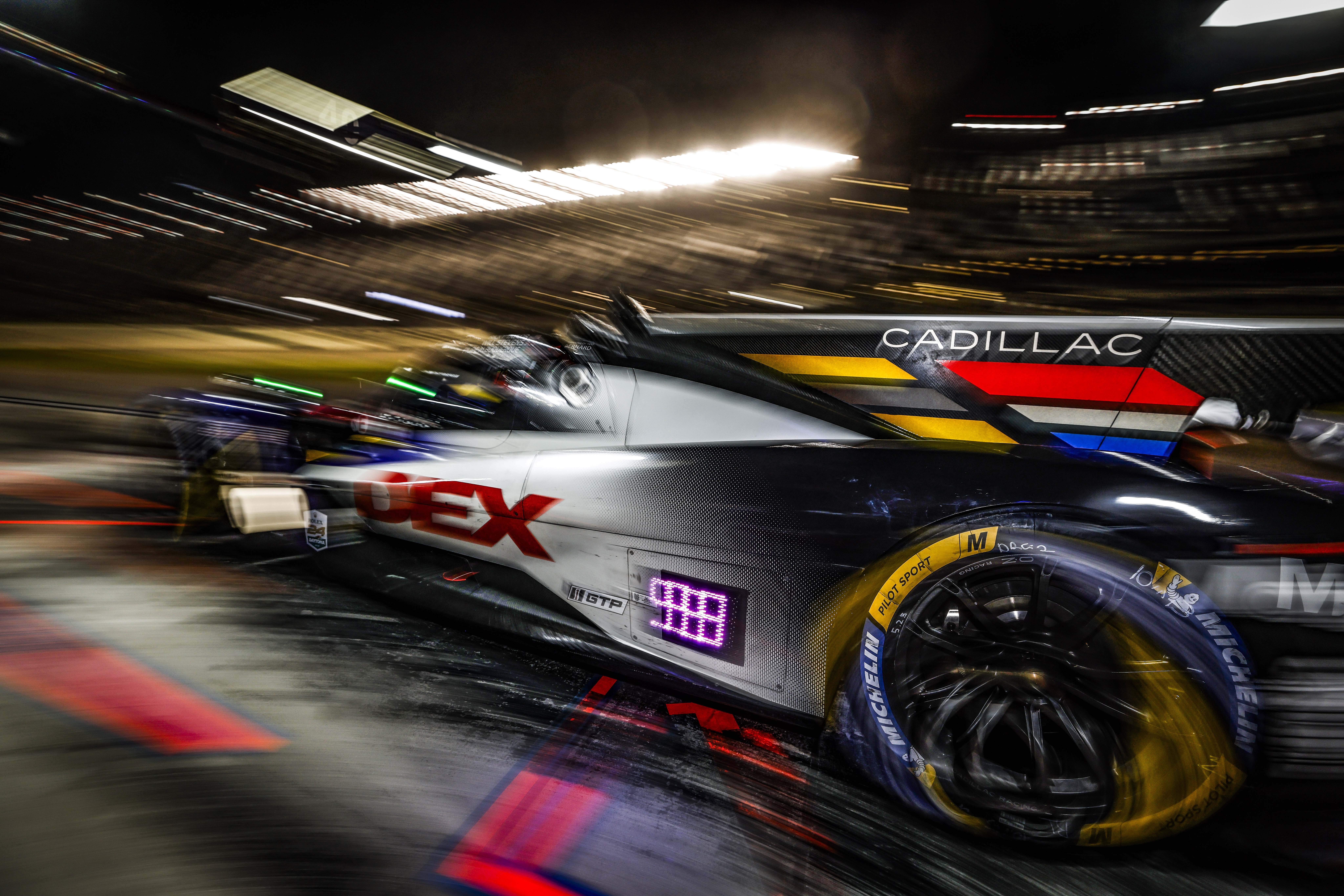
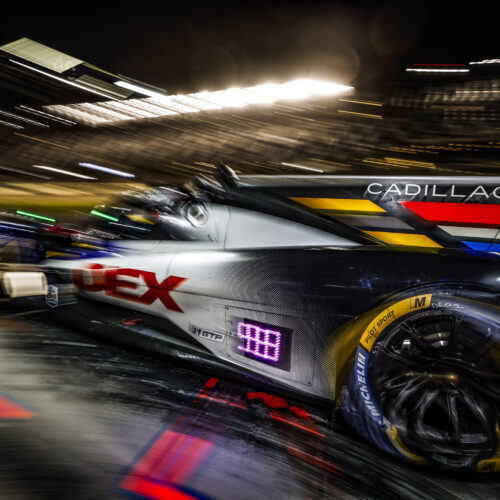
Cadillac is one of a growing number of automakers to embrace the current category of hybrid prototype race cars. Credit: Michael L. Levitt/Lumen via Getty Images
Cadillac is one of a growing number of automakers to embrace the current category of hybrid prototype race cars. Credit: Michael L. Levitt/Lumen via Getty Images
DAYTONA BEACH, Fla.—The annual 24-hour race that kicks off the American racing season took place this past weekend at Daytona International Speedway. Each year, the crowd gets bigger and bigger, drawn in large part by the hybrid prototypes that contest the GTP class for overall victory. After Formula 1, these are some of the most complex, sophisticated race cars ever to turn a wheel—and it doesn’t hurt that they look extremely cool, too. But yet again, endurance racing wants to offer more than just entertainment.
A large number of automotive technologies or safety features that we mostly take for granted today made their way into road cars from the race track. Seatbelts, rear-view mirrors, turbocharged engines, aerodynamics, direct-injection engines, dual-clutch gearboxes, and more owe their existence to competition. Although direct examples of racing technology transfer in the mid-21st century seem less common than the intangible benefits gained when a bunch of motorsports-trained engineers have lunch every day with their road car colleagues.
That is starting to change, though, and now the domain is in simulation. Vast amounts of data are generated during the course of a race—each of the 11 GTP cars that raced at Daytona collects 1,600 different channels of data from onboard sensors, with nearly as many on the GTD machines that are based on road-going cars like Porsche’s 911 or Chevrolet’s Corvette. With 60 cars running for 24 hours—and that’s just the first race of the year—that’s a heck of a lot of high-quality data being generated, and now IMSA wants to leverage that to help automotive and technology companies develop better simulation tools, with the creation of IMSA Labs.
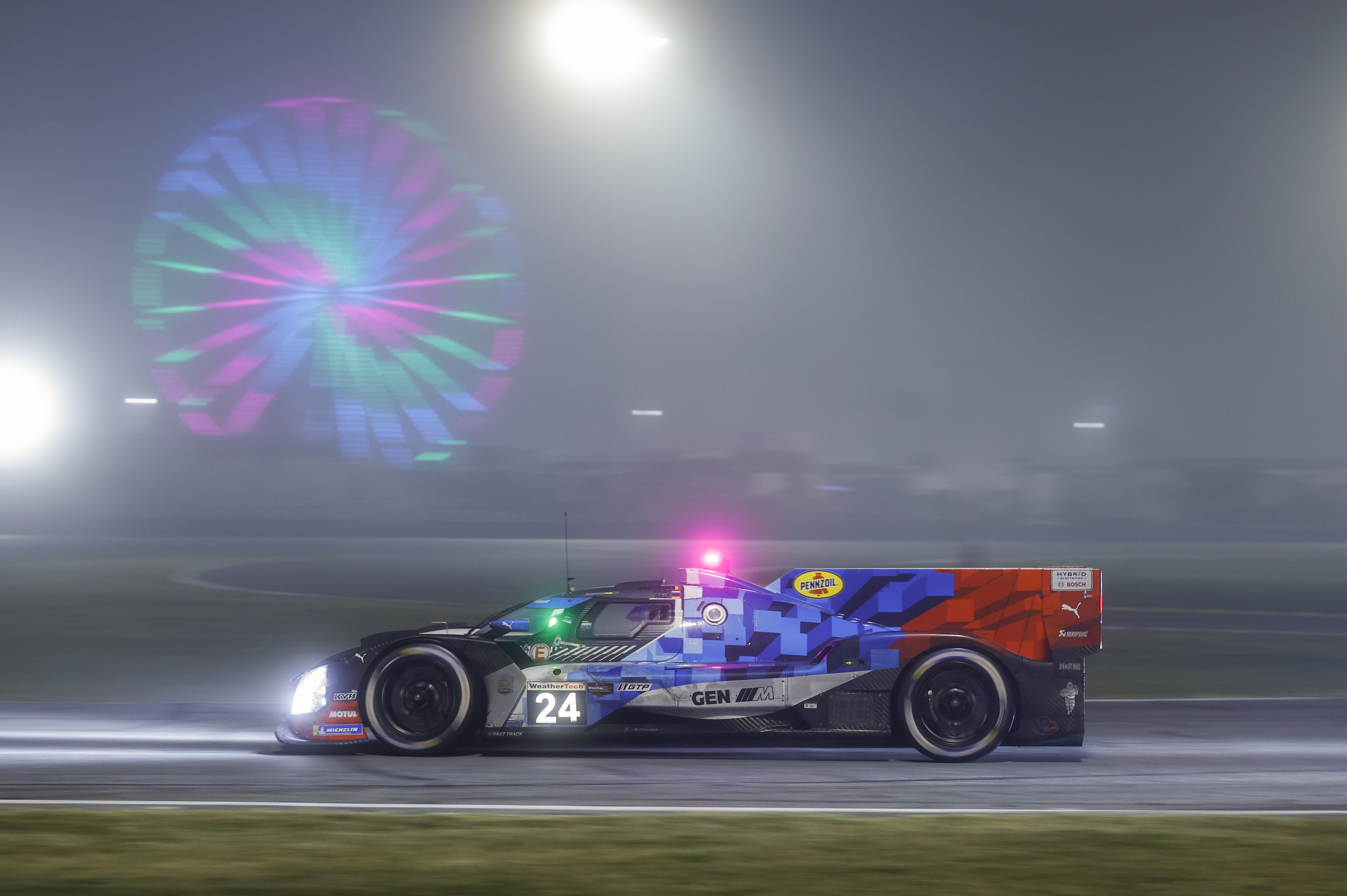
Daytona Beach might have avoided the freezing storm that gripped much of the rest of the country, but the race was inconvenienced by very thick fog that brought out a safety car for more than six and a half hours.
Credit: David Rosenblum/Icon Sportswire via Getty Images
Daytona Beach might have avoided the freezing storm that gripped much of the rest of the country, but the race was inconvenienced by very thick fog that brought out a safety car for more than six and a half hours. Credit: David Rosenblum/Icon Sportswire via Getty Images
The sanctioning body has also extended its activities with NASA, signing a partnership with the space agency to work together on “telemetry, diagnostics and sensor methodologies.”
Why bother racing?
Car racing is, at its heart, a sport. And it’s also entertainment. But it also serves as an engineering exercise, with each race series balancing those three elements to different degrees. And the engineering is why companies like Bosch get involved.
“We have our technology up from the Bosch side that we use in our everyday vehicle engineering,” said Joe Capuano, regional president of Bosch Engineering. “We’re able to bring those components in different ways to the racetrack, where obviously the requirements are different, and it’s really a loop of learning. So we take our base components, we apply ’em in different ways to the needs of the race teams, and then we take the feedback from the races and we can improve our products that we have in our automotive portfolio.”
A company like General Motors, which competes in IMSA under both the Cadillac and Chevrolet brands, mostly does it to beat other automakers. But that’s not the only reason.
“It really teaches engineers, teaches us to advance quickly, be able to analyze data, adapt, discard things. And inside General Motors we really connect engineering and motorsports directly,” said Eric Warren, vice president of global motorsports competition at GM. “Motorsports really resides in the engineering groups. So as we develop new simulation methods and things… it directly connects with the groups that are designing our cars. And so not only do we get to compete from that standpoint, that drives this brand against brand, but also helps us train engineers to really relate to those technologies and drive that technology that ends up on the road,” Warren said.
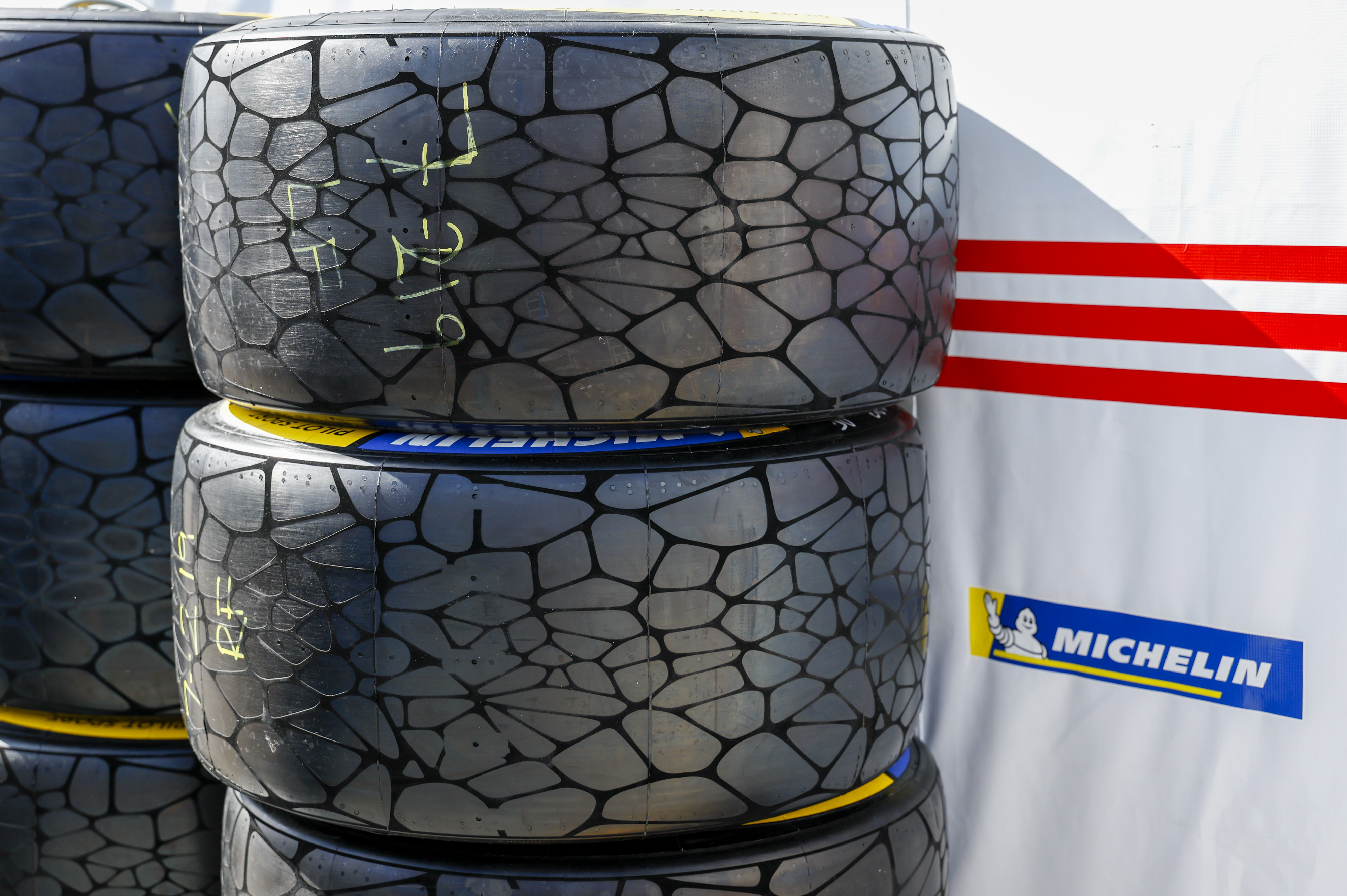
Michelin’s new hypercar tire. The darker web pattern is appliqué, made of the same tire compound plus Michelin’s “Velvet Technology,” which the tire maker is using on its sustainable racing tires (in MotoGP as well as IMSA and the World Endurance Championship) as a visual cue for fans.
Credit: David Rosenblum/Icon Sportswire via Getty Images
Michelin’s new hypercar tire. The darker web pattern is appliqué, made of the same tire compound plus Michelin’s “Velvet Technology,” which the tire maker is using on its sustainable racing tires (in MotoGP as well as IMSA and the World Endurance Championship) as a visual cue for fans. Credit: David Rosenblum/Icon Sportswire via Getty Images
“Literally what we do is we learn here on the weekend and then Monday morning we’re back in the office and we’re designing based on what we learned over the weekend into the products that we can drive ourselves through the rest of the week,” explained Matthew Cabe, president and CEO of Michelin North America.
This season, the tire maker has introduced a new tire for IMSA’s GTP class, as well as the near-identical cars in the World Endurance Championship, that contains more than 50 percent recycled and renewable material, while being more durable and no less performant than its older, less sustainable versions of seasons past. And the payoff for road cars is real: the tire maker’s CrossClimate tires make use of the same “slick intermediate” technology that adds grip in the wet that the French company proved at Le Mans a little over a decade ago.
It’s mostly digital now
The latest frontier in the automotive industry is the rise of the software-defined vehicle. Automakers are redesigning from scratch the electronic systems and architectures that run their cars.
“You’ll read and see a lot about software defined vehicles… and you think we’ve been doing that in racing forever,” said David Salters, president of Honda Racing Corporation USA. “So typically you have the minimum number of [electronic control unit] boxes on the car, you try and control the system end to end, and your engineers write the software. And the lovely thing about GTP is it is open software architecture. If we can think it, we can write it and do it. So in our case, we have an F1 ECU sat there, and we control all the software platform. We have a group of people—it actually helped us recruit people because it’s super interesting—and we literally develop stuff in days and hours,” Salters said.
“So we’re sort of walking the walk, it’s underneath. And so just software development, energy management, traction control; the traction control system we have on the car, Honda has a technical forum once a year, and we were asked to present what we’ve done with the traction control. It’s sort of self-aware,” Salters said.
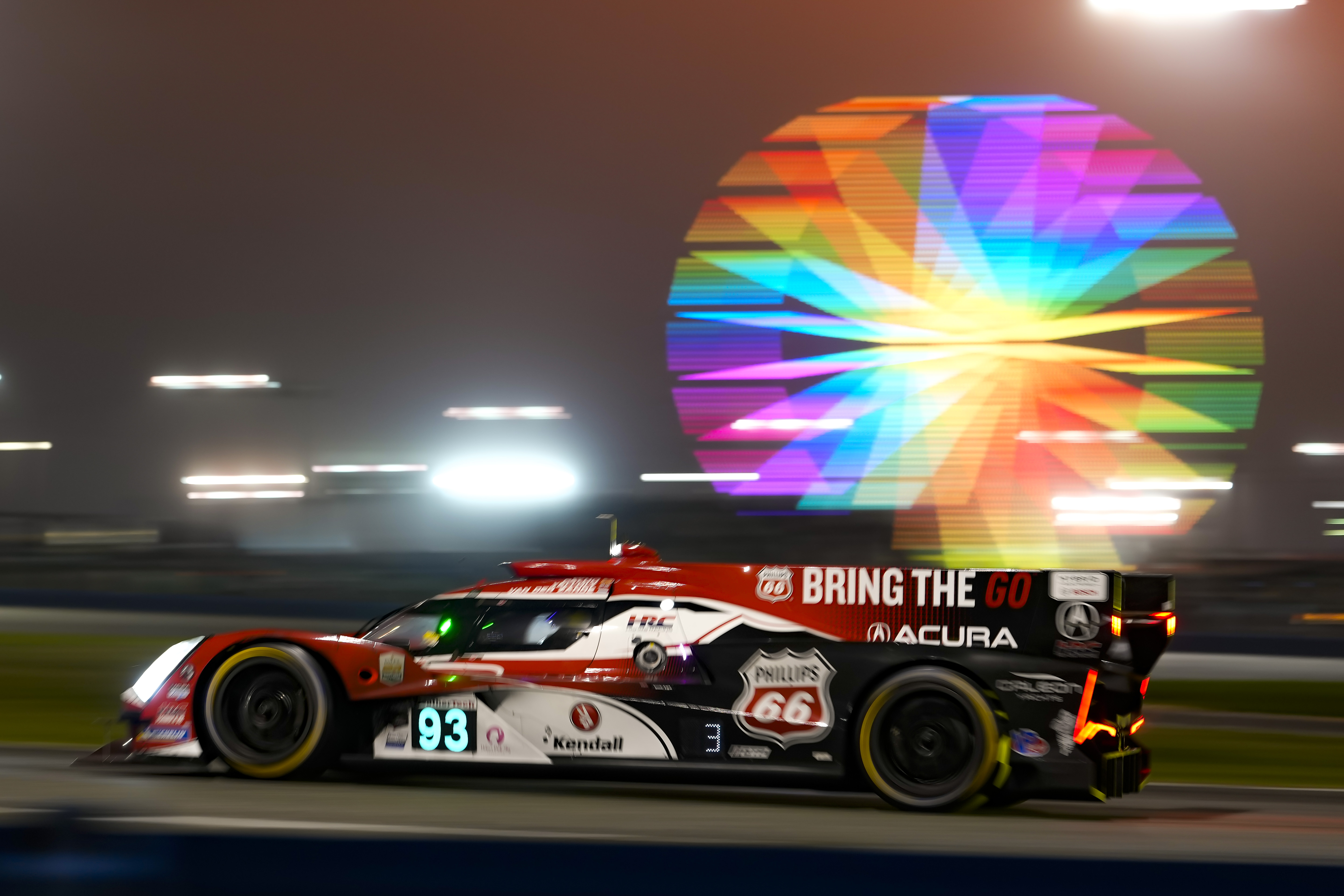
Hardware is tightly homologated, but rapid software iteration is a key to success in IMSA’s GTP class.
Credit: Andrew Bershaw/Icon Sportswire via Getty Images
Hardware is tightly homologated, but rapid software iteration is a key to success in IMSA’s GTP class. Credit: Andrew Bershaw/Icon Sportswire via Getty Images
“As David said, the vehicle is very software driven, but what is unique about particularly this race is, the conditions change, right? You have different drivers and totally different conditions,” said Warren. “You look at other race series: you have a short window, you’re optimizing on the razor’s edge, and you’re like, okay, you hit that. In this form of racing, particularly IMSA, it’s overnight, the track’s cold, you’ve got tire choices, and so you have to broaden your ability to model the vehicle, how to control the vehicle.”
IMSA Labs
Going racing to make better road cars is a pretty obvious reason to get involved if you’re a car company, but the sport can have benefits to other industries. For example, the Williams F1 team’s engineering arm took its knowledge of aerodynamics and used it to make open-front supermarket freezer cabinets stay colder with less energy. With IMSA Labs, the idea is to take the data from a race full of cars and use it to make better simulations. And like most other industries, it’s hard to escape the presence of machine learning and AI.
“It seems natural that an automaker and a tire company and a company like Bosch would want to use this space,” said IMSA President John Doonan. “But now it is our goal that the companies that I just mentioned and others will use this space to develop the next version of software that’s maybe not used in racing, maybe used in a broader audience, or prove out a product that’s already on the market. And as David and Eric mentioned, the data-rich environment that we have allows them to do that in real time in a very extreme—it doesn’t get more extreme than 24 hours across the street—environment like that,” Doonan said.
“Just by training imitationary techniques on the human data that’s generated, we can, with just a few hundred laps, drive cars at the top 1 percent of human performance. And to me that speaks volumes about quality of the data,” said Siddhartha Sen, principal research manager at Microsoft Research.
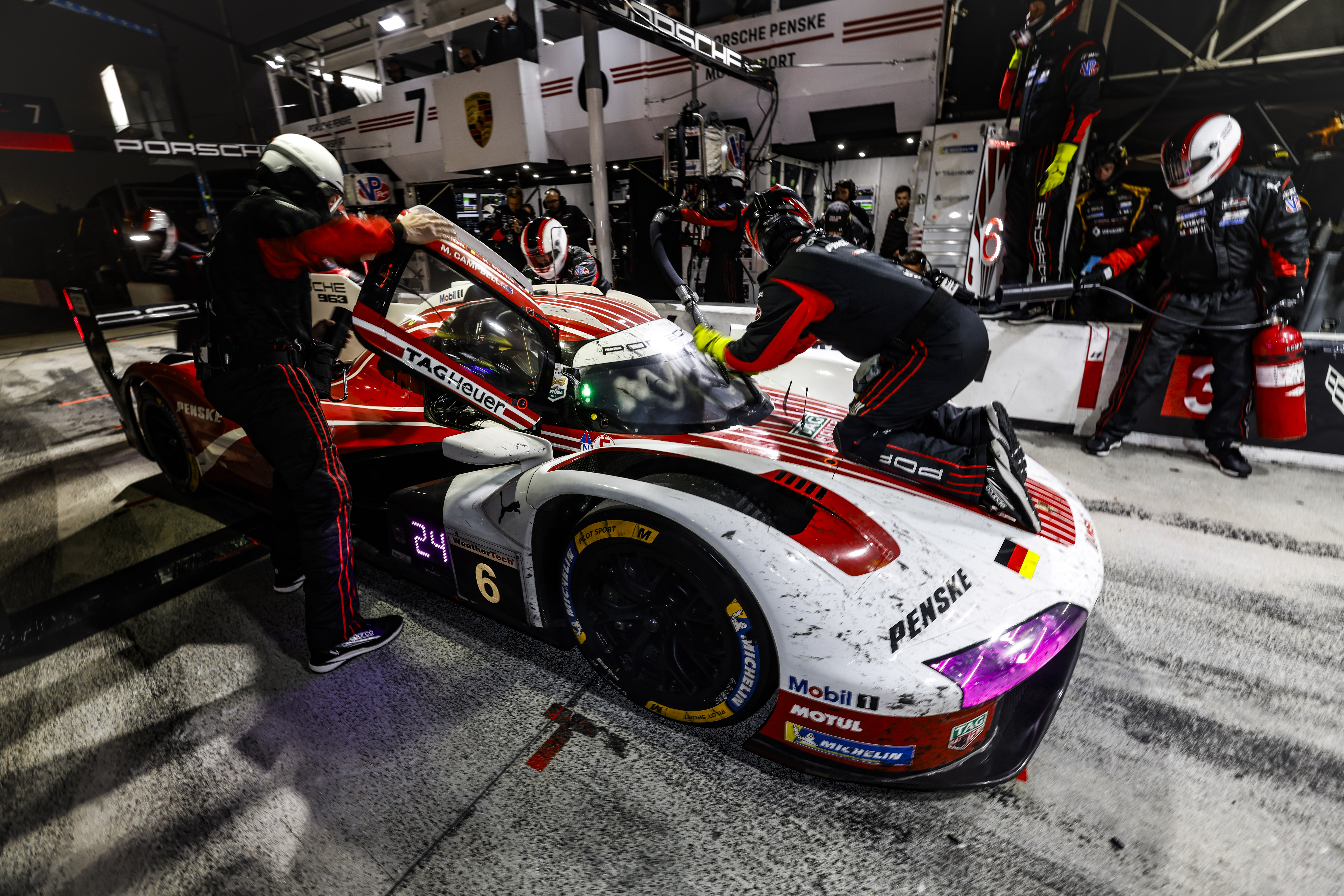
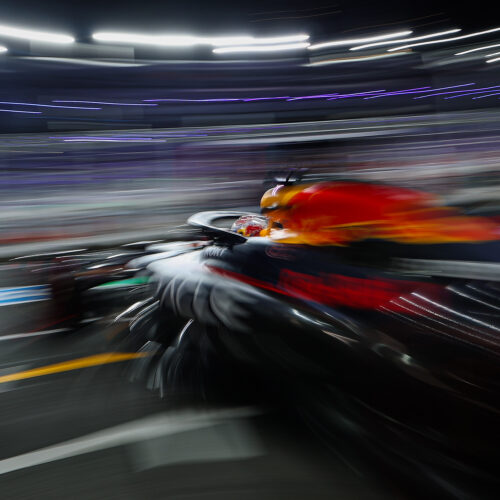
The less time spent stationary on the pit lane, the better.
Credit: Michael L. Levitt/Lumen via Getty Images
The less time spent stationary on the pit lane, the better. Credit: Michael L. Levitt/Lumen via Getty Images
“You wouldn’t be able to do that if the data wasn’t high quality. Machine learning is all about cleaning noisy data and dealing with, honestly, all kinds of crap that you get right? And here the quality of the data, the sensors that’s collected, the attention that’s paid to that data is amazing… So honestly, as an AI researcher, as someone running an AI program, it is kind of a dream, you’re almost like at a candy store when you see this kind of quality of data and the diverse ways in which people drive,” Sen said.
“In general, I found that the gap between simulation and reality can be made quite low with racing, and the only demand I’ve seen, that kind of low gap, [is] maybe the flight simulators… it’s just uncanny how people who, in online racing sims, perform, and that can kind of translate to what they see on the actual track. And I think that kind of low gap is a reason why we’re able to create models that can actually be useful in real life. And this is why I’m very excited about the platform in general, not just because of the data we’re going to collect, [but] the fact that it’s human data, and it’s diverse human data, which, by the way, is all the craze these days. Everything we’re doing with LLMs, we’re just trying to imitate how humans do things,” Sen said.

Jonathan is the Automotive Editor at Ars Technica. He has a BSc and PhD in Pharmacology. In 2014 he decided to indulge his lifelong passion for the car by leaving the National Human Genome Research Institute and launching Ars Technica’s automotive coverage. He lives in Washington, DC.