Visiting the stars (and planets, and telescopes) in VR
Walkthrough experience includes visits to stars, exoplanets, and observatories.
Credit: Smithsonian Starstruck
Credit: Smithsonian Starstruck
Having a computer strapped to my face for 40 minutes was one reason to feel a little sweaty. But the tour of the Universe I had just received in virtual reality—including visits to the near vicinity of the Sun, the giant black hole at the center of our galaxy, and a hellscape of an exoplanet 41 light-years distant—provided another excuse for sensing some heat.
Smithsonian Starstruck: An Immersive Experience is a 40-minute astronomy walk-through. It debuted in Washington, DC, in May with solo adult tickets now ranging from $29 to $35 and group tickets for four or more starting at $18 each (all now discounted by 15 percent); it will also open in Denver, Orlando, Florida, and San Antonio, Texas, later this year. I stopped by on a Monday in June to take it in.
After some onboarding that included setting such preferences as closed captioning and signing a waiver, I had enough time to sit on a bench next to the exhibit space (which has hosted other VR experiences) to enjoy watching another attendee with a VR headset blurt out, “Oh my God!”
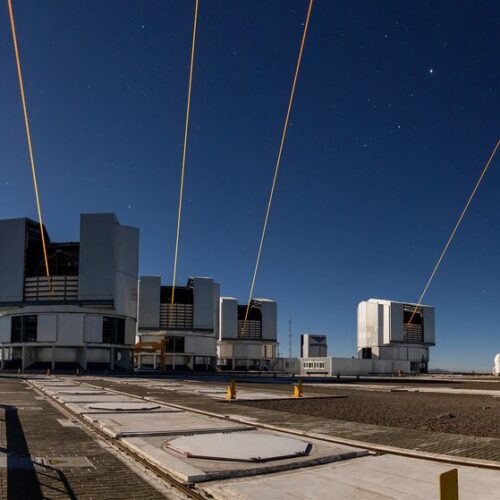
After putting on an HTC Vive Focus 3 headset and receiving introductory coaching about how to move through the exhibit space, the tour began. My virtual self was standing below a glittering night sky at the Multiple Mirror Telescope at the Smithsonian Astrophysical Observatory’s Whipple Observatory.
The stars in my VR night were big and bright, but they blurred noticeably when I moved my head. I had to wonder how a headset more recent than this 2021-vintage model would have performed; in other cities, Starstruck patrons will don a newer HTC product, the Vive Focus Vision, and the DC exhibit will move to that model at some point.
From there, we walked from one viewing spot to another in Starstruck’s room, occasionally bumping into each other as we followed the lead of a virtual tour guide wearing what looked like an approximation of SpaceX’s spacesuits and voiced by narrator James Seawood. We strolled to watch a re-creation of the Universe’s self-birth via the Big Bang, then ambled over for a close-up look at a stellar nursery that the Hubble Space Telescope made famous as the Pillars of Creation.
Seawood described the scene of star formation floating before our perch as “a cosmic pressure cooker” and “beautiful chaos.”
VR vistas
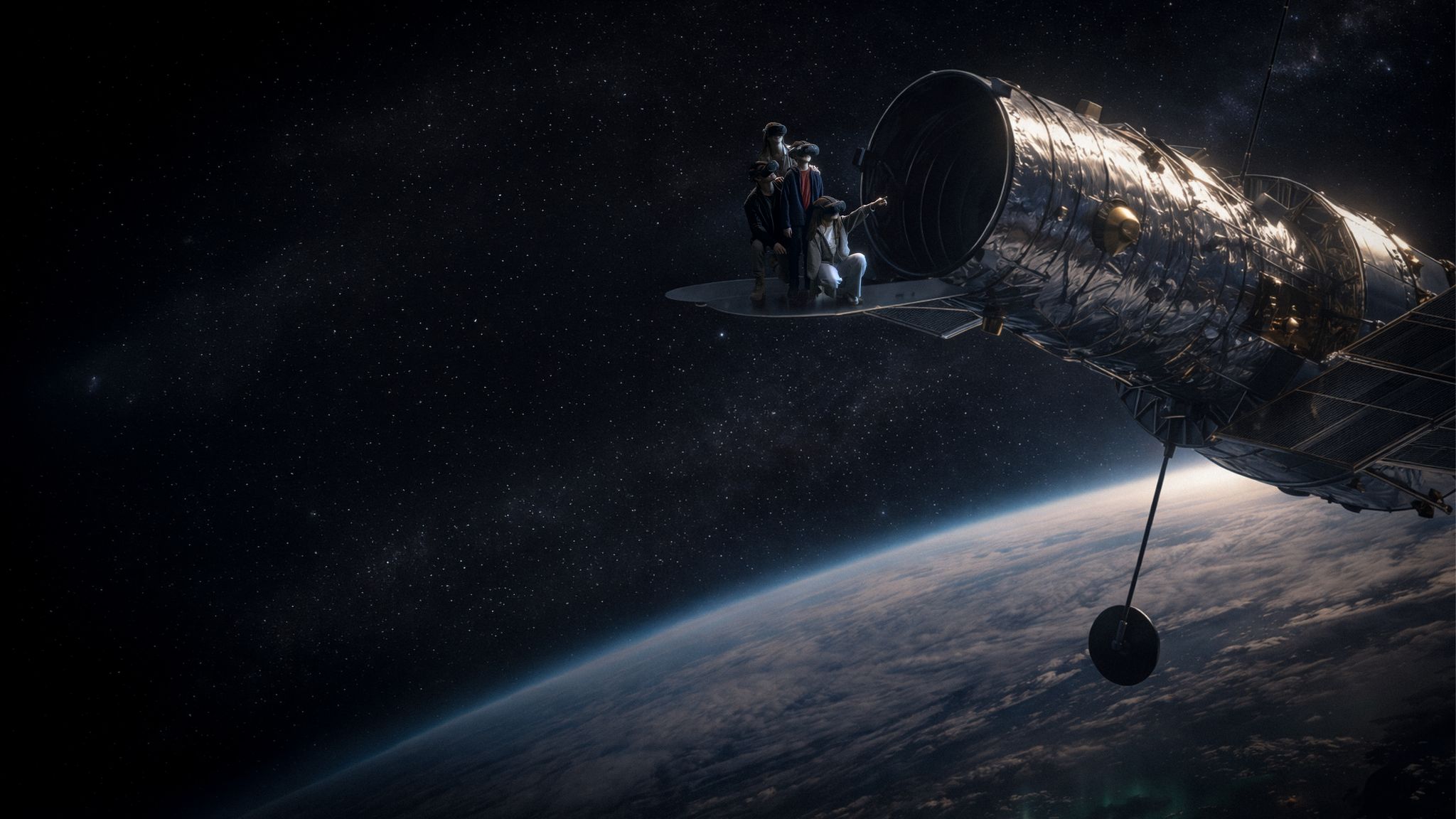
As we stood on a virtual set of glowing hexagonal blocks, the VR vistas zoomed as far out as a view of thousands of galaxies and as close as a dangerous proximity to the Sun—with NASA’s Parker Solar Probe keeping us company. Starstruck features three other of NASA’s farthest-seeing observatories: Hubble, the Chandra X-Ray Observatory, and the James Webb Space Telescope.
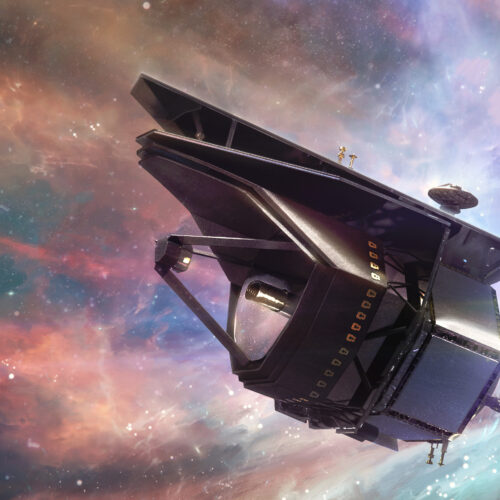
Each spacecraft’s close-up in the tour comes with a chance to press a “Take a picture” button that didn’t seem to do anything, plus an opportunity to play with a small model of it. I could not resist a chance to inspect JWST’s intimidatingly complex design, so I picked up a gossamer version of the observatory 1.5 million kilometers away from my real-world spot and gently turned it in my virtual hand.
Credit: Smithsonian Starstruck
Credit: Smithsonian Starstruck
Much of Starstruck focuses on the life cycles of stars and their planets, and a particularly evocative segment transported us to the hellish surface of Janssen, an exoplanet also known as 55 Cancri Ae that’s in an orbit so close to its star Copernicus that its year lasts about 17 hours.
The experience’s depiction of that planet’s surface as rugged rock outcrops with lava flowing around them (and stashes of diamonds crushed into being by the intense heat) may understate Janssen’s brutal environment—some analyses suggest that its entire surface is molten rock.
Many exoplanets are stuck in inhospitable orbits that make life or just the presence of liquid water impossible, and this stop on the tour brings home Earth’s good fortune. As Seawood put it: “We hit the stellar jackpot.”
Two other stops provided an up-close look at the death throes of stars.
A visit to Betelgeuse showed that the late-stage red supergiant in the constellation Orion was looking distinctly lumpy as it had begun to fuse higher elements. The visit then took us into the future with the star going supernova, putting on a show that no one on Earth has seen for centuries.
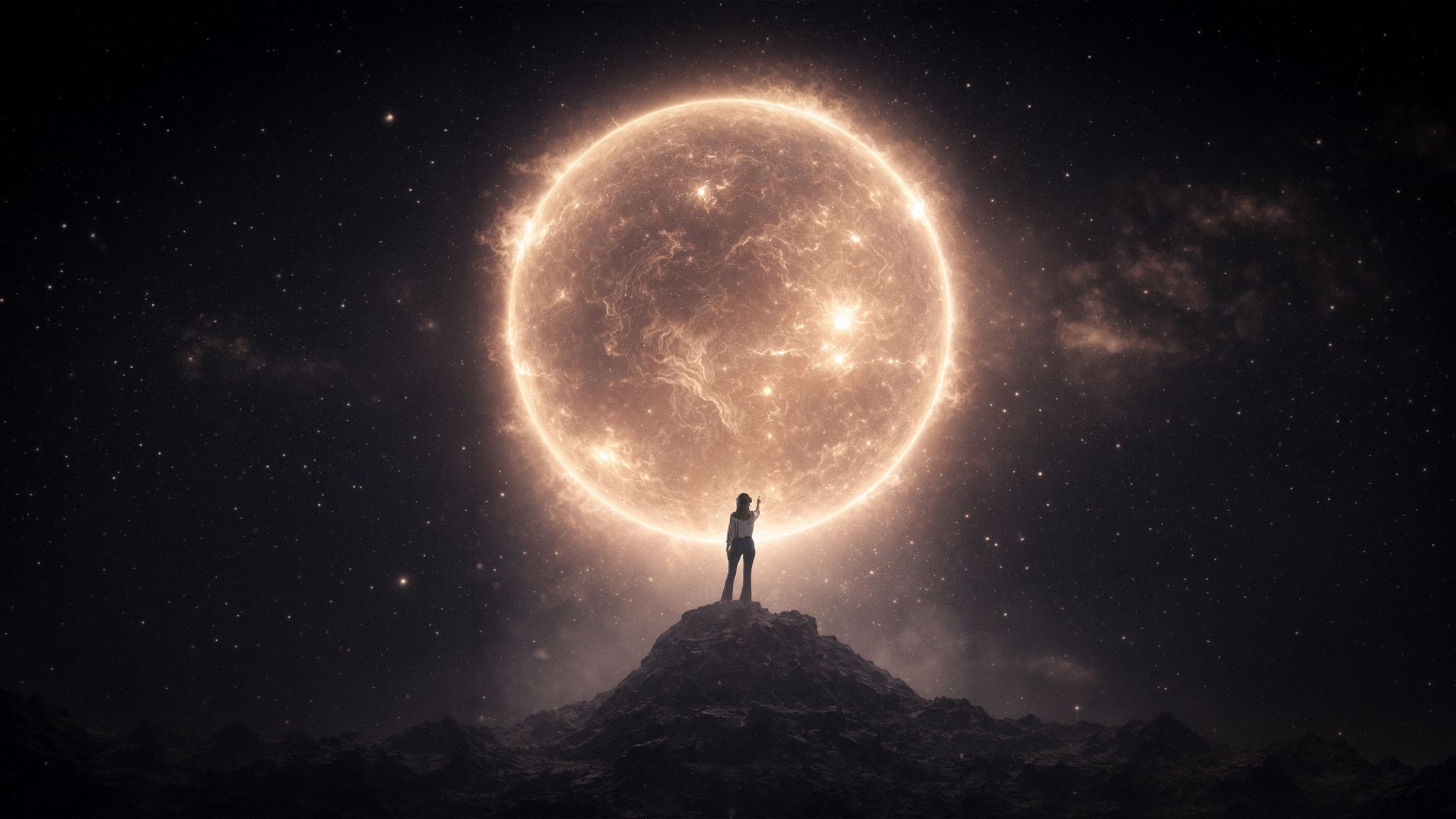
The last stop in space took us to just outside the event horizon of Sagittarius A*, the unimaginably enormous black hole at the center of the Milky Way. Starstruck made its most effective use of VR’s potential here; I raised my virtual hand to direct a beam of light toward the black hole, then saw it bend into that inescapable gravity well and shift into the red.
The tour ended by taking us back to a particularly remote corner of Earth and another sky full of stars: Chile’s Atacama Desert, the future site of the Giant Magellan Telescope (SAO is among its founding partners). It depicts that still-under-construction observatory as finished, with its enclosure open and its seven primary mirrors angled up to see a little farther into the Universe.
For a VR connoisseur with an Apple Vision Pro at home, the experience here might not deliver enough technical wow. But if you’re a space nerd or astronomy enthusiast—especially if you can assemble three like-minded friends as an away team to qualify for the group discount and make it less awkward when you walk into each other mid-tour—it provides an engaging escape.