- United’s new Airbus A321XLR begins service soon, and it’s packed with tech
- It’ll mostly serve international, transatlantic routes with free Starlink-powered Wi-Fi
- The big surprise? Two Economy Plus rows with no middle seats
Just a few months back, I got to go inside United’s next-generation Boeing 787 Dreamliner, complete with a high-tech new interior, spacious seats, and some notable upgrades for Economy.
The 787 is a wide-body aircraft built for United’s biggest and longest routes, and now, the airline is bringing that same design philosophy to a much smaller plane and experimenting with something I’ve never seen on a United aircraft before: an Economy Plus row with no middle seat.
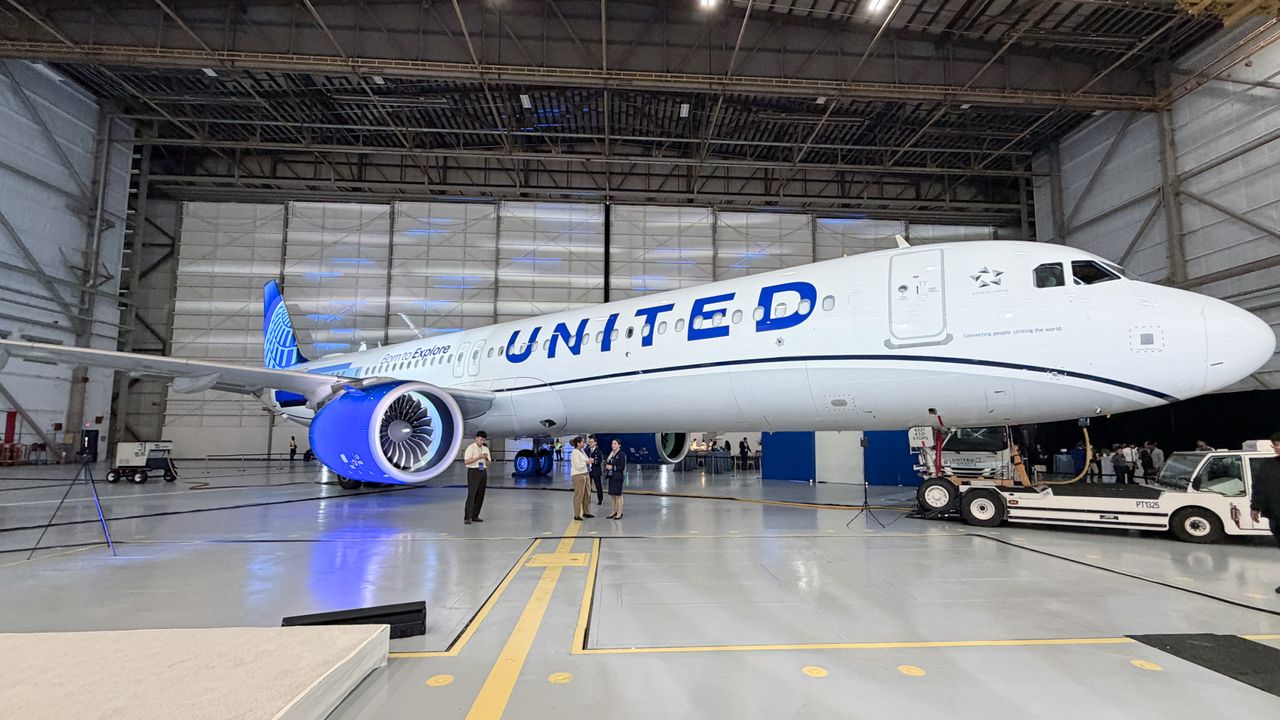
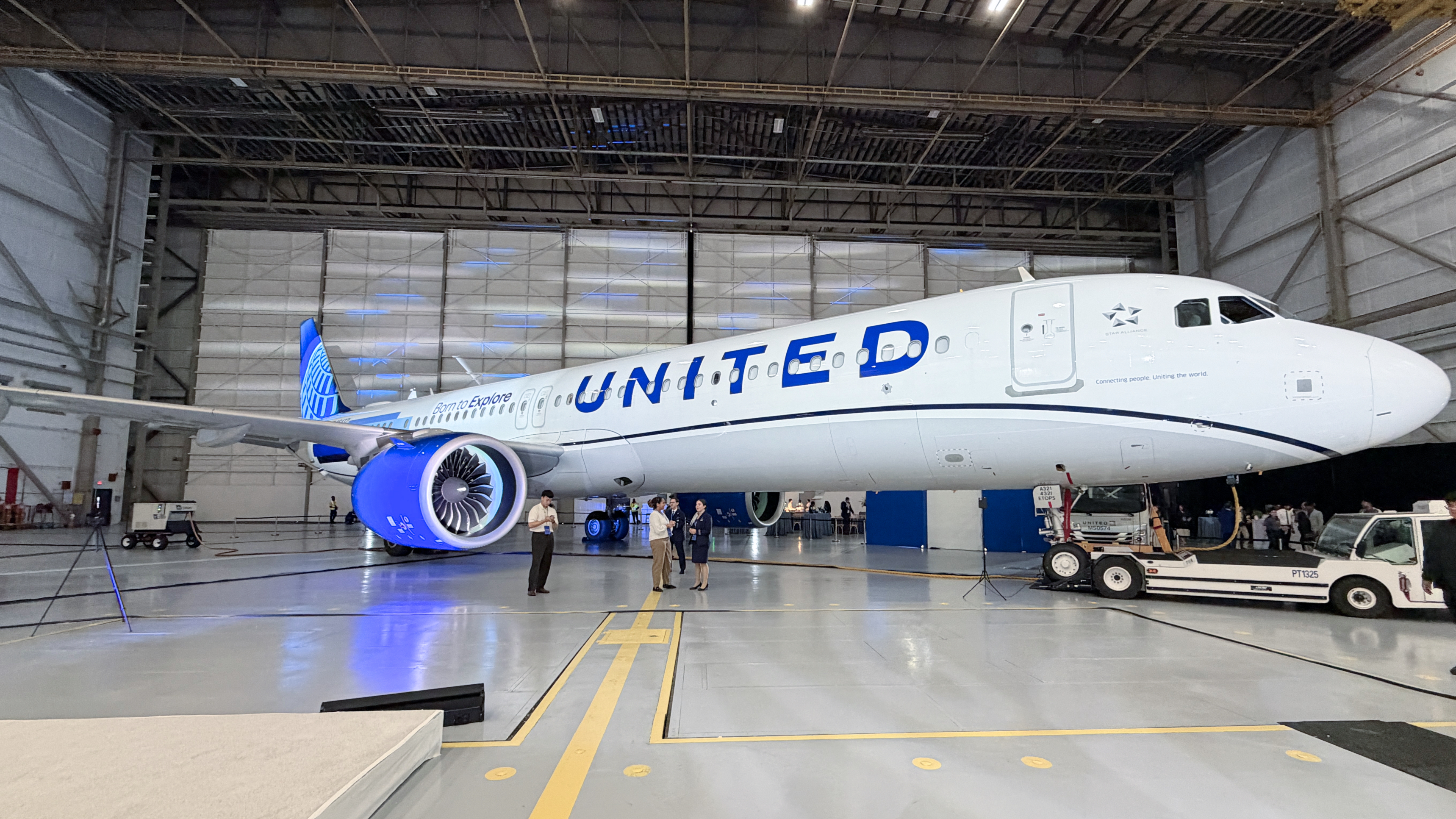
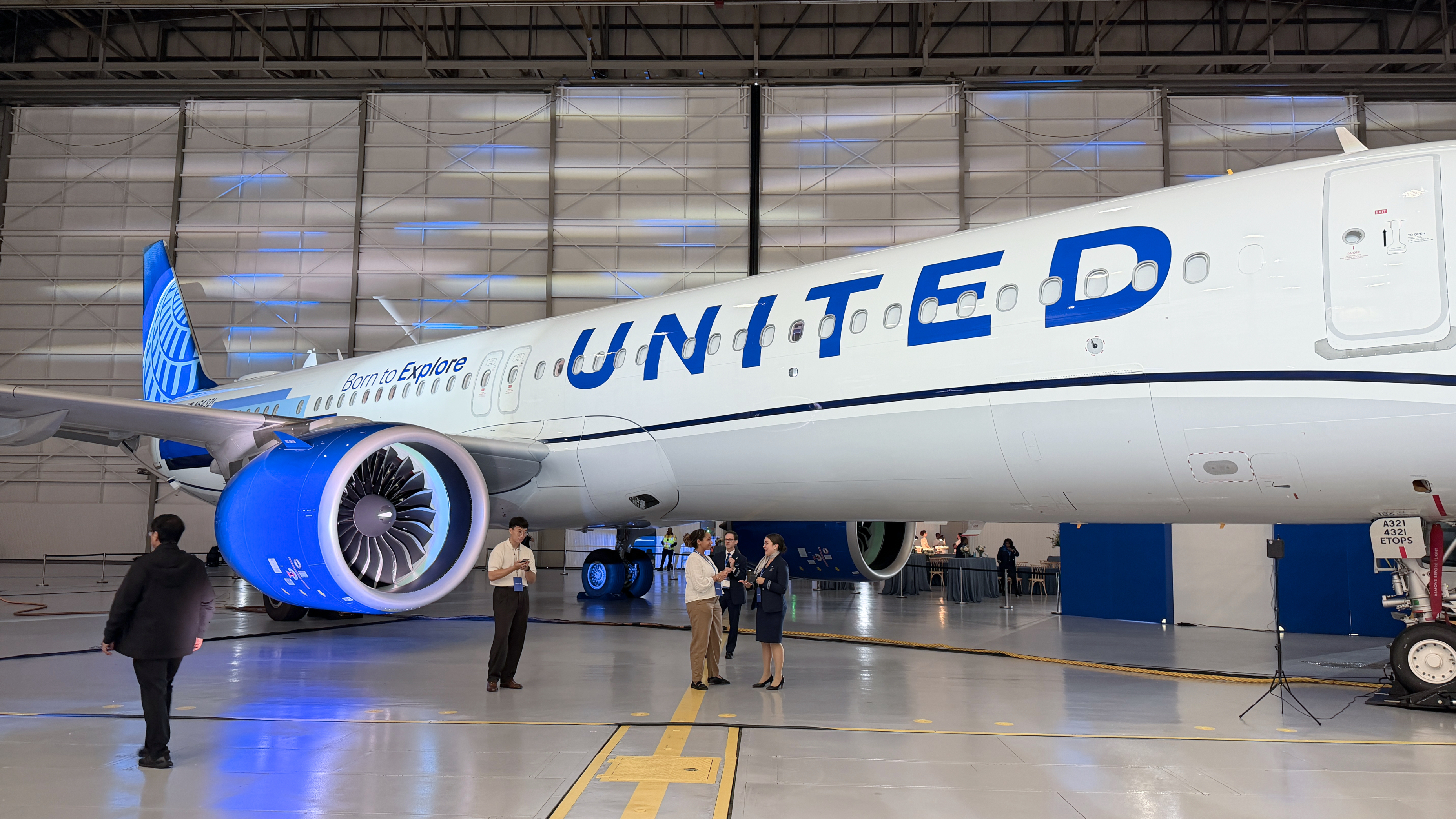
I’ve been inside United’s brand-new Airbus A321XLR, a single-aisle aircraft that’s designed to bridge the gap between narrowbody efficiency and widebody distance capabilities, and it’s a pretty fascinating look at where the airline’s cabins are headed.
There’s a new Polaris business-class seat with closing doors, a spacious Premium Plus cabin, 4K OLED screens at every seat, Starlink Wi-Fi from day one, and, yes, those two-seat Economy Plus rows, designed to give you a little more space without the dreaded middle seat.
And after spending time in all four cabins, I think United might be onto something.
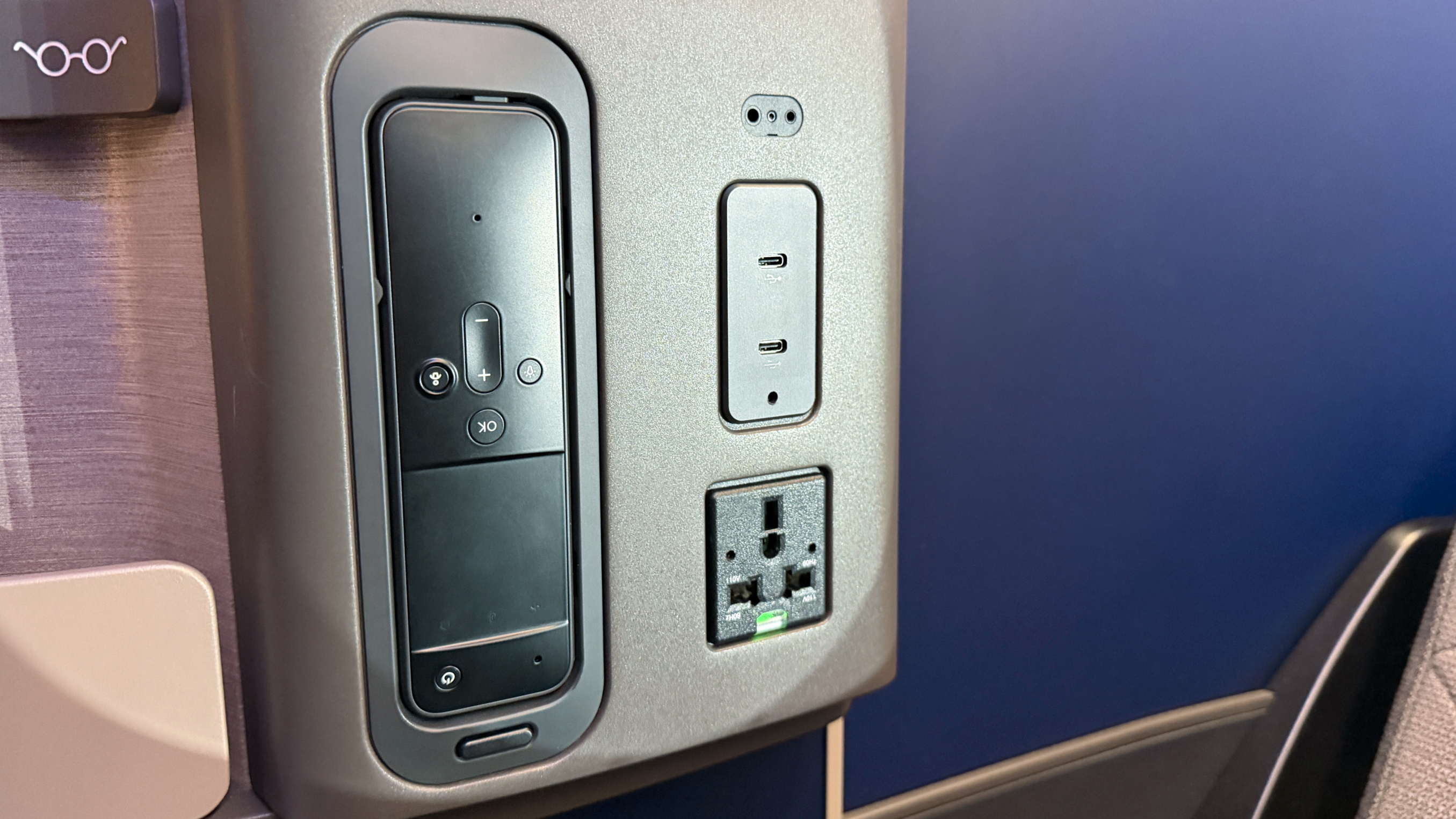
Let’s start with the new Polaris business-class product. The A321XLR is a single-body aircraft with 20 Polaris seats, complete with closing doors on either the left or right side of the aircraft. They are pretty spacious, though a bit smaller than the Polaris seats on the 787 Dreamliner. Still, you get an ample seat with an electronic touchscreen control to let it lay flat, kick out the leg rest, or adjust many facets of the experience.
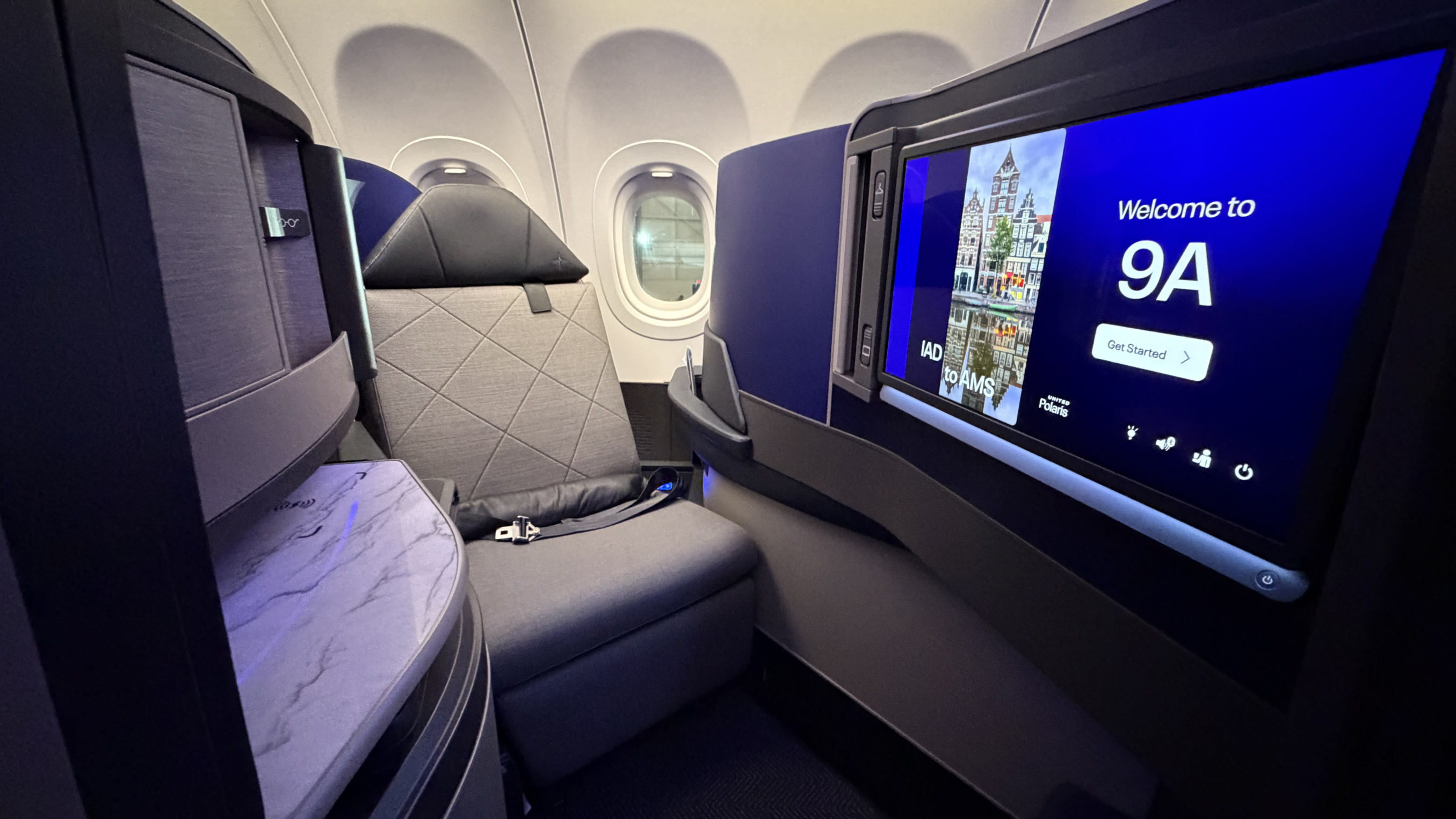
There are plenty of power ports, including two USB-C ports that top out at 60 watts, a standard wall plug, and a wireless charger. At the center of the experience is a 19-inch 4K OLED screen that’s touch-enabled and, with a button press, slightly pushes out from its base and lets you pull it forward for the perfect view. You’ll also find plenty of storage and a sizable tray table that I wish was a bit larger — still, it should fit a 14-inch laptop very comfortably.
That’s the most premium experience on board the A321XLR. The middle option of United’s three class offerings is Premium Plus, which features a very spacious recliner that rivals those in domestic first class on smaller single-body aircraft.
It boasts a 16-inch 4K OLED screen that can tilt and matches the size of the screen on the original Polaris product still in use on some aircraft. You’ll even find a wireless charger tucked under the armrest — a unique spot, but helpful. There’s also a standard wall plug for each seat — remember, Premium Plus is a 2×2 configuration — and a USB-C port tucked at the bottom of the OLED screen.
The tray table is pretty close to the size of what’s in Polaris and can be a good mini-desk for working in the sky, or, let’s be honest, enjoying whatever meal United is serving.
Finally, we move into Economy, which has a total of 118 seats split into 84 standard Economy and 34 Economy Plus extra-legroom options, including two with the middle seat removed.
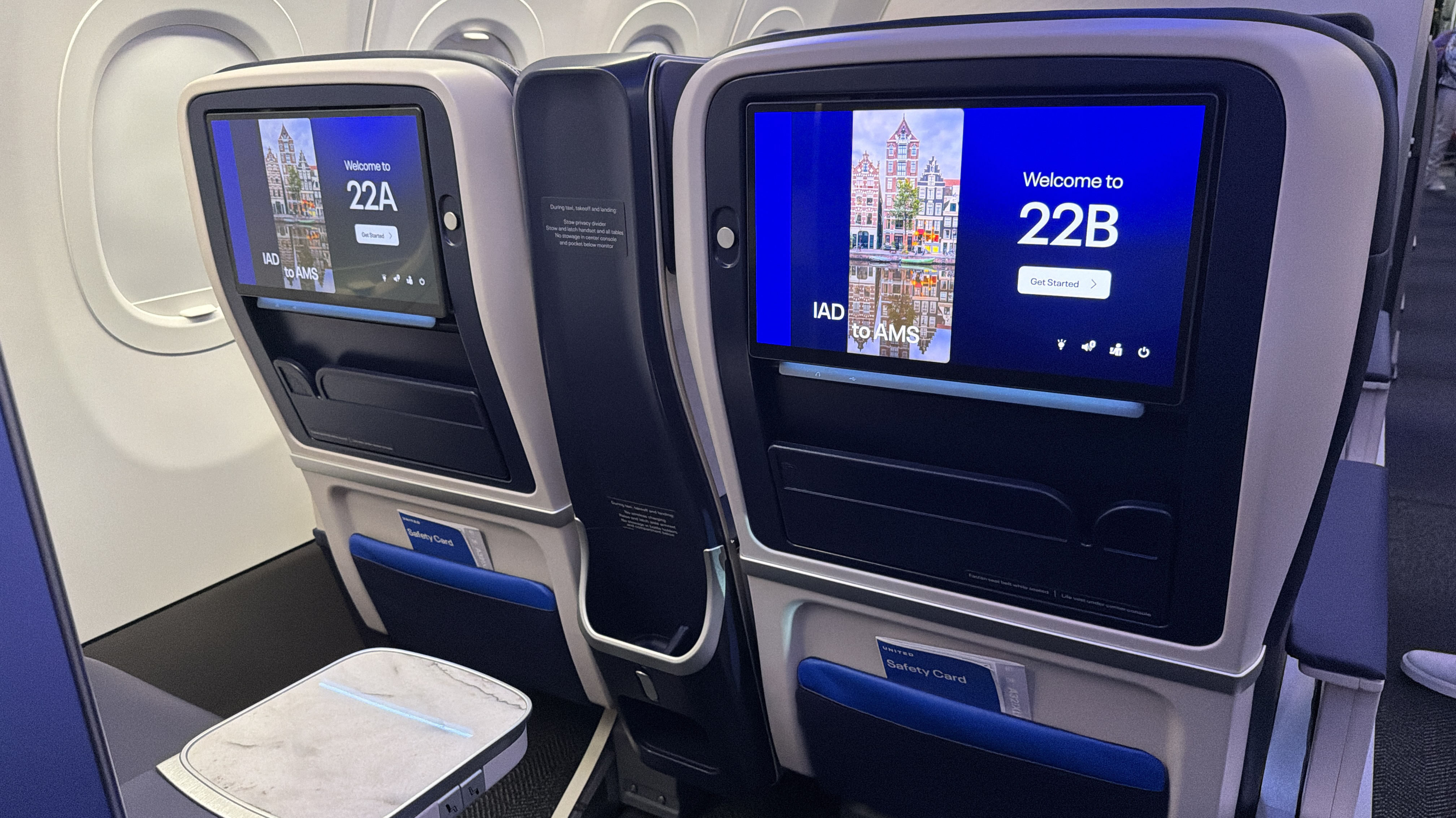
With any of these seats, you get a punchy, vibrant 13-inch 4K OLED that’s touch-enabled; across the board, United is knocking it out of the park with the displays here. An intuitive interface offers plenty to watch, including Apple TV in the sky, plus access to music and podcasts from Spotify. A crisp, vibrant screen in each seatback will certainly elevate the experience everywhere.
United began the process of reintroducing screens on aircraft without them, and making them a key part of the ‘United Next’ cabin, back in 2021, and now the airline has close to 800 aircraft with screens in every seat, and should have a quarter of a million seat-back screens across its fleet by the end of next year.
Peter Wolkowski, United’s Head of Product Marketing, told me, “In our post-flight survey data, we just see kind of huge increases in satisfaction across the board when customers fly on an aircraft with screens versus one without.”
There’s a standard headphone jack and USB-C port built into every Economy and Economy Plus seat, meaning that every seat, even in Economy, gets at least one power source — that’s excellent. You also get two standard wall plugs per row, but those are shared.
Economy Plus with open middle seats is where the experimentation comes into play — it was my first time seeing these, and especially for a transatlantic flight, which are the routes the A321XLR will primarily be flying, if the price is right, it could really be worth the upgrade.
The main appeal is no one next to you in the middle, and for couples flying, this is pretty nice. You get plenty of elbow room, and the middle seat essentially has a metal table bolted across it, with two indents for cupholders and a padded rear.
I’m very curious to see pricing for these, and how much of a premium they command over standard Economy Plus.
United is starting with only two of these rows on the aircraft, but if they prove popular, I wouldn’t be surprised if the airline expands this offering. Peter Wolkowski, United’s Head of Product Marketing, told me, “There’s a lot to love about this aircraft, but just having the ability to kind of test new concepts is really exciting.”
“We’re really eager to see how customers respond to [the open middle seat option], and if it is something that kind of performs well and customers love it, we’re going to look at more ways of doing that type of thing on other aircraft.”
I hope we continue to see this kind of experimentation with new seat types, and at affordable price points, rather than airlines just prioritizing the top end.
Rounding out the United A321XLR offering is ‘Starlink from the start’, meaning the plane is equipped with the right antennas and routers, as well as the proper certification, to offer Starlink Wi-Fi from its very first flights.
This means that any MileagePlus members can get free, fast Wi-Fi for as many devices as they bring, and in my testing, both on media flights and regular ones, it really improves the overall flying experience. No longer is there a concern about not being able to connect, whether that’s when you’re sending a text to a loved one or friend, or something else that requires a connection.
The A321XLR also features mood lighting, which United can split up by cabin — i.e., Polaris, Premium Plus, or Economy — to help set the mood for different parts of the flight, but also to potentially help combat jet lag.
So when does the A321XLR begin flying, and where is it headed?
Alongside the launch event at a hangar at Newark Liberty International Airport, United also announced new routes, and the A321XLR is a key part of them.
Starting September 1, 2026, the A321XLR begins with domestic flights, but later this year, the aircraft formally kicks off its international routes. In total, United announced 10 entirely new international destinations and 13 new routes for 2027.
The new routes are San Francisco to Okinawa, Japan; Washington Dulles to Toulouse, France; and several for Newark. The latter includes Newark to Luxembourg City; Marseille, France; Ibiza, Spain; Valencia, Spain; Terceira, Portugal; Ljubljana, Slovenia; Olbia (Sardinia), Italy; and Catania (Sicily), Italy.
If you like the idea of a flight on the Airbus A321XLR, it’ll be headed to Luxembourg from Newark, Washington, DC; to Toulouse from Newark; to Ibiza from Newark; to Valencia from Newark; and to Marseille from Newark.

Follow TechRadar on Google News and add us as a preferred source to get our expert news, reviews, and opinion in your feeds. Make sure to click the Follow button!
And of course, you can also follow TechRadar on YouTube and TikTok for news, reviews, unboxings in video form, and get regular updates from us on WhatsApp too.