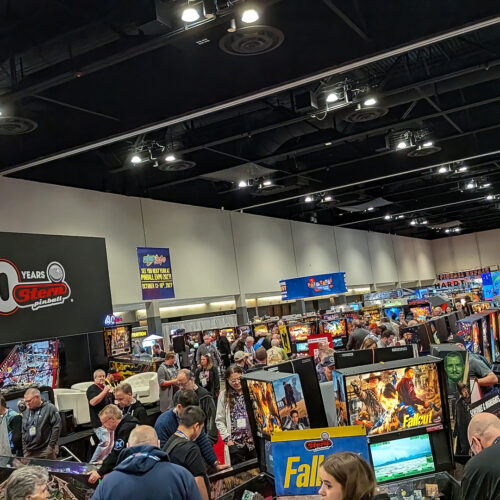
Flipping through the highlights in and around Pinball Expo 2026.
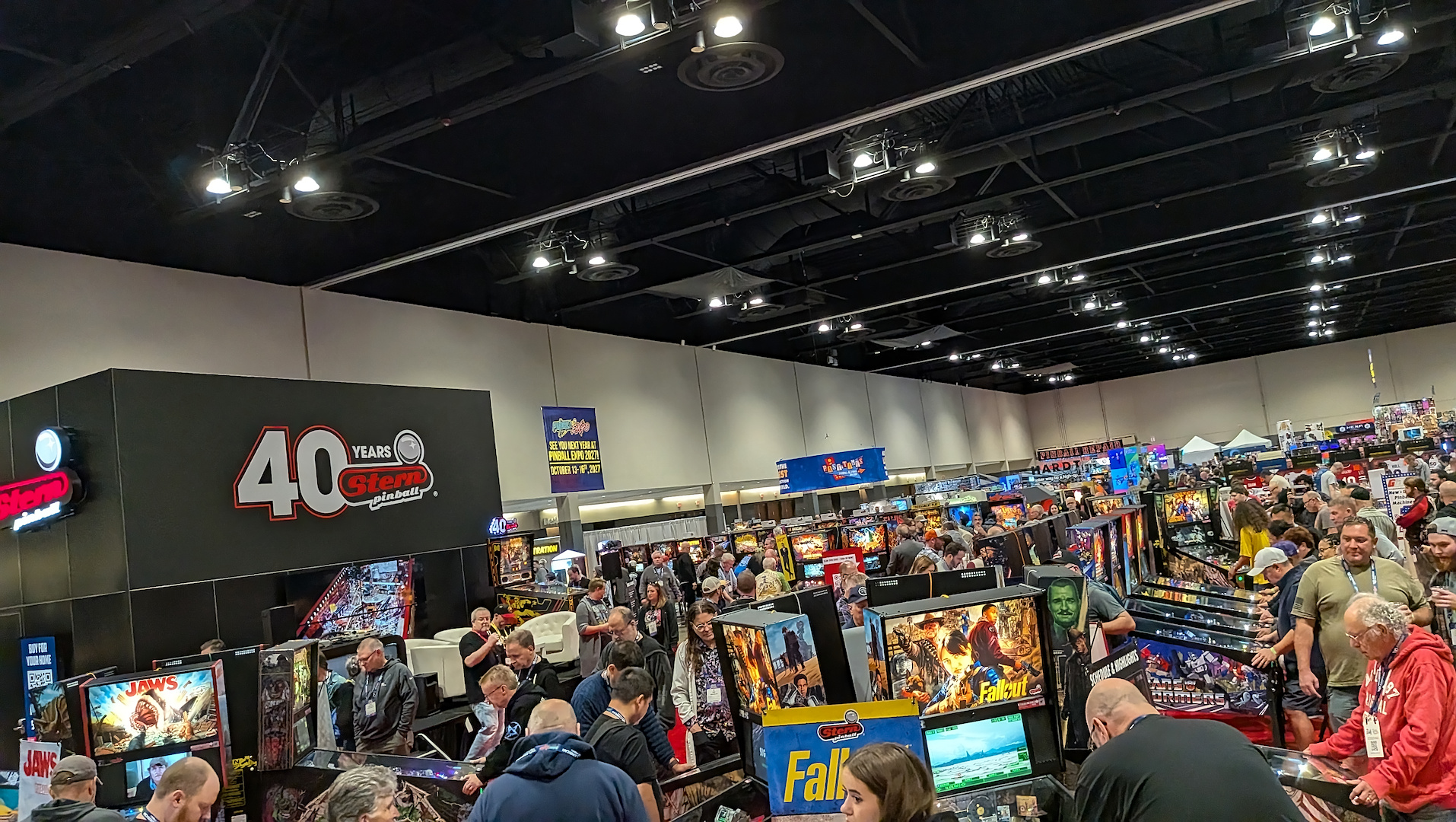
It’s October in the Midwest, which means it’s time for the pinball world to descend on a convention center in Chicagoland for the annual Pinball Expo. Once thought to be an entertainment sector slowly bleeding out, pinball has come back in a big way in recent years. I visited one of Chicago’s last old-school manufacturers before heading down the road to see what’s new in the silver-ball universe.
Behind the silver ball
Hundreds gathered on a brisk fall Friday morning outside Stern Pinball’s headquarters in Elk Grove, Illinois, waiting to enter a Wonka-like wonder factory where piles of raw parts become licensed creations from Jaws to the brand-new Fallout. Stern invited me to tour its offices and factory floor before heading off to the convention in nearby Schaumburg, Illinois.
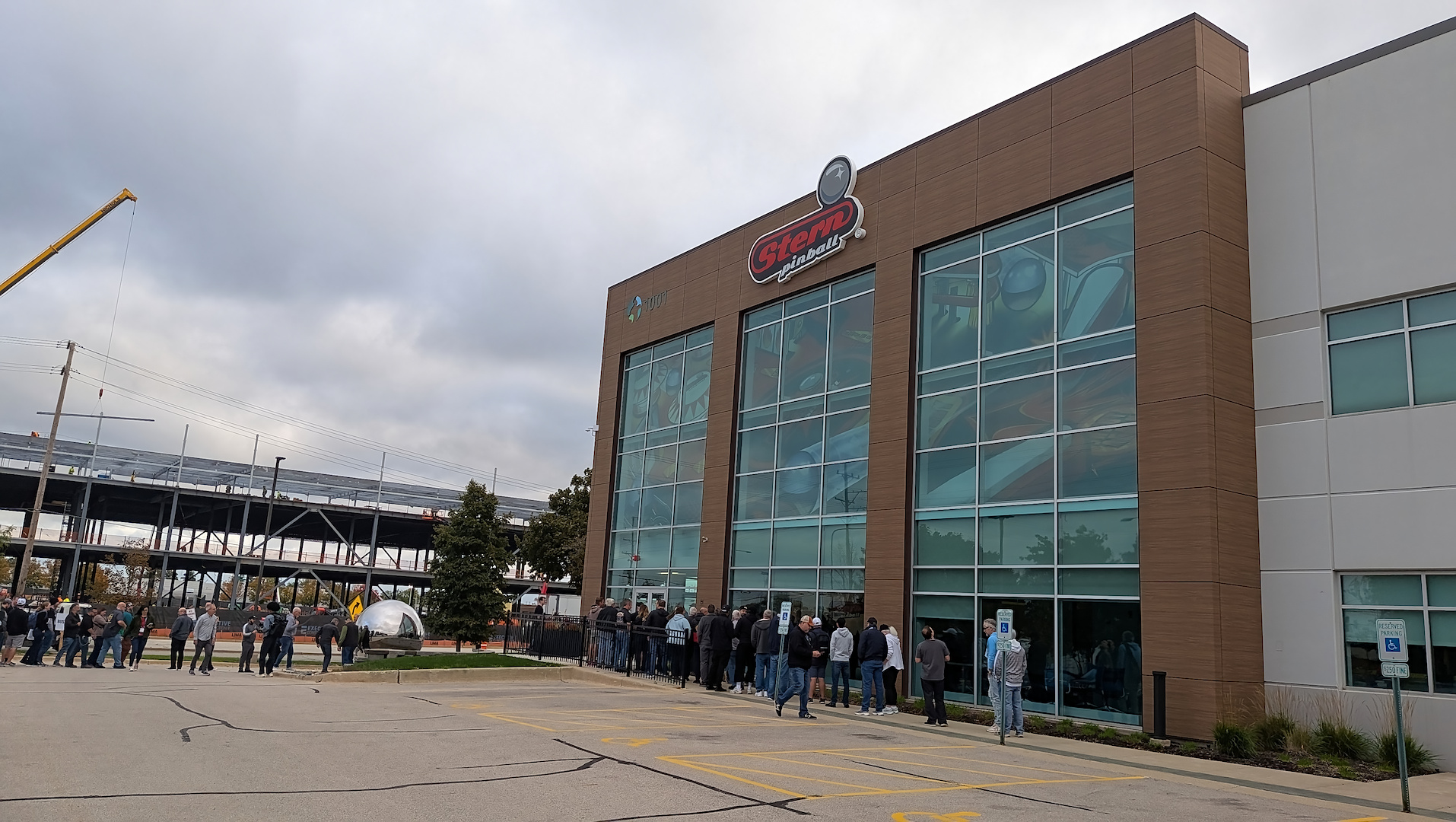
An early-morning line begins to form outside of Stern HQ as buses of Pinball Expo attendees arrive for tours.
An early-morning line begins to form outside of Stern HQ as buses of Pinball Expo attendees arrive for tours.
As I stood with my tour group in Stern Pinball’s HQ lobby, mouth agape at the dozens of machines lining the walls, we were greeted by the man himself, Gary Stern, who gave us some background on the company’s 40-year history. After a stop at Gary’s podium, we were ushered to the factory floor entrance, where Stern employee and legendary game designer George Gomez briefed us on the tour rules and answered questions. According to Gomez, “at any given time, Stern controls 90 percent of the current pinball market, and everybody else splits the rest.”
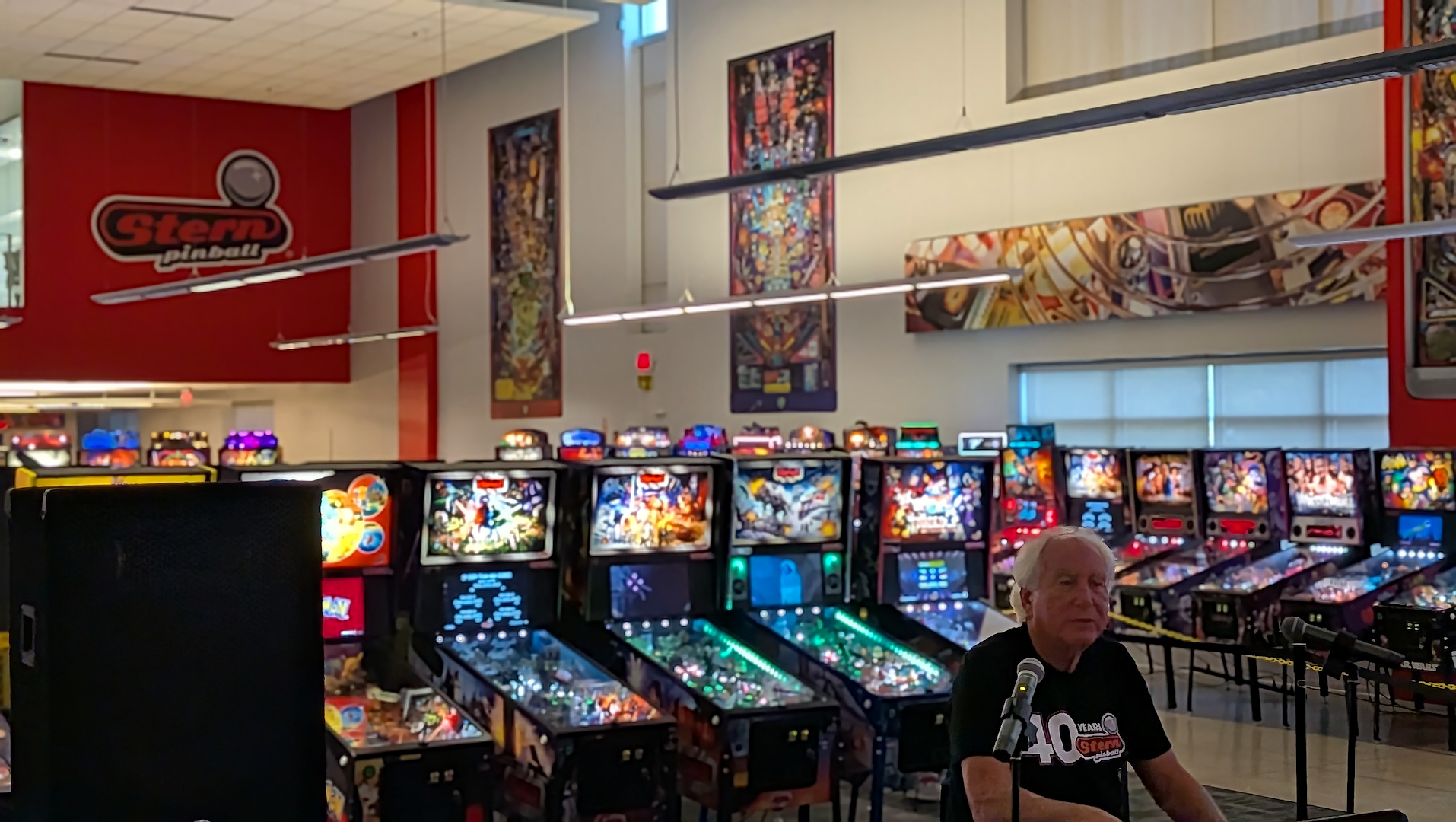
Gary Stern greets visitors at the Stern factory tour.
Gary Stern greets visitors at the Stern factory tour.
While the industry may be expanding toward something more reminiscent of its glory days, there’s no doubt who still rules the market. With a steady stream of new license releases, Stern has cemented itself as the brand in modern pinball.
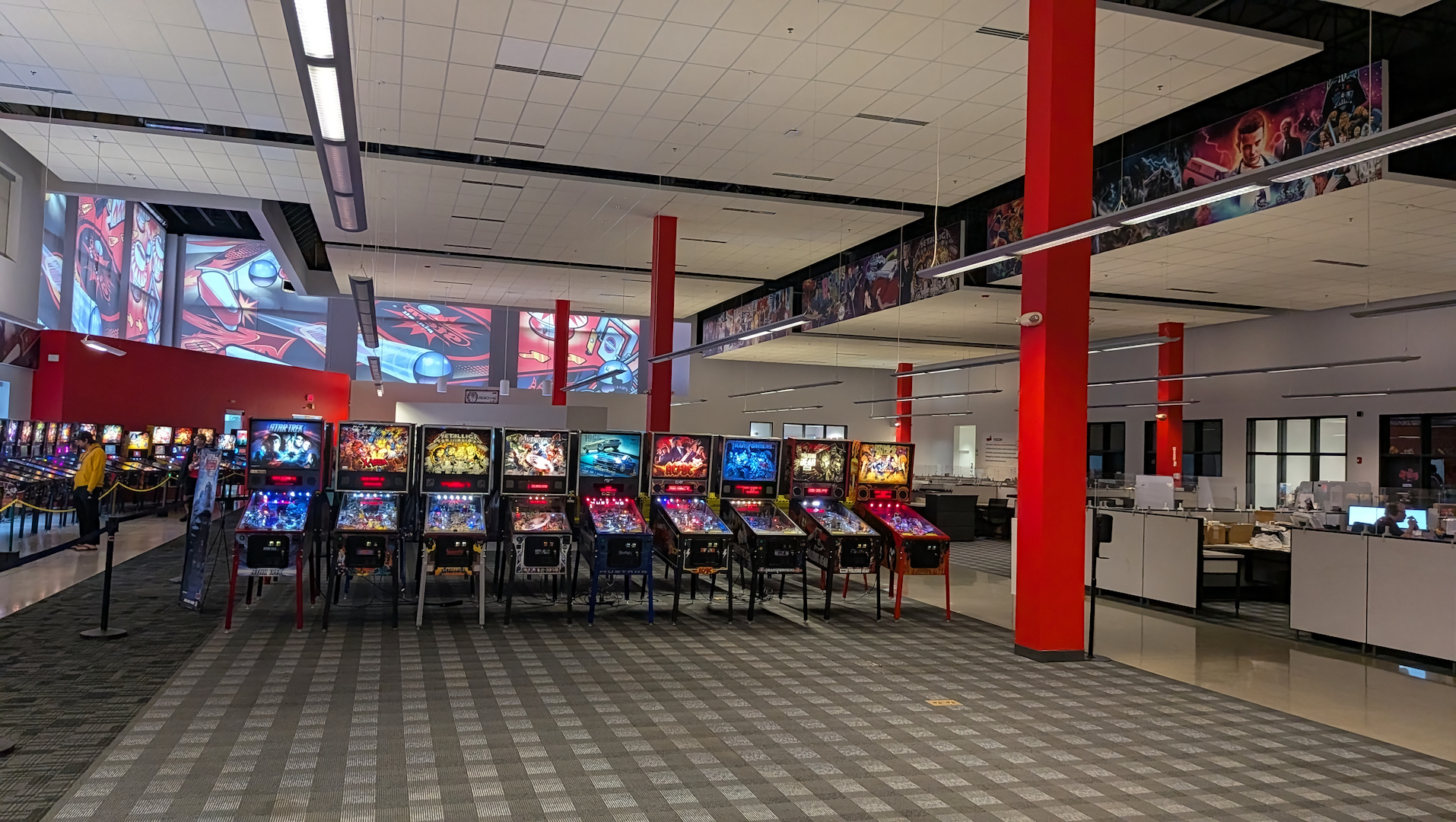
Stern HQ. I think I could work in this office…
Credit: Nick Indge
Stern HQ. I think I could work in this office… Credit: Nick Indge
What I saw on the expo floor, though, showed me that the remaining 10 percent of the market is doing some really interesting things, and hobbyist projects are booming. From modular home setups to open development kits that let anyone with silver-ball dreams try their hand at game design, there was something for everyone. In short, it’s a very exciting time to be a pinball fan.
The Stern pinball headquarters in Elk Grove Village, Ill.
Latest from the show floor
Stern’s latest offering, Fallout, stood near the entrance of a convention floor packed with the latest machines from manufacturers like Jersey Jack, Barrels of Fun, Spooky Pinball, and others. I’ve attended this show for the last four years, and each year seems to bring new companies into the fold. Despite more than 25 years of advances in home entertainment, nothing quite matches the tactile thrill of launching a metal ball around a wooden cabinet.
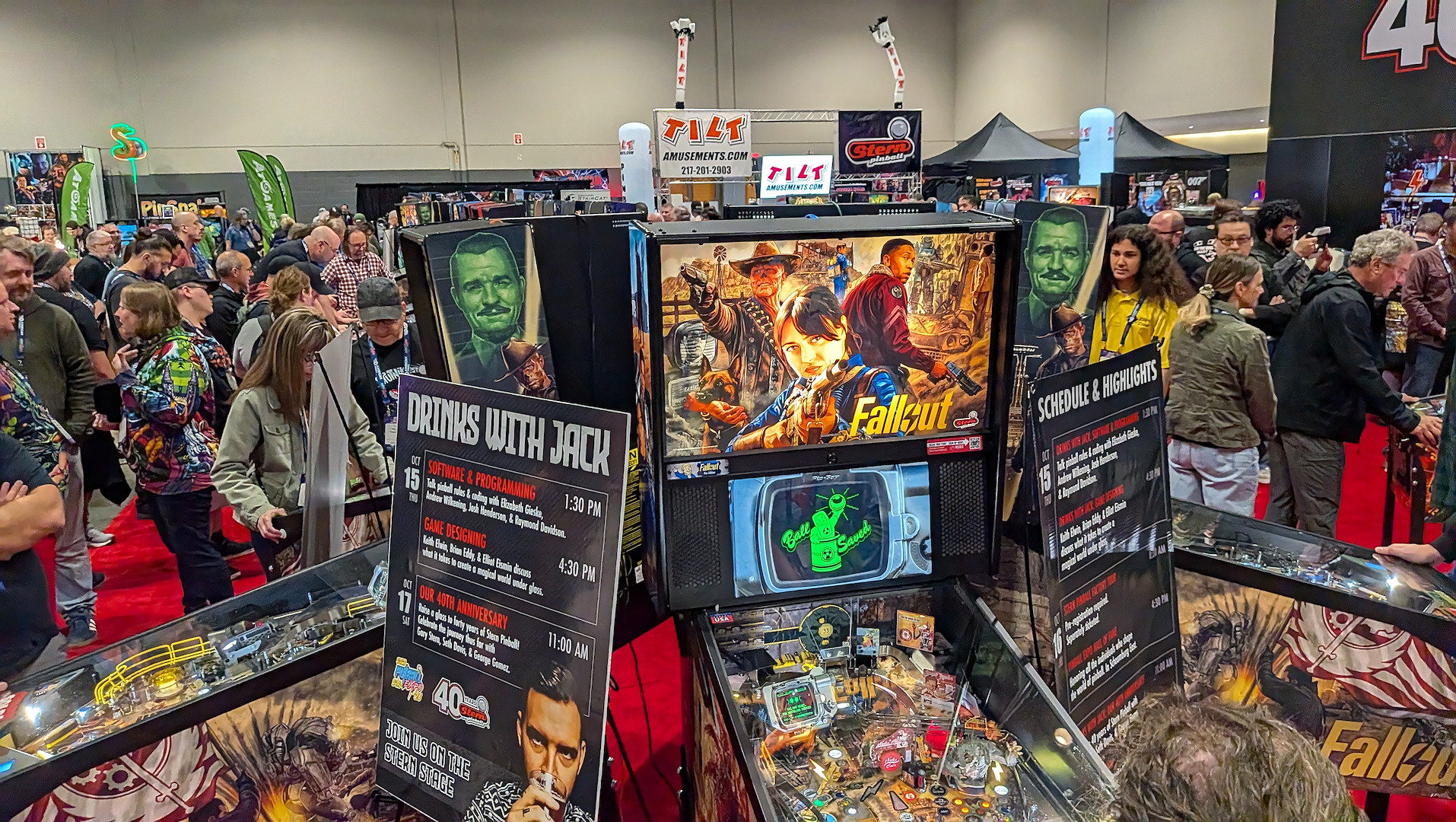
The new Fallout machine from Stern Pinball.
Credit: Nick Indge
The new Fallout machine from Stern Pinball. Credit: Nick Indge
Several companies showed off their latest attempts to bring pinball into virtual reality without abandoning physical controls, letting players wear a VR helmet while pressing real buttons on a pedestal setup. It’s a fun novelty that demonstrates what’s possible, but if the lines at the expo were any indication, most people still prefer walking up to a physical machine and enjoying the tactile controls, visuals, and sounds that come with it.
American Pinball’s upcoming remake of Circus Voltaire. Nick Indge
The modular market
One of the biggest questions facing anyone buying a pinball machine for home use is what to do when you get bored with a $10,000 game. Until recently, the options were to sell it, find someone willing to trade, or build your own virtual pin setup with screens instead of physical playfields. The Multimorphic P3 team saw an opportunity for another approach.
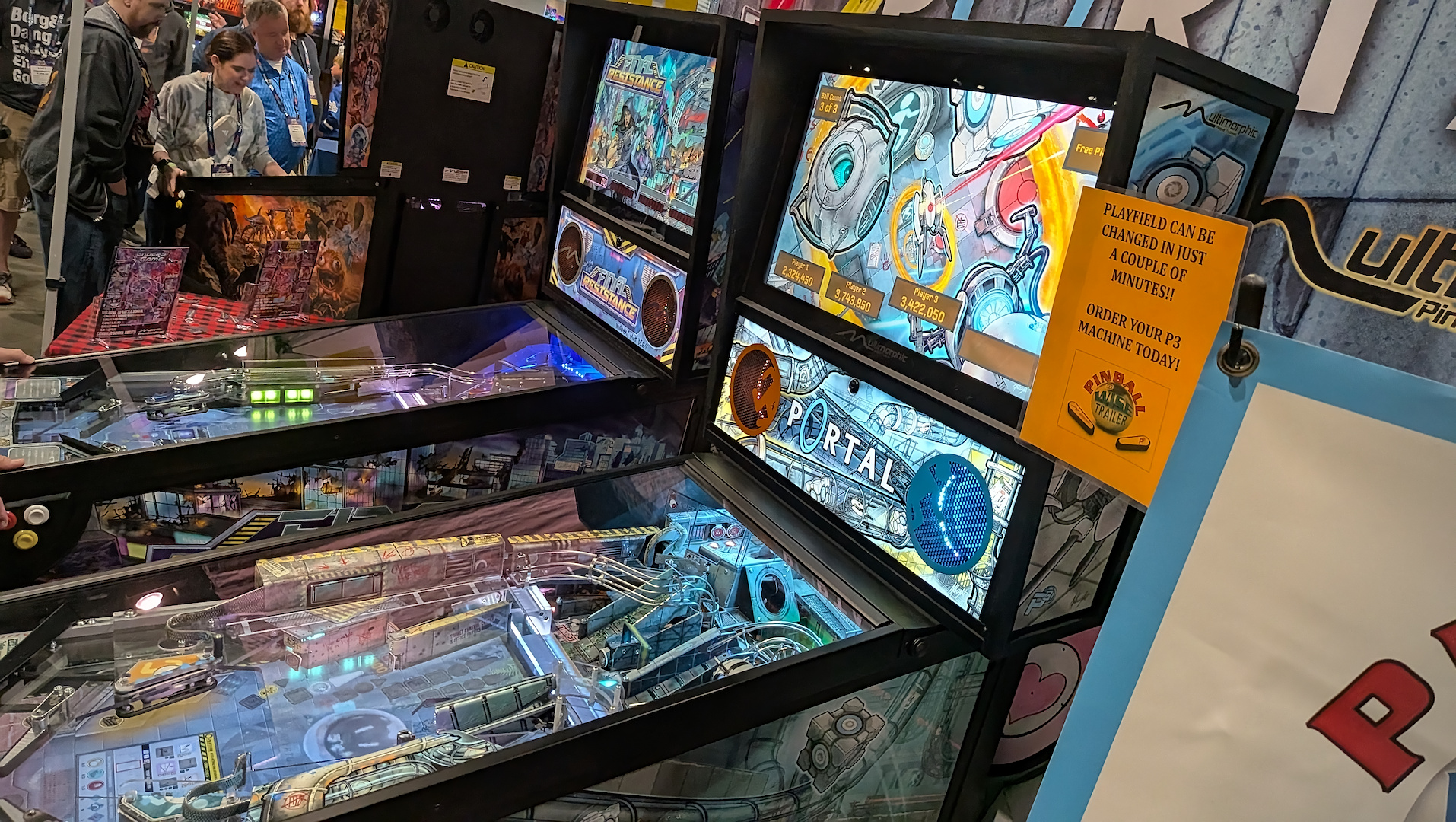
Multimorphic’s Portal pinball machine is a part of their P3 lineup of swappable table designs.
Multimorphic’s Portal pinball machine is a part of their P3 lineup of swappable table designs.
According to Multimorphic co-creative director Stephen Silver, “The way the P3 is designed is that the lower two-thirds is a ball-tracking interactive display… We have floating mechanisms above the screen, floating flippers, floating slings, floating targets. And the upper third is a swappable play field. We’ve got 10 different play fields now that we can swap and change the entire game.”
As demonstrated by the much-hyped Dungeon Crawler Carl prototype (whose lines never seemed to get shorter), the P3 system uses a playfield screen that can react to ball movement in real time, and the game can change to match player choices. In Dungeon Crawler Carl, for instance, the display layout changes based on which book in the series the player chooses.
“We’re planning on doing seven books in the game… you can play them in any order you want,” Silver explained. ” The idea being that you get to Faction Wars—the events of the seventh book—it’s a perfect wizard mode. When we started this, Faction Wars was the last book in the series. It still feel(s) like a good wrapping-up point for this story that we’re telling. In the future, we could always be open to adding more books, but right now that’s the plan.”
The first two entries in the book series had playable pin versions on the show floor, and Silver says that “every single book itself is the equivalent depth of a ’90s Williams game… It’s like seven really solid games in one,” Silver said.
Dungeon Crawler Carl will enter production “at the end of the year, and then it should be rolling out to delivery early next year,” he said.
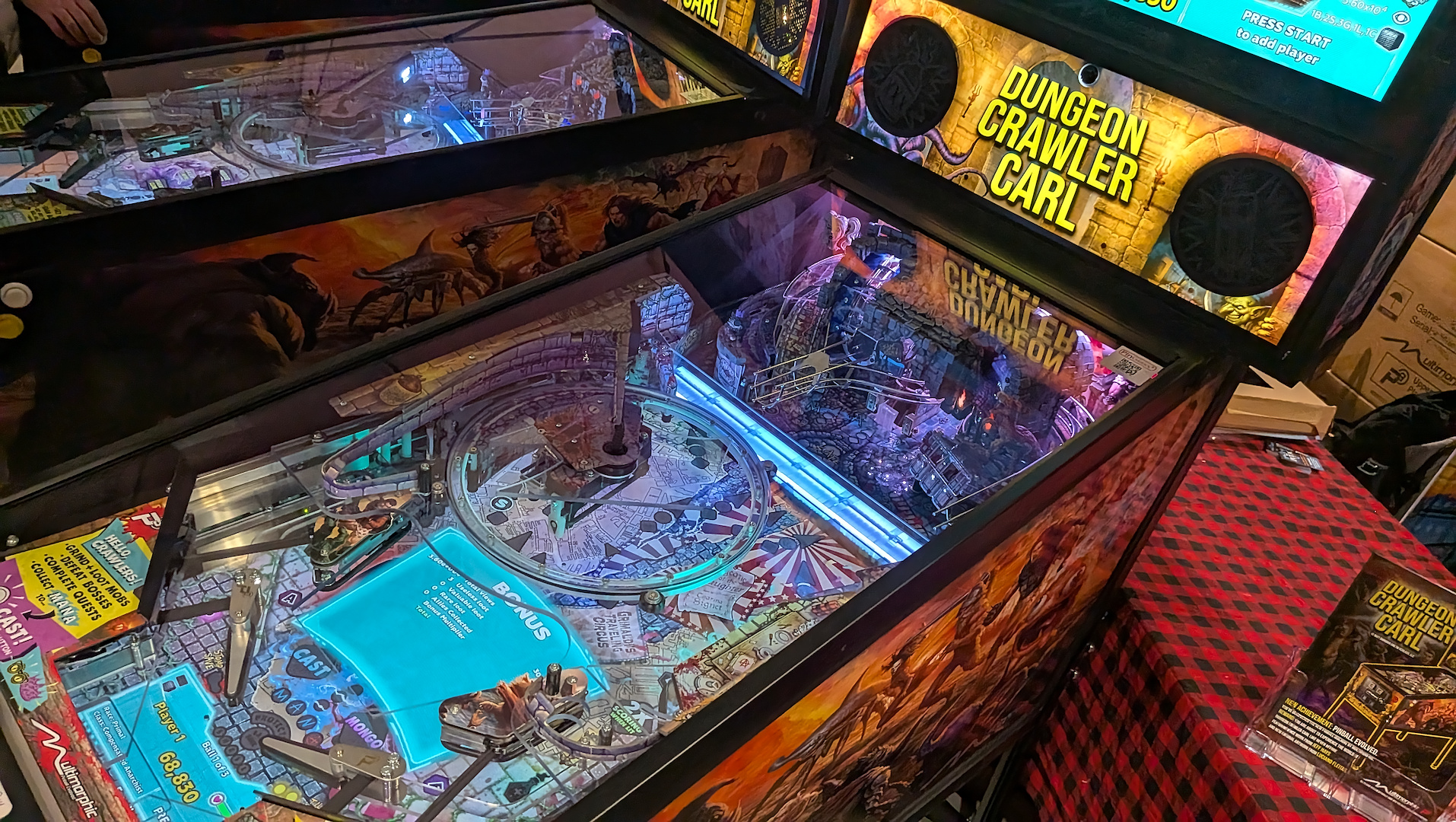
Multimorphic’s upcoming Dungeon Crawler Carl pinball.
Multimorphic’s upcoming Dungeon Crawler Carl pinball.
The platform’s versatility extends beyond in-house designs. Multimorphic offers a free software development kit (SDK) that lets community members design and distribute their own table creations for the P3 system. Machine owners can swap physical overlay kits or remove them entirely to play original games on the reactive screen.
“There are 30 different games available on the system now because you can do software-only games,” Silver said. “It’s the only third-party development platform in pinball. So anybody can download the free SDK and develop third-party software games… and release it through our store to an audience of P3 owners that are hungry for new content.”
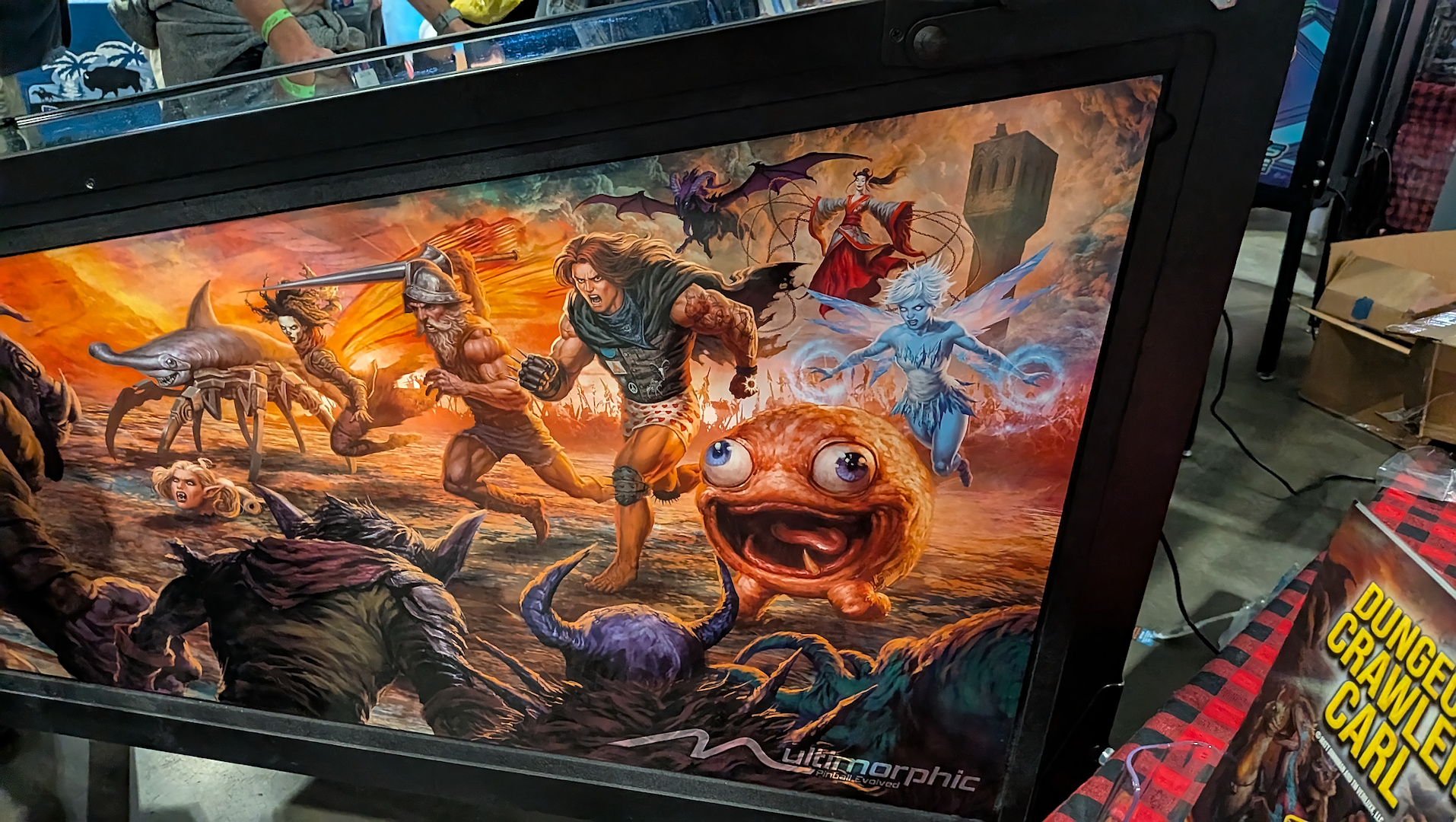
Dungeon Crawler Carl cabinet artwork by Brad Albright. Voice actor Jeff Hays also reprises his audiobook roles for the machine.
Dungeon Crawler Carl cabinet artwork by Brad Albright. Voice actor Jeff Hays also reprises his audiobook roles for the machine.
Pocket Pinball and pinball construction set
Sitting on one of the more unassuming tables of the PinExpo show floor was Pocket Pinball, a free Android APK that lets users load any Visual Pinball X (VPX) table on their phone or tablet. But the project’s developer, Johnny Zen, had something else to show off: a closed beta for his Pinball Construction Set. An homage to the 1982 classic Bill Budge Apple II game of the same name, the browser-based tool lets users design their own pinball machine with an easy drag-and-drop interface. Multimorphic may have the only free pinball SDK for now, but if Zen has his way, that won’t be true for long.
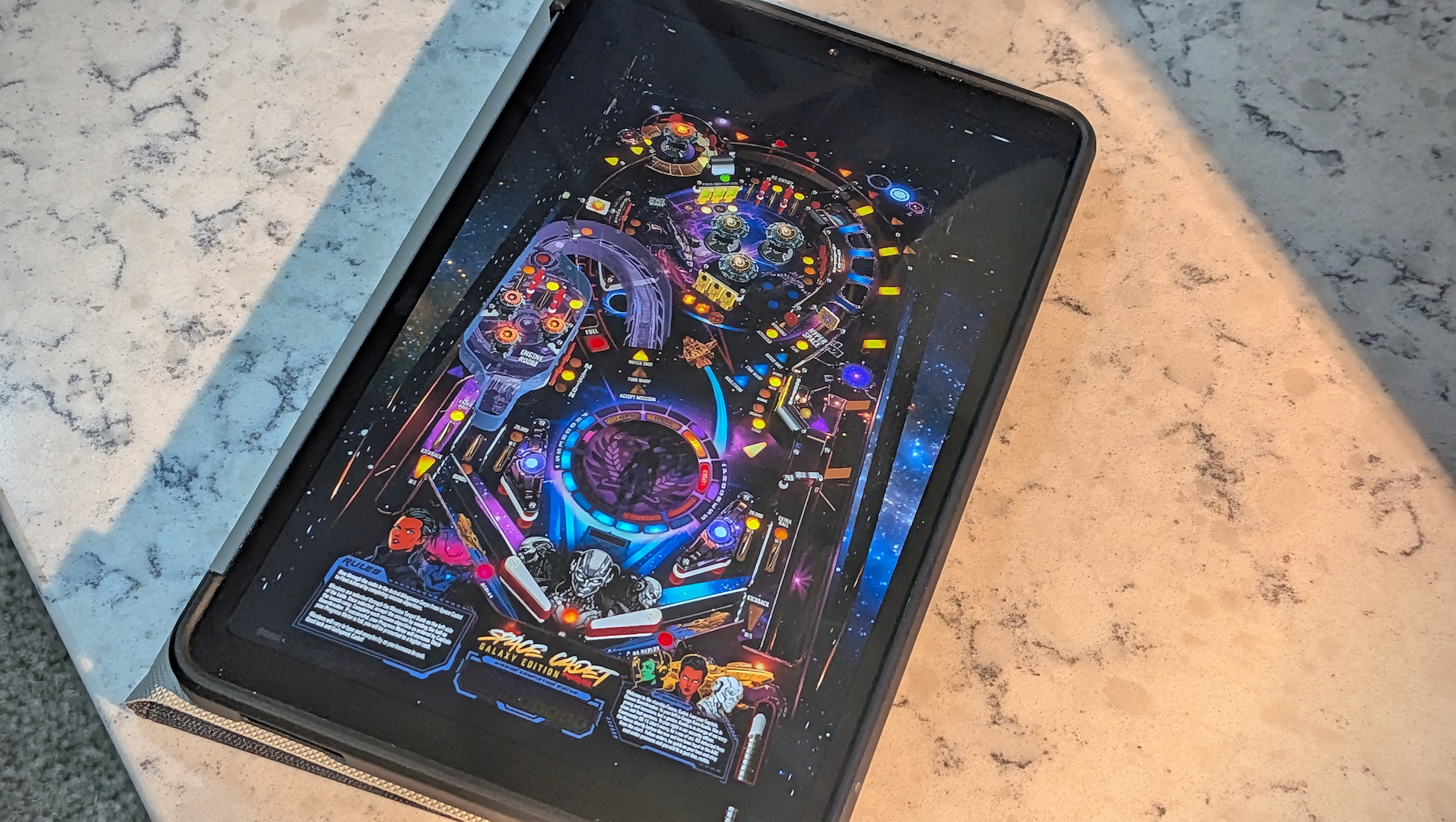
Pocket Pinball running on my tablet.
Pocket Pinball running on my tablet.
Whereas most modern pinball designs start at the CAD desk, the upcoming Pinball Construction Set keeps the process entirely within a browser. Zen compares the system to building a coaster in Roller Coaster Tycoon: Users can choose between three styles or start with a blank slate. After selecting a template, such as a standard or wide-body layout, they can add traditional design elements like ramps, targets, and scoops by clicking and dragging them into place.
The program is still in closed beta, but aspiring pinball developers can register their interest to be notified when it becomes publicly available. Zen also plans to add a marketplace where users can commission artwork from freelance artists. “If you needed some artwork for your apron or playfield, you basically look at the artist profiles, then the app will send the artist’s team the exact measurements of what you need,” he said.
Homebrew heaven
One of the most exciting trends in pinball’s modern resurgence is the rise of homebrew design, with passionate hobbyists turning basement-built machines into careers with some of the industry’s biggest players. Often serving as playable resumes, homebrew games give aspiring designers a chance to flex their creative muscles without the licensing restrictions that come with producing commercial machines.
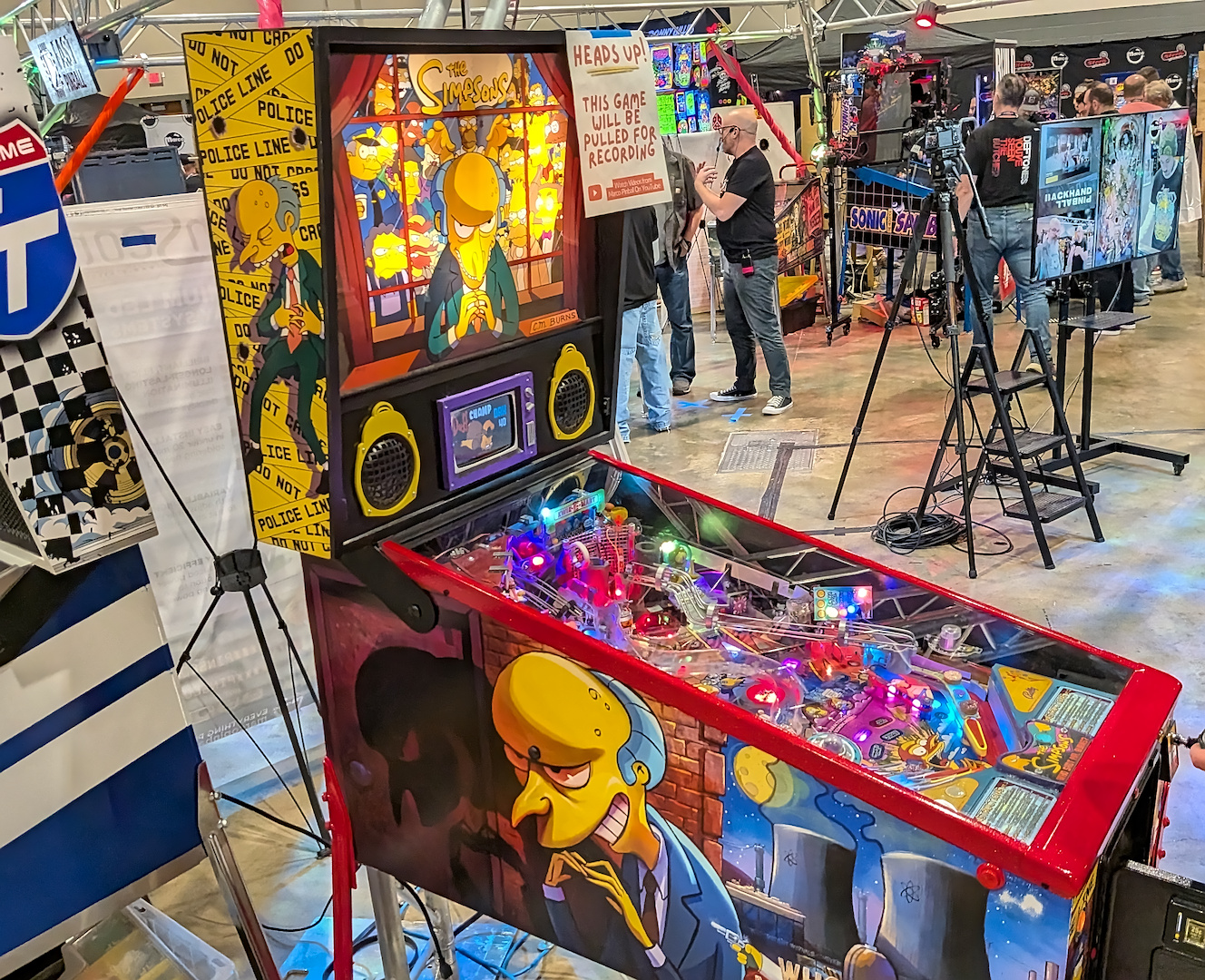
Who Shot Mr Burns? This impressive homebrew looks ready for the arcade floor.
Who Shot Mr Burns? This impressive homebrew looks ready for the arcade floor.
One of this year’s homebrew highlights was Shaolin Flow, an ode to the great Hong Kong action movies that those of us who grew up in the ’90s watched on Saturday afternoon network TV. Complete with an optional Wu-Tang soundtrack, Shaolin Flow lets players choose between traditional flipper-button controls and a more punchy approach. Two fist-shaped sensors sit atop the playfield, to the left and right of the flippers. Players activate the flippers by throwing punches over the sensor.
What initially looked like a gimmick quickly proved to be a great time. Adding a physical element to an already physical game felt more natural than I expected, and the absence of any perceptible input lag made the experience seamless.
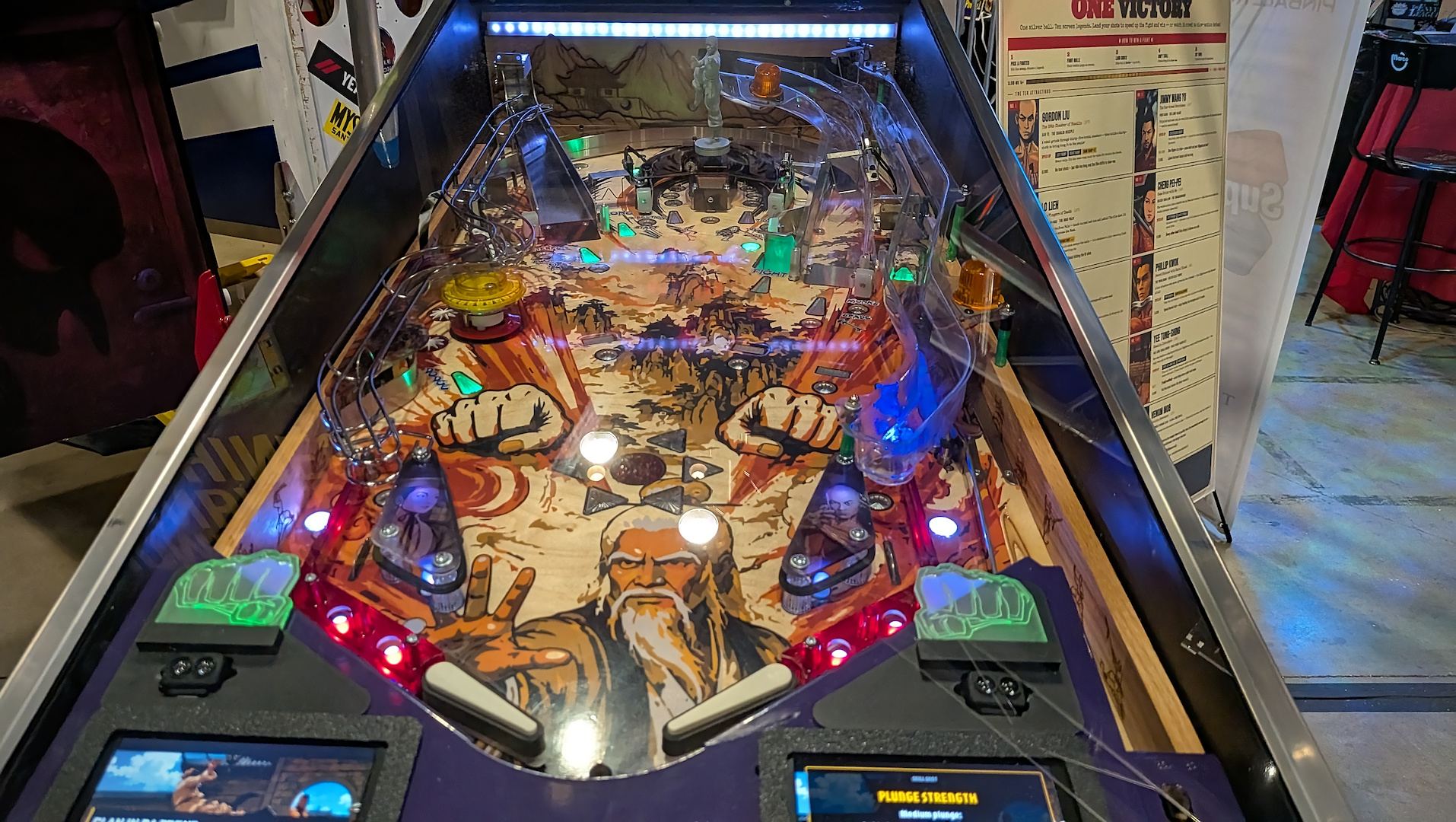
Passing your fists over the green sensors allows you to control flippers by punching.
Passing your fists over the green sensors allows you to control flippers by punching.
As the tools for designing and building pinball machines become more accessible, the homebrew scene continues to grow. Each year brings more entries to the floor, transforming what was once a smaller corner of proudly displayed projects into a dedicated, walled-off section featuring games from the future stars of pinball design. This year’s homebrew showstopper could see its creator designing a licensed table for one of the industry’s major manufacturers by the following year’s show.
An Akira-themed homebrew pinball machine. Nick Indge
So much more
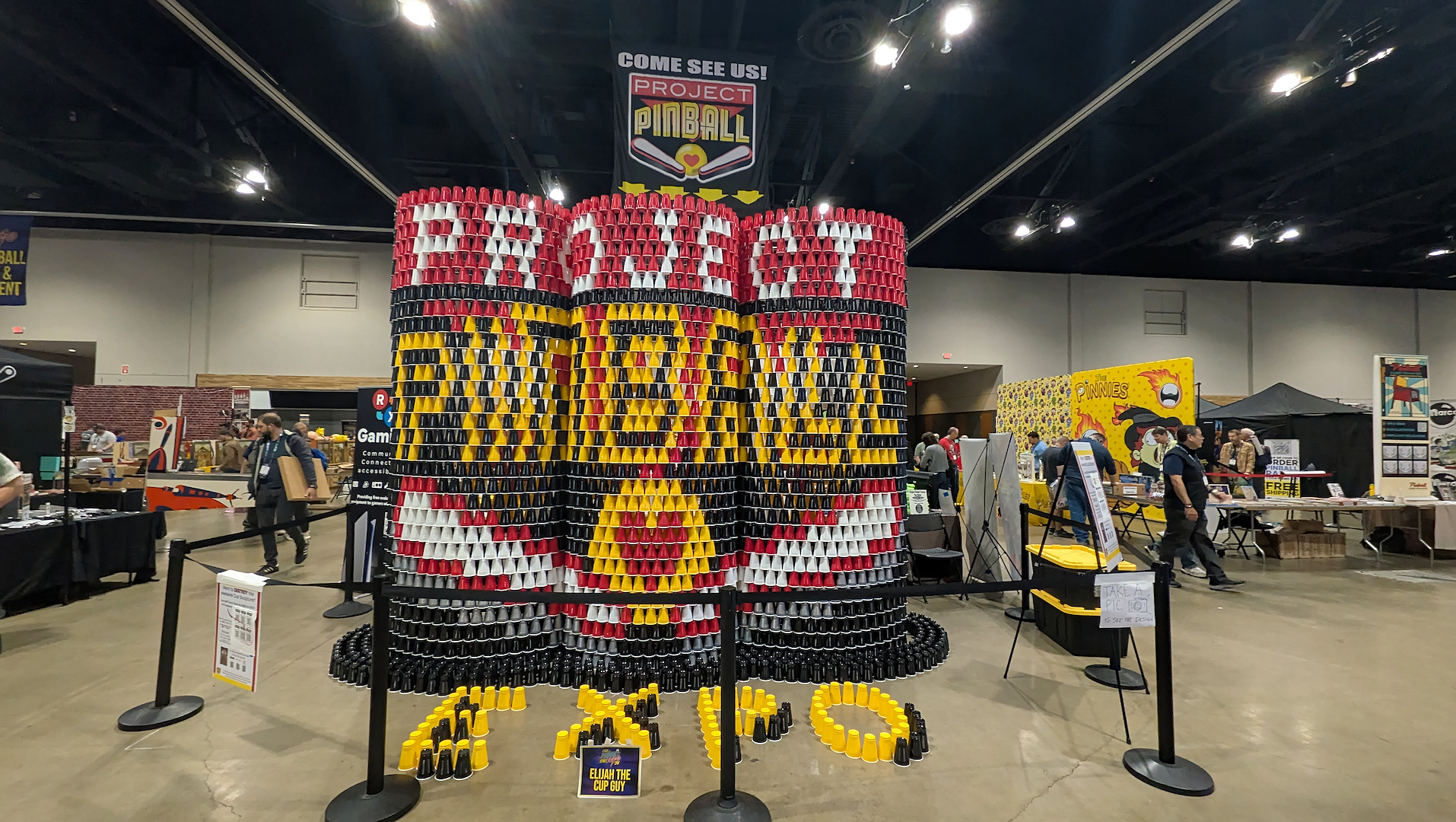
Project Pinball is a charity that raises money to place pinball machines in children’s hospitals. Great cause!
Credit: Nick Indge
Project Pinball is a charity that raises money to place pinball machines in children’s hospitals. Great cause! Credit: Nick Indge
Pinball Expo isn’t just an industry trade event; it’s also a celebration of every era of pinball history. Volunteers haul machines from their personal collections to the show floor, where the general public can play them all weekend. And it’s not just balls and flippers. Walk the aisles, and you’ll see artists, merch and crafts vendors, accessories, retro video games, traditional arcades, and enough aftermarket mod kits to turn any pinball machine into a second hobby.
Pieces of the world’s largest Sonic collection on display. Nick Indge
The future
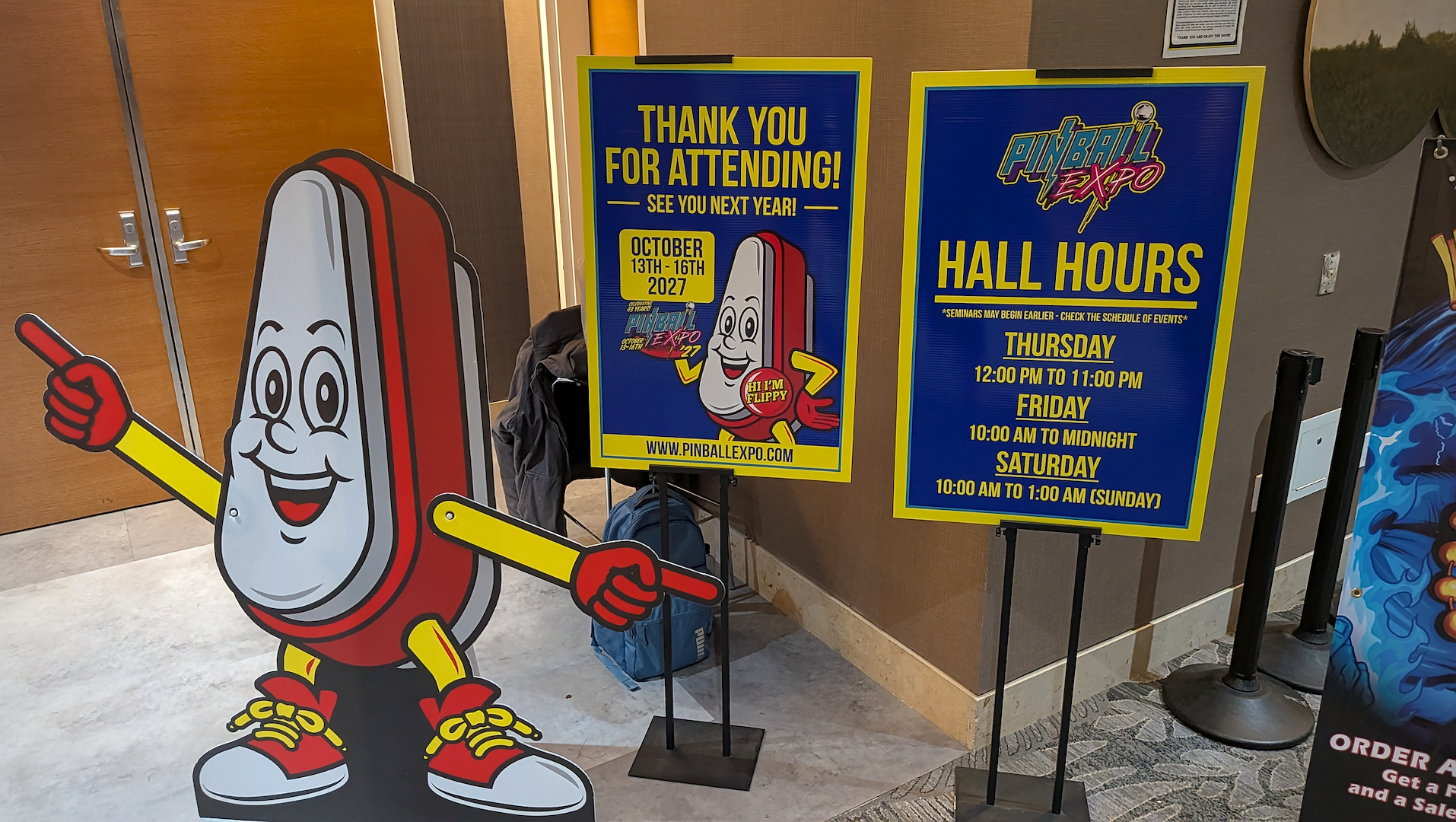
See you later, Flippy!
See you later, Flippy!
For decades, pinball production was concentrated among a handful of major manufacturers in the Chicagoland area. While the region might still be the industry’s epicenter, newer challengers to Stern’s dominance, like Texas-based Barrels of Fun or European producers like Dutch Pinball, show that things are changing.
Today, aspiring developers can turn a good idea into a playable VPX table without ever putting down their phone. Whether it’s a bedroom developer working with a free SDK or one of the industry’s biggest players, pinball is being made by more people in more places, and fans are all the better for it.

Nick Indge is a Senior Technology Reporter at Ars Technica covering hardware, embedded systems, and self-hosted infrastructure. A former security investigator turned tech writer, he writes to help readers escape subscription traps and regain ownership of their digital lives. He lives in Chicagoland with his family and a goofball husky.