
- An AMD ‘Gainsborough’ chip has been leaked in a benchmark
- The codename suggests that this could be the CPU of the Steam Deck 2
- Whether or not the performance fits the bill isn’t clear yet, and there are doubts around the timing here too — but it’s still a hint that Valve could be exploring the hardware to use in its handheld sequel
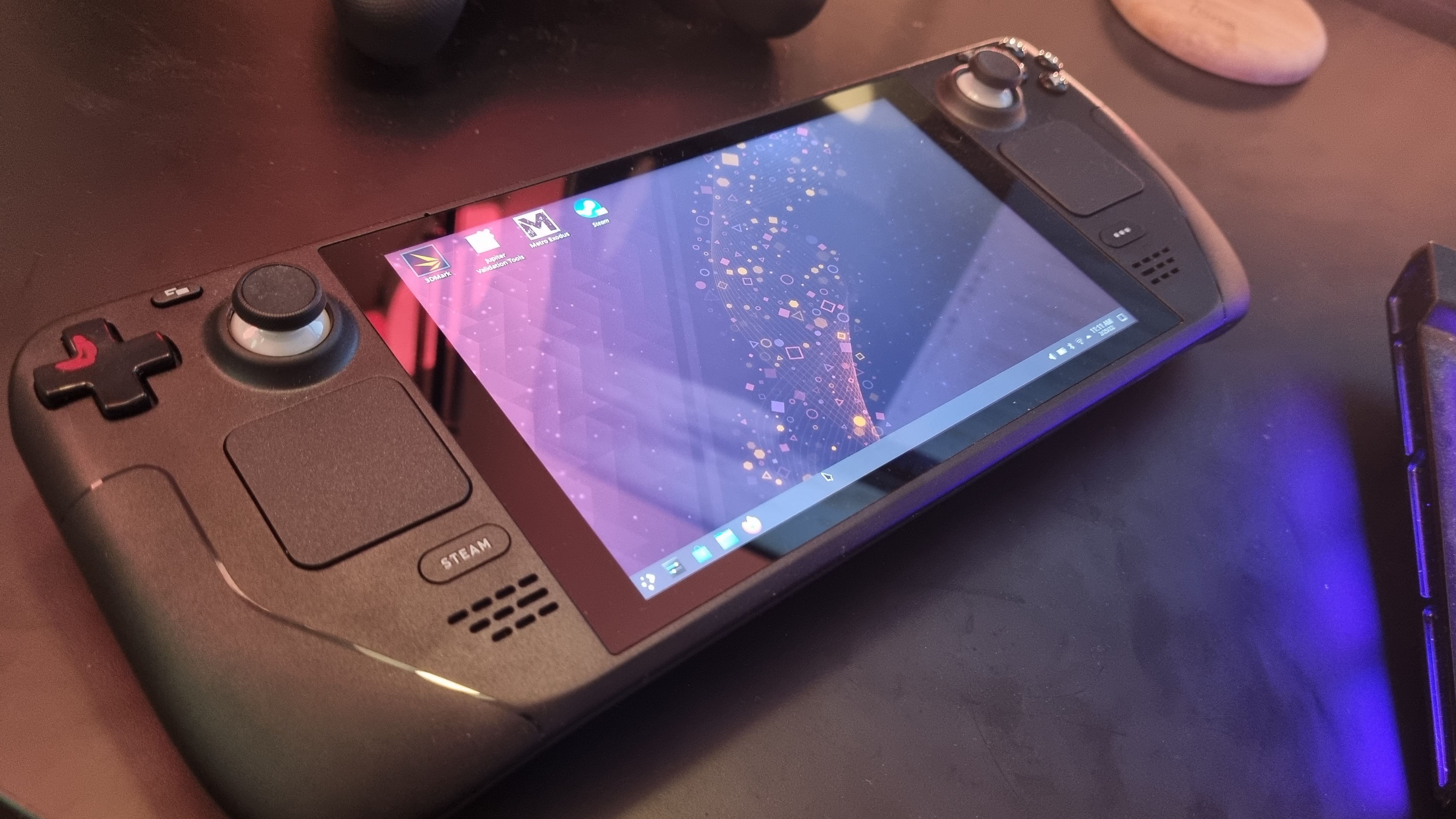
We’ve caught sight of a chip that supposedly might power the Steam Deck 2, which serves as a hint that Valve could already be working on its handheld sequel.
TechPowerUp spotted the development with an AMD ‘Gainsborough’ APU having been leaked via OpenBenchmarking. It’s an engineering sample chip with 6-cores (12-threads) and a base clock of 2.4GHz – but what links this to Valve’s next-gen handheld?
Well, it’s tenuous, granted – so arm yourself with a pile of seasoning – but the word Gainsborough is the key here, as Valve has used codenames inspired by Final Fantasy VII for Steam Deck silicon before. Namely Aerith and Sephiroth, and Gainsborough is Aerith’s surname, as well-known GPU leaker Kepler pointed out.
Seemingly this Gainsborough chip was paired with 24GB of system memory for testing, although that doesn’t necessarily reflect a potential upgrade for the Steam Deck 2 in this regard – that’s a shaky idea given the RAM crisis and how long it might last for. All this means is that this memory configuration is currently what AMD or Valve is trying out the chip with.
There are benchmark results here (of course, it’s on a benchmarking site), and we get to see that this new AMD APU hits 3,508 points in Furmark at 1024 x 768 resolution. That’s a bit faster than the Steam Deck which scores 3,323 (albeit at 1280 x 800).
Analysis: benchmarking clarification

If the benchmarking seems unimpressive, it’s going by the raw numbers, but remember that this is very early testing with drivers which are still a long way from being knocked into shape. In other words, expect the Gainsborough APU to be a lot faster than this when the chip is fully finished and the drivers are properly honed.
Overall, at this stage it’s difficult to read exactly what this benchmarking tells us, but the fact that it’s already quicker than the current CPU in the Steam Deck is promising. Although some gamers out there are still arguing that it seems lacklustre, and that this wouldn’t be enough of a generational upgrade for Valve’s handheld sequel.
Also, this CPU is expected to debut late in 2027 or in 2028, and frankly, that feels a little early for the Steam Deck 2 given what’s happening with the RAM crisis (in terms of keeping the retail price down). Also, when a Valve engineer most recently spoke about the Steam Deck 2, Pierre-Loup Griffais was very guarded on the subject of a potential launch timeframe, and the hardware sounded very much up-in-the-air still.
However, hardware cards being played closed to the chest like this is hardly surprising, and this doesn’t rule out Valve exploring the Gainsborough chip currently for a possible Steam Deck 2 launch towards the end of the decade.
We shall see, but for now, I’d treat this one with a lot more caution than your average rumor. Nonetheless, it remains a tantalizing hint that Valve is now beyond tinkering with ideas for the next-gen Steam Deck, and is actively testing out potential hardware.

Follow TechRadar on Google News and add us as a preferred source to get our expert news, reviews, and opinion in your feeds.