
![how-robotics-is-changing-the-supply-chain-[q&a]](https://thetechbriefs.com/wp-content/uploads/2026/02/108608-how-robotics-is-changing-the-supply-chain-qa.jpg)
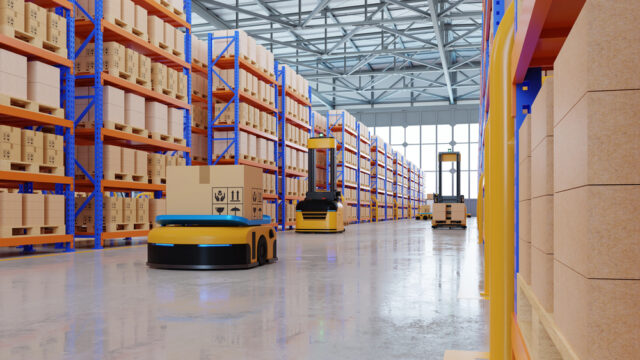
Robotics has transformed how companies think about efficiency and workflow in the warehouse. When automation first entered the sector, the focus was mainly on speed: moving goods from A to B as quickly as possible.
Today, it’s about re-imagining how the entire warehouse operates. We spoke to Renaud Heitz, CTO and co-founder of Exotec to learn more
BN: How is robotics changing the way companies approach efficiency and workflow in warehouses and supply chains?
RH: Robots can now take on many of the most repetitive, labor-intensive tasks, allowing organizations to keep pace with shifting consumer demand while easing the physical strain on employees. By removing non-productive walking time and automating product retrieval, robotics boosts efficiency and reduces the risk of accidents occurring.
Our Skypod system allows fleets of robots to scale up to 14 metres in height, maximizing storage density and significantly increasing throughput. Beyond speed, robotics delivers something warehouses have long struggled to achieve flexibility. Capacity can be scaled simply by adding more robots, without changing the existing infrastructure. Beyond that, the system itself can be expanded by installing additional racks, allowing storage density to increase progressively as the business grows. That kind of agility is what modern supply chains need most to adapt instantly to demand, without sacrificing productivity or employee safety.
BN: What are the most common misunderstandings about warehouse automation, and how can the industry address them?
RH: One of the most common misunderstandings is that automation limits operational flexibility. Traditional systems often did, but most modern robotics are now both modular and scalable. Automation doesn’t have to be an all-or-nothing investment: it’s capable of evolving alongside business operations.
Another misconception is that warehouse automation is purely about the machines. In reality, software plays an equally crucial role. It’s the software that orchestrates the robots, optimises performance and adapts to changes in demand.
Many people still believe automation is capable of replacing the human workforce, when in truth, it enhances their roles and promotes collaboration. By allowing robots to handle repetitive, physically demanding work, employees’ attention is directed to higher-value work like decision-making, quality control and problem-solving.
BN: How is software shaping the capabilities of modern robotics, and in what ways is it driving greater efficiency and adaptability in warehouse operations?
RH: Software is the brain of modern warehouse robotics. At Exotec, our Deepsky technology is the overseer of operational data, ensuring continuous improvement and optimal performance throughout logistics processes, 24/7/365. It seamlessly orchestrates robot fleets, monitors real-time inventory and optimises task flows, ensuring every robot, bin and order is tracked, while adjusting priorities to handle urgent orders, returns or demand spikes.
With Deepsky, warehouses can easily scale operations by adding robots or reconfiguring workflows without major system changes. It also allows for continuous monitoring and predictive maintenance, ensuring operations run smoothly around the clock, reducing downtime. In essence, software turns robotics from a static automation tool into a dynamic, data-driven ecosystem that is able to adapt and improve every day.
BN: AI has become a major focus across industries. How is it being applied in the robotics and automation sector today, and how do we expect this to evolve?
RH: AI is transforming robotics and automation by enabling systems to perceive, decide, and act with unprecedented precision. At Exotec, we’ve invested in AI research for years to enhance our robotic solutions. Today, AI powers critical functions such as automated picking: algorithms analyze images to recognize objects, determine their shape and position, and execute retrieval with high accuracy.
Looking ahead, AI will permeate most of our software stack — predictive maintenance, route optimization, and resource allocation will become standard. By leveraging data from entire robot fleets, AI can anticipate maintenance needs, optimize traffic flow, and dynamically allocate resources, driving efficiency and resilience in warehouse operations. As the technology evolves, we expect advances in reinforcement learning and simulation to further accelerate adaptability and performance
BN: How do you see robotics technology evolving to meet the needs of the future? And which innovations are likely to have the biggest impact?
RH: We’re entering an era where robots, each with specialized roles, are unified through software platforms that allow them to work together seamlessly, enabling end-to-end automation without losing the flexibility demanded by modern operations.
As technology continues to evolve, the real breakthrough will come from integration by connecting robotics not just within the warehouse, but across the entire supply chain. When automation becomes part of a company’s wider data ecosystem, that’s when you unlock true resilience, efficiency, and agility.
BN: How will the role of the human workforce progress alongside robotics and automation, and what skills will be most important in the coming years?
RH: People will always be at the heart of operations. As robots automate the most repetitive or physically demanding tasks, it is also creating new opportunities for skilled roles, particularly in maintenance, system operations and engineering.
The most valuable skills will be adaptability, digital literacy, and problem-solving. Operators won’t need to be programmers, but they’ll need to understand how to work with data, interpret dashboards, and make informed decisions in real time.
Education and training will be essential to bridge that transition. Without strong investment in technical education, we risk facing a significant shortage of maintenance technicians and engineers. The future of work in logistics will depend on how effectively we prepare people for these types of roles.
Image credit: vanitjan/depositphotos.com


