
TechRadar Verdict
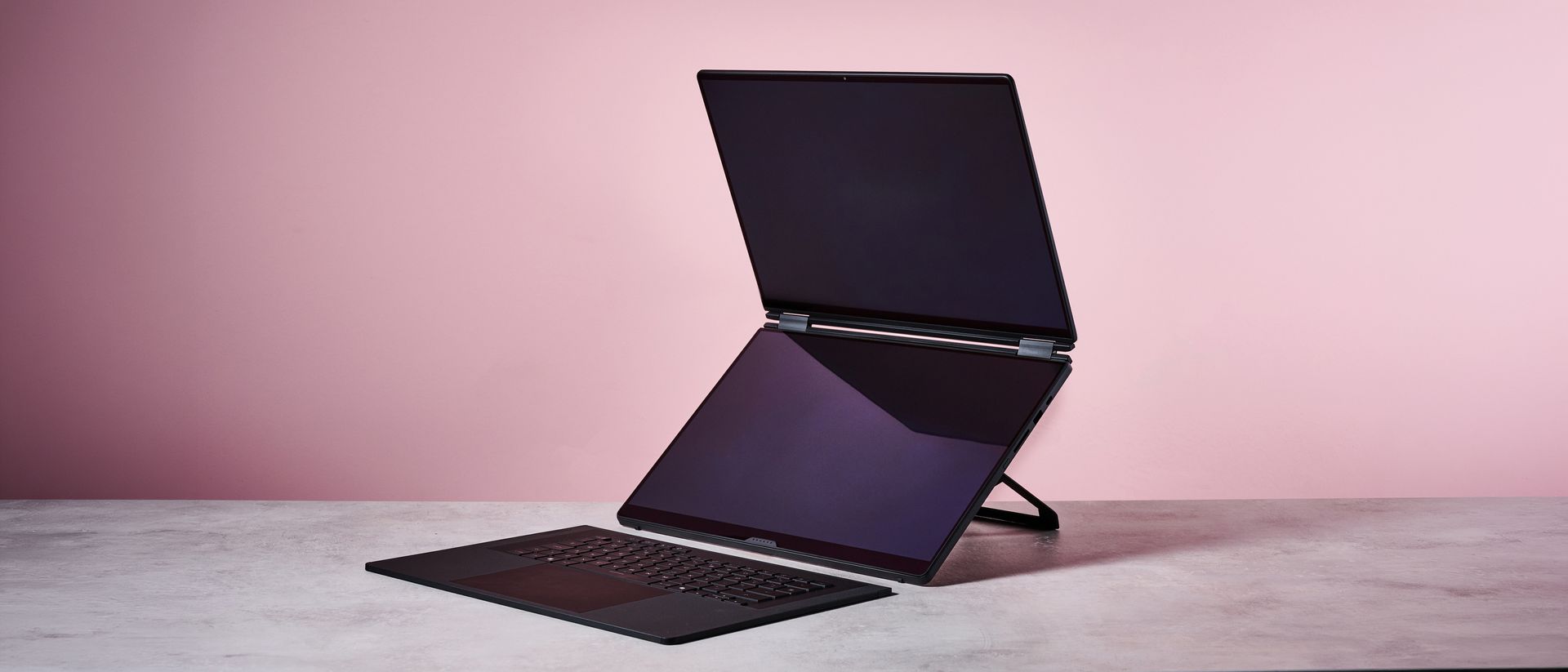
We’ve seen dual-screen laptops before, but they’re still something of a rarity, especially in a full-fledged gaming laptop. So it’s impressive what Asus has managed to achieve here, packing two 3K OLED displays (with touchscreen functionality no less), a detachable keyboard, and an RTX 50 series GPU into a form factor that isn’t as cumbersome as you might imagine. It also performs exceptionally well, although battery life is underwhelming at best. It’s a niche prospect for sure, but if you must have two displays in a laptop and don’t want to sacrifice graphical power, the ROG Zephyrus Duo is unmatched.
Reasons to buy
- +
Fantastic dual display setup
- +
Still relatively compact
- +
Top-tier performance
Reasons to avoid
- –
Not the most premium of constructions
- –
Fans prone to making noise
- –
Poor battery life
Why you can trust TechRadar We spend hours testing every product or service we review, so you can be sure you’re buying the best. Find out more about how we test.
Asus ROG Zephyrus Duo (2026): Two-minute review
The ROG Zephyrus Duo is a mighty gaming laptop with an outstanding spec, which includes not one but two 3K OLED touchscreens.
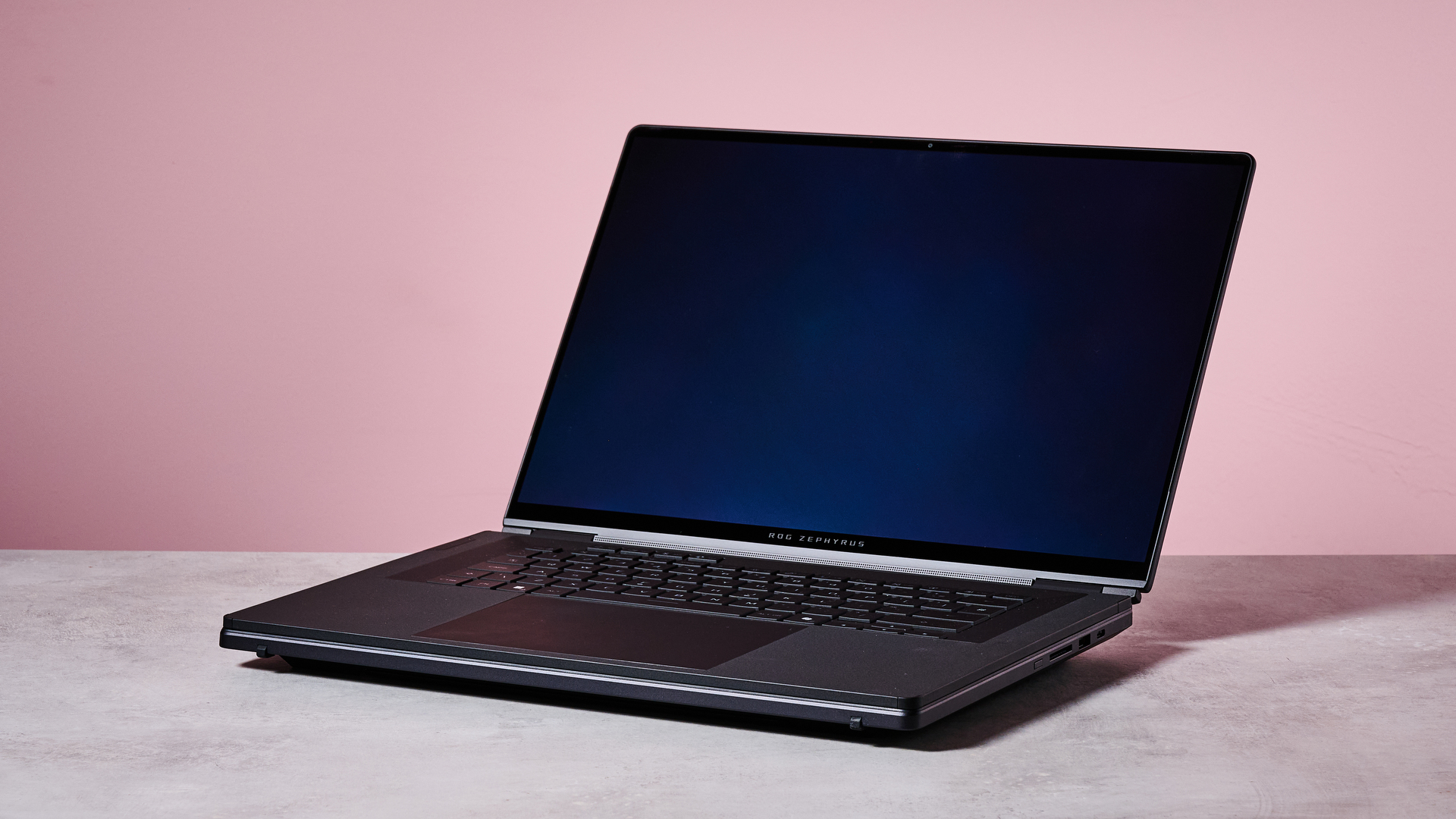
It looks, though, bely its capabilities. There isn’t much branding or brashness here, and the dark colorway keeps things modest. It also lacks the sleekness of some models, with its various jutting edges and angles sullying its contours. The materials don’t seem all that premium, either. However, the ROG Zephyrus Duo is still a solidly made machine, and considering what lurks beneath, it’s surprisingly thin and compact.
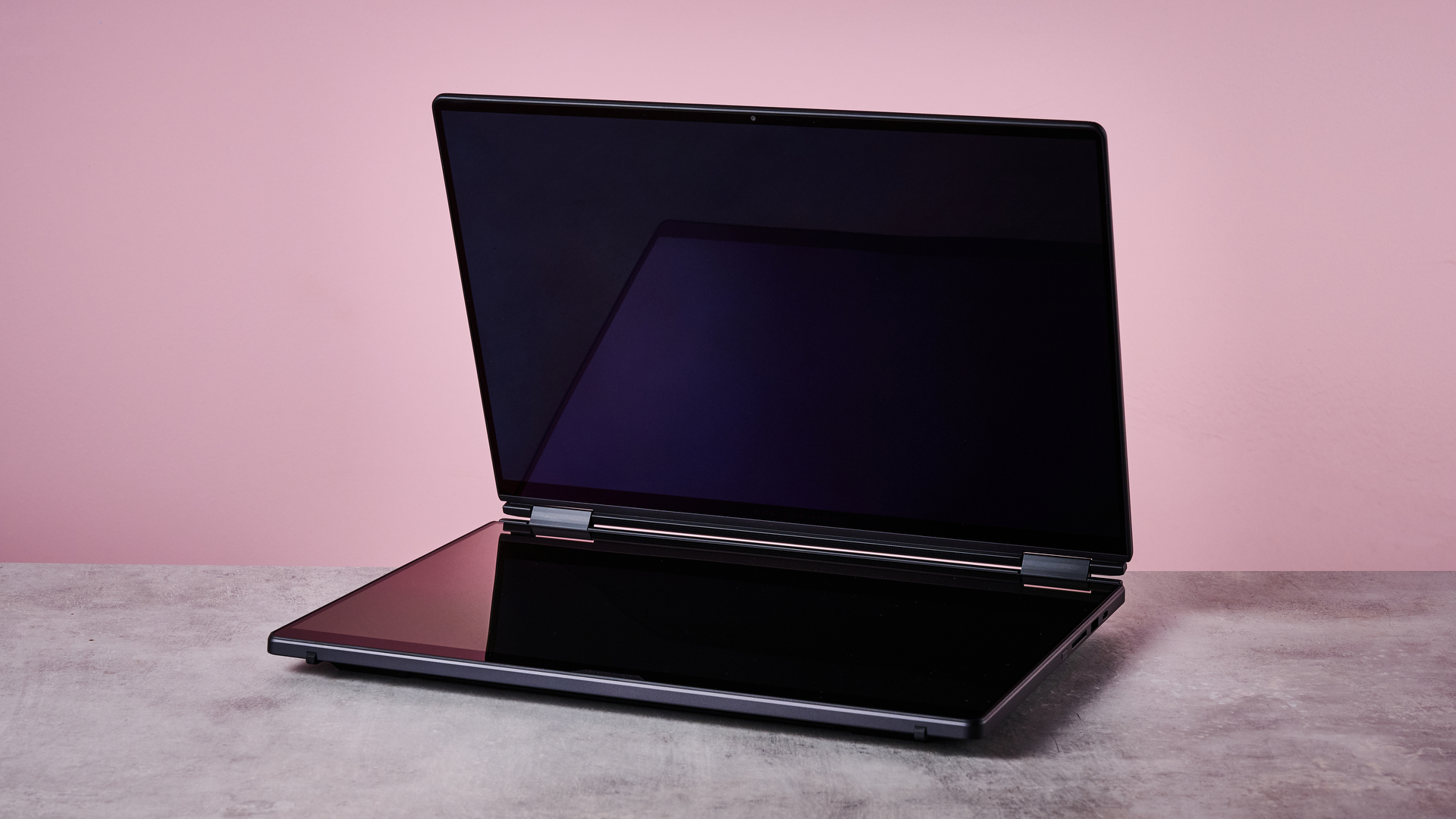
The way the dual displays are set up is clever and well engineered, too. The keyboard can be detached to reveal the second screen, and there’s a sturdy stand underneath the unit to prop up both displays. These solutions provide plenty of scope for your preferred setup, and the various hinges operate smoothly while providing plenty of stability.
Latest Videos FromTechRadar
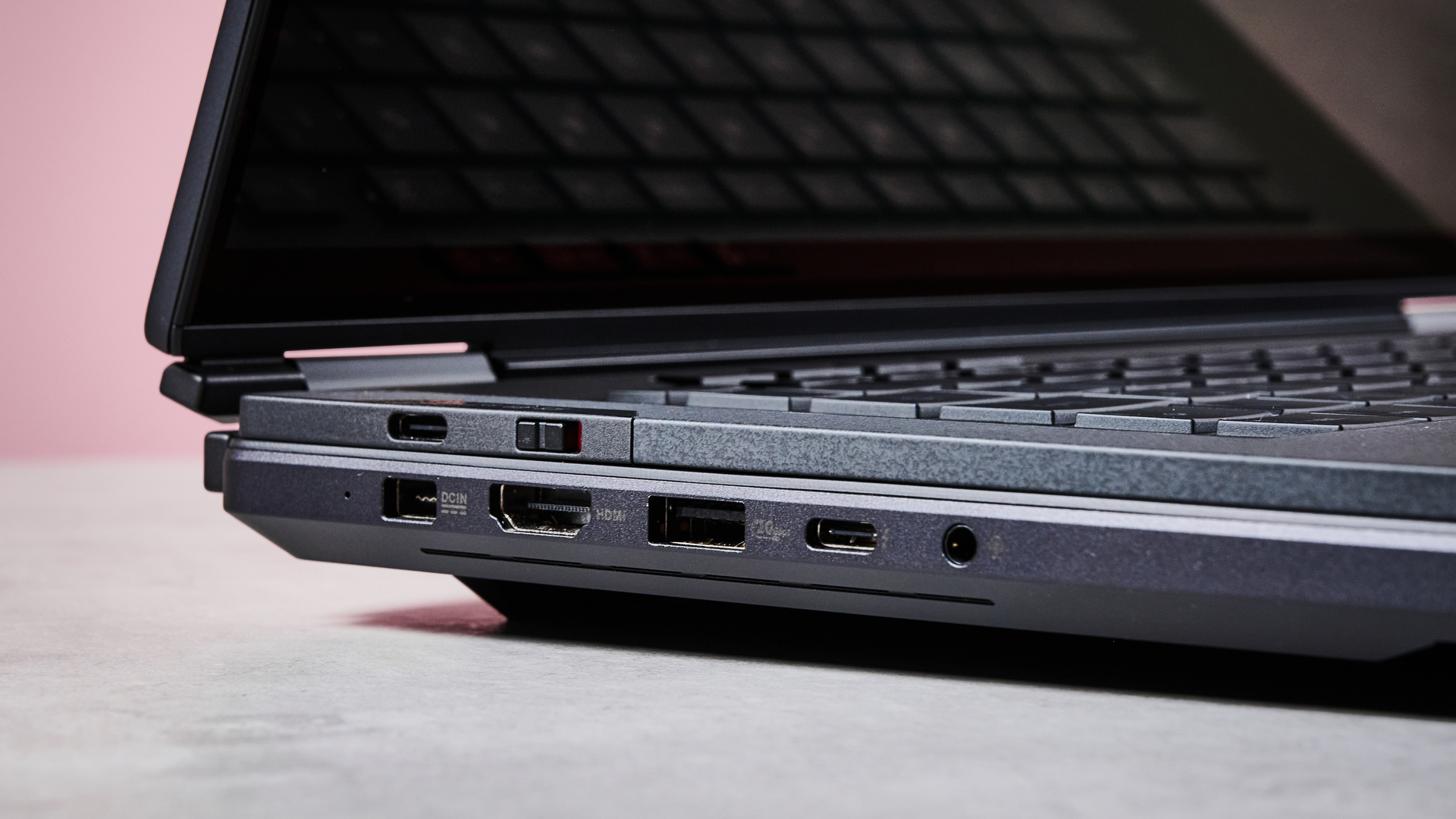
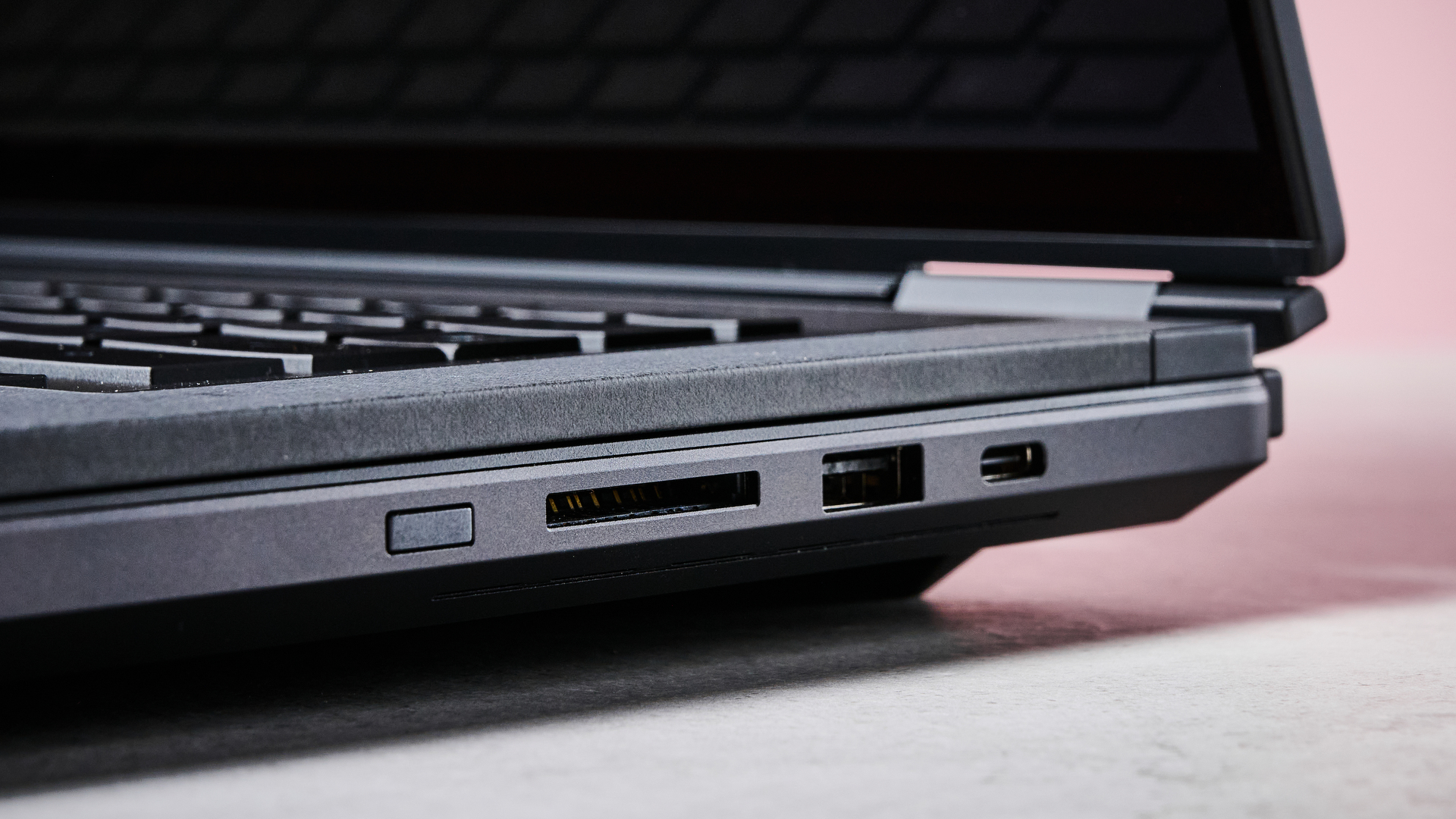
What’s more, there’s a generous selection of ports on the ROG Zephyrus Duo, matching some of the best gaming laptops on this front. In addition to two Thunderbolt 4 USB-C ports and two USB-A ports, you also get an SD card reader and an HDMI output.
My review unit was the top-spec model with the RTX 5090 GPU, so naturally its gaming performance was superb. It ran Cyberpunk 2077 between 50-60fps on the highest preset and at full resolution. There was a lot of fan noise and heat, but the former isn’t too disruptive, and the latter is confined to the underside of the unit.
Both displays are as vivid and as sharp as you would expect given their OLED technology and 3K resolution. Their touchscreens are responsive and sufficiently smooth, although they can feel a little grabby at times. They’d be better served by a stylus, but unfortunately you’ll have to provide your own, since the ROG Zephyrus Duo doesn’t come with one.
The keyboard functions well, whether attached to the bottom screen or detached and connected via Bluetooth. The keys have a generous travel and a tactile feel, which makes them great for typing. However, they feel a little cramped when gaming in the WASD position, and it’s a shame the layout isn’t full size, given the space available. The integrated touchpad works well for cursor navigation, thanks to its large surface.
As with most gaming laptops, the battery life of the ROG Zephyrus Duo is a weak point. It didn’t even last four hours when I ran a movie on a continuous loop, a poor result even by the measly standards of your typical gaming laptop.
The ROG Zephyrus Duo certainly demands a large chunk of money, but it’s an undeniably high-end device with just about the best performance you could wish for in a portable gaming machine. What’s more, there aren’t many dual-screen laptops built for gaming at this level, so the ROG Zephyrus Duo is a must if that’s a priority for you.

Asus ROG Zephyrus Duo (2026) review: Price & availability
- Starts from $4,499.99 / £3,999.99 / AU$8,999
- Available now
- Incredibly expensive
Given its almighty spec, it shouldn’t come as a surprise that the ROG Zephyrus Duo has a price tag to match. Exact model specifications vary with region, but the starting price is $4,499.99 / £3,999.99 / AU$8,999. For this, you get an RTX 5070 Ti GPU, 32GB of RAM, and 1TB of storage.
If a dual-screen setup is a must for your laptop, you could also look at the Lenovo Yoga Book 9i. It too comes with Bluetooth keyboard, but also comes with a mouse and a stylus, both of which the ROG Zephyrus Duo omits. Additionally, it costs a lot less than ROG Zephyrus Duo, although the big drawback is that it doesn’t have a dedicated GPU, so it isn’t one for heavy gamers.
If you don’t need dual screens, but just want an all-conquering gaming laptop, then the Razer Blade 18 is about the best we’ve tried in this category. We were overawed by its performance, while we also loved its keyboard, display, and form factor. It too has a seriously daunting price, though.
Asus ROG Zephyrus Duo (2026) review: Specs
Swipe to scroll horizontally
| Row 0 – Cell 0 |
Asus ROG Zephyrus Duo (2026) base configuration |
Asus ROG Zephyrus Duo (2026) mid configuration |
Asus ROG Zephyrus Duo (2026) max configuration |
|
Price |
$4,499.99 / £3,999.99 / AU$8,999 |
$5,499.99 |
$(TBC) / £6,099.99 / AU$12,999 |
|
CPU |
Intel Core Ultra 9 386H (up to 4.9 GHz, 16 cores) |
Intel Core Ultra 9 386H (up to 4.9 GHz, 16 cores) |
Intel Core Ultra 9 386H (up to 4.9 GHz, 16 cores) |
|
Graphics |
NVIDIA GeForce RTX 5070 Ti Laptop GPU (12GB GDDR7) |
NVIDIA GeForce RTX 5090 Laptop GPU (24GB GDDR7) |
NVIDIA GeForce RTX 5090 Laptop GPU (24GB GDDR7) |
|
RAM |
32GB LPDDR5X |
32GB LPDDR5X |
64GB LPDDR5X |
|
Screen |
2x 16-inch 3K (2880 x 1800) OLED, 16:10, 120Hz, HDR, Touchscreen, G-Sync |
2x 16-inch 3K (2880 x 1800) OLED, 16:10, 120Hz, HDR, Touchscreen, G-Sync |
2x 16-inch 3K (2880 x 1800) OLED, 16:10, 120Hz, HDR, Touchscreen, G-Sync |
|
Storage |
1TB PCIe 4.0 NVMe M.2 |
1TB PCIe 4.0 NVMe M.2 |
2TB PCIe 4.0 NVMe M.2 |
|
Ports |
1x power input (DC), 2x Thunderbolt 4 (DisplayPort / power delivery, 40Gbps), 2x USB-A (3.2 Gen 2, 10Gbps), 1x HDMI 2.1 FRL, 1x SD card reader, 1x 3.5mm combo audio |
1x power input (DC), 2x Thunderbolt 4 (DisplayPort / power delivery, 40Gbps), 2x USB-A (3.2 Gen 2, 10Gbps), 1x HDMI 2.1 FRL, 1x SD card reader, 1x 3.5mm combo audio |
1x power input (DC), 2x Thunderbolt 4 (DisplayPort / power delivery, 40Gbps), 2x USB-A (3.2 Gen 2, 10Gbps), 1x HDMI 2.1 FRL, 1x SD card reader, 1x 3.5mm combo audio |
|
Wireless |
Wi-Fi 7, Bluetooth 6.0 |
Wi-Fi 7, Bluetooth 6.0 |
Wi-Fi 7, Bluetooth 6.0 |
|
Battery |
90WHrs |
90WHrs |
90WHrs |
|
Weight |
2.82kg (6.22 lbs) |
2.82kg (6.22 lbs) |
2.82kg (6.22 lbs) |
|
Dimensions |
13.98 x 9.72 x 0.98 inches (355 x 247 x 24.9mm) |
13.98 x 9.72 x 0.98 inches (355 x 247 x 24.9mm) |
13.98 x 9.72 x 0.98 inches (355 x 247 x 24.9mm) |
Asus ROG Zephyrus Duo (2026) review: Design
- Understated looks
- Smart and versatile dual-screen setup
- Generous port selection
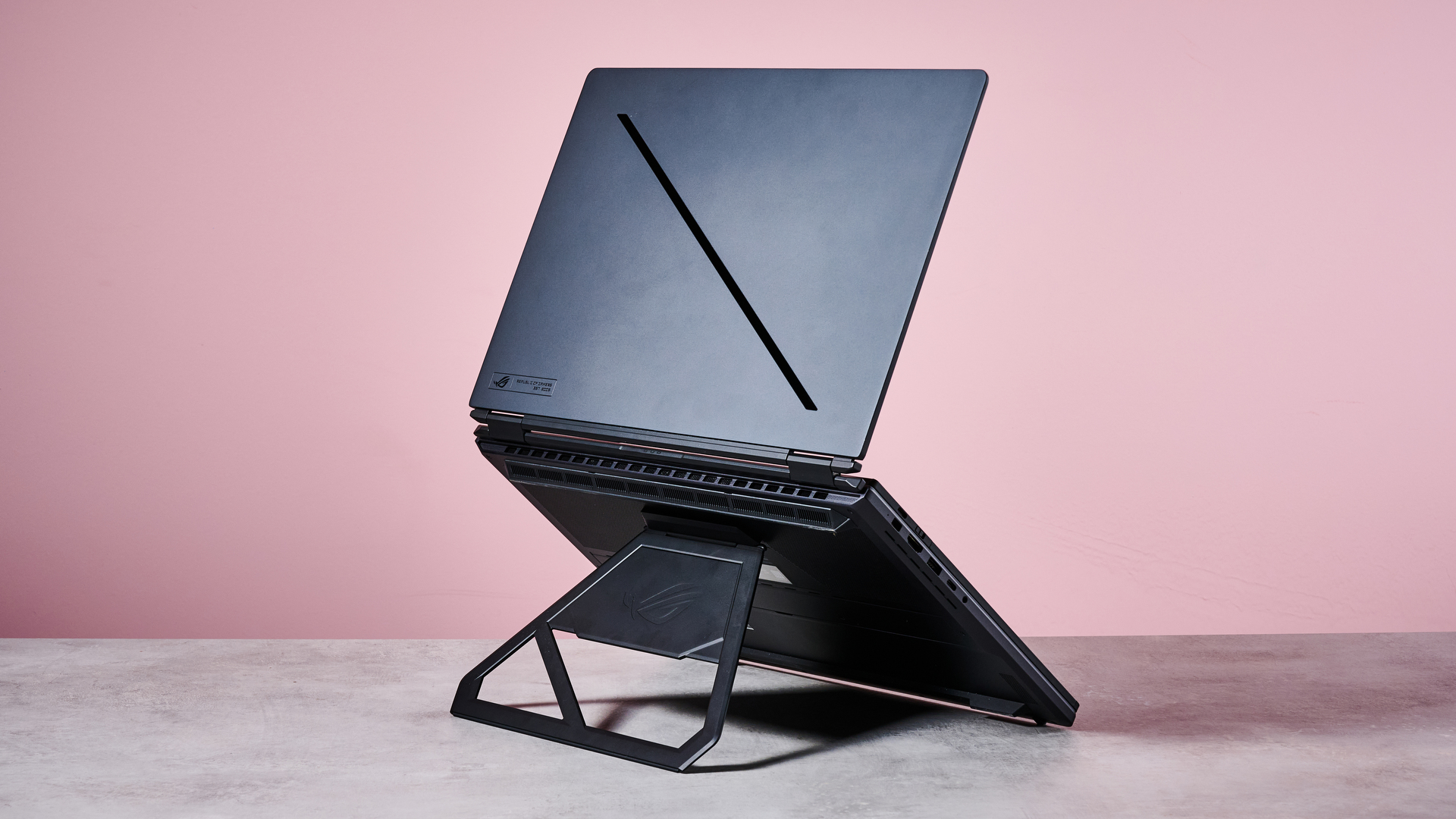
The ROG Zephyrus Duo cuts a rather unassuming figure, with its dark gray colorway and lack of branding. On the lid, the diagonal strip that’s become the mark of the Zephyrus line doesn’t add much interest. But the matte finish on the lid is a nice touch.
However, the rest of the unit’s materials don’t look or feel particularly premium. Its form is quite utilitarian, too, lacking the totally flat and flush surfaces of more sleek laptops. Thankfully, though, it feels very solid, and although the top display enclosure is quite thin and has some flex to it, it’s sturdy enough.
The ROG Zephyrus Duo is actually quite a discreet device. There’s no denying its thickness, but when you consider it hides a second screen and a detachable wireless keyboard, as well as featuring up to an RTX 5090 GPU, it’s quite impressive Asus has managed to make it this compact. It’s still expectedly heavy, though.
Two 3K OLED touchscreen displays are the standout feature of the ROG Zephyrus Duo. You can set them up in various ways: by reclining the main display back past 180 degrees so you can prop the unit like a tent, or leave the laptop in the standard position and simply remove the keyboard to use the display underneath. This would be perfect for drawing or handwriting while you keep your eyes on the main display. It’s a shame, though, that the ROG Zephyrus Duo doesn’t come with a stylus despite supporting them, although if you’re an enthusiastic creative you may already have one you can use.
The hinge offers a smooth pivot and provides plenty of stability, no matter what angle you have the main display at. However, it doesn’t allow for a full 360-degree rotation, so the ROG Zephyrus Duo can’t be used like a tablet — although this wouldn’t exactly be practical, given its size and weight.
Perhaps the best way to make use of the ROG Zephyrus Duo’s dual displays is to unfold the integrated kickstand underneath the unit so that both displays are stacked on top of each other. This stand provides a reassuring stability and, despite how thin it is, it doesn’t feel flimsy.
Switching between dual- and single-screen use is made easy thanks to the removable keyboard. It’s magnetically attached to the bottom screen, so it simply requires a light pry to detach it. At the same time, it’s also very stable when in place; I didn’t experience any wobbling or displacement when using it.
When detached, it connects to the ROG Zephyrus Duo via Bluetooth, which you enable by flicking a switch on the side of the keyboard. It charges when attached to the bottom screen, but you can also charge it using the USB-C port on its side when it’s not.
Its build quality is less impressive than the rest of the ROG Zephyrus Duo, though. The soft outer material feels cheap and is prone to scuff marks and the like, while the board itself is quite flimsy. However, this is a price worth paying for its lightness, and it remains stable while typing.
Given its real estate, the layout is disappointingly compromised. It seems like there’s space to include a number pad or at least more navigation keys. The arrow keys are inconveniently small, too, although the integrated touchpad is a good size at least.
I was also glad to see a number of ports on board the ROG Zephyrus Duo. In addition to two Thunderbolt 4 USB-C ports and two USB-A ports, there’s also a full-sized SD card reader, an HDMI port, and a 3.5mm headset jack. These ports are spread quite evenly across both sides of the unit and are sensibly positioned.
Asus ROG Zephyrus Duo (2026) review: Performance
- Phenomenal performance
- Consistent fan noise
- Keyboard not great for gaming
Asus ROG Zephyrus Duo (2026) benchmarks
3DMark: Night Raid: 63,017; Fire Strike: 34,724; Steel Nomad: 4,818; Solar Bay: 88,856; Solar Bay Unlimited: 86,289; Solar Bay Extreme: 17,498; Solar Bay Extreme Unlimited: 16,958
Geekbench 6.5: Multicore: 17,119; Single-core: 2,857
Cinebench R23: Multi Core: 20,933; Cinebench R24: Single Core: 124; Multi Core: 1,252
Crossmark: Overall: 2,177; Productivity: 1,975; Creativity: 2,532; Responsiveness: 1,852
Passmark Overall: 15,847.2; CPU: 39,981.9; 2D Graphics: 1,462.5; 3D Graphics: 30,730.9; Memory: 40,56.3; Disk: 82,992.7
BlackMagicDisk: Read: 9,501MB/s; Write: 8,190MB/s
HandBrake 4K to 1080p: 104.26fps
Civilization VII: (Max resolution, High, XeSS Balanced): 149fps; (1080p, High): 183fps
Shadow of the Tomb Raider: (Max resolution, Highest, DLSS Balanced): 173fps; (1080p, Highest, SMAA x4): 162fps
Total War: Warhammer III: Mirrors of Madness: (Max Resolution, Ultra): 48fps; (1080p, Ultra): 53fps
Cyberpunk 2077: (1600p, Ray Tracing: Ultra, DLSS Balanced): 66fps; (Max resolution, Ultra, DLSS Balanced): 94fps; (1080p, Ultra): 124fps
Marvel Rivals: (Max resolution, DLSS Balanced, Ultra): 75fps; (1200p, Low): 149fps
Battery Life (TechRadar movie test): 3 hours and 37 minutes
My review unit was equipped with the top-tier RTX 5090, which, combined with the Intel Core Ultra 9 and 64GB of RAM, made for blistering performance. I was getting around 30fps on Cyberpunk 2077 with the maximum Ray Tracing: Overdrive preset and the maximum 2880 x 1800 resolution selected, with DLSS set to Balanced. This jumped to between 50-60fps when I enabled Frame Generation on top.
As expected, though, fan noise accompanied this performance. Thankfully, it’s not too disruptive, but more troubling is the fact that the fans can whir up sporadically, even when fairly lightweight tasks are being undertaken, such as browsing the web.
Scorching temperature can also afflict the ROG Zephyrus Duo, although mercifully the heat is confined to the underside of the base, with the commonly contactable surfaces, such as the keyboard and bottom screen, remaining perfectly comfortable to touch. Using the kickstand also helps to dissipate some of the heat.
As you would expect, the two 3K OLED displays are a visual treat, with plenty of sharpness, contrast, and vividness. They both have small bezels, which helps them to maximize their respective 16-inch canvases, and they do a reasonable job of keeping reflections at bay thanks to their high brightness levels.
Their touchscreen functionality is also quite good. Although they can be a little grabby at times, they’re smooth enough for the most part. They’re also quick to respond to inputs.
The keyboard is a tactile affair, with low-profile keys that offer more dampening and travel than you might expect, but they’re still snappy, making for a fast and satisfying experience. They’re comfortably spaced for typing, although I found gaming in the WASD position a little cramped and awkward. The large touchpad makes general navigation practical, though.
Asus ROG Zephyrus Duo (2026) review: Battery life
- Short-lived, even by gaming laptop standards
- Quick to charge
For such a large and feature-packed gaming laptop, it’s no real surprise that the ROG Zephyrus Duo isn’t a particularly enduring machine. However, it drains faster than many other gaming laptops. It lasted just over three and a half hours in our movie playback test, and this was with just the main screen active.
To put this result into context, the Lenovo Legion 7i Gen 10, another 16-inch gaming laptop, lasted almost eight hours in the same test, while the Razer Blade 18, which is 18-inches, lasted closer to eight and a half hours.
Fortunately, the ROG Zephyrus Duo is quick to charge, taking between 60-90 minutes to fully replenish, which is more impressive.
Should I buy the Asus ROG Zephyrus Duo (2026)?
Scorecard
Swipe to scroll horizontally
|
Attributes |
Notes |
Rating |
|
Value |
The ROG Zephyrus Duo is incredibly expensive, but that’s hardly a surprise considering its two displays and superlative spec. |
3 / 5 |
|
Design |
That dual-display setup is well thought-out, but while the construction is strong, it doesn’t look or feel especially premium. |
4 / 5 |
|
Performance |
My review unit had just about the highest spec a gaming laptop could have, so naturally outright performance was peerless. The fans frequently make themselves known, though, and the keyboard isn’t the best for gaming. |
5 / 5 |
|
Battery life |
Disappointing, even by gaming laptop standards. It’s at least quick to charge, though. |
3 / 5 |
|
Overall Rating |
The ROG Zephyrus Duo is a unique proposition in the gaming laptop market, and it’s certainly an accomplished machine. The poor battery and awkward keyboard are drawbacks, but the real issue is the price. Still, if you need an incredibly powerful dual-screen laptop, nothing fits the bill better. |
4 / 5 |
Buy it if…
” data-widget-type=”deal”>
Razer Blade 18
The Razer Blade 18 is easily one of the best gaming laptops we’ve ever tested. It gets pretty much everything right: the performance is phenomenal, the keyboard is a dream to use, and even the form factor is reasonable for an 18-inch machine. More remarkable is that it has a superior battery life to many of its rivals. Read our full Razer Blade 18 review.
” data-widget-type=”deal”>
Lenovo Yoga Book 9i
If you want a powerful dual-screen laptop, but don’t need all that gaming prowess, the Yoga Book 9i is a fine choice. We loved this laptop’s everyday performance and interesting arrangements for its two displays. Its port selection is a little disappointing, but it’s a veritable bargain next to the ROG Zephyrus Duo. Read our full Lenovo Yoga Book 9i review.
How I tested the Asus ROG Zephyrus Duo (2026)
- Tested for a few days
- Used for a variety of tasks
- Plenty of gaming laptop experience
I tested the ROG Zephyrus Duo for several days, during which time I used it for a variety of tasks besides gaming, such as general browsing and video streaming.
I also ran our comprehensive series of benchmark tests, designed to assess every facet of a gaming laptop. I tested the battery life by running a movie on a continuous loop.
I’ve been PC gaming for over a decade, and have used a variety of systems and components during that time. I’ve also reviewed many gaming laptops previous to the ROG Zephyrus Duo, including other Asus models.
- First reviewed: August 2026
- Read more about how we test

Lewis Maddison is a Reviews Writer for TechRadar. He previously worked as a Staff Writer for our business section, TechRadar Pro, where he gained experience with productivity-enhancing hardware, ranging from keyboards to standing desks. His area of expertise lies in computer peripherals and audio hardware, having spent over a decade exploring the murky depths of both PC building and music production. He also revels in picking up on the finest details and niggles that ultimately make a big difference to the user experience.
” data-join-the-conversation-text=”Join the Conversation”>
You must confirm your public display name before commenting
Please logout and then login again, you will then be prompted to enter your display name.
Related Posts

NYT Strands hints and answers for Tuesday, April 29 (game #422)
(Image credit: New York Times) Looking for a different day? A new NYT Strands puzzle appears at midnight each day […]
I’ve looked through hundreds of listings in the HP Spring sale — these are the 9 best deals on RTX 5060, 5070, and 5080 machines
(Image credit: HP / Edited by Google Gemini) There are a lot of ‘Spring sales’ happening right now – primarily […]

Google Keep could get a fresh redesign soon – including two features that’ll make it much easier to use
Google’s note-taking app, Google Keep, could be getting more interface upgrades First-look images provided by Android Authority suggest that its […]