

A new survey reveals that VPN use is now common across the United States, with privacy concerns driving much of that adoption. The findings show that many VPN users want to keep their online activity private from government agencies, alongside concerns about tracking by companies and internet providers.
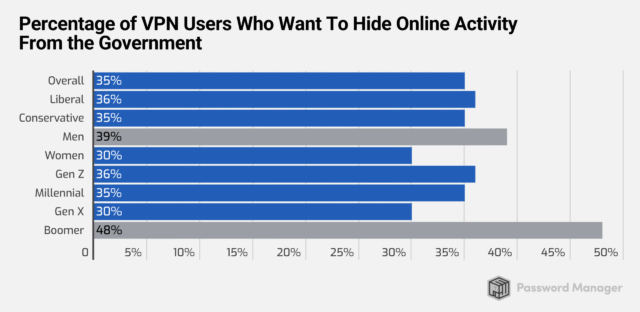
The PasswordManager.com survey, which questioned 2,706 U.S. adults, found that 36 percent of respondents say they currently use a VPN. Among those users, 35 percent report using a VPN specifically to keep their online activity private from the government.
SEE ALSO: AdGuard’s TrustTunnel VPN protocol avoids detection by mimicking normal web traffic
Avoiding tracking by private companies remains the most common reason for using a VPN, with 65 percent of users saying they use one to prevent monitoring by advertisers or data brokers. Nearly half, 47 percent, say they use a VPN to limit visibility from their ISP.
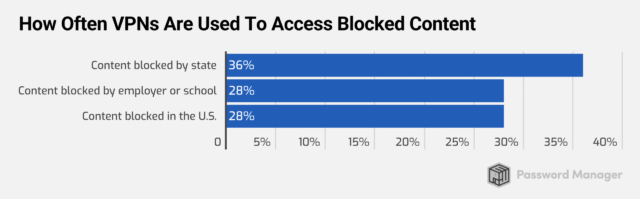
VPNs are also used to bypass content restrictions. 35 percent of users say they access websites blocked in their state, while 28 percent say they use a VPN to reach sites blocked across the U.S. The same share report using a VPN to access websites blocked by an employer or school.
Usage extends beyond casual browsing. 64 percent of VPN users say they use one for everyday online activity, and 56 percent report using a VPN when accessing financial or banking accounts. 28 percent say they use a VPN for gambling or sports betting websites, and 25 percent use one to access adult content.
Security and privacy remain the primary drivers overall. 65 percent of VPN users cite privacy or security as their main reason for using one. Another 25 percent say privacy and accessing restricted content are equally important. Only 10 percent say accessing restricted content is their primary motivation.
VPN use for government snooping
Concern about government monitoring is widespread beyond VPN users. A whopping 80 percent of Americans say they are very or somewhat concerned about government surveillance or restrictions on online activity. That concern appears consistent across political lines, with 82 percent of liberals and 80 percent of conservatives reporting similar levels of concern.
“People are turning to VPNs because they feel watched, restricted, or tracked, and a VPN is one of the few tools that feels accessible and immediate,” says Gunnar Kallstrom, information systems and cybersecurity expert at Password Manager. “Whether it’s avoiding surveillance, bypassing state or workplace restrictions, or protecting sensitive activity, VPNs are becoming a go-to response when people feel their online choices are being monitored or limited.”
The survey also shows that VPN usage patterns vary by age and gender. Gen Z and Baby Boomers are more likely than other groups to say they use VPNs to keep activity hidden from the government. Men report this reason more often than women, although the gap is not huge.
23 percent say they use a VPN to keep activity private from an employer, 19 percent say they want privacy from family members, and 9 percent from a romantic partner.
What do you think about VPN adoption and concerns over online surveillance? Let us know in the comments.


