
- New research analyzes GPS jamming signals over the last 7 years
- A Russian satellite network seems to be the source of the interference
- There are still questions over the purpose of the 10-second bursts
Losing access to GPS navigation systems might not stop you finding your way to the office, but it would play havoc with military maneuvers — and that might explain why Russia has apparently been testing a way to jam GPS signals across the entire European continent.
Russia’s involvement and intentions haven’t been confirmed, but a new study from researchers at the University of Texas at Austin and Stanford University (via Ars Technica) lays out a pretty strong case. It analyzes a series of powerful “interference events” across Europe, Greenland, and Canada, based on data collected between 2019 and 2026.
These events affected the Global Navigation Satellite Systems (GNSS) that GPS relies on, and they can be caused deliberately, or as the result of natural events (like atmospheric interference). This new study focuses on sharp, intense, regular bursts of interference that have been lasting less than 10 seconds, and hitting the same frequencies.
The study, which hasn’t yet been peer-reviewed, maps out when and where these jamming signals have appeared. They’ve mostly been showing up during business hours in Europe, and generally on Tuesdays, Wednesdays, and Thursdays, making GPS signals harder to get a lock on and less reliable.
A potential source
Something is jamming GPS over Europe. Here’s what we found – YouTube 
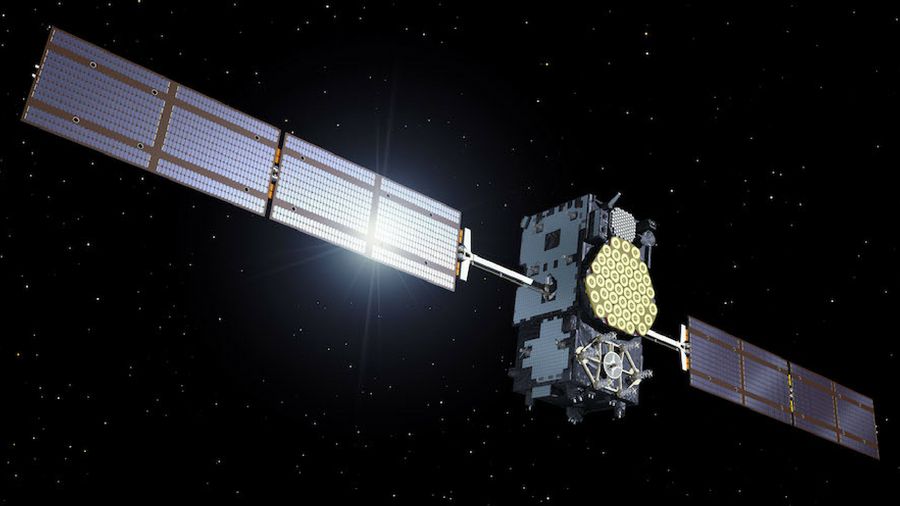
Figuring out where the interference was coming from needed more work. With help from a wider team, the researchers calculated the source of the jamming based on timings and locations of an event in February 2026. Those calculations pointed to the Russian satellite Kosmos 2546, with an accuracy level of five meters (16.4 feet).
Further analysis suggests that the rest of the system that Kosmos 2546 belongs to — the Russian Edinaya Kosmicheskaya Sistema (EKS) — is behind the interference. EKS is Russia’s sole early warning system, intended to spot the launch of ballistic missiles from anywhere on Earth, so in theory it’s largely passive rather than active.
What we don’t know is why this is happening. “I do think that this is a massive escalation in the electronic warfare background conflict that’s going on right now,” aerospace engineer Todd Humphreys, one of the researchers involved, told science and education YouTube channel Veritasium in a detailed breakdown of the study.
While the disruption does seem deliberate, not everyone Veritasium spoke to is sure the acts are malicious. Other experts interviewed by The New York Times said they didn’t think Russia would risk distracting its only early warning system with a secondary purpose.

Follow TechRadar on Google News and add us as a preferred source to get our expert news, reviews, and opinion in your feeds.