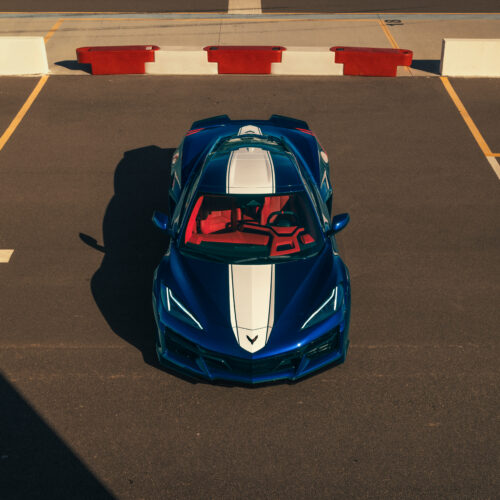
A 13:1 compression ratio makes it the highest-compression small-block that Chevy has ever produced, up from the 12.5:1 in the current Z06.
That compression ratio is enabled by a number of tweaks, including better cooling around the valves and spark plugs and optimized direct injection. Mike Kociba, assistant chief engineer of small block engines at General Motors, told me that some extra processing power was key to unlocking that extra performance.
“With our newer controllers and control systems, you can process information faster. So, if you start to sense an issue, you can react to it faster,” Kociba said. The issue is a phenomenon called knock, in which combustion in the cylinders doesn’t happen at precisely the right time. When you’re talking about an engine spinning at 6,800 rpm, explosions occurring at the wrong time can have catastrophic effects.
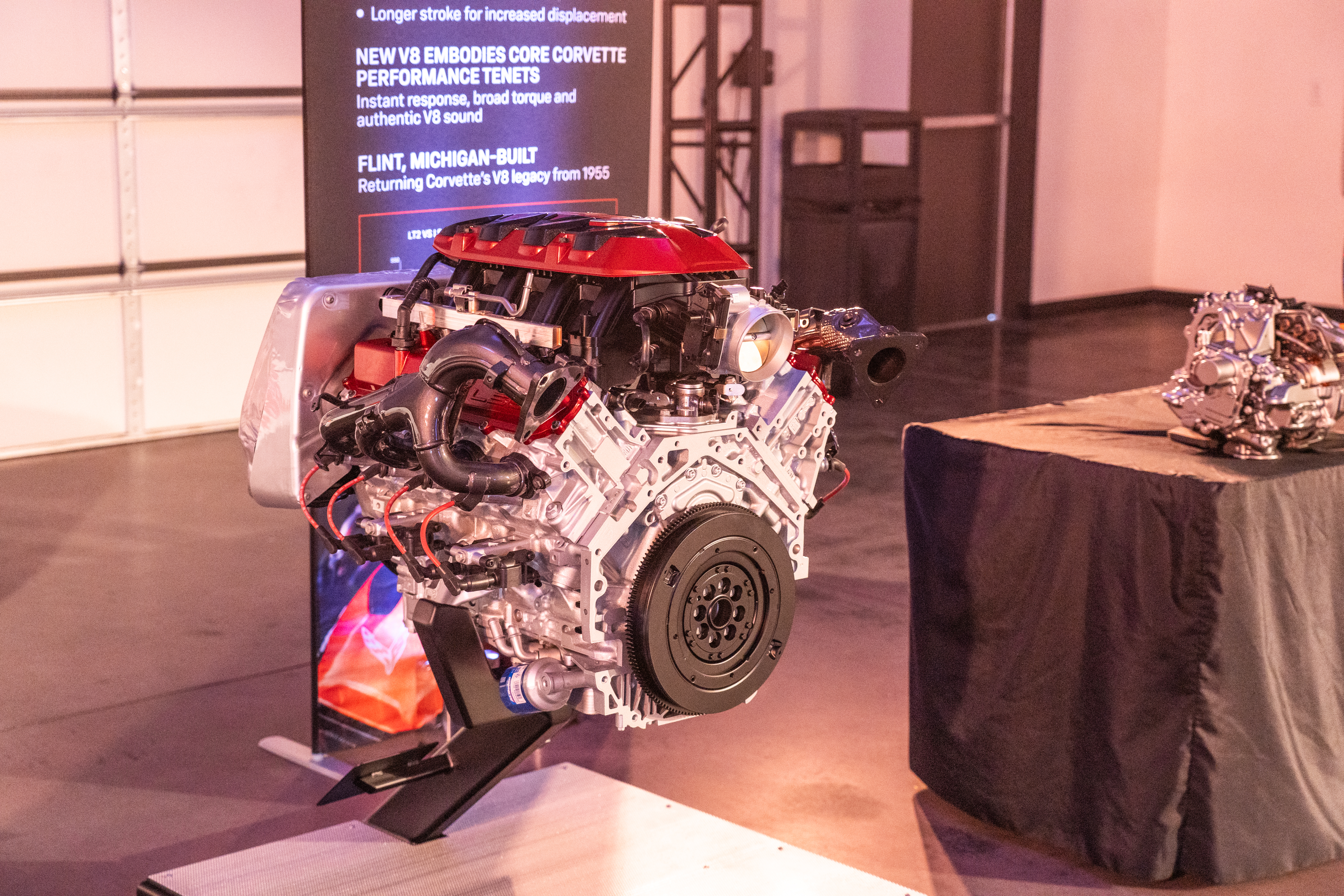
The new LS6 engine.
Credit: Tim Stevens
The new LS6 engine. Credit: Tim Stevens
Knock sensors are standard on every engine, but with the new LS6, Chevy’s engineers refined the system with a faster onboard engine controller called the E94. Using the same sensors as before, the extra processing power of the new controller means that the system can detect and react to knock more quickly, letting engineers push the envelope further on output.
“It’s still based on our knock sensors, which are vibration-based. So if you can start detecting an unusual vibration, if it meets a certain frequency profile, then we react to that,” Kociba said. The “new processors, faster speed… obviously helps us chew through the logic.”
That logic includes fast Fourier transforms and other algorithmic means of identifying specific wave patterns amid the overwhelming noise of a high-strung V8.
Kociba said this is still a discrete controller and not fully integrated into a broader software-defined vehicle platform. The company is starting to move that way, though. “That’s one more step on the journey to integrate and make the engine controls as agile as they can be… one step closer to what you’d consider a true software-defined vehicle,” he said.