
Beijing, China, June 23, 2026 (GLOBE NEWSWIRE) — Striding AI today announced that it is developing a new generation of robotic foundation systems designed to accelerate the deployment of Physical AI in real-world environments.
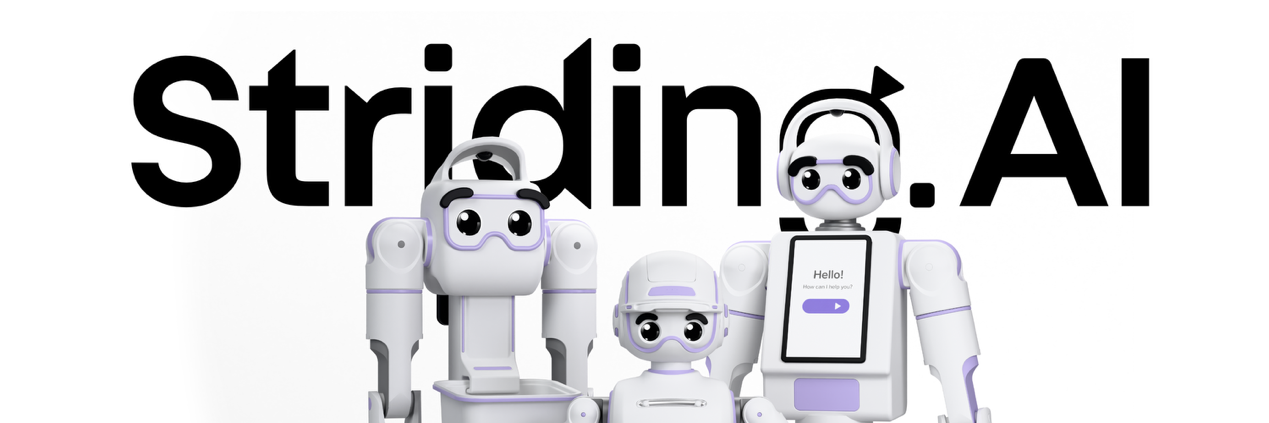
The company’s approach focuses on building the foundational technologies required for robots to perceive, reason, act, and continuously improve through interaction with the physical world. By integrating advanced foundation models with robotic perception, control systems, real-world action data, and deployment infrastructure, Striding AI aims to enable intelligent machines to perform useful tasks across commercial, industrial, and everyday settings.
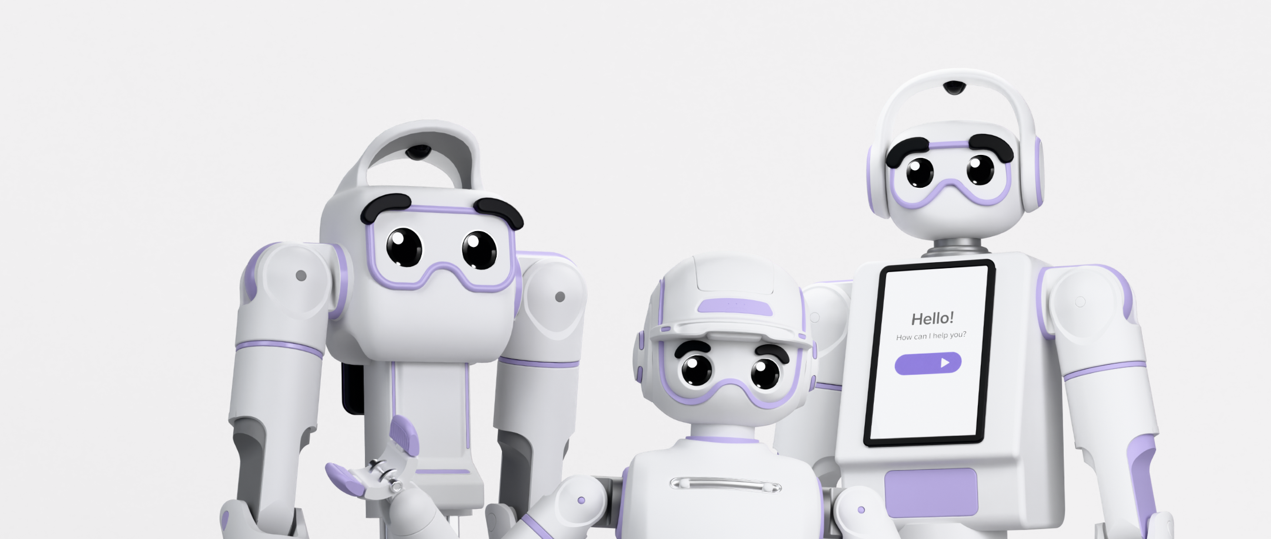
Powered by a world-class team of researchers, engineers, product builders, and business leaders, the company is pushing the boundaries of Physical AI through World Action Models and next-generation reinforcement learning technologies. By accelerating the large-scale adoption of robotics across commercial and industrial applications, Striding AI aims to become a leading trustworthy robotic service provider.
“We believe that breakthroughs in Physical AI emerge from the continuous co-evolution of data, models, and infrastructure.” said Song Yao, founder and CEO of Striding AI.
The company takes a systems-first approach to physical AI, integrating foundation models, robot hardware and software, data infrastructure, control systems, and deployment engineering for building scalable service. The company’s leadership team includes founders and executives with backgrounds in AI chips, autonomous driving, robotics research, and industrial technology, combining deep technical expertise with experience bringing complex technologies into production environments.
Striding AI plans to begin with practical deployment scenarios in structured environments such as retail, where robots can support tasks including shelf restocking, inventory counting, product organization, and checkout assistance. These environments provide frequent human interaction, repeatable workflows, and rich operational data, making them a strong starting point for developing scalable Physical AI systems.
Over time, Striding AI expects its robotic foundation systems to support broader applications across sectors including retail, food, agriculture, logistics, healthcare, and telecommunications. The company’s long-term vision is to build robots that learn from real-world experience, improve continuously, and become part of everyday human environments.
Behind its deployment strategy, Striding AI is developing a new generation of robotic foundation systems that can turn multimodal perception into real-world robotic action. By integrating advanced foundation models with robotic perception, control, and real-world action data, the system learns actionable representations of how actions affect and change the physical world through interaction, enabling robots to transfer skills more effectively across different tasks and environments.
These capabilities are integrated into a closed-loop robotics architecture spanning perception, planning, execution, feedback, and recovery, where human-in-the-loop reinforcement learning turns real-world operations into continuous training data.
In early internal testing, Striding AI’s human-in-the-loop RL method improved task success rates by up to 3x. To scale this flywheel, Striding AI is building infrastructure for robot pretraining, distributed reinforcement learning, and edge-to-cloud orchestration, creating a platform designed to improve as more robots operate in real-world environments.
Striding AI sees Physical AI as a full-stack effort, where foundation models, robotic systems, data, infrastructure, and deployment capabilities must advance together.
The capabilities developed in real-world environments, from handling diverse objects and understanding retail shelves to planning and executing complex tasks, are part of an integrated system designed for broader robotic applications. Through this systems-first approach, Striding AI aims to build robots that learn from real-world experience, improve over time, and gradually become part of everyday human environments.
CONTACT: Jimei Kou
pr@striding.ai