

But Riot says it’s considering rolling the BIOS requirement out to all players in Valorant‘s highest competitive ranking tiers (Ascendant, Immortal, and Radiant), where there’s more to be gained from working around the anti-cheat software. And Riot anti-cheat analyst Mohamed Al-Sharifi says the same restrictions could be turned on for League of Legends, though they aren’t currently. If users are blocked from playing by Vanguard, they’ll need to download and install the latest BIOS update for their motherboard before they’ll be allowed to launch the game.
Newer PCs are getting patched; older PCs might not be
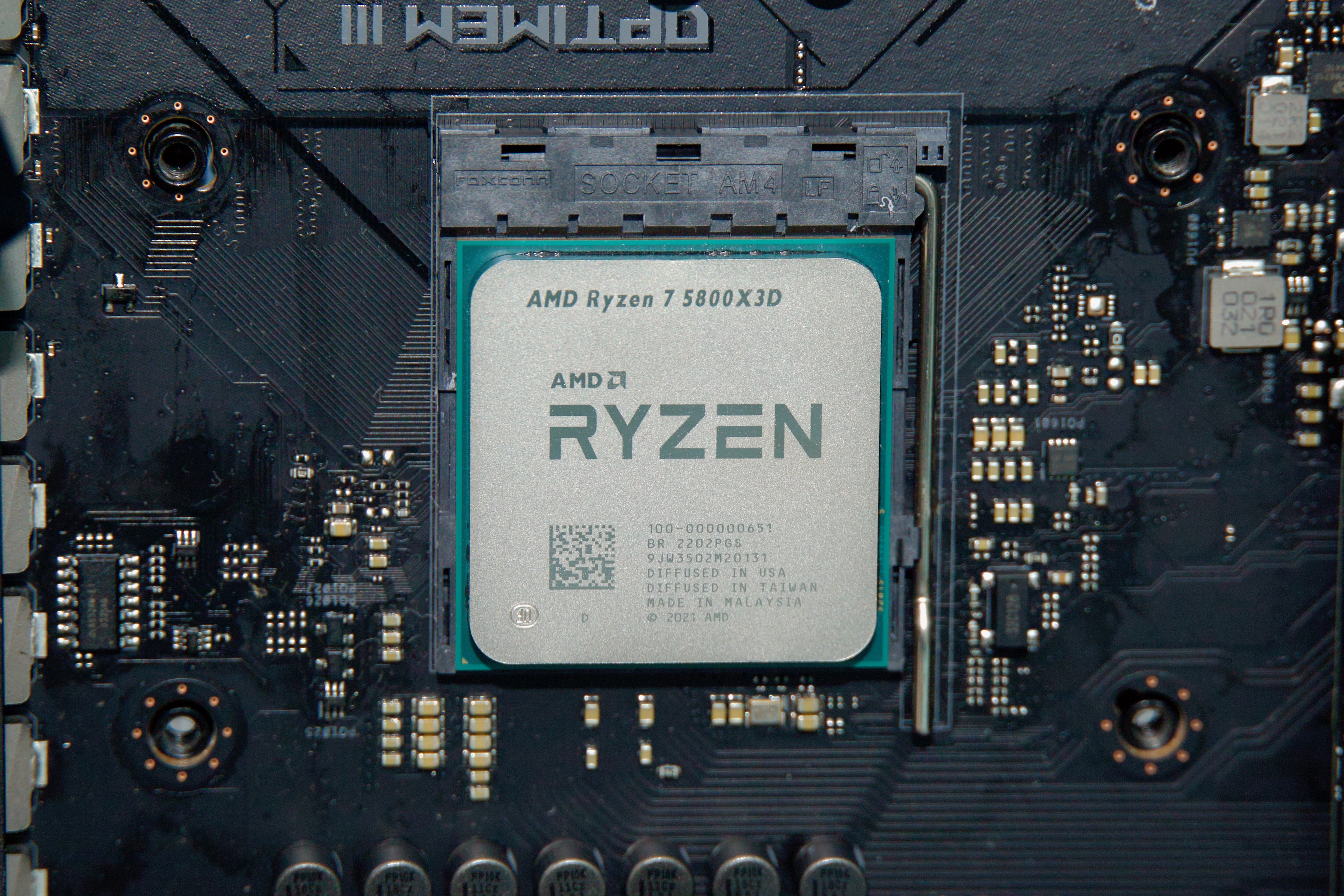
An AMD Ryzen 7 5800X3D in a motherboard with a 500-series chipset. It’s unclear whether these somewhat older systems need a patch or will get one. Credit: Andrew Cunningham
The vulnerability is known to affect four of the largest PC motherboard makers: ASRock, Asus, Gigabyte, and MSI. All four have released updates for at least some of their newer motherboards, while other boards have updates coming later. According to the vulnerability note, it’s unclear whether systems from OEMs like Dell, Lenovo, Acer, or HP are affected.
ASRock’s security bulletin about the issue says it affects Intel boards based on the 500-, 600-, 700-, and 800-series chipsets; MSI only lists the 600- and 700-series chipsets. Asus is also missing the 800-series, but says the vulnerability affects boards based on even older 400-series Intel chipsets; Gigabyte, meanwhile, covers 600-through-800-series Intel chipsets, but is also the only vendor to mention patches for AMD’s 600- and 800-series chipsets (any motherboard with an AM5 socket, in short).
Collectively, all of these chipsets cover Intel’s 10th-generation Core processors and newer, and AMD Ryzen 7000 series and newer.
What’s unclear is whether the boards and chipsets that go unmentioned by each vendor aren’t getting a patch because they don’t need a patch, if they will be patched but they just aren’t being mentioned, or if they aren’t getting a patch at all. The bulletins at least suggest that 400- and 500-series Intel chipsets and 600- and 800-series AMD chipsets could be affected, but not all vendors have promised patches for them.


