AlayaCare survey of 164 professionals reveals nearly 7 in 10 organizations say staff time lost to admin is their biggest barrier to quality care
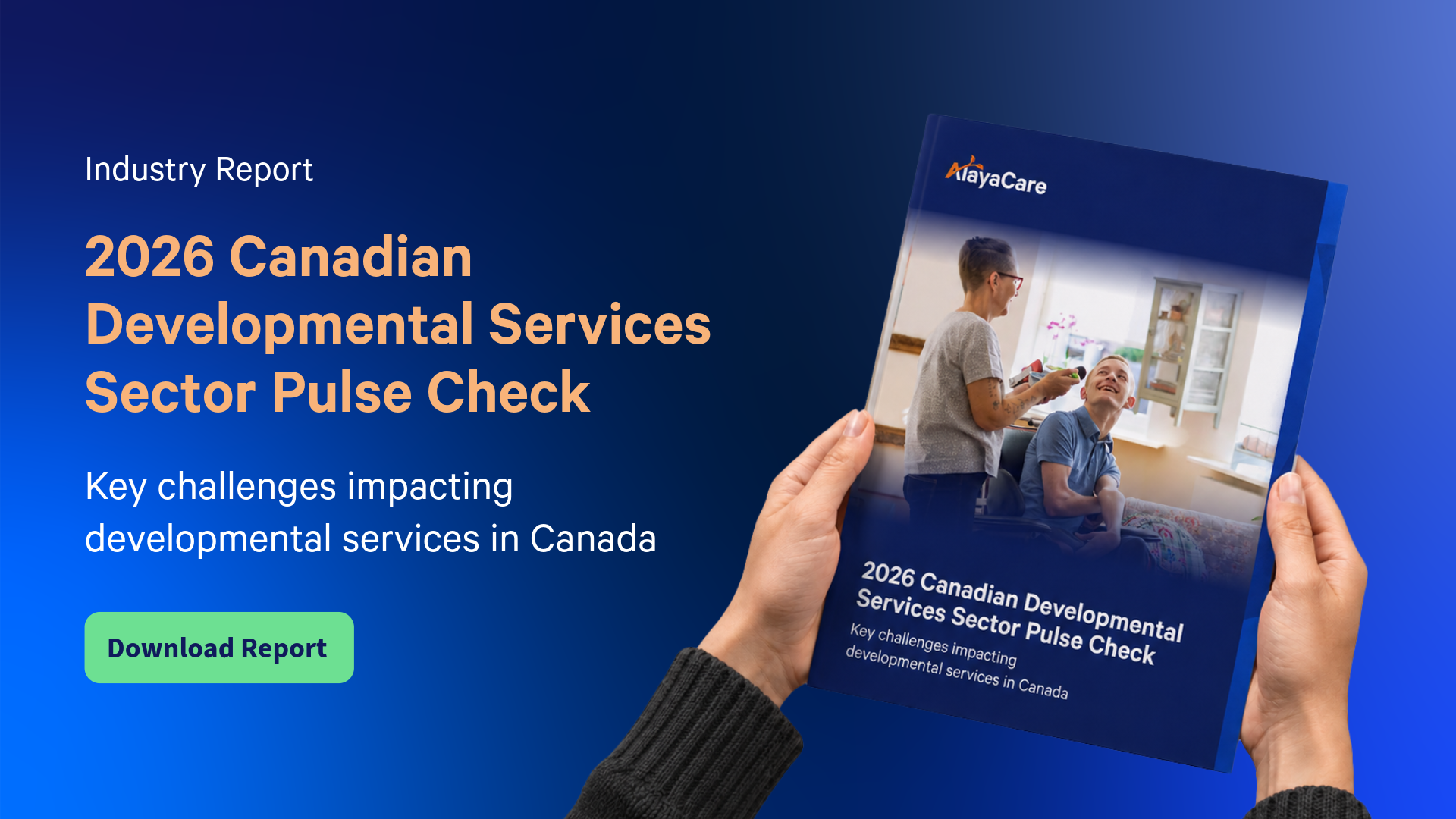
2026 Canadian Developmental Services Sector Pulse Check
TORONTO, June 03, 2026 (GLOBE NEWSWIRE) — AlayaCare, a leading provider of cloud-based home care solutions, supporting developmental services organizations and children’s treatment centres across Canada, released its 2026 Canadian Developmental Services Sector Pulse Check. The survey, conducted in early 2026, gathered responses from 164 professionals spanning executive, operational, clinical, and frontline roles across adult developmental services, children’s treatment, and mixed-service organizations nationwide. Over 60% of respondents were senior leaders or decision-makers.
The findings reveal a sector under significant and sustained pressure — one that is committed to its mission but constrained by outdated tools, disconnected systems, and an administrative load that is pulling staff away from the people they support.
Key findings
Staff time is the most urgent constraint
68% of organizations identified limited staff time and capacity as their single biggest barrier to quality care — ahead of funding, staffing levels, and technology. Staff are not simply short in number; they are stretched by the systems around them, spending hours on documentation and manual data entry that should be spent with clients.
Family engagement remains stuck in an outdated loop
Despite operating in 2026, 81% of organizations still rely on phone and email to keep families informed, and 41% use paper-based logs. Only 16% of organizations use an online portal or digital tool for family updates. Staff cited limited time as the primary barrier to more consistent communication.
Complex funding is a daily challenge
Most organizations report to multiple funders simultaneously — provincial developmental services ministries, children’s ministries, health authorities, and philanthropic sources — each with distinct requirements, timelines, and templates. 34% identified manual data entry and reconciliation as their biggest source of billing and reporting friction.
Disconnected systems are commonplace
More than a third of organizations use multiple platforms that do not connect with one another, creating data silos and compounding reporting challenges. Nearly a third still rely on spreadsheets, and 16% operate primarily on paper.
There is practical interest in AI
50% of respondents see a near-term role for AI in reducing documentation time. 70% said that getting time back from administrative work is their most important goal for the next 12 to 18 months. The sector is not looking for transformation — it is looking for relief.
“The commitment in this sector is extraordinary, and the demand is growing. But the tools haven’t kept pace. When staff spend more time navigating processes than supporting people, something has to change. Our focus is simple: give that time back.”
— Aleem Bhanji, Canadian Market Leader, AlayaCare
A sector ready for change
The report also highlights a structural challenge specific to the Canadian developmental services landscape: nearly one in three organizations supports individuals across their full lifespan, from infancy to older adulthood. As young people move from children’s treatment programs to adult developmental services, their history, goals, and support plans often do not follow them. Staff are forced to rebuild context from scratch, creating risk, delays, and frustration for everyone involved.
Three priorities emerge from the data:
- Reclaim time for people: Cutting documentation burden for frontline staff and clinicians is the most impactful change the sector can make.
- Connect care across the lifespan: Organizations need technology that can carry records, plans, and relationships through transitions, so staff do not have to start over each time.
- Help families stay connected: Giving families real-time, self-serve access to schedules, services, and updates is not a nice-to-have feature — it is essential for person-centred care.
About AlayaCare
AlayaCare is an end-to-end platform designed to serve public, private, and non-profit home-based and community care organizations that manages the entire client lifecycle, including needs assessments, care plans, scheduling, visit and route optimization, and visit verification. Founded in 2014 and now with over 600 employees, AlayaCare combines traditional in-home and virtual care solutions that enable care providers to lower the cost of care and achieve better outcomes for their clients. For more information, visit AlayaCare.com.
Media contact:
Monica Szalajko
monica.szalajko@alayacare.com
A photo accompanying this announcement is available at https://www.globenewswire.com/NewsRoom/AttachmentNg/537270f0-9d9f-44bb-9680-cefadfb18663