
- Micron has unveiled faster new GDDR7 video memory
- It runs at 36Gbps compared to 32Gbps for the initial incarnation of GDDR7
- This memory also comes in 3GB modules rather than 2GB, which is an important step forward for graphics card VRAM capacity
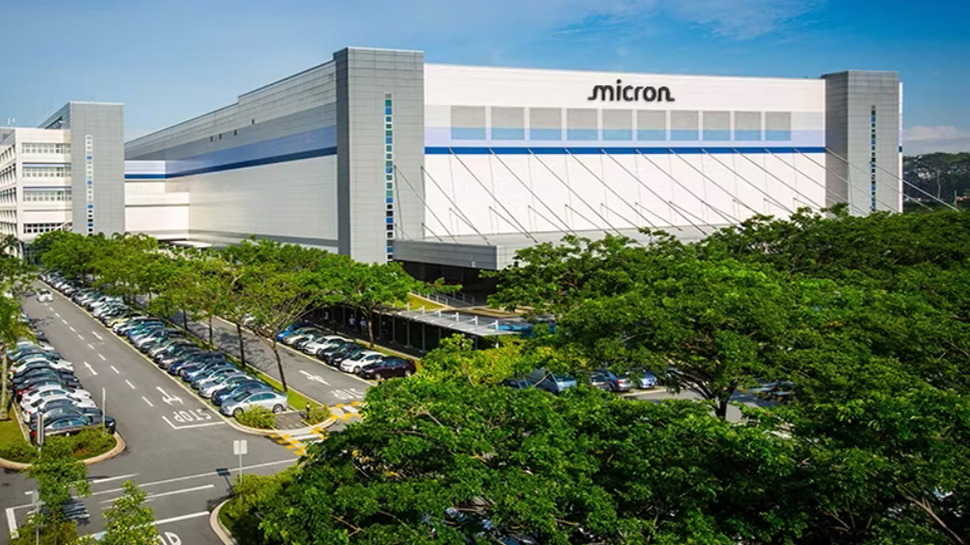
Micron has released a new type of GDDR7 memory for graphics cards, which is the firm’s fastest such RAM yet.
Tom’s Hardware reports that Micron issued a press release detailing the new GGDR7 memory, which offers a speed of 36Gbps. For perspective, the first GDDR7 modules that hit the market — and arrived on consumer GPUs with the RTX 5000 series from Nvidia — were 32Gbps modules. (Although they were run slower than that, at 28Gbps in most cases, for better thermals and stability).
Another key step forward with Micron’s new GDDR7 is that it uses 3GB modules rather than 2GB (and a 24Gb density). You can only fit so many memory chips on any given graphics card — based on the bus width of the board, the lanes that link the memory to the GPU chip itself — so going from 2GB to 3GB modules allows for loading up more video RAM and a higher overall capacity.
As Micron notes: “Modern games are pushing GPU architectures harder than ever.”
The firm expands on that: “As game environments expand and visual assets grow, memory capacity becomes critical to maintaining seamless, artifact-free experiences. Micron’s new 24Gb density enables up to 96GB of graphics memory, giving GPUs significantly more space for high-resolution textures, expansive worlds, and advanced visual effects.”
Essentially, the maximum video RAM loadout with these chips on a consumer graphics card with a 512-bit bus (as seen on the RTX 5090) is now 96GB, rather than 64GB with 2GB modules. (Note that this maximum involves using chips front and back of the board in a ‘clamshell’ configuration, a more complex and costlier endeavor, which is why Nvidia ran with a spec of 32GB with just modules on the front.)
Analysis: looking to the future
Right here and right now, this doesn’t mean a whole lot to gamers, of course. Currently we’re all more worried about the scarcity of existing forms of video RAM pushing up the prices of graphics cards slowly but surely.
And while it may seem odd to see 96GB of VRAM mentioned in relation to gaming – and to be fair, it is odd — Micron is really just promoting the benefits of 3GB modules more broadly. It’s a boast of ‘up to’ 96GB, and the effects will be felt across whole GPU product stacks, including the likes of 128-bit affordable GPUs that have 8GB now, but could be configured with 12GB using 3GB modules. That’s an important upgrade which avoids the aforementioned complications of a ‘clamshell’ design to increase video RAM capacity.
Micron should have angled its press release better in this respect, but instead wanted to go with an eye-catching 96GB figure, I guess — marketing is often a ‘numbers game’ in that respect.
At any rate, for the mentioned reasons, it’s good news to see a bolstered form of GDDR7 from another memory chip maker. And I say another, because there are two other big forces in this arena, Samsung and SK Hynix, and both already have faster takes on GDDR7 that run at up to 42.5Gbps and 40Gbps respectively.
However, 36Gbps is still a more than respectable speed boost, and as I already mentioned, Nvidia hasn’t even pushed to get the top speed out of the initial GDDR7 incarnation, which offered 32Gbps. As noted, all the initial Blackwell GPUs that used GDDR7 ran at 28Gbps, and just the RTX 5080 differs – and even that graphics card only pushed to 30Gbps. (A move that was implemented to make up for its much leaner memory bus compared to the RTX 5090.)
It is also noteworthy that Micron spends some time considering gaming angles in its press release, and this new GDDR7 could well be what we see in Nvidia’s next-gen graphics cards. That could be true not just for RTX 6000 GPUs, but also for AMD‘s next-gen graphics cards. (Team Red stuck with GDDR6 in RDNA 4 this time around).
There is another possibility, though, and that’s the rumored RTX 5000 Super refreshes employing this Micron VRAM. I wouldn’t rule that out, as these GPUs are supposedly really beefing up memory loadouts. On the subject of these cards, the latest speculation insists that Nvidia’s Blackwell Super revamps won’t arrive this year (as previously hoped). So, whatever the case, it’s likely we’re quite a long way out from seeing this faster GDDR7 memory in consumer graphics cards.
Mind you, in the current climate, with the RAM crisis making matters difficult for graphics card makers, talk of scope for expanding VRAM loadouts feels rather pointless at best. Hopefully this isn’t a situation that’ll persist for too long, but the general indicators right now aren’t good – certainly not for this year.
Follow TechRadar on Google News and add us as a preferred source to get our expert news, reviews, and opinion in your feeds. Make sure to click the Follow button!
And of course, you can also follow TechRadar on YouTube and TikTok for news, reviews, unboxings in video form, and get regular updates from us on WhatsApp too.
” data-join-the-conversation-text=”Join the Conversation”>
You must confirm your public display name before commenting
Please logout and then login again, you will then be prompted to enter your display name.