- LG Display is now mass-producing its world-first LCD panel
- The unique feature is VRR, which can adjust itself to as low as 1Hz in order to save power with static on-screen content
- The OLED version of this tech is currently a 20Hz implementation, but a 1Hz spin will be coming in 2027
LG Display has announced that mass production of its world-first LCD panel has just started, with the unique twist being that it has a variable refresh rate (VRR) that can dip to just 1Hz — and an OLED take on this formula will follow in 2027.
Tom’s Hardware highlighted LG’s press release that explains: “In order to achieve this world first, the company developed its own circuit algorithms and panel design technology, discovering new materials and applying the oxide with the lowest power leakage during low-refresh-rate mode to the display’s thin-film transistor.”
The screen intelligently adjusts the refresh rate depending on the content being displayed, running at up to 120Hz, or as low as 1Hz as noted.
Article continues below
It’s with static images — like when reading a document, or web page, where you don’t need the screen to be refreshed many times per second — that the tech will drop to 1Hz (once per second). The benefit of this is to save power, and therefore battery life, with no impact on the quality of what you’re viewing on the screen.
This so-called ‘Oxide 1Hz technology’ is actually already available in the Dell XPS 14 and 16 for 2026, though with volume production now underway, it’ll presumably be coming to more notebooks soon enough.
Note that the OLED version of this tech — again as seen on the Dell XPS 14 and 16 — can’t drop to 1Hz, but rather its lowest limit is 20Hz. However, LG says it has an OLED version that can get down to 1Hz, coming into mass production in 2027.
Analysis: a considerable benefit — with others set to join the 1Hz party
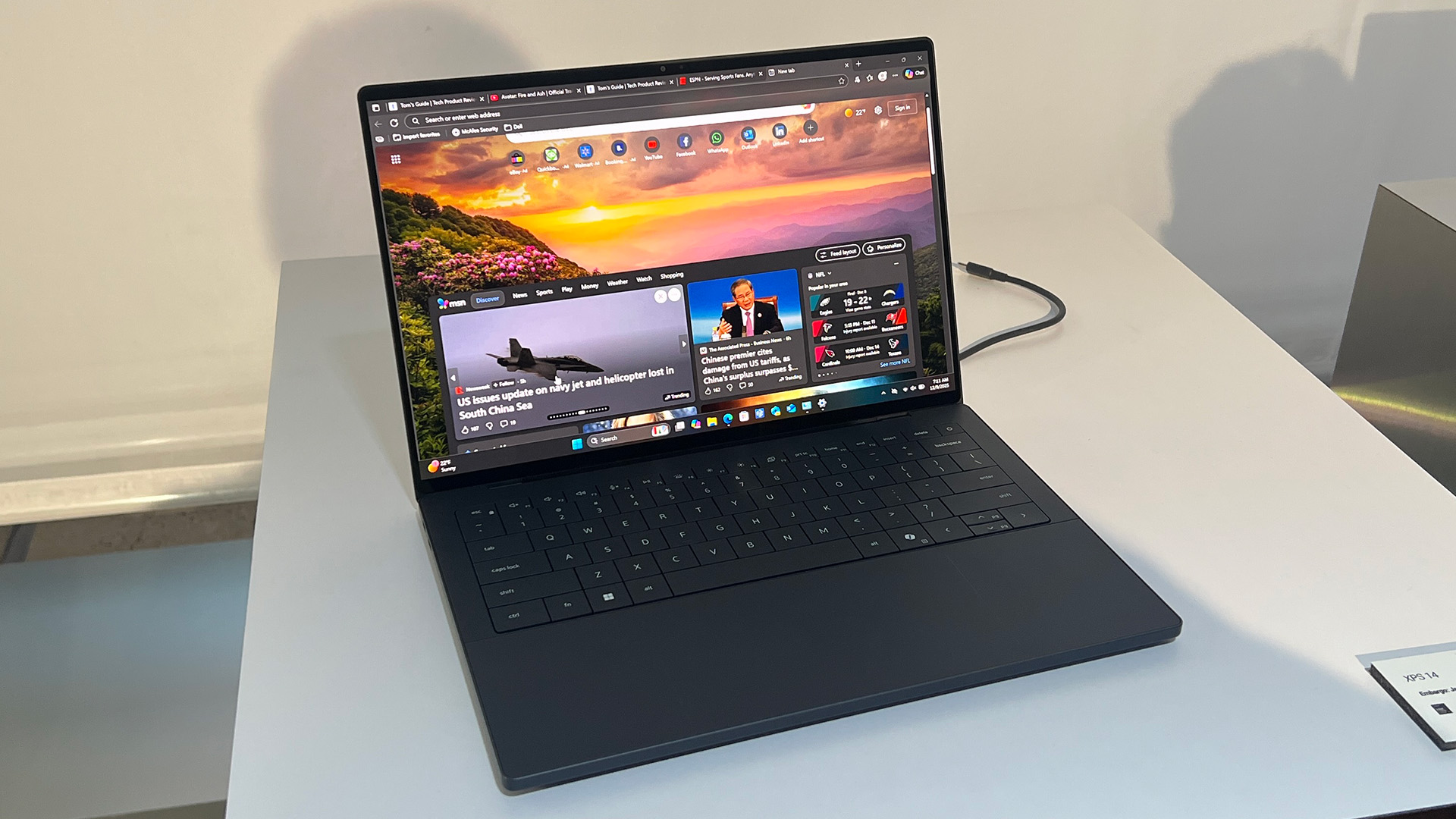
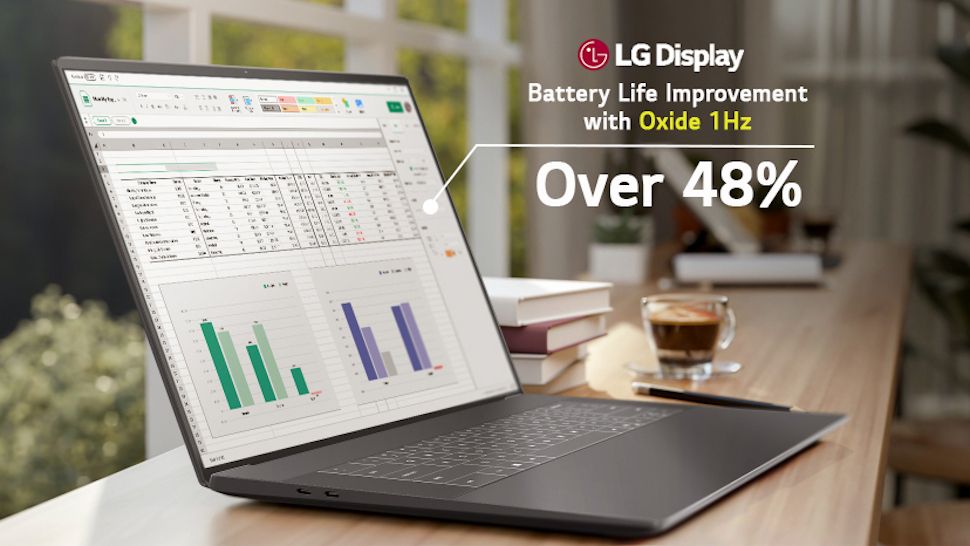
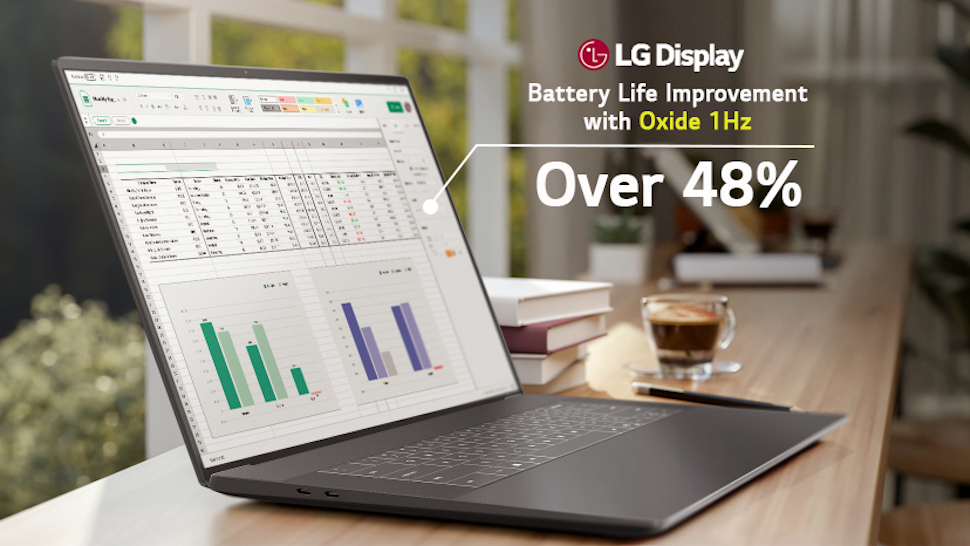
LG claims that this tech makes a big difference, noting, “The result is dramatically improved battery efficiency, including 48% more use on a single charge compared to existing solutions.”
We don’t have to take LG’s word for it, as it’s clear enough that the mentioned Dell laptops have excellent battery life. The LCD model of the new XPS 14 offers a longevity of up to 31 hours (based on Dell’s own testing with streaming Netflix playback), and while that’s not all down to VRR (by any means), it seems the tech definitely helps keep power usage frugal.
According to Notebookcheck.net, the Dell XPS 16 (LCD version) sips just 1.5W of power when idling at the desktop (with VRR on, and with nothing happening on-screen, the tech will be dropping the refresh rate down to its lowest 1Hz level).
LG isn’t the only player in this battery extending game, either, with BOE in conjunction with Intel also having developed ‘Winning Display 1 Hz tech’, which is the same idea.
The end result is that by next year, we should be seeing a lot more of these power-saving screens beefing up battery life, including a widespread deployment of an OLED variant from LG that can hit 1Hz, as noted. And with mobile silicon continuing to take big strides with power efficiency, there should be some seriously long-lasting notebooks coming down the line.
Follow TechRadar on Google News and add us as a preferred source to get our expert news, reviews, and opinion in your feeds. Make sure to click the Follow button!
And of course, you can also follow TechRadar on YouTube and TikTok for news, reviews, unboxings in video form, and get regular updates from us on WhatsApp too.
” data-join-the-conversation-text=”Join the Conversation”>
You must confirm your public display name before commenting
Please logout and then login again, you will then be prompted to enter your display name.