
But why?
It’s helpful to know that the lack of physical buttons isn’t just a trend pushed by designers—the bean counters like it, too. It’s quicker—and therefore cheaper—during assembly to just fit a capacitive touch module that controls multiple settings or switches than it is to have individual buttons, each connected to a wiring loom. Which is why we’re seeing the controls for heating and cooling the interior, the headlights, seat heaters, and more move from knobs and dials and sliders and buttons to touch panels. Sometimes they’re standalone, sometimes they’re embedded along the bezels of the infotainment touchscreen. Sometimes they’re even their own touchscreen.
And they’re more distracting to use than physical buttons.
Like Euro NCAP, ANCAP is not requiring all functions to be physical buttons, lest all our cars look like the flight deck of a Boeing 747-400, or perhaps a first-generation Porsche Panamera. That won’t go nearly far enough for some, but it is at least a move in the right direction.
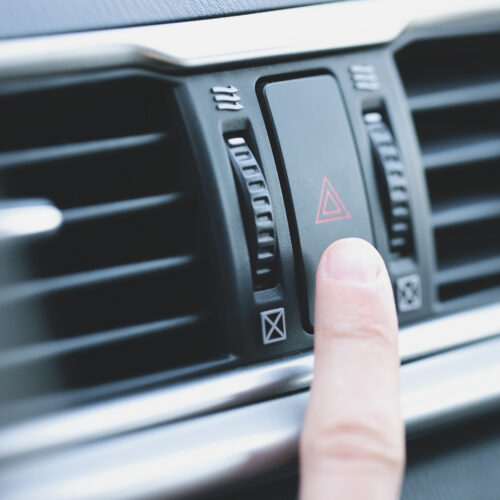
“From 2026, we’re asking car makers to either offer physical buttons for important driver controls like the horn, indicators, hazard lights, windscreen wipers and headlights, or dedicate a fixed portion of the cabin display screen to these primary driving functions,” it wrote in its guidance of what’s changed for 2026. Similarly, Europe is requiring turn signals, hazard lights, windshield wipers, the horn, and any SOS features like the EU’s eCall function.
Encouragingly, it looks like automakers are starting to take this to heart and are designing newer models accordingly. Porsche was an early ditcher of buttons after having previously used many, many of them (like the aforementioned Panamera), but as we found in our preview of the next Cayenne, real buttons are back on the menu.