50 years of Apple
We’re celebrating Apple’s 50th birthday with a week of content about the tech giant. It covers everything from personal recollections from our writers to the greatest — and worst — Apple gadgets as voted by you, and you can read it all on our 50 years of Apple page.
Apple turned 50 years old this week. The company has a semi-mythic origin story, and one of its enduring images is of founders Steve Jobs and Steve Wozniak working out of the Jobs family home garage in the 1970s.
From DIY start-up to multi-trillion-dollar company — it’s the American dream writ large.
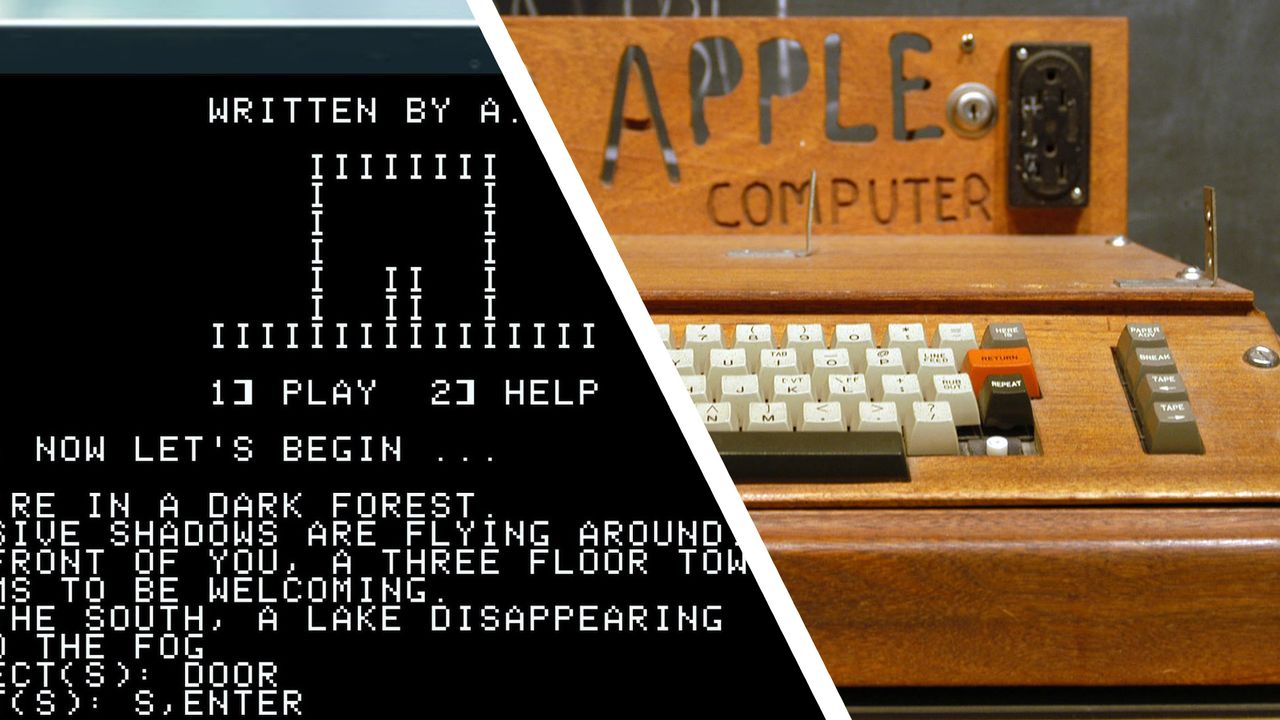
The Apple-1 computer is what Wozniak and Jobs were making back in those garage days. It was a circuit-board PC that sold for $666.66 — a Wozniak quirk — and only around 200 of them were ever made. The Apple-1 went on sale in 1976, as Apple’s very first product.
Article continues below
This is an important part of the Apple story, but it came before the company became remotely big. That came in 1977 with the Apple II, which would go on to sell millions of units.
Only a handful of the original Apple-1 systems are estimated to still work, or even exist, these days. But what was it like to use one of these systems? It’s a little different from what you might imagine.
The Apple-1 was a tool for nerds and tinkerers — by Wozniak, for Wozniak, more or less. There was no built-in word processor. There was a version of BASIC programming, and what was actually made for the system was the one thing people have been saying for decades that Apple doesn’t care about: games.
Despite the lack of color and having no real graphics beyond character symbols, games are where it’s at.
Getting hold of real Apple-1 hardware to try them will cost you a not-inconsiderable fortune these days. One rare prototype system was recently sold at auction in January 2026 for $2.75 million, setting a new record.
However, you can try out Apple-1 software for free, on your PC, using emulation software. I did just that, to get a feel of what playing with an Apple-1 back in the mid-1970s was really like. Here’s my take on seven of the more notable releases from 50 years ago.
1. Boldly going too far for modern sensibilities (Star Trek, 1977)
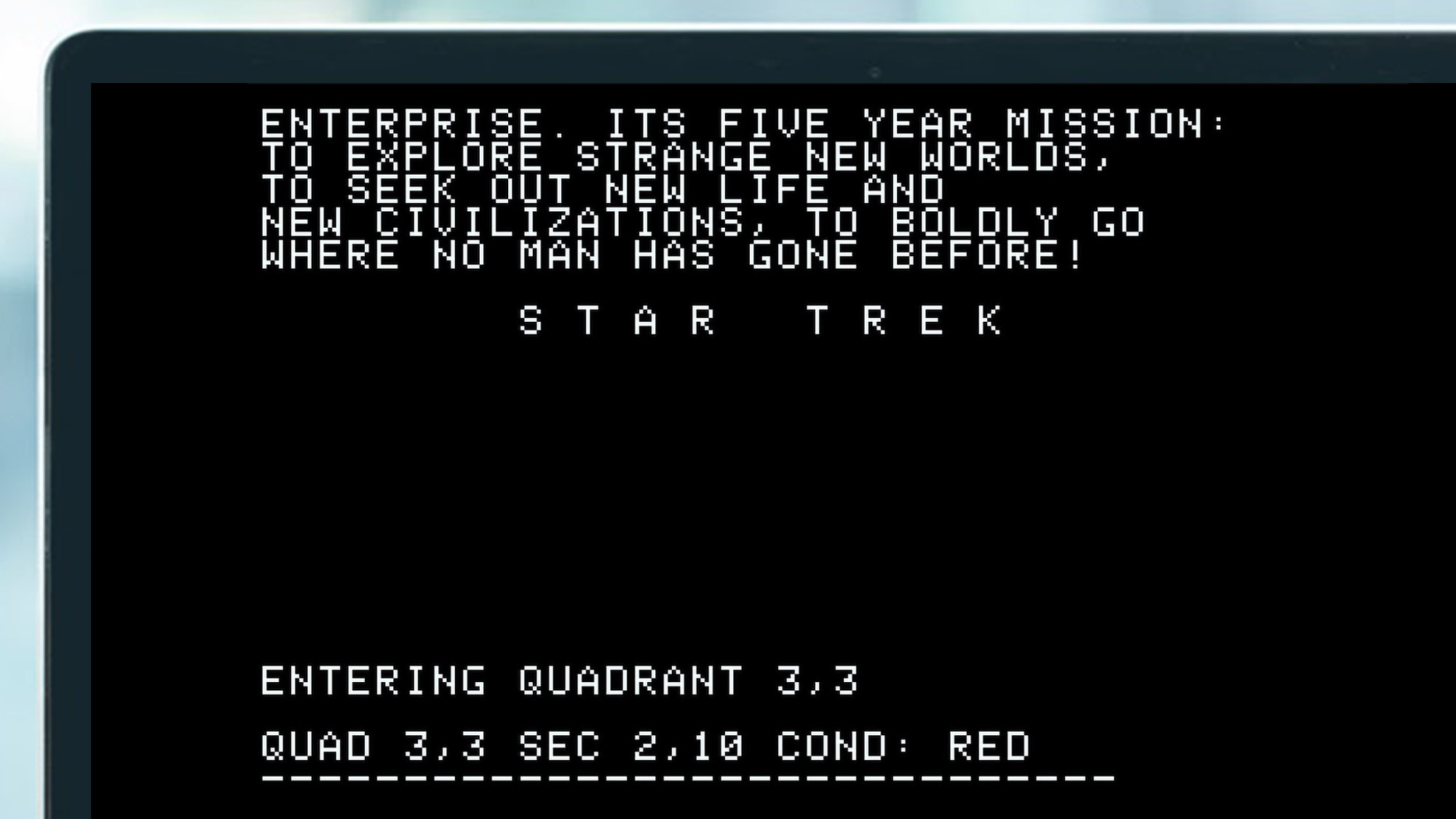
You have to hand it to developer Robert J. Bishop: Star Trek is an ambitious game considering what the system is working with. It puts you in control of the Enterprise, capable of making most of the key commands you’d hear in an episode of the show itself. You engage engines, make short and long-range scans, and fire photon torpedoes and phasors — all through text alone.
The original version is pretty much indecipherable without a manual. And while the 2003 remake (by Vince Briel) is radically more approachable, it only brings it up to the level of “mostly impenetrable.” Once you do get your head around how the system works, it also becomes a bit tedious, like an over-engineered version of Battleships.
Maximum marks for ambition, but the 2026 mind isn’t made for this stuff. Give it a go to see if you’re made of stronger stuff.
2. When is blackjack not fun? (Blackjack, 1976)
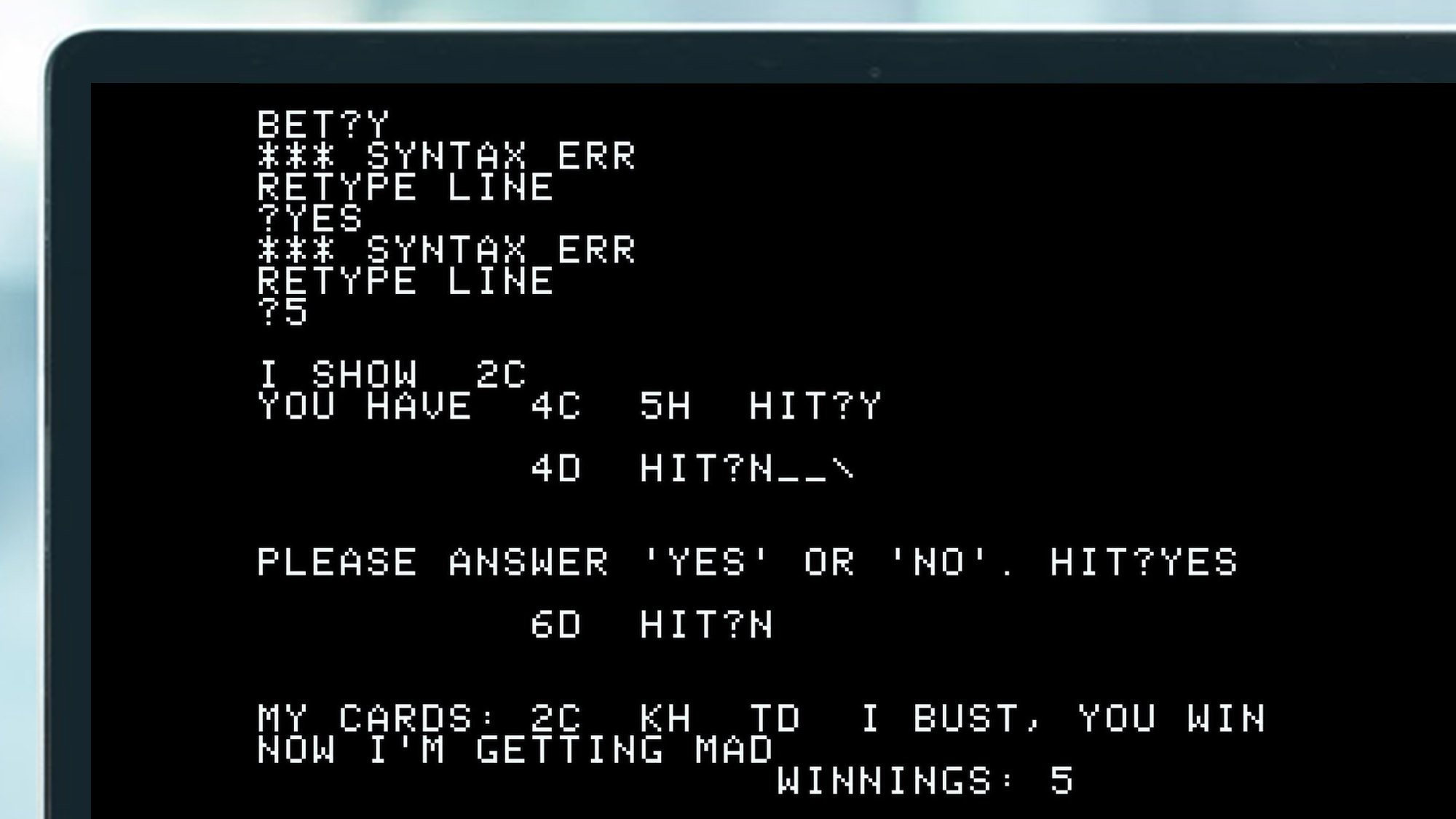
Now here’s a super quick blast of fun that really doesn’t need too much in the way of visual information: a good old game of blackjack.
Just like the real deal, it’s you versus the dealer. And at each stage, you choose whether to stick or draw, after betting at least. The name of the game is to get as close to 21 as possible without going bust — as if we needed to tell you.
There’s not much in the way of game logic beyond the basics, mind. You seem to be able to bet as much as you like, even if your winnings dive way into the red. But the irreverent little dealer lines at the end of each round make up for it.
3. A teeny tiny text adventure (Little Tower, 1976)
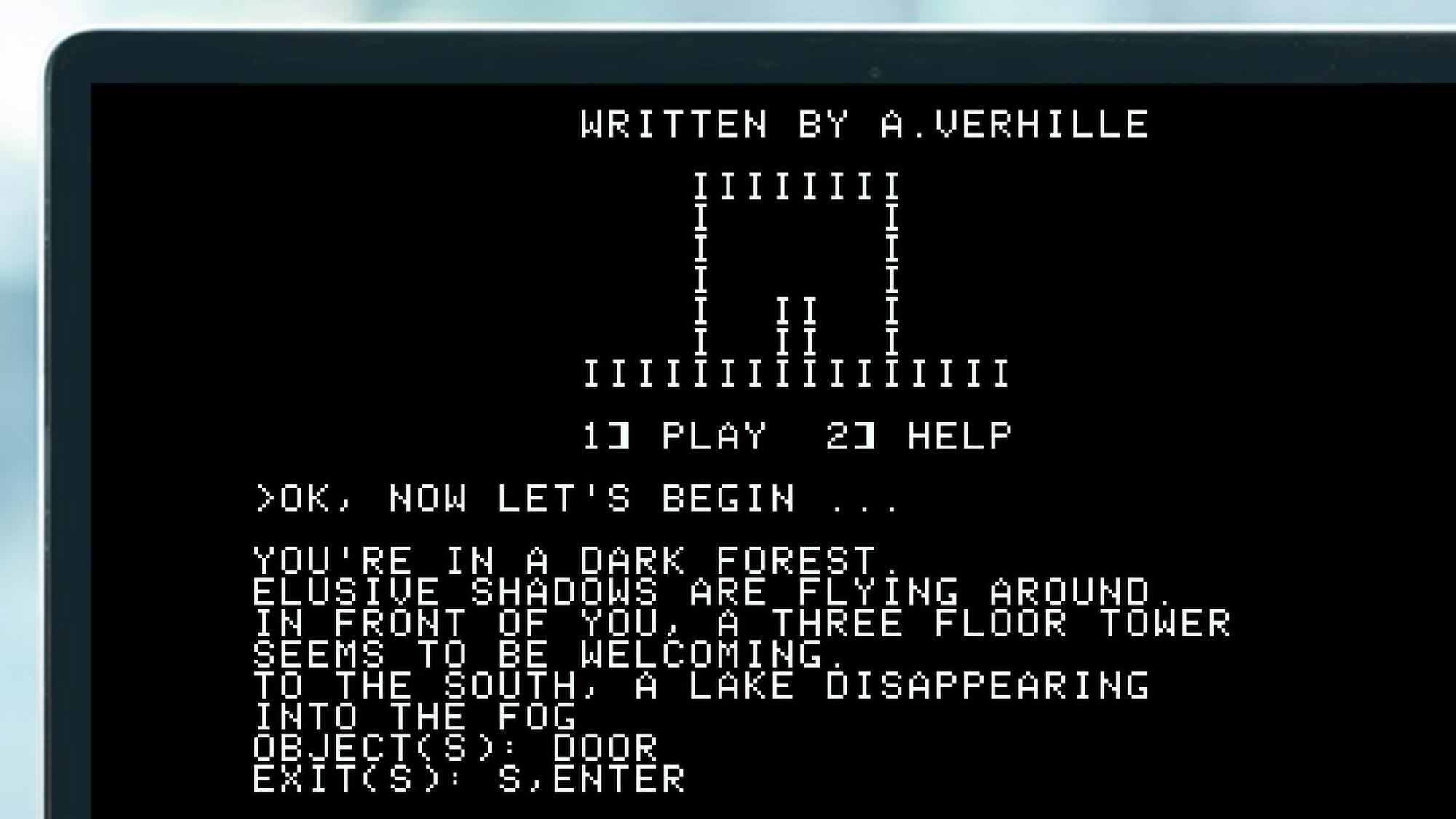
An ideal blast from the past, this one, as you can finish it in just a few minutes. Who doesn’t get bored with most retro games by then anyway? Little Tower is an occasionally grammatically dubious text adventure that drops you in front of a mysterious three-story ‘tower’ — yep, it’s not much of a tower.
You explore, find your way in, and discover a dangerous threat, all within the space of five minutes. Even by the standards of early text adventures, Little Tower’s available syntax is very basic, but it’s a reminder of how much the imagination can fill in the gaps when graphics don’t do the job for you.
4. Like your first driving lesson, but with more death and destruction (Lunar Lander, 1976)
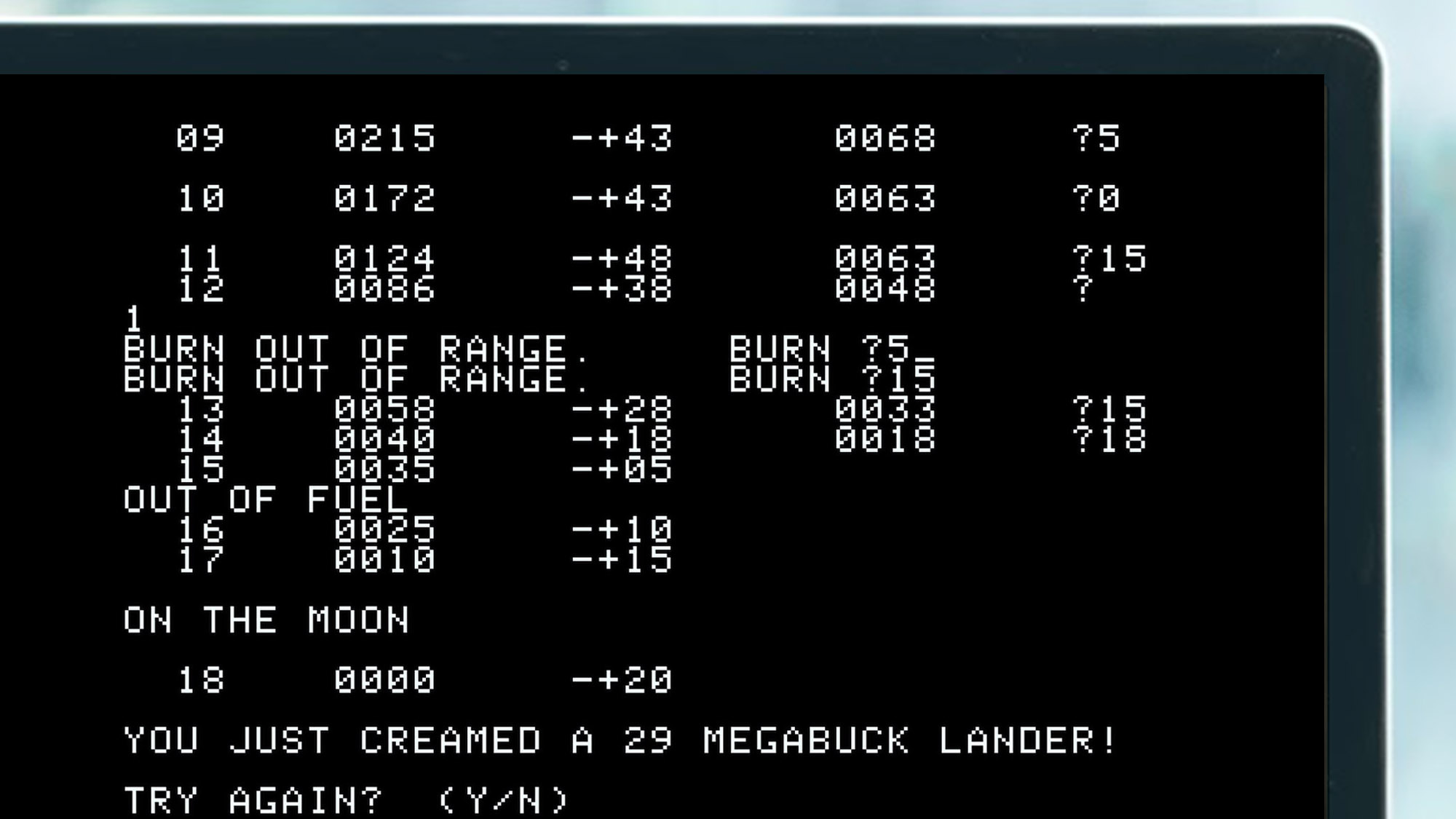
The 1979 arcade version of Lunar Lander is a vector graphics classic, one of the early titles that delivered a sense of real-world physics in gaming. 1976’s Lunar Lander for Apple-1 has to do the same job with no graphics at all. And it’s a tough ask.
As in the arcade game, the idea is to fire off a moon landing module’s engines so it’s able to land safely rather than dive, missile-like, into the ground. There’s no lateral movement in this one — just firing the blasters at very specific intensities. But it’s worth a shot to see if your brain’s up to the maths. Mine is not.
5. A pleasant brain-pummeling (Codebreaker, 1976)
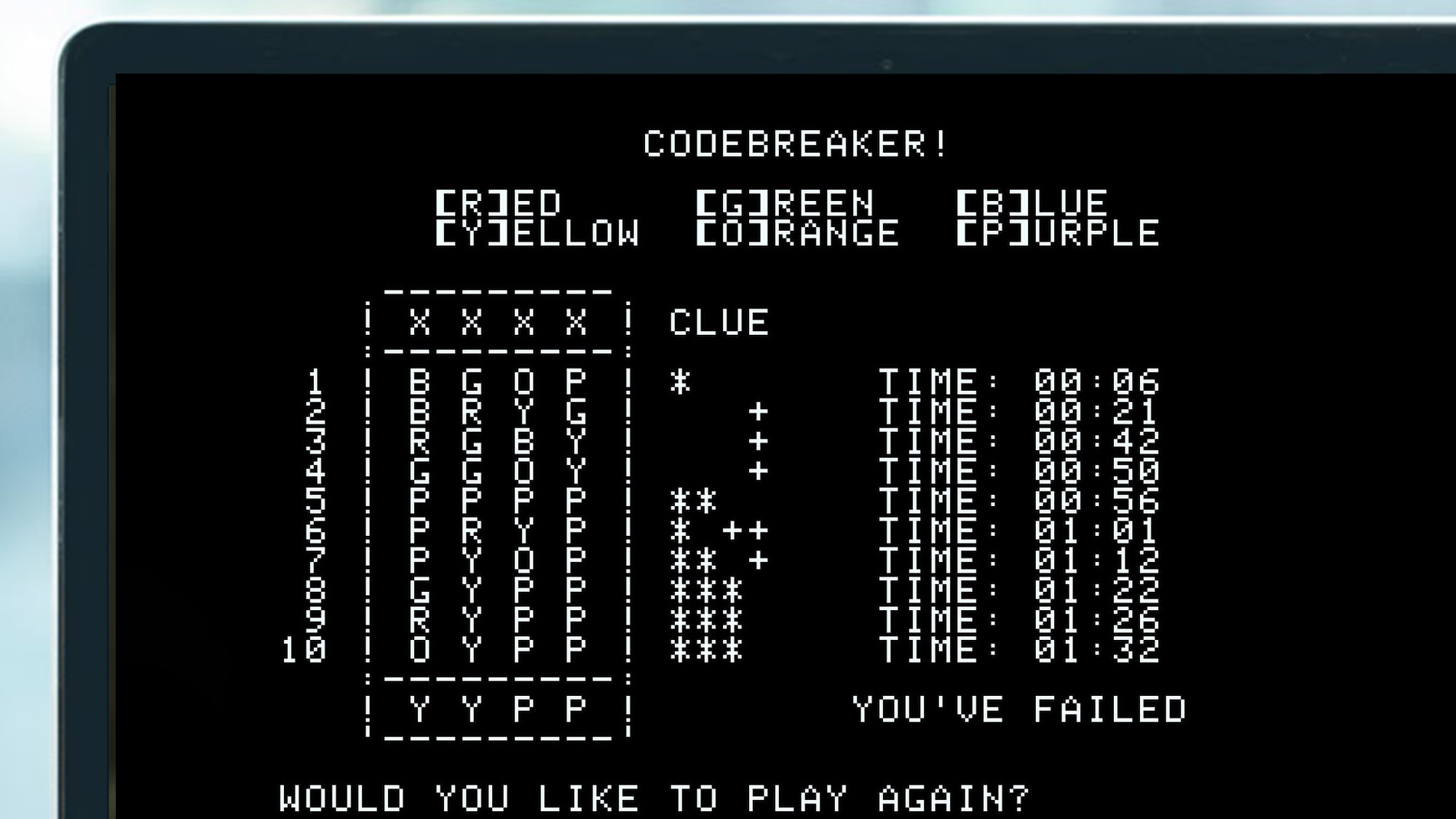
This is an adaptation of the board game Mastermind. Or, to many, it might seem a bit like the slightly annoying mini-games you’ve encountered in console video games.
You have to work out a code for the order in which a series of four colored blobs is arranged. And after each guess, you get told how many colors you have correct, and how many are also in the correct place.
You get 10 attempts only. It’s a proper brain teaser that’s equal parts infuriating and rewarding. There are even three difficulty levels, which ramp up the stakes with longer codes and a time limit. You may not end up wanting to play for more than a few minutes, but you’ll feel the gears of your grey stuff moving if you’re not used to this style of play.
6. One of the OG hipster indie ‘games’ (Conway’s Game of Life, 1976)
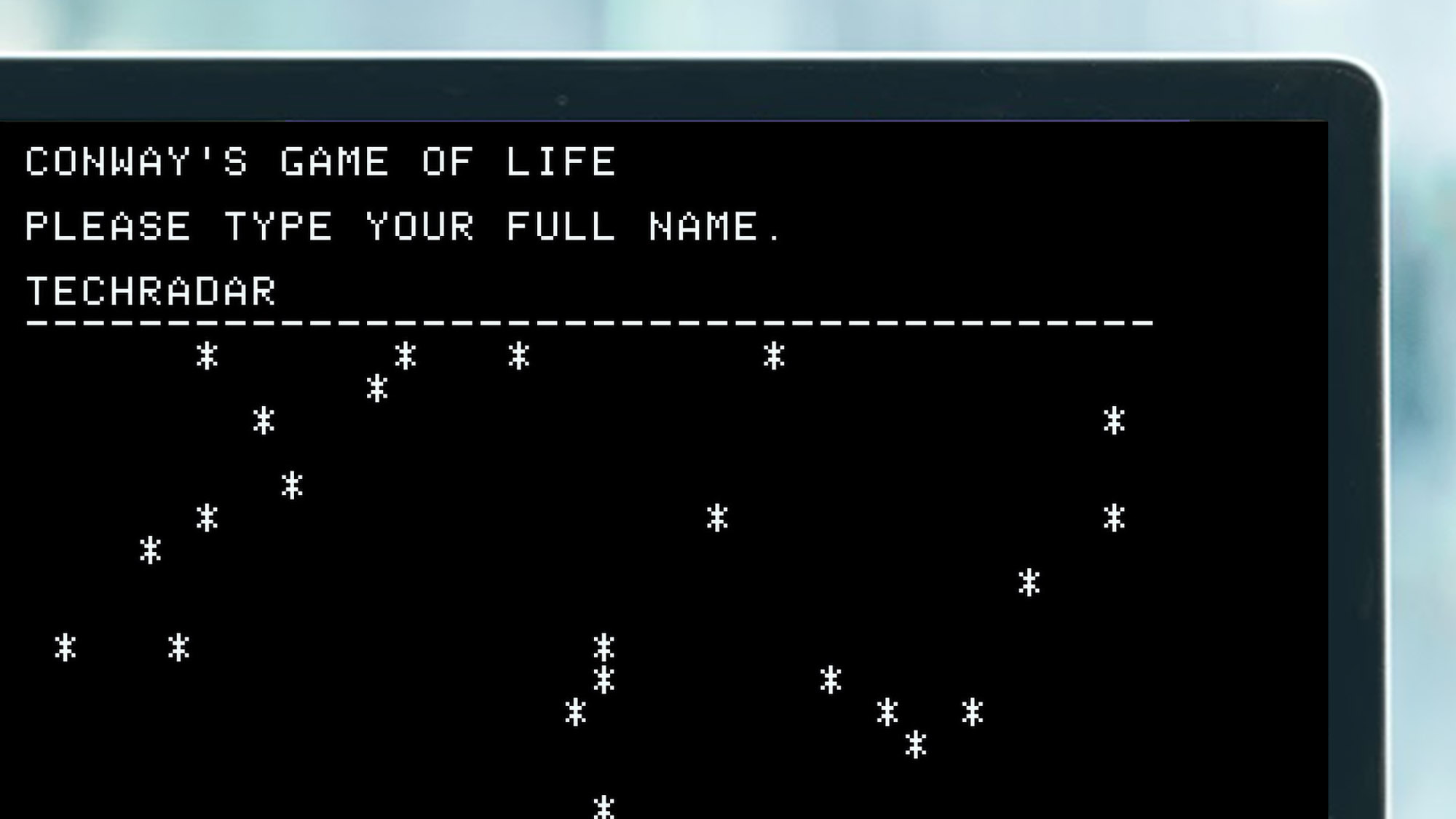
Pretty baffling, this one. It’s the 1970s equivalent of an indie game that would pick up five-star reviews from the odd navel-gazing critic, but a shrug from much of the gaming population. But it is at least interesting in theory. Conway’s Game of Life is a cellular division simulator.
You enter your name, which presumably affects the mathematical model in some way. Then at each stage of the simulation – which rolls out like a dot-matrix printer reeling off your tax return – you apparently can mould the outcome by picking either a 1, 2, or 3 command. That’s according to the Apple-1 Software website, anyway.
A bit confusing to some, then, but you’ll actually find adaptations of Conway’s 1970 mathematical model that determine this all over the shop, including a modern version for iPad on the App Store.
7. A simplified version of a puzzle staple (15 Puzzle, 2020)
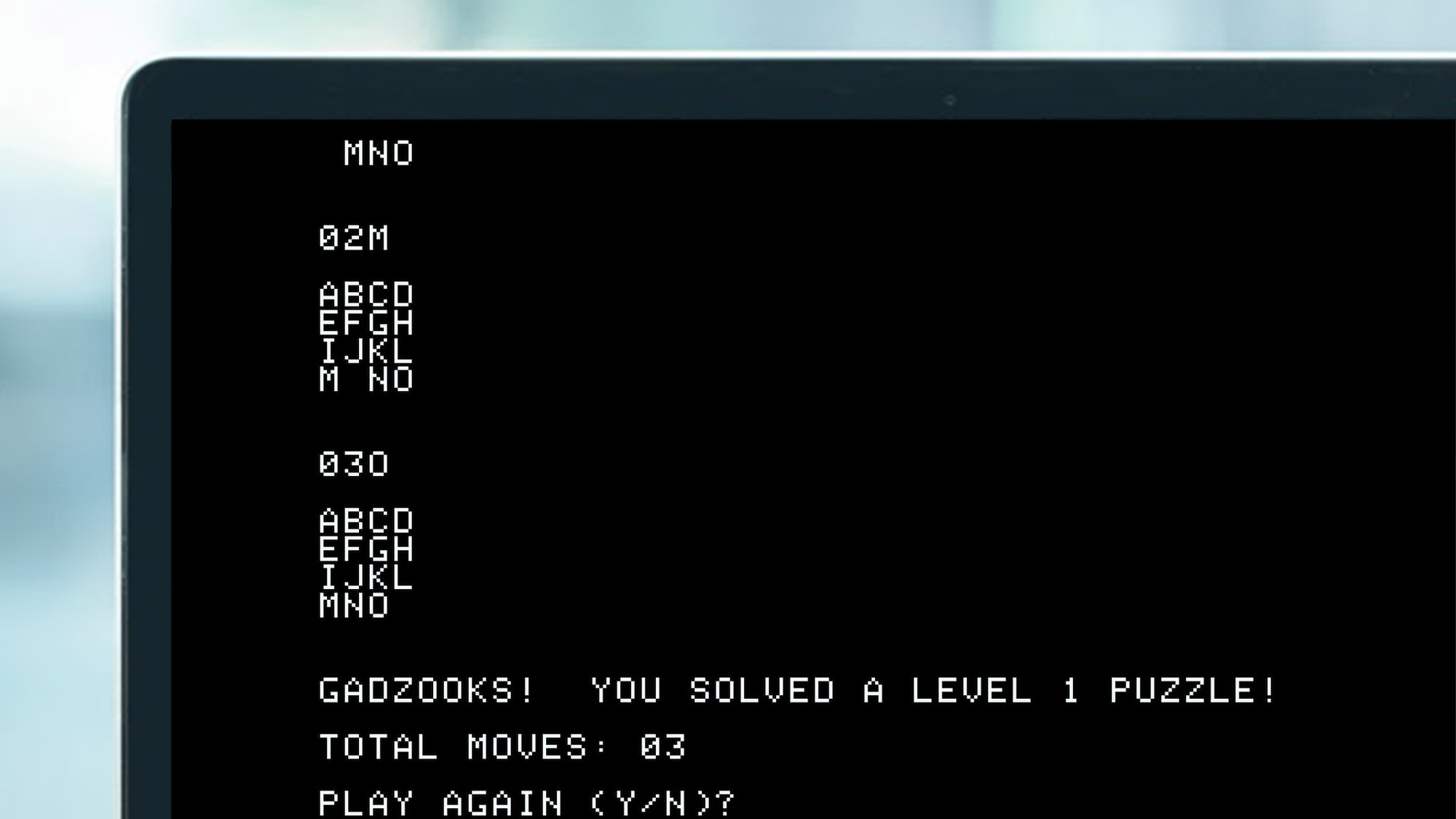
This brain-teasing slider puzzle is distilled headache juice at its higher difficulty settings. There’s a grid of letters in a 4×4 pattern, with just one gap among them. At the start of the run, they’re jumbled up, and you need to corral them back into order by sliding rows, columns, or single letters.
At the lowest difficulty, you’ll just need a move or two to get the job done. However, to our puny minds at least, difficulty level “5” is beyond us. The interesting element of this one is that it was actually made decades after the system was discontinued. Developer Jeff Jetton announced its release in 2020 over at the Applefritter forums.
Apple-1 may be mostly gone, but it’s not forgotten.
Follow TechRadar on Google News and add us as a preferred source to get our expert news, reviews, and opinion in your feeds. Make sure to click the Follow button!
And of course you can also follow TechRadar on TikTok for news, reviews, unboxings in video form, and get regular updates from us on WhatsApp too.
” data-join-the-conversation-text=”Join the Conversation”>
You must confirm your public display name before commenting
Please logout and then login again, you will then be prompted to enter your display name.