
TechRadar Verdict
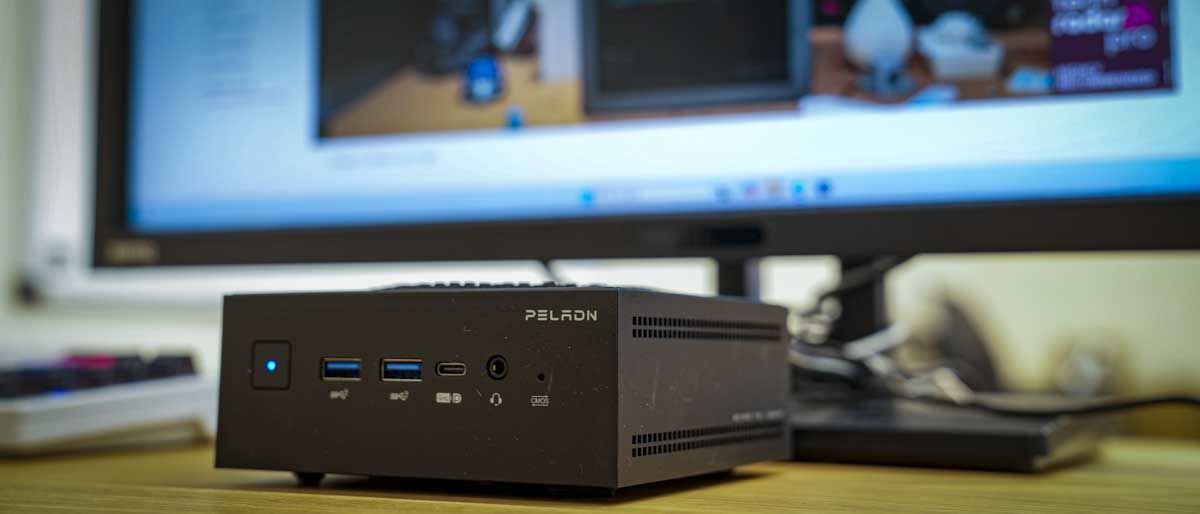
Initial impressions of the HO5 370 were mixed: the pricing places this mini PC at a premium level, yet the build quality and design felt a little too plastic. However, once plugged in, there was no doubt about the performance, the processor ripped through Microsoft Office applications and handled image and video editing in the Adobe applications without many issues. Gaming was also well catered for, and if you want to play at a higher resolution than 1080p, there’s an OCuLink port for a more powerful GPU.
Pros
- +
Superb overall performance
- +
Fast storage
- +
OCuLink eGPU expansion
Cons
- –
Noticeable fan noise
- –
Plastic build quality
- –
Non-upgradeable RAM
Why you can trust TechRadar We spend hours testing every product or service we review, so you can be sure you’re buying the best. Find out more about how we test.
Peladn HO5 370: 30-second review
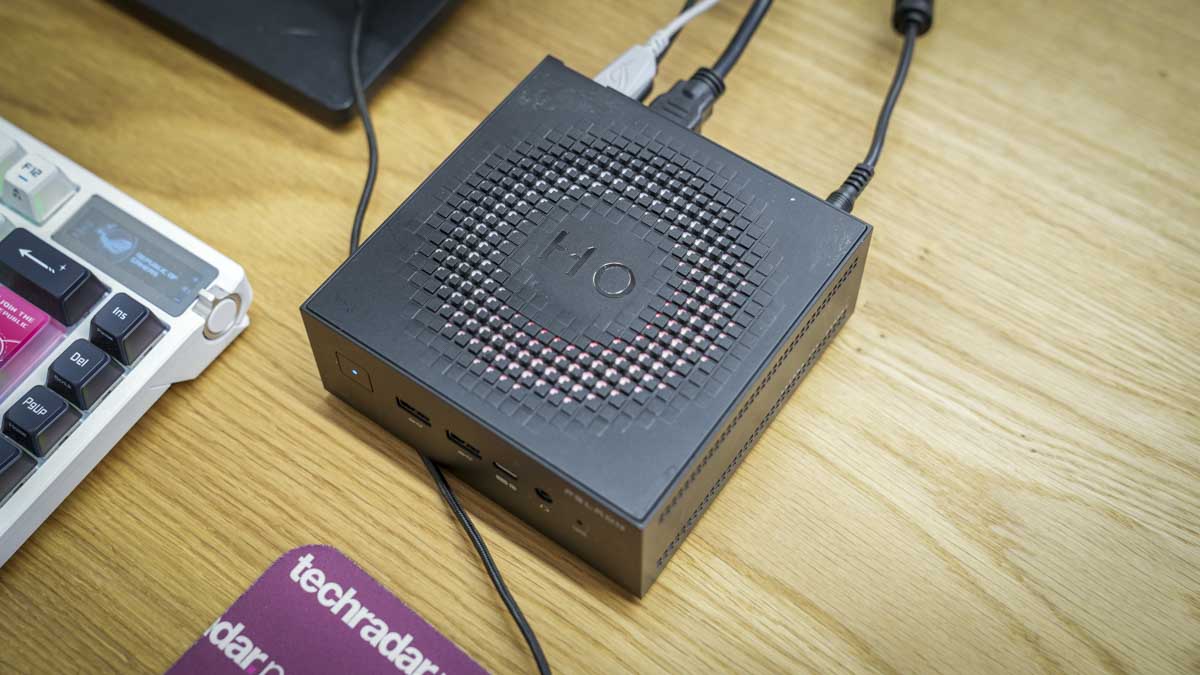
Opening up the box to the Peladn HO5 HX 370 and initial looks are slightly deceptive. Whilst the quality is good, it’s all a bit overly plastic, as seen on the top plate with a large HO logo and a quirky, raised, textured surface. There’s a distinct gamer feel to the basic design.
The OCuLink enables you to connect to an eGPU and offers superior performance options compared to HDMI or DisplayPort when feeding an eGPU. This means it’s not only better for gaming but also for creative applications such as Photoshop, Adobe Premiere Pro and DaVinci Resolve, essentially allowing you to plug a high-end graphics card into this compact machine.
Starting the machine up, there’s the usual run-through of the Windows 11 Pro setup process. Once registered and activated, the speed at which the machine boots provides insight into its true processing power.
Sure enough, getting started with productivity apps, mainly Word and PowerPoint, both were handled with ease, with the HO5 370 hardly being pushed. Even with Photoshop and a browser open in the background, handling relatively large files, performance remained smooth.
Despite only having 32GB of non-upgradeable RAM, performance continued to impress. Switching from Word and PowerPoint to Photoshop, I was able to open and adjust image files from the Hasselblad X2D, with huge data files. These are among the largest digital camera files you can produce, and the fact that a mini PC can handle them is impressive.
Likewise, when opening Premiere Pro and editing video from a Sony A7 IV, the machine handled those large files without and slowdowns. The 1TB internal SSD is limited by space, but the USB4 port on the front enables connection to a portable SSD, making storage easy to expand with an external device.
When Adobe Premiere Pro started to work harder, processing files for a five-minute edit and applying effects and grading, the cooling fans did kick in and were audibly louder than I would usually expect for this size of machine. However, it was able to edit without too many issues, and as long as I gave a little breathing space between larger edits for the timeline to render.
Finally, after finishing the five-minute edit, it was time to look at gaming potential. Whilst I don’t have an eGPU to test the uplift in performance through OCuLink, I was still able to play Cyberpunk 2077 and Indiana Jones and the Great Circle at 1080p with medium graphics smoothly.
By the end of testing, from productivity to creative use and a little relaxation with gaming, I was impressed with how well the Peladn HO5 370 mini PC handled almost anything. Knowing you can plug in a powerful eGPU to boost graphics performance is a definite advantage.
My main concern would be the build quality. With a premium price and premium internals, it feels like a relatively cheap exterior compared to those in our best mini PC guide. Whilst performance is exceptionally good, there is only one USB4 port, which is fine for a single external device, but I feel there should have been at least one more for a machine of this calibre.
In this review, I looked at the HO5 HX 370 mini PC with the AMD Ryzen AI 9 HX 370 and AMD Radeon 890M integrated graphics.
At the end of testing, I’m impressed with the overall performance. I just wish more thought had gone into the casing materials and the choice of ports around the body.
Peladn HO5 370: Price and availability
- How much does it cost? From £903 / $949
- When is it out? Available now
- Where can you get it? Directly from Peladn or Amazon.com
The Peladn HO5 370 mini PC retails at a premium price point in the US of $1011 via the Peladn website.
It is also available through major online retailers such as Amazon.com where it’s priced at $920
However, it’s not currently available through Peladn’s Amazon.co.uk store yet.
- Value: 4 / 5
Peladn HO5 370: Specs
CPU: AMD Ryzen AI 9 HX 370
Graphics: Integrated Radeon (890M)
RAM: 32GB
Storage: 1TB NVMe SSD (dual PCIe 4.0 M.2 slots available)
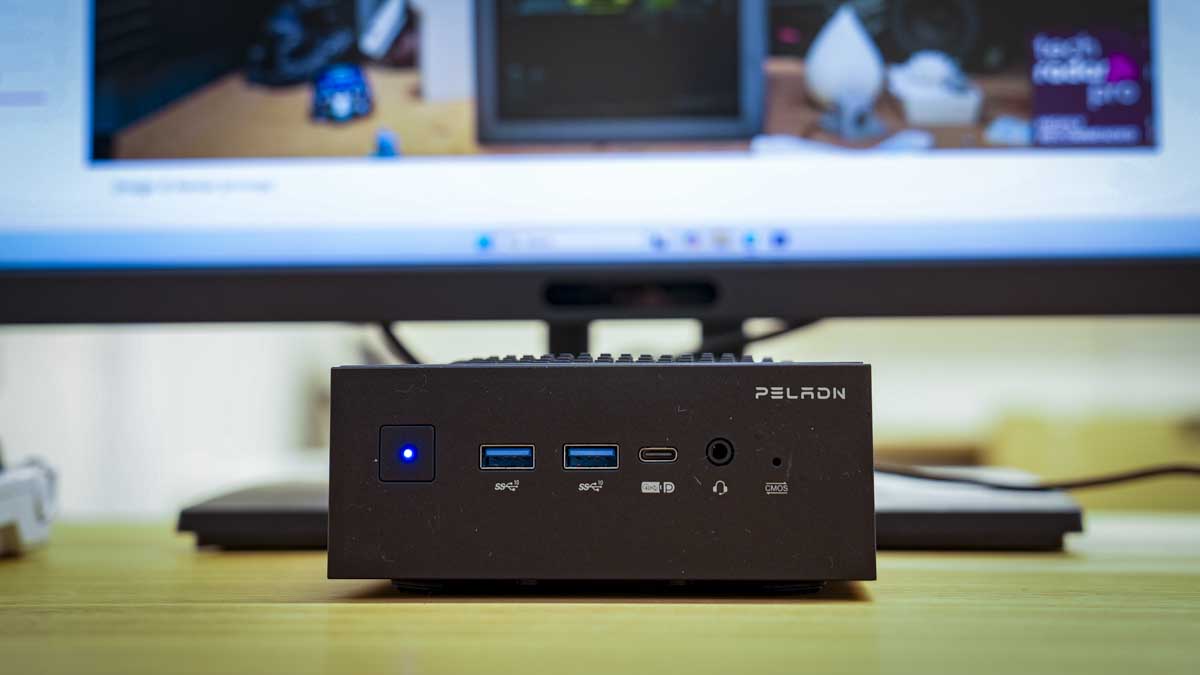
Front Ports: USB 3.2 Gen 2 Type-A, USB4 Type-C, 3.5mm combo audio, Power button, Clear CMOS
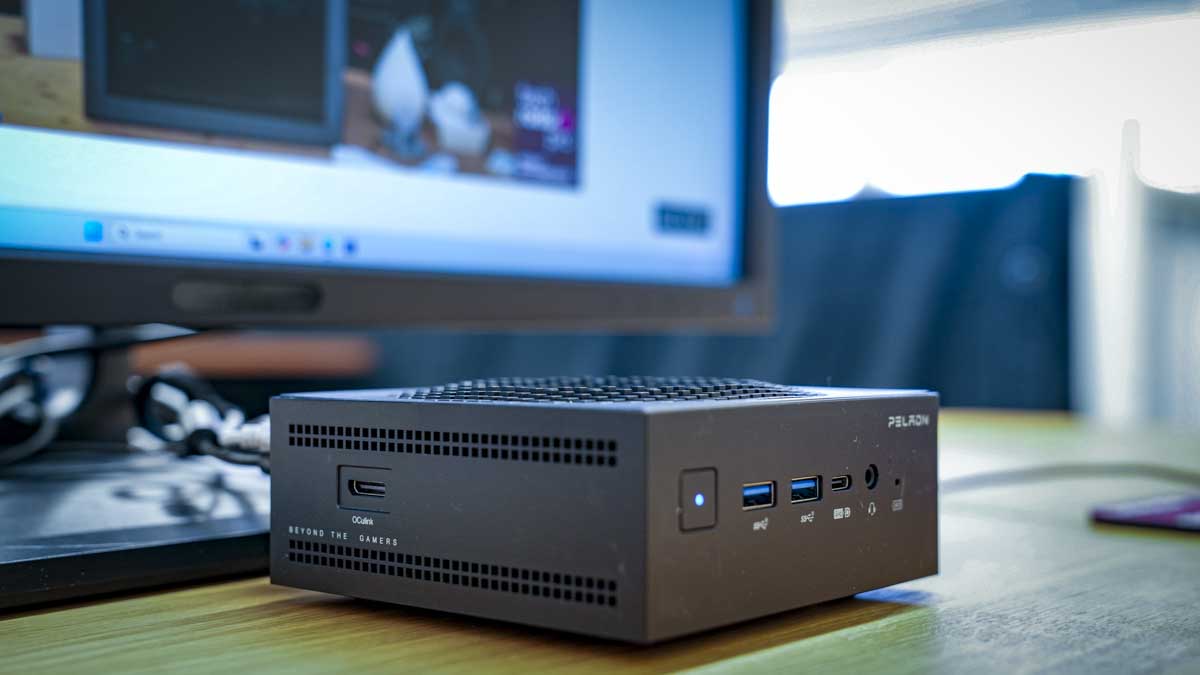
Left Ports: OCuLink
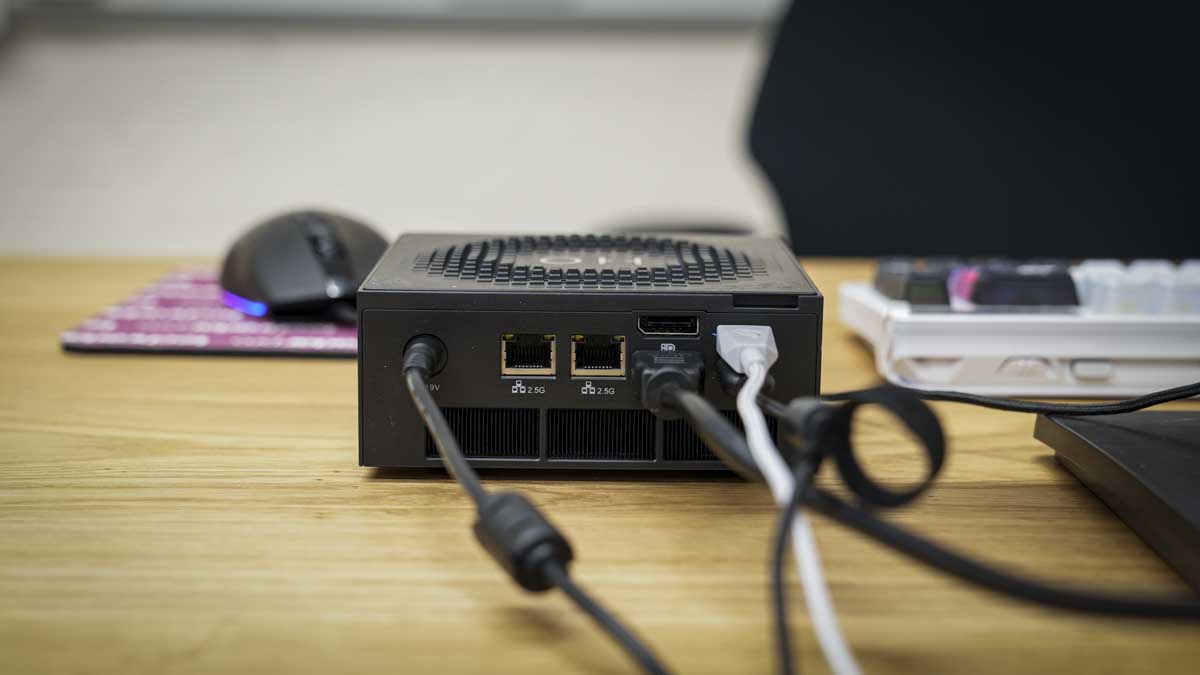
Rear Ports: DC-In, 2x 2.5G LAN, USB 2.0 Type-A, HDMI, DisplayPort
Connectivity: Wi-Fi 7, Bluetooth
Audio: 3.5mm combo jack
Size: 5.12 x 5.12 x 2.17 in / 130 x 130 x 55mm
Weight: 35.27oz / 1kg
OS Installed: Windows 11 Pro / Linux
Accessories: Power adapter
Peladn HO5 370: Design
The Peladn HO5 370 takes on the usual mini PC form factor and, with its full plastic casing, textured top and integrated RGB lighting, has the aesthetics of a lower to mid-range mini PC. However, this is purely aesthetic, as the actual price point places it firmly in the premium segment of the genre.
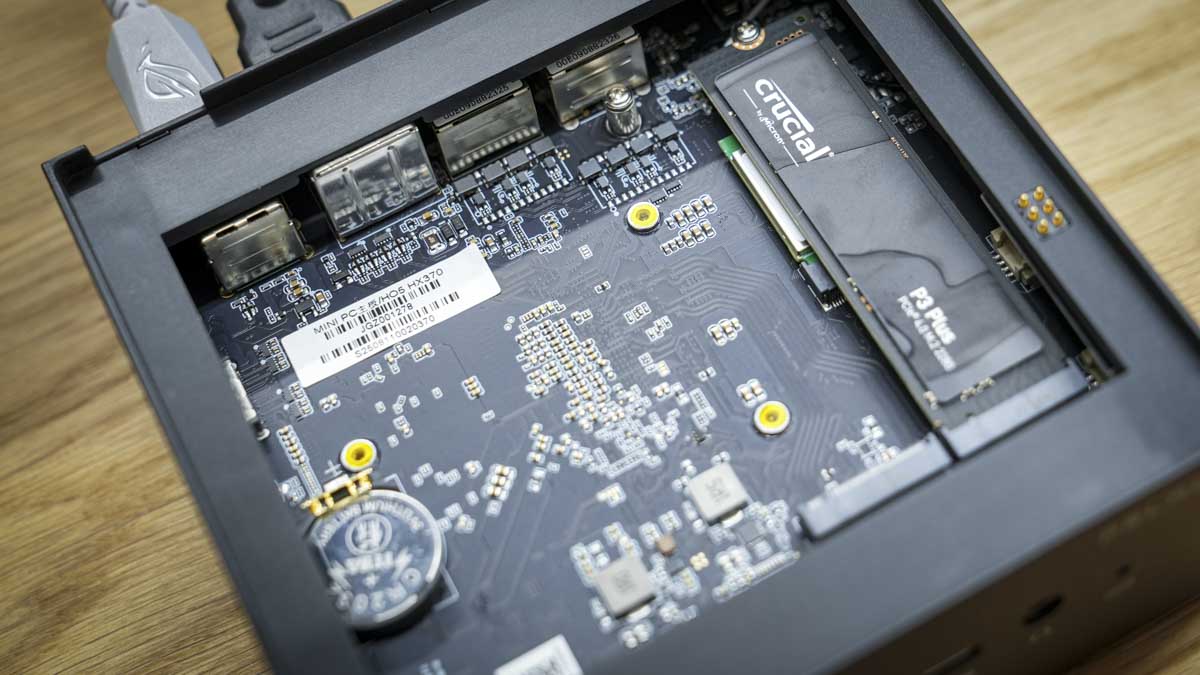
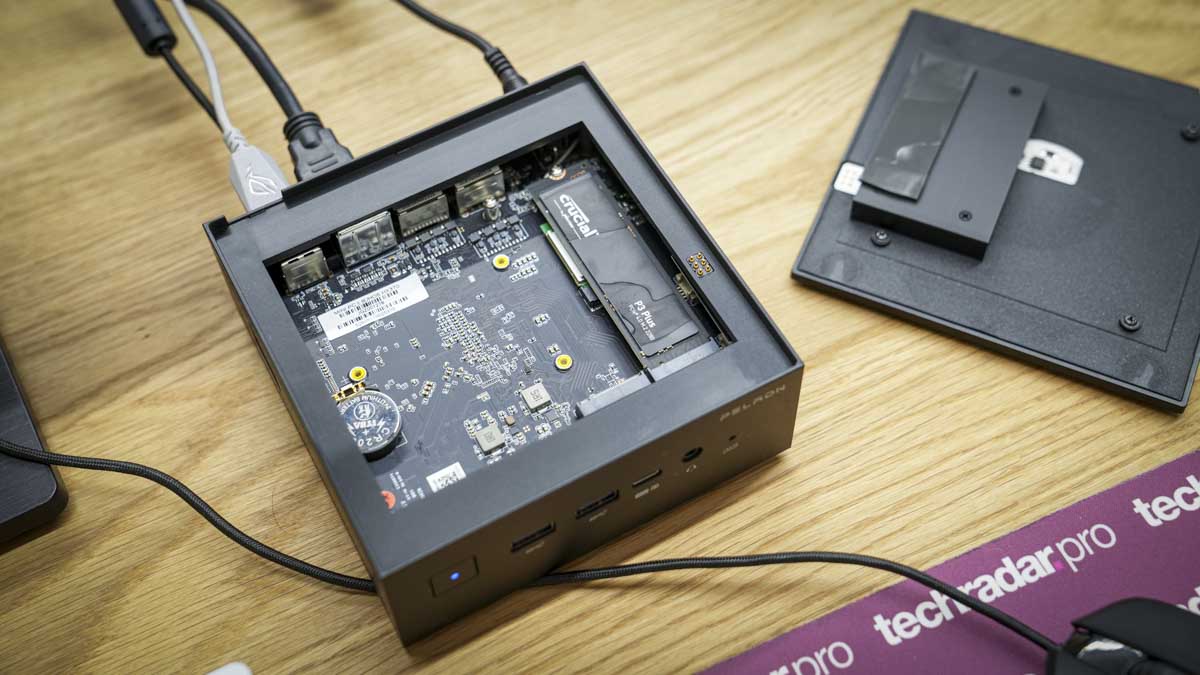
The design is very functional, with a magnetic top that gives quick access to the internals. Whilst there isn’t much upgradeability beyond the two PCIe 4.0 SSD slots, with one pre-installed for Windows 11 Pro or Linux, you can still substantially upgrade storage. When it comes to RAM, it’s soldered on and comes standard with 32GB in our review machine.
In terms of dimensions and weight, it measures 5.12 x 5.12 x 2.17 in / 130 x 130 x 55mm and weighs 35.27oz (or exactly 1kg). In addition to the mini PC itself, you also have the power adapter and cabling, which add a little to the overall weight.
Looking at the ports around the body, on the front, you have the power button, two USB 3.2 ports, a single USB4 Type-C port, a 3.5mm audio jack, and a Clear CMOS button, all fairly standard for a mini PC of this type.
Around the back, you have the DC-in connection for the separate power brick, two 2.5G LAN ports, and HDMI and DisplayPort outputs. Next to these are two USB 2.0 Type-A ports. On the side is a single OCuLink port for connecting to an eGPU.
Around the body, there is plenty of venting to ensure good airflow and prevent thermal throttling. Peladn’s Ice Blast 2.0 cooling technology features triple copper heat pipes and a large fan on the top heat conductor to help expel hot air from the system.
- Design: 3 / 5
Peladn HO5 370: Features
The Peladn HO5 370 mini PC is a powerful, AI-ready general-use machine that feels at home in the office, creative studio or for home entertainment and gaming. The price places it at the premium end of the market despite its plastic build. With an AMD Ryzen AI 9 HX 370 processor and integrated AMD Radeon 890M GPU, it forms one of the most powerful foundations for a mini PC currently available.
This level of power requires effective cooling, and Peladn has included its Ice Blast 2.0 technology, featuring a triple-copper heat-pipe design and a large fan system to draw heat away from the internals and reduce thermal throttling.
When it comes to RAM and storage, the system features 32GB of LPDDR5X 7500MHz onboard memory, soldered and non-upgradeable. However, there are two PCIe 4.0 M.2 slots that support up to 4TB each, for a total of 8 TB. In our review sample, the machine arrived with a 1TB SSD installed.
For networking, wireless connectivity includes Wi-Fi 7 and Bluetooth 5.4, enabling fast cable-free networking. If you prefer a more stable wired connection, there are dual 2.5G RJ45 LAN ports, allowing you to connect to wired networks or a NAS setup, depending on your configuration.
One of the key features is the OCuLink port on the side of the machine, which enables connection to an external eGPU to significantly boost performance for gaming, video, and 3D content creation. If you do not have an OCuLink eGPU, the USB4 port on the front can also be used with a more standard eGPU enclosure. This USB4 port is a full-function port, offering power delivery, data, audio and video.
If you want to run a three-monitor setup, you can use DisplayPort 1.2, HDMI 2.0 and USB4 Type-C, which is useful for gaming or content creation.
For those seeking higher-end graphics performance, the OCuLink port supports external graphics cards with data transfer speeds up to 32GB per second, exceeding what the integrated GPU alone can deliver.
The machine has been designed as a general-use system for the office, with the latest AI-enhanced CPU and GPU options for business, gaming, online education and home entertainment. Whilst the casing may feel a little inexpensive, the internal processor and port selection offer significant potential.
- Features: 4 / 5
Peladn HO5 370: Performance
Benchmark scores
CrystalDiskMark Read: 5118.51
CrystalDiskMark Write: 3170.81
Geekbench CPU Multi: 15221
Geekbench CPU Single: 2902
Geekbench GPU: 37428
PCMark Overall: 8847
Cinebench CPU Multi: 20005
Cinebench CPU Single: 2001
Fire Strike Overall: 9236
Fire Strike Graphics: 10006
Fire Strike Physics: 30390
Fire Strike Combined: 3524
Time Spy Overall: 3991
Time Spy Graphics: 3591
Time Spy CPU: 10855
Wild Life Overall: 22292
Steel Nomad Overall: 280
Windows Experience Overall: 8.3
Getting started with the Peladn HO5 370 mini PC involved the usual Windows 11 Pro setup, which is pre-installed and just requires your personal details to complete.
Once installed, I added Microsoft Word, Excel and PowerPoint, as well as Adobe Lightroom Classic, Adobe Photoshop, Adobe Premiere Pro and DaVinci Resolve, along with benchmarking applications and a couple of higher-end games, including Cyberpunk 2077 and Indiana Jones and the Great Circle.
From the outset, the build quality didn’t quite live up to this machine’s potential. Whilst it is solid enough, the plastic casing feels a little on the cheap side, and the RGB LEDs under the top plate give it a slightly less premium aesthetic. However, it is well designed, and the magnetic top plate is easily removed, making access to the internals straightforward. It is quick and easy to replace the internal SSD if you want to upgrade from the relatively small drive that comes pre-installed to larger 4TB sticks to maximise internal storage.
Switching the machine on, your first hint that there’s nothing cheap about this mini PC is how quickly it boots, almost instantaneously showing the lock screen. Once logged in and starting to download the required applications, it was notable how fast the Wi-Fi connection was.
Although it was paired to Wi-Fi 6 due to my router, download speeds were still excellent. Once everything was installed and ready, I began by planning several lectures, the first on dodging and burning in the darkroom, and another on the principles of shutter priority for a beginner’s photography class. I also sat and wrote this review using this mini PC.
As expected with a machine featuring an up-to-date CPU and GPU, the Microsoft applications ran without issue. With a Windows Experience score of 8.3, all applications ran quickly and smoothly, although I was slightly surprised the score wasn’t higher. Switching between Microsoft Word, Excel and PowerPoint presented no issues, and even with Photoshop open to resize images while moving between that and the Edge browser, the machine handled everything without difficulty.
Pushing the system further, I opened several images in Adobe Photoshop, starting with shots from the Sony Alpha A7 IV and then progressing to files from the Hasselblad X2D. What was surprising was how easily the machine handled these large image files. Whilst the Sony files are sizable, the Hasselblad X2D files are among the largest you’ll encounter from a mirrorless camera.
The fact that it managed them so smoothly, including generating thumbnails in Adobe Bridge and creating multiple layers in Photoshop, was impressive. With the Hasselblad files, quick adjustments in Lightroom were often all that was needed, and the smooth processing in both Photoshop and Lightroom made the workflow straightforward.
In Photoshop, I also tried the generative expand on the images and the advantages of the hardware AI CPU was obvious. The speed was balanced, but it was the accuracy of the adjustments that really made the benefits of AI stand-out. Using the new Neural Filters to enhance a landscape and the results over a non AI machine were faster and the quality of the render was far higher and more natural.
Having been impressed with stills editing, I moved on to video production in Adobe Premiere Pro, loading in footage shot on the Sony A7 IV. Again, the computer handled it without major issues, loading clips into the timeline quickly. I ensured I allowed a little time for rendering before applying heavier edits or cuts, and after the initial draft edit, I gave the timeline a few moments to render before applying grading adjustments.
The speed at which the HO5 370 mini PC handled edits for a five-minute production in Premiere Pro was good, and the edits were made more demanding by the fact that some footage was shot with anamorphic lenses requiring de-squeezing during editing.
One limitation is the internal 1TB storage, which quickly becomes restrictive when working with high-resolution image and video files. I needed to plug in a USB4 SSD to accommodate the file sizes I was using, though the USB4 port’s transfer rates are well-suited to this kind of workload.
Whilst the CPU and GPU coped well, there were moments when brief pauses helped the timeline render fully. This is where the OCuLink option becomes appealing, enabling connection to a high-powered eGPU if needed. If you intend to use this as a compact video workstation for regular production work, an eGPU would be advantageous.
After running through these tests, the performance stands in contrast to the design and aesthetics. It is a small powerhouse that matches its price point in performance, if not in asthetics and materials.
Moving on to gaming, I ran several higher-end titles. Performance stood out, with both Cyberpunk 2077 and Indiana Jones and the Great Circle being more than playable at 1080p, offering a good gaming experience. Considering that an external GPU can be connected via OCuLink, there is clear potential for even higher performance despite the machine’s small size.
At a base level, processing performance is exceptionally good. Whilst the internal SSD capacity is limited, it can be upgraded. One other aspect that stood out was fan noise. With so much power in such a small case, heat generation is inevitable. To prevent thermal throttling, the fans work hard under load.
During 4K video rendering in Premiere Pro, the fans ramped up noticeably. As processing loads increased, fan speed and volume also increased. However, unlike some machines that produce a high-pitched whine, the tone here remained consistent and more tolerable.
- Performance: 4.5 / 5
Peladn HO5 370: Final verdict
Considering my first impressions of this mini PC, it has exceeded expectations in performance. The plastic casing and RGB lighting are far removed from the level of processing power it delivers.
However, like the design, the port selection is somewhat mixed. On the front, you have USB4 along with two USB-A ports, which is useful. On the back, there are two older USB Type-A ports, more suited to a wired keyboard and mouse than anything else. I would have expected at least one additional USB4 port.
On the side, though, you have OCuLink for connection to ultra-fast eGPUs, significantly boosting both performance and flexibility.
Throughout use, the Peladn HO5 mini PC feels like a mix of excellent and average elements. The design and aesthetics are acceptable, as is the port layout, but the CPU and GPU performance are exceptionally good.
The ability to upgrade internal storage to multiple terabytes adds flexibility, making it suitable for office use, a capable mid-range creative workstation, and mid-level gaming, with the option to push further in both content creation and gaming through an eGPU.
Cooling does slightly detract from the experience. Whilst it generally manages temperatures well, with only minor thermal throttling under heavy load, the fans become audibly loud. If you require a particularly quiet workspace, this may not be ideal.
Overall, there is plenty on offer. It handled everything I threw at it, from day-to-day Microsoft Office work to creative tasks in Adobe Lightroom Classic and Premiere Pro, as well as demanding games. The processing combination is more than capable for most users.
If you’re looking for a machine with strong processing power and the added flexibility of an OCuLink eGPU option, the Peladn HO5 370, despite its looks, is a serious contender.
Should I buy the Peladn HO5 370?
Swipe to scroll horizontally
|
Value |
Excellent all-round performance but with a hefty premium price tag |
4 |
|
Design |
Quirky design that is functional but feels overly plastic and slightly odd |
3 |
|
Features |
Given that it features an OCuLink port, it is slightly surprising that there is only one USB4 port, though there are plenty of USB Type-A ports |
4 |
|
Performance |
Surprisingly powerful for a mini PC, suitable for productivity, content creation and mid-level gaming |
4.5 |
|
Overall |
A compact and versatile workstation with the power and optional OCuLink connection to suit a wide range of users |
4 |
Buy it if…
” data-join-the-conversation-text=”Join the Conversation”>
You must confirm your public display name before commenting
Please logout and then login again, you will then be prompted to enter your display name.
Related Posts
I’ve looked through hundreds of gaming laptops today — this highly-rated model with an RTX 5070 for £1,199 is the obvious pick
(Image credit: Future) As someone who regularly writes about gaming laptops, it’s usually the US retailers that have the lion’s […]
Quordle hints and answers for Monday, July 21 (game #1274)
(Image credit: Getty Images) Looking for a different day? A new Quordle puzzle appears at midnight each day for your […]

Smarter DevOps with Kite: AI Meets Kubernetes
The story of DevOps has always been about evolution i.e. from manual system management to full-scale automation. But in 2025, […]