
TechRadar Verdict
The Minisforum MS-02 Ultra is a flagship mini workstation featuring Intel’s powerful Core Ultra 9 285HX CPU and designed for creatives, home lab enthusiasts, AI developers, and business users who need workstation-class performance without installing a large PC tower. There’s plenty on offer with PCIe 5.0 expansion, dual 25GbE SFP+ networking, support for up to 256GB of ECC DDR5 memory, and four M.2 slots capable of up to 24TB of storage. This review model features an Intel Core i9-285HX that handled demanding creative tasks and gaming incredibly well. The fans did let me know that the heat was building, but the cooling is well managed. However, maximising its potential requires substantial investment in upgrades, such as RAM, ROM, and GPU. If you have specific needs, the MS-02 Ultra stands out because of its small size and adaptability.
Pros
- +
Exceptional performance for its size
- +
Unique 285HX feature set
- +
Impressive, expandable connectivity
Cons
- –
Full potential requires significant additional investment.
- –
No discrete GPU out of the box
- –
25GbE SFP+ limited to 285HX model only
Why you can trust TechRadar We spend hours testing every product or service we review, so you can be sure you’re buying the best. Find out more about how we test.
Minisforum MS-02 Ultra: 30-second review
The Minisforum MS-02 Ultra is a compact mini workstation aimed at business professionals who need desktop-grade power but lack the space for a full-sized workstation.
The first thing that struck me as I lifted the MS-02 from the box was that, for such a small machine, it’s incredibly heavy at 3.45kg, which instantly gives you the hint that this is a serious piece of kit rather than your run-of-the-mill mini PC.
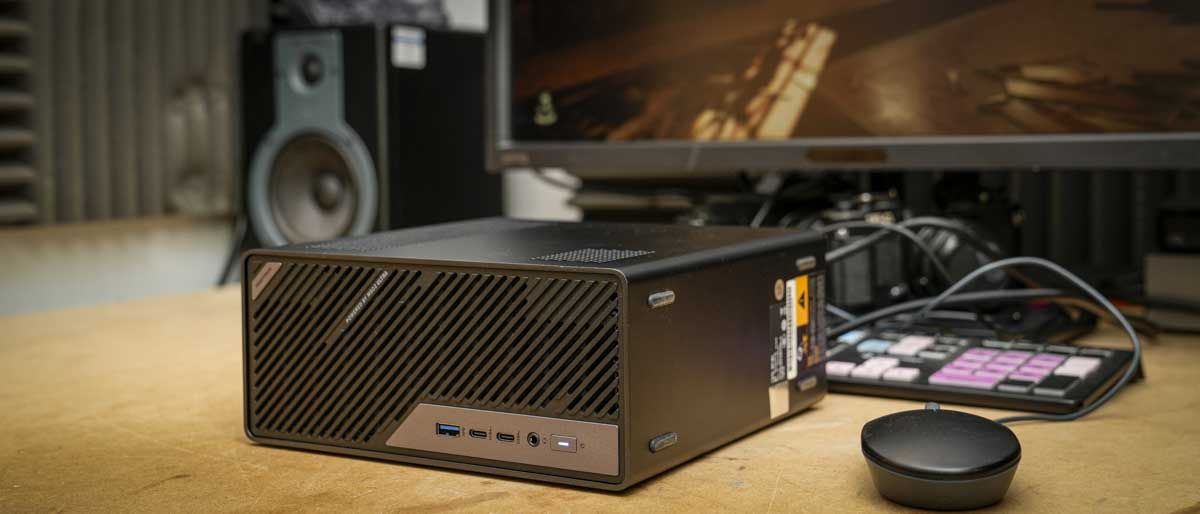
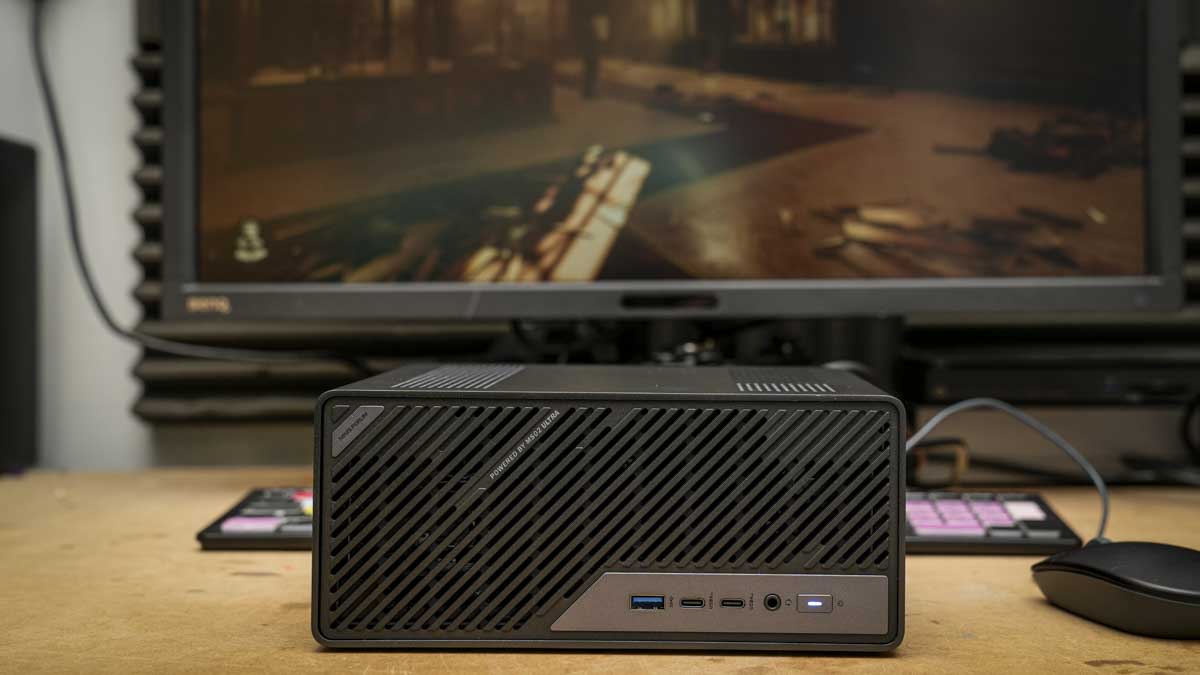
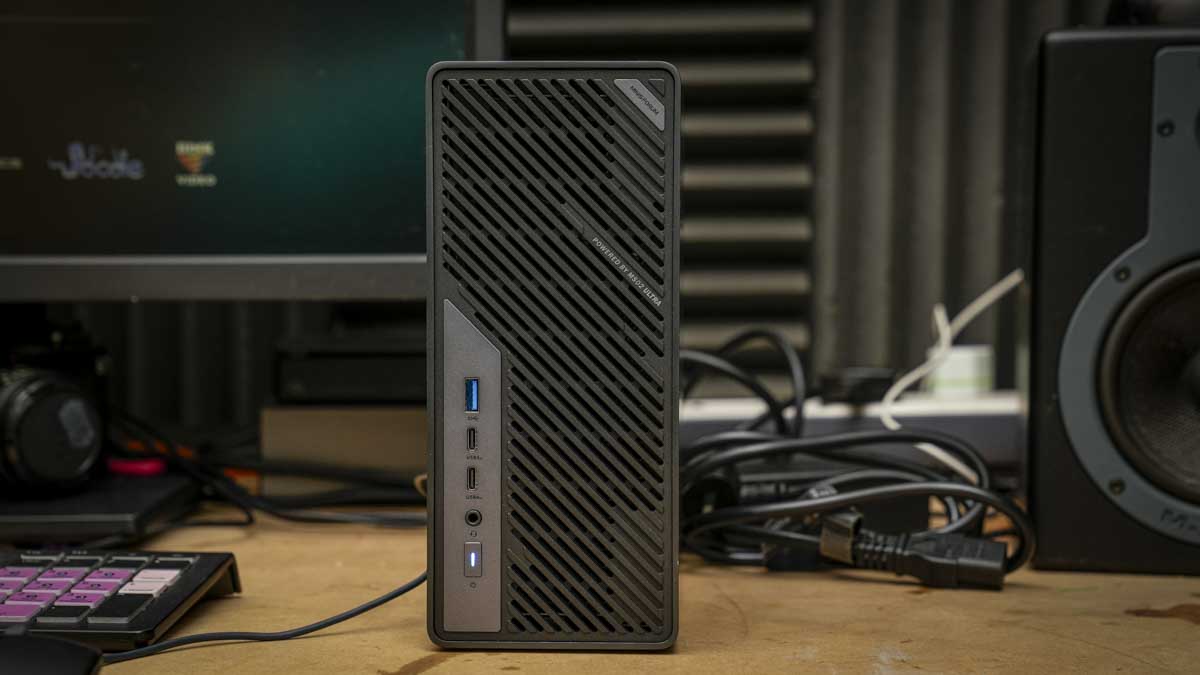
The matte black chassis is discreetly designed, with plenty of cooling vents running across the casing. There are also rubber feet on the base and side that let you easily orient the machine in either an upright tower or a flat desktop position. It looks and feels like a miniaturised version of a professional workstation rather than a standard Mini PC, and its full-metal exterior gives it a premium look and feel.
Checking the MS-02 reveals that this machine is the link between the Mini PC and the Desktop. It has the small size of a Mini PC but quite a bit of upgradability, including RAM, ROM, and an expansion slot. All of the upgrade potential can be easily accessed via the slide-out internal chassis.
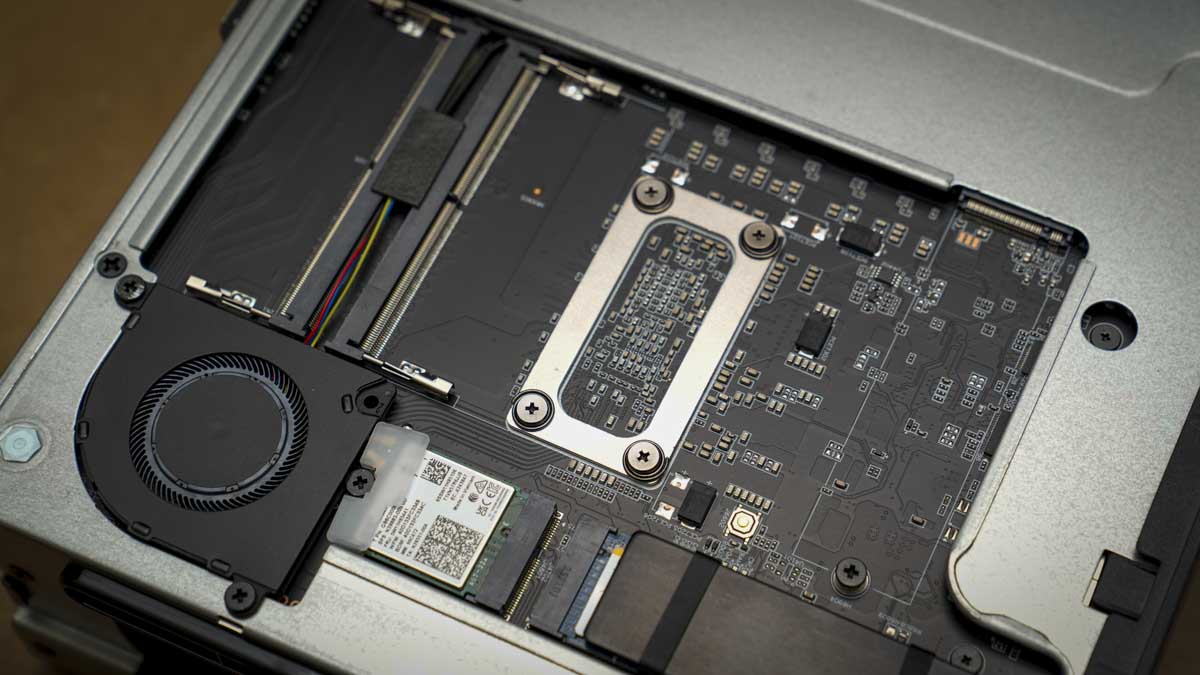
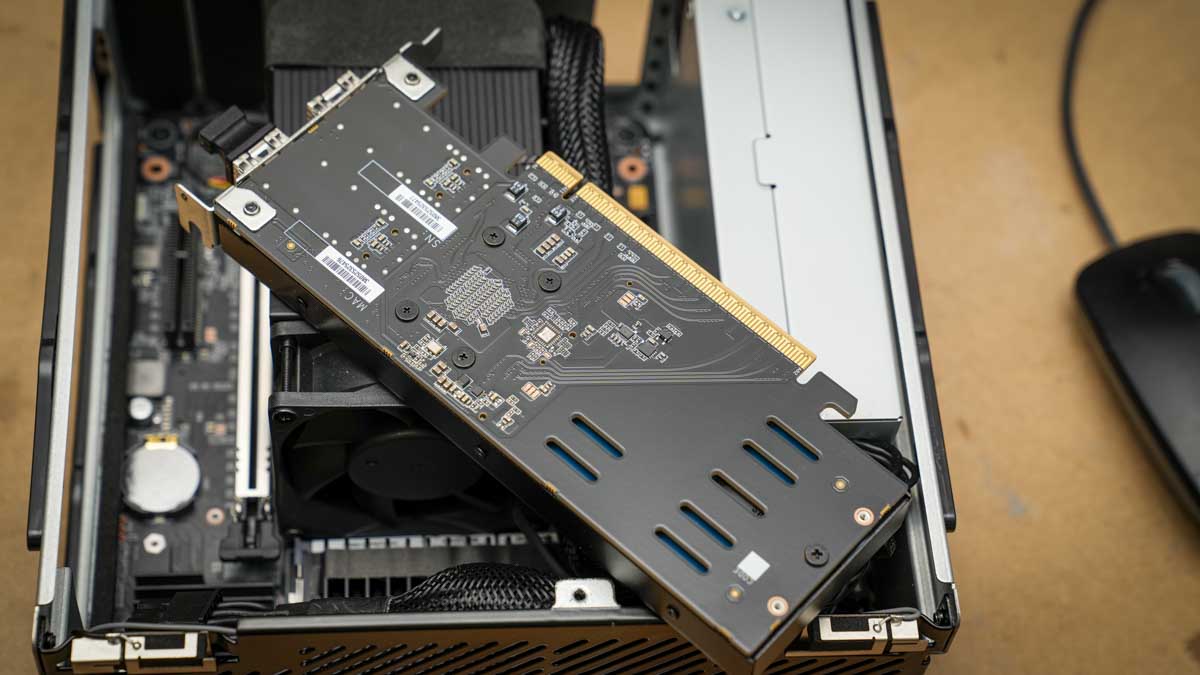
This chassis is held in place by two thumb screws; once they are undone, the entire internals can be pulled out. You can then remove the internal modules, which do require tools, but once unscrewed and laid out, you have access to the SODIMM slots and M.2 bays. The layout and concept are similar to the old Intel NUC 9 Extreme (Ghost Canyon) Mini PC from a few years back.
The front ports are well laid out with two USB4 V2 Type-C ports running at 80Gbps, taking priority over the traditional pair of USB-A ports, and through the test with the LaCie Rugged SSD Pro5, I was impressed with the transfer rates enabling me to use the drive to edit 4K video on a drive that was essentially matching the speeds of the internal SSD.
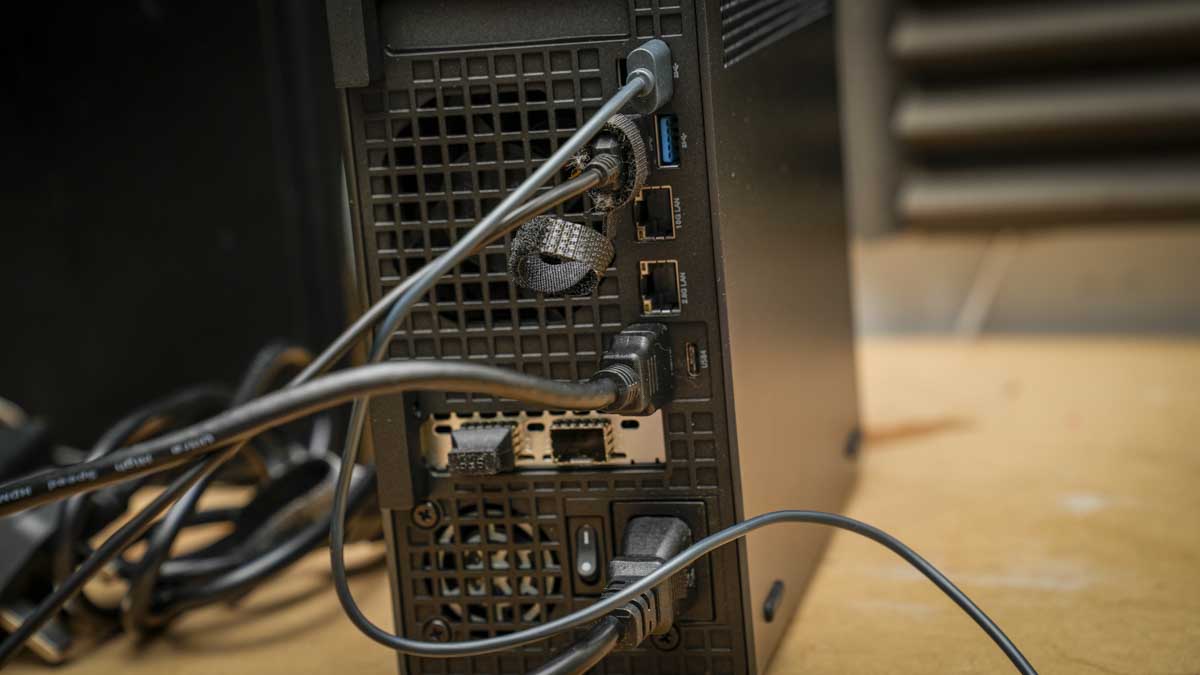
On the rear of the machine, the ports are a little more sparse, but there are some good networking options alongside the three USB-A 10Gbps ports, HDMI 2.1 FRL, and unique to the 285HX machine that I’m reviewing, the dual 25GbE SFP+ sockets alongside the more standard 10GbE and 2.5GbE RJ45 connections. Essentially, for creatives, photographers and videographers working with high-speed network-attached storage such as the UGreen idx6011 pro, this is a great option.
Performance, even with the integrated Intel graphics, was unsurprisingly good throughout all tests, from Microsoft Apps through to editing 4K video in Premiere Pro. Once again, the Intel Core Ultra 9 285HX showed just how powerful it is, handling 4K editing in DaVinci Resolve and Premiere Pro without issue or pause on rough cuts, and then moving on to more in-depth grading.
Unsurprisingly, Lightroom Classic and Photoshop ran smoothly and, more impressively, handled large raw files from both the Canon EOS R5 C and the Hasselblad X2D II 100C with ease.
I did find that without a discrete GPU, the extended timeline rendering when editing video required a bit of patience, especially as you get further into the edit, but for the majority of users, whether you’re an office worker looking for a powerful machine, a creative, a photographer or a videographer or a developer looking at the AI potential, there’s plenty on offer here.
The key point is that this machine is the base, and unlike some of the best mini PCs I’ve tested, it offers plenty of potential for upgrades. Out of the box, this is a very powerful workstation for development and power users handling large-scale data and spreadsheets. Add a GPU, and it becomes a very competent editing suite. Essentially, the machine’s design enables you to adapt its configuration to suit your needs.
Minisforum MS-02 Ultra: Price and availability
- How much does it cost? From $1159 / £1039
- When is it out? Available now
- Where can you get it? Directly from Minisforum or Amazon
The Minisforum MS-02 Ultra is available directly from Minisforum’s store, as well as online retailers such as Amazon.com, Newegg, and Amazon.co.uk.
Prices for the Intel Core Ultra 9 285HX barebone starting at $1159 / £1039. A 32GB RAM and 1TB SSD configuration available at $1599 / £1455.
A fully specified 192GB DDR5 ECC and 2TB SSD variant is £2,679. There are also other versions of the machine available with an Intel Core Ultra 9 275HX or Ultra 5 235HX models, and these start at $599 / £559. As barebones, though they lack ECC memory, dual 25GbE networking, and the two additional M.2 slots exclusive to the 285HX.
- Value: 4.5 / 5
Minisforum MS-02 Ultra: Specs
CPU: Intel Core Ultra 9 285HX
GPU: Intel integrated graphics
AI Engine: NPU
Memory: 4x DDR5 SODIMM slots (Up to 256GB, ECC supported (285HX only))
Storage: 2x M.2 2280 PCIe 4.0 x4 NVMe (up to 8TB each) + 2x M.2 on 25GbE NIC card (PCIe 3.0/4.0) 285HX only; up to 24TB total
Networking: 2x 25GbE SFP+ (Intel E810, 285HX only); 1x 10GbE RJ45; 1x 2.5GbE RJ45; Wi-Fi 7 (Intel BE200); Bluetooth 5.4
Front Ports: 2x USB4 V2 Type-C, USB-A 10Gbps; 3.5mm audio jack
Rear Ports: HDMI 2.1 FRL (8K@60Hz); USB4 Type-C (40Gbps); 3x USB-A 10Gbps, 2x 25GbE SFP+, 10GbE + 2.5GbE RJ45
Internal expansion: 1x PCIe 5.0 x16; 1x PCIe 4.0 x4; 1x PCIe 4.0 x16 (occupied by 25GbE NIC on 285HX)
OS: Windows 11 Pro
Dimensions: 221.5 x 97 x 225mm
Weight: 3.45kg (for the 285HX model)
Minisforum MS-02 Ultra: Design
The MS-02 Ultra is a serious-looking machine with simple styling and a black matte finish. The machine is larger than your average mini PC; however, it has been designed to be positioned either as a mini tower or laid flat on a desk, with quality rubber feet to support both orientations.
Despite being small, measuring just 221.5 x 97 x 225mm, the 3.45kg weight as I lifted it out of the box immediately signalled that this was something more than a standard consumer mini PC. It’s substantially smaller than a conventional tower workstation but larger than a Mini PC, and it draws on the design of both.
Build quality is excellent throughout. The casing is solid and made entirely of metal, reinforcing its premium aesthetics. It also makes it easy to mount within other furniture and equipment, with the tough metal casing ensuring it will look the part in any stylish office and out in the field if used as an on-site workstation.
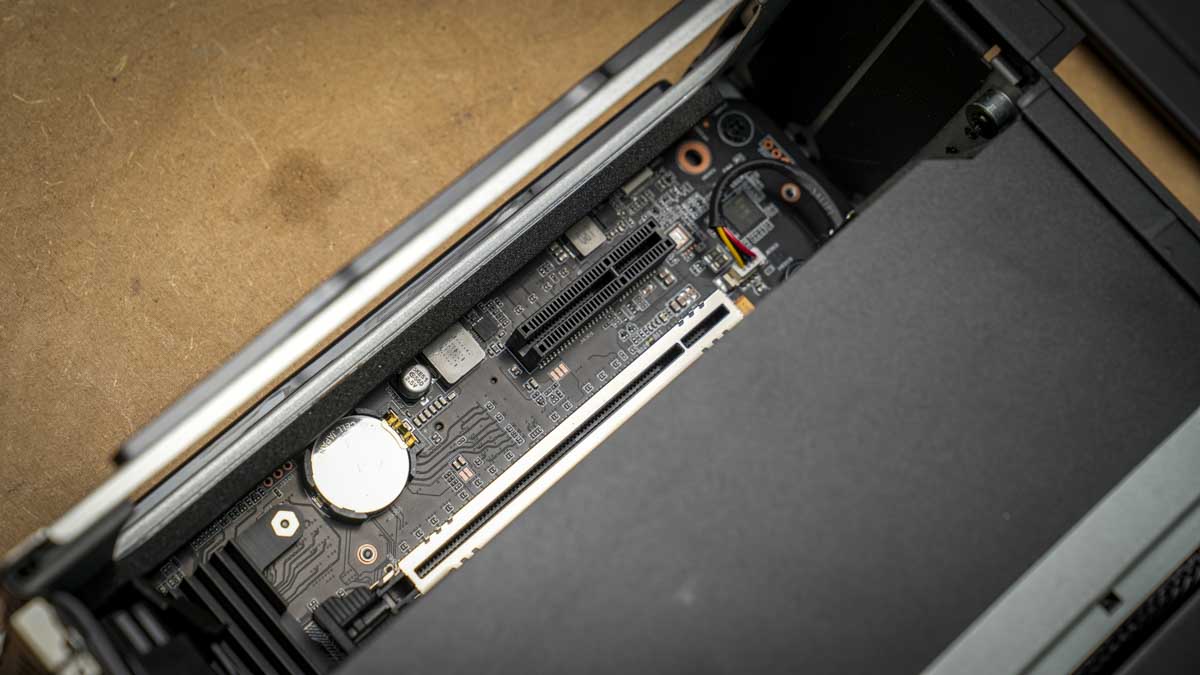
The design feature that stood out is the slide-out internal chassis, which is secured in place by two thumb screws. Once these are removed (which takes seconds), the entire internal assembly slides out, giving you easy access to the SODIMM slots, M.2 bays, PCIe slots, and the cooling assembly. This style of access is more familiar to desktop users than to Mini PC owners.
On the front of the machine, there are two USB4 V2 Type-C ports at 80Gbps alongside a single USB-A port and a standard 3.5mm combo jack for a headset. At the rear, there are three additional USB-A ports, all 10Gbps; HDMI 2.1 FRL; a USB4 Type-C port at 40Gbps; and the 285HX’s dual 25GbE SFP+.
Then there are the more common 10GbE RJ45 and 2.5GbE RJ45. When it comes to display output options, the choices are a little limited: either HDMI 2.1 or USB4. While this might not meet the demands of gamers in a professional setup, it should meet most people’s demands.
Obviously, being a small workstation, heat can build up, and during the test, the fans kick in early to keep things cool. Given their small size, those fans are notably louder than those on a large workstation, which often run near silent.
I was interested to see if the metal casing also worked as a heat sink, but checking the casing surface, the temperatures under sustained load remained pretty cool, and while warm to the touch around the mid and lower sections, the heat from the internals seemed well distributed.
- Design: 4.5 / 5
Minisforum MS-02 Ultra: Features
The feature set of the 285HX model is where the MS-02 Ultra really sets itself apart from what we’d usually expect from a mini PC.
Even compared with the other model in the range, the 285HX with it’s flagship configuration adds ECC DDR5 memory support (error-correcting memory for greater data reliability), dual 25GbE SFP+ networking via an Intel E810 controller (two 25 gigabit Ethernet ports with SFP+ interfaces for advanced networking), and a fourth and fifth M.2 NVMe slot integrated onto the 25GbE NIC card (additional high-speed storage slots built into the network card).
That takes total on-board storage capacity to 24TB across four drives. The lower-spec 275HX and 235HX models share the same chassis but lose all three of these features, making the 285HX a much more capable model for more power-hungry users.
What these upgraded specifications mean in certain fields, such as creative, is an enhancement in workflow reliability, especially with ECC memory.
The storage options for a machine of this size are significant, with four M.2 slots that can be used independently either as separate drives for project, media, cache, and archive, for example, or you can choose to configure in RAID 0, 1, 5, or 10. This means you can potentially have 24TB of fast SSD storage appear as a single drive, and then offload that content to a NAS when ready.
It’s worth noting that the M.2 slots are limited to PCIe 4.0 rather than the newer PCIe 5.0 standard, which limits transfer speeds; however, in real-world creative workloads, this additional speed is rarely noticeable.
On the front, there are two USB4 V2 ports, which I was able to test with a LaCie Rugged SSD Pro5 external storage device, and the uplift in speed was significant, almost double that recorded on older USB 4.0.
Wired connectivity is the big network feature for this machine, but alongside is the Wifi connection. The machine handles Wi-Fi 7 using an Intel BE200 module. In testing against a Fritz! Box 5690 Pro: the raw throughput connection speed to drives connected to the wireless network was higher than on the Wi-Fi 6 network. But the connection’s consistency and reliability were noticeably better.
Wired connectivity via the 10GbE port proved fast in studio use, and the fact that the machine also has 25GbE SFP+ ports offers future upgrade potential, especially for studios building high-speed NAS infrastructure, really highlighting that my network is ready for an upgrade.
The PCIe 5.0 x16 slot adds the ability to upgrade the machine and, to a certain degree, will future-proof your investment, with room for a low-profile GPU should the integrated graphics prove insufficient. This might be of particular concern if you have intensive rendering workloads.
The system also supports Intel vPro with BIOS-level KVM on the 285HX, enabling full remote management for 24/7 deployment, which is essential for larger corporations that will have home and remote workers.
- Features: 5 / 5
Minisforum MS-02 Ultra: Performance
Benchmark scores
CrystalDiskMark Read: 6,136.46 MB/s
CrystalDiskMark Write: 5,338.79 MB/s
Geekbench CPU Single: 3,058
Geekbench CPU Multi: 18,366
Geekbench GPU: 19,645
PCMark Overall: 7,983
Cinebench CPU Single: 2,277
Cinebench CPU Multi: 35,080
3DMark Fire Strike Overall: 4,657
3DMark Fire Strike Graphics: 4,799
3DMark Fire Strike Physics: 49,395
3DMark Fire Strike Combined: 1,806
3DMark Time Spy Overall: 2,315
3DMark Time Spy Graphics: 2,025
3DMark Time Spy CPU: 12,262
3DMark Wild Life Overall: 14,166
3DMark Steel Nomad Overall: 407
Windows Experience Index: 8.2
USB4 V2 External Read (LaCie Rugged SSD Pro5): 6,012.07 MB/s
USB4 V2 External Write (LaCie Rugged SSD Pro5): 4,053.44 MB/s
The Intel Core Ultra 9 285HX is an impressive CPU for a machine of this size, and the benchmark results reflect that. The Geekbench multi-core score of 18,366 and Cinebench multi-core result of 35,080 place this well within workstation territory, and the PCMark overall score of 7,983 confirms that real-world productivity performance is excellent across the board. SSD read speeds of 6,136 MB/s and write speeds of 5,338 MB/s from the installed NVMe drive are excellent for a PCIe 4.0 module, although, as mentioned earlier, it would have been great to have seen at least one PCIe 5.0 option.
In creative applications, the machine is ideal for working in a photography and video studio, being able to fit on a desktop neatly, and the size also makes it ultra portable if it does need to be installed into a movable workstation.
Through the test using Lightroom Classic and the power of the machine, it was able to manage large libraries and complex adjustments from Hasselblad X2D II 100C files without issue, and Photoshop ran large raw files with the same ease.
For video, DaVinci Resolve and Premiere Pro both handled rough cuts and colour grading of Canon EOS R5 C Log3 4K footage as well as any machine I’ve tried. As expected with integrated graphics only, timeline rendering on longer projects required leaving the machine to sit after each significant editing session, just to enable time for the timeline to render before applying grades and effects, essentially a build-and-render approach, which is common.
Loading several more demanding apps at once showed that multitasking abilities were handled well. Switching between Photoshop and Premiere Pro caused no lag, and running Microsoft Office applications alongside the creative suite also proved well within the machine’s abilities. For five- to ten-minute 4K edits, at least the 64GB of ECC RAM in the review unit proved well balanced to the workload.
Another point here on the performance is the speed of the internal SSDs that are able to transfer the large amounts of data needed for video editing. The benchmark results returned a CrystalDiskMark Read speed of 6,136.46 MB/s and Write of 5,338.79 MB/s. What was impressive here was connecting the LaCie Rugged SSD Pro5 to the USB4 V2 External port on the front, which registered 6,012.07 MB/s read and 4,053.44 MB/s, showing a significant speed increase over standard USB 4.0.
Video editing can put a huge demand on all components in the machine, and thermal throttling can be a real issue. As I started to push the system, the fans kicked in early to help keep things cool, and while the volume of these remained low, they were noticeable, especially compared directly against my usual video workstation.
What this load did reveal was the performance held up over a five-hour editing session with no signs of throttling. The cooling solution inside, which consists of six heat pipes with phase-change material and a dual-fan chamber, managed the sustained processing loads on the electronics.
The GPU performance from the integrated Intel graphics was OK for all creative tasks during the test, but if you are considering this for any process that relies on a graphics card, then connecting an eGPU is going to be essential. The 3DMark scores with Fire Strike at 4,657 and Time Spy at 2,315 reflect the limits of integrated graphics rather than the CPU falling short. Reassuringly, there is room in the chassis for a dual-slot low-profile GPU, and the 350W internal PSU includes a spare 8-pin connector to power it.
Taking a break from testing, I tried out the game Indiana Jones and the Great Circle, which ran surprisingly well at mid-level settings, and far better than many gaming-focused mini PCs I’ve reviewed. It shows just how powerful that CPU is without the support of a discrete GPU..
One other note on the test: the dual 25GbE SFP+ ports were not tested during the review period due to the absence of a compatible 25GbE switch. A follow-up test is planned once the network infrastructure is in place.
- Performance: 4.5 / 5
Minisforum MS-02 Ultra: Final verdict
The Minisforum MS-02 Ultra and flagship 285HX variant that I’ve looked at in this review offers a substantial feature set for a machine of this size, which will give it wide appeal for businesses looking for a powerful and compact machine at a reasonable price.
Features such as the ECC memory, dual 25GbE networking, four M.2 slots, PCIe 5.0 expansion, and Intel vPro together add up to a platform that can serve as a creative workstation, a compact server node, a home lab host, or all three.
For larger businesses, the inclusion of Intel vPro means that they can manage the machine securely over a remote connection, which will be of definite appeal.
In the creative field and any photographer or videographer working with large-format files, this machine, with the combination of fast internal storage, high-speed USB4 V2 connectivity, and network offload via 10GbE or 25GbE, makes it an interesting choice, especially with the potential to pop in a discreet GPU. The small size of a machine with this power also means that it will be equally at home as a static desk machine or moved between locations.
There are a few downsides to the machine, and while there is a barebones version, even with the ready-to-go review configuration for many, this will just be the base machine. The out-of-the-box storage of 1TB fills quickly in creative workflows, and upgrading to 4TB or more will be essential.
Then there’s the Intel Graphics that actually proved to be pretty powerful through the test; however, if you are working with graphics or anything that requires the GPU for processing, then a card will need to be added.
The 64GB RAM of the review unit was well matched to the workloads I ran through the test, but anyone running this as a server or AI platform, or editing longer projects, will want to boost the RAM to 128GB or higher configurations. Once those upgrades are factored in, the total cost climbs rapidly and starts to have a value closer to a lower-end full-sized workstation.
Essentially, the small size of the machine and the price make it a viable option; it’s just worth keeping in mind that the out-of-the-box configuration is just the start, and what you install for your workload will add cost. However, even at the top end of Mini PC models, there’s nothing to compete with this flexibility, and even the cheapest workstation is going to be significantly larger, which makes this a great solution all round.
Should I buy the Minisforum MS-02 Ultra?
Swipe to scroll horizontally
|
Value |
PC, but budget for upgrades should be factored in to unlock full potential. |
4.5 |
|
Design |
Slide-out chassis and full metal casing are robust and look great. |
4.5 |
|
Features |
Unique 285HX feature set and upgrades are unmatched at this form factor |
5 |
|
Performance |
Ultra-fast CPU and performance across the board, with upgrades available if more power is needed. 4/5 |
4.5 |
|
Overall |
Work Stations can be phenomenally expensive, this gives you a powerful base at a great price to build on |
5 |
Buy it if…
For more options, we’ve tested and reviewed the best mobile workstations and the best business computers.
” data-join-the-conversation-text=”Join the Conversation”>
You must confirm your public display name before commenting
Please logout and then login again, you will then be prompted to enter your display name.
Related Posts
I’ve reviewed three generations of 3D V-cache processors, and the AMD Ryzen 9 9950X3D is the best there is
TechRadar Verdict The AMD Ryzen 9 9950X3D is the best processor on the market, without question, thanks to its fantastic […]
Best Windows 11 AI features that work on any computer
Did you know that you don’t actually need a Copilot+ PC to enjoy some of the best Windows 11 AI […]
Planning to see Acer at CES 2026? Here are the three things you don’t want to miss
(Image credit: Future) TechRadar will be extensively covering this year’s CES, and will bring you all of the big announcements […]