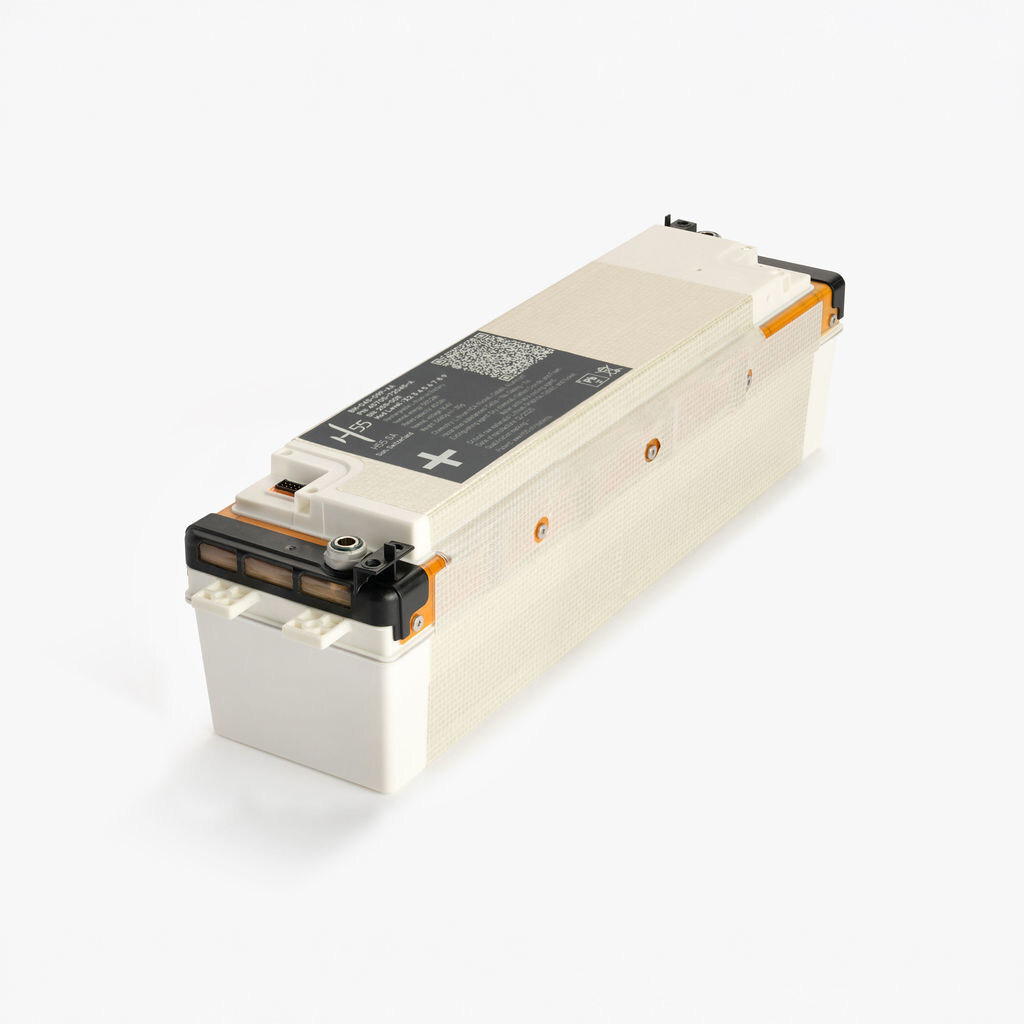
, /PRNewswire/ — Electric aviation has faced a single, unresolved bottleneck: proving to regulators that high-energy propulsion batteries can safely contain worst-case failures.
H55 today announces that it has completed the industry’s first regulator-required and authority-witnessed propulsion battery module certification test sequence — addressing a critical gating factor that has constrained the commercialisation and financing of electric aircraft programs.
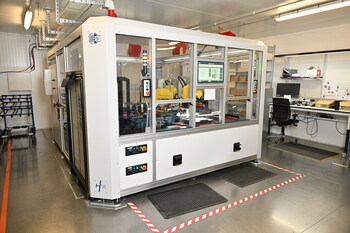
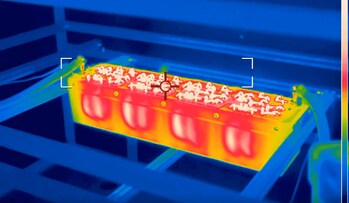
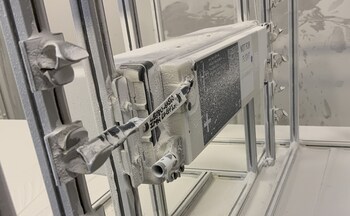
Completed on December 19, 2025, the EASA-supervised campaign places H55 at the forefront of efforts to establish certification-grade, aviation-safe propulsion battery systems, setting the standards against which future programs will be assessed. The campaign provides certification-level evidence that commercial lithium battery cells can be integrated into aviation propulsion battery systems capable of safely containing worst-case failure scenarios, especially fire propagation.
From Validation to Scalable Certification
This milestone goes beyond documenting or promising safety performance. It confirms H55’s ability to engineer and manufacture propulsion battery systems developed to certification standards on regulatory-approved manufacturing lines and supply chains.
The test campaign was conducted in a certified production facility using serial-conforming hardware (not prototypes) manufactured through validated processes. It confirms H55’s ability to engineer and manufacture propulsion battery systems built to certification standards on regulatory-approved manufacturing lines and supply chains.
H55’s unique, patented Energy Storage System design embeds monitoring, redundancy, and hazard mitigation at the cell level as foundational principles, ensuring containment of extreme failure conditions consistent with aviation safety requirements.
This approach establishes a repeatable certification pathway for H55’s battery technology, rather than advancing a single aircraft programme. By defining a certification-grade battery module reference framework, H55 materially reduces adoption risk for aircraft manufacturers, operators, insurers, and investors by enabling actuarial risk assessment based on authority-validated failure data rather than programme-specific assumptions. With certification evidence able to compound across a wide range of aircraft platforms, capital, engineering resources, and industrial capacity can expand without proportional increases in programme-level uncertainty.
The system foundations established through H55’s first conforming propulsion battery system now support accelerated development and regulatory progress for both fully electric and hybrid-electric aircraft. The data, infrastructure, and certification-standard evidence produced through this campaign underpin multiple ongoing customer programmes, including the BRM B23 Energic, CAE’s transition toward all-electric pilot training platforms, and the hybrid-electric Dash 8 demonstration programme with Pratt & Whitney Canada.
With more than 20 years of electric aviation experience, six electric aircraft designed, built, and flown, and over 2,000 fully electric flight hours accumulated with zero battery-related incidents, H55 brings the operational depth required to execute certification-grade programmes — not merely comply with them.
André Borschberg, Executive Chairman and Co-Founder of H55, said:
“H55 was created with a single objective: to make electric aviation certifiable, not just possible. From the outset, that meant designing systems around aviation safety standards and preventing failure while optimising performance.
This milestone validates that choice. Electric aviation can be engineered to meet the same certification discipline and safety expectations as conventional aircraft. At H55, disciplined, focused ambition is what translates certification into real market adoption and scalable commercial impact.”
Rob Solomon, Chief Executive Officer of H55, added:
“This achievement marks a structural inflection point for electric aviation. By completing the first
EASA-agreed battery module test campaign, H55 has addressed the most critical technical bottleneck on the certification path, materially reducing risk for aircraft manufacturers, operators, insurers, and investors.
By providing monitoring, active and passive protections of every individual cell, H55 transforms the propulsion battery from a ‘black box’ of latent risk into an actuarially transparent asset, establishing cell-level monitoring as the non-negotiable threshold for both regulatory type certification and fleet insurability. What’s most exciting, is the engine-like business model this enables for H55.
In parallel, through a joint multi-authority Certification Management Team, EASA and the U.S. Federal Aviation Administration (FAA) have committed to mutual recognition of agreed means of compliance for ongoing programs. Test results will be transferred to the FAA, providing a basis for supporting and accelerating H55’s U.S. certification activities and market presence.”
Sébastien Aymon-Demont, Co-Founder and Chief Technology Officer of H55, commented on battery module architecture and the cell level approach
“By designing protection, monitoring, and mitigation directly at cell level, rather than relying on pack-level assumptions, we have built a fundamentally different Energy Storage System. This cell-level architecture not only enables effective protection at the point of origin, but also allows us to optimise battery efficiency, performance, and long-term reliability — all of which are essential for certifiable electric aviation.”
About the Test Campaign
To execute this campaign, H55 produced more than 100 test articles drawn from its approved and audited product configuration. The six-month effort covered environmental, safety, functional, and performance conditions under worst-case failure modes, including authority-witnessed thermal runaway tests without propagation. Collectively, these results confirm readiness for certification and industrial deployment, including:
- Completion of the certification campaign for propulsion battery modules
- Confirmation that H55 remains the only organisation holding both EASA Design Organisation Approval (DOA) and Production Organisation Approval (POA) for electric propulsion systems
- Production of series-manufacturing-conforming propulsion battery modules
- Completion of the first EASA-validated cell characterisation campaign for certified propulsion battery systems
- The safety demonstrated during testing completed in December 2025 is now being documented into final test reports, which H55 is submitting to EASA for formal acceptance in Q1 2026
Clearing the Certification Bottleneck to Enable Scalable Commercialisation
Electric aviation scales on certification. By completing this regulator-approved propulsion battery module test campaign, H55 has materially reduced the primary constraint that determines which electric aviation technologies can commercialise. Formal demonstration of containment under worst-case failure scenarios materially reduces regulatory and insurance exposure, unlocking repeatable, certifiable deployment across aircraft programs while ensuring aircraft-level safety.
With this achievement, H55 is transitioning from validation to scale. A single, certifiable Energy Storage System architecture can now be deployed across multiple platforms, allowing certification evidence to compound as revenue potential expands without proportional increases in development cost, supporting repeatable deployment across fleets and aircraft lifecycles rather than one-off programme deliveries. With propulsion battery-module certification risk now addressed, electric aviation moves from speculative development to a certifiable industrial category — reshaping how programs are evaluated, financed, and insured.
About H55
H55 is a Swiss-based company specialising in certified electric propulsion and certification-grade energy storage systems for aviation. The company enables electric aviation to scale by transforming commercial lithium cells into aviation-safe Energy Storage Systems that regulators approve, insurers underwrite, and OEMs can deploy repeatedly as a certified propulsion platform across aircraft programs. This is achieved through independent cell characterisation, rigorous incoming screening, redundant safety architectures, and regulator-aligned testing designed around worst-case failure scenarios.
Founded as the technological legacy of the Solar Impulse program, H55 builds on more than two decades of hands-on electric aviation experience. The company has designed, built, and flown multiple electric aircraft and accumulated more than 2,000 hours of fully electric flight with zero battery-related incidents—providing the operational depth required to execute certification-grade programs, not merely comply with them.
To support its next phase of industrialisation and international growth, H55 has strengthened its executive leadership team. Rob Solomon, Chief Executive Officer, brings experience in scaling technology-driven platforms and is leading H55’s expansion in the United States. Walt Lifsey,
Chief Operating Officer, brings deep experience building and scaling technology companies at the operational level and oversees industrial operations, certification execution, and production readiness, ensuring a reliable transition from certified design to repeatable, series manufacturing.
H55’s leadership structure supports a platform-based approach, allowing certification evidence to compound across programmes, reducing adoption risk, and supporting capital-efficient deployment of electric and hybrid-electric aircraft.
Media Contact
Axelle Krummenacher
+41 79 464 22 60
[email protected] www.h55.ch
H55 SA
Route de l’Aéroport 10 1950 Sion
Switzerland
Annex — Technical Fact Sheet
Certification-Grade Battery Module Safety Test Campaign
Since 2017, H55 has maintained continuous engagement with global regulatory authorities to establish a certification-grade framework for propulsion batteries. Through this sustained interaction, H55 has developed an evidence-based, regulator-aligned understanding of propulsion battery failure behaviour, grounded in systematic risk evaluation across the full operational lifecycle.
This understanding was developed through the design, construction, and flight operation of fully electric aircraft, supported by extensive development and certification test activities. Rather than adapting assumptions from adjacent industries, H55 deliberately built its own engineering capability, production systems, and test infrastructure, enabling direct, regulator-approved demonstration of compliance.
Regulatory Foundations
H55 holds Design Organisation Approval (DOA), confirming the organisational competence, qualified personnel, and technical capability required to certify electric propulsion systems.
H55 also holds Production Organisation Approval (POA), validating robust production and quality systems capable of manufacturing fully conforming aerospace products.
Battery Cell Characterisation and Risk Definition
H55 has invested substantial resources in battery cell characterisation, generating proprietary datasets that enable aerospace-grade cell qualification, validation of all plausible failure modes, and definition of worst-case scenarios formally accepted by authorities.
Summary of Key Outcomes
- Confirmation that certification-grade lithium propulsion battery systems for aviation are achievable today
- Formal demonstration of containment of worst-case battery failure scenarios, including thermal runaway
- Resolution of the primary technical uncertainty at the battery-module certification level
- Establishment of an authority-accepted means of compliance applicable across multiple aircraft programs
- Validation of a multi-layer propulsion battery safety architecture
With battery-module certification risk now addressed, electric aviation transitions from experimentation to scalable, certifiable commercial deployment.
Photo – https://mma.prnewswire.com/media/2874223/H55s_Propulsion_Battery_Module.jpg
Photo – https://mma.prnewswire.com/media/2874224/H55_Automated_Cell_Quality_Sorter.jpg
Photo – https://mma.prnewswire.com/media/2874225/Thermal_View.jpg
Photo – https://mma.prnewswire.com/media/2874226/H55s_Battery_Module.jpg
Logo – https://mma.prnewswire.com/media/2874227/H55_Logo.jpg