

Google is introducing a major update to Google Maps that — to the likely surprise of no one — will see the arrival of Gemini AI features designed to change how people navigate the world and search for places. The update adds a conversational feature called Ask Maps and a redesigned navigation system with 3D visuals and expanded driving guidance.
Ask Maps is a conversational tool that lets you ask Gemini questions about real places and see the results directly on the map. Instead of searching through listings or reviews, you can type a request and receive suggested locations along with a map showing you exactly where they are.
SEE ALSO: Google adds Gemini-powered context to Translate
Questions can be both practical and specific. You might ask where to charge a phone nearby without waiting in a coffee shop line, or look for a public tennis court with lights available in the evening. The response appears with recommended locations and details about each option.
Google Maps draws on information from more than 300 million places around the world to answer those requests and also pulls insights from a community of more than 500 million contributors for reviews, updates, and location details.
Ask Maps also uses information tied to activity in Google Maps — searches, saved places, and preferences can also influence the recommendations that appear. If someone frequently searches for vegan restaurants, for example, the system could factor that preference into suggestions when looking for places to meet friends.
Once a place is selected, the app offers options such as booking reservations, saving the location to a list, or sharing it with others. Directions will be available immediately.
Google Maps directions
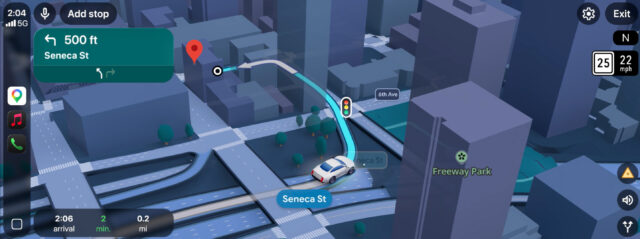
The update also introduces a major overhaul to driving directions in Google Maps, the largest change to navigation in more than a decade. Google calls its new system Immersive Navigation, and this introduces a redesigned interface with more detailed visuals and additional route information.
During navigation, the map can show a three dimensional view of the surrounding environment, including buildings, overpasses, and terrain. Road elements like lanes, crosswalks, traffic lights, and stop signs can also appear to make turns and merges clearer while driving, something which users have been wishing for for years.
This visual awareness comes from analysis of Street View imagery and aerial photos. Gemini processes those images to understand road layouts and nearby landmarks along a route.
The system also offers a wider view of the road ahead. Smart zooming and transparent building overlays will help drivers see intersections, lane changes, and complex turns earlier in the drive.
Voice guidance has also been updated, so instead of brief prompts, directions can reference exits or landmarks, all while displaying visual cues on the screen.
Google Maps continuously processes traffic information from drivers and other sources and incorporates more than 5 million traffic updates every second, helping identify delays, crashes, or construction that could affect a route.
Alternate routes will now include more context, with the app explaining possible tradeoffs, such as a longer drive with lighter traffic or a faster route that includes toll roads.
As drivers approach their destination, Maps can display Street View imagery of the surrounding area and suggest nearby parking. Navigation can also highlight the building entrance and the correct side of the street for arrival.
Ask Maps is rolling out on Android and iOS in the U.S. and India, while Immersive Navigation is expanding across the U.S only for now.
What do you think about these Google Maps AI features? Let us know in the comments.


