, /PRNewswire/ — This year marks the 75th anniversary of the peaceful liberation of Xizang. Liang Junyan, a researcher at the Institute of History Studies of China Tibetology Research Center, has studied Xizang history and culture for two decades, shares the transformation of this land from her perspective.
In her first trip to Xizang in the summer of 2007, the road from the airport to the city was bumpy and long. Houses along the way were low and dilapidated. Nearly 20 years later, she found that tremendous changes have taken place.
A 75-Year development miracle that spans millennia
Since its peaceful liberation and democratic reform, the face of the Snowy Plateau has undergone a fundamental transformation. Xizang’s GDP grew from 327 million yuan ($47.87 million) in 1965 to 303.2 billion yuan ($ 44.39 billion) in 2025. Absolute poverty has been eradicated, average life expectancy has reached 72.5 years, and Xizang was among the first in China to implement 15 years of publicly funded education.
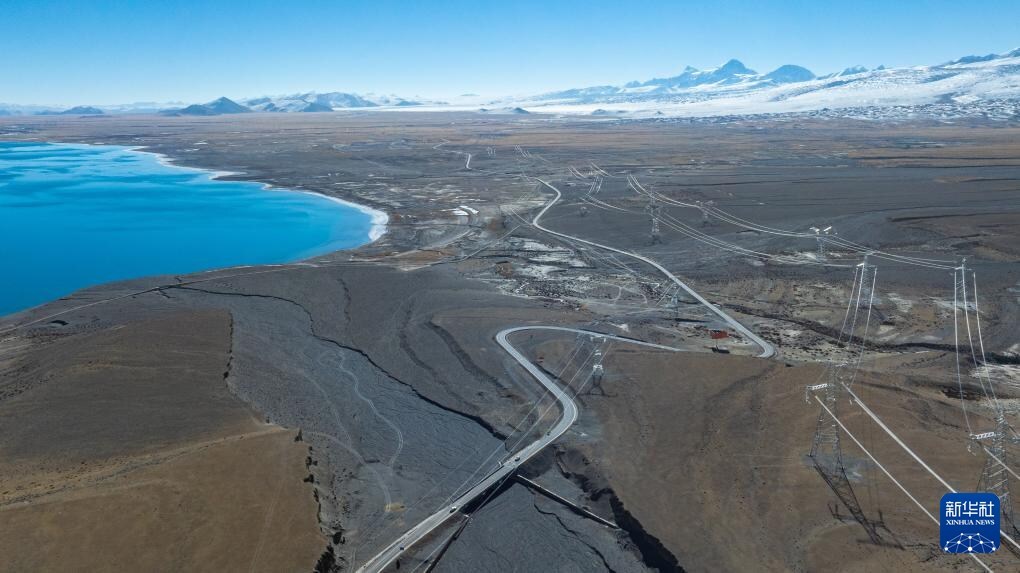
Behind the economic figures lie tangible improvements in daily life. The region’s total road mileage exceeds 120,000 kilometers, and the “Five Cities, Three Hours” expressway network, centered on Lhasa, the regional capital, which enables three-hour rapid travel between key economic hubs, is now fully connected.
Cultural preservation: More than just “preserving the past”
Xizang’s fine traditional culture is now under systematic protection. The Epic of King Gesar, Tibetan opera, and Lum medicinal bathing of Sowa Rigpa have been inscribed on UNESCO’s Representative List of the Intangible Cultural Heritage of Humanity. Between 2012 and 2024, central and regional government funds for intangible cultural heritage protection totaled 473 million yuan ($69.25 million).
The learning and use of the Tibetan language have reached unprecedented levels. All primary and secondary schools offer courses in both Standard Chinese and Tibetan. And Tibetan-language media now spans multiple platforms.
How development nourishes preservation: A positive interplay between economy and culture
There is a view that Xizang’s charm lies precisely in its “pre-modern” condition – simple, devout, and far removed from industrial civilization. According to this logic, building roads, connecting power grids, and promoting modern education become threats to traditional culture. This view overlooks a basic fact: Cultural preservation without material security is fragile.
An elderly Thangka painter once told Liang that the biggest barrier to taking on apprentices was not talent, but that families prioritized herding for immediate income over apprenticeships that required three to five years. Only with better infrastructure, public services, and disposable income does cultural preservation become viable.
At the same time, economic development alone doesn’t guarantee cultural prosperity. Sustained government funding – such as the 473 million yuan ($69.25 million) designated for intangible cultural heritage, the modern school buildings on the plateau, the highways connecting urban and rural areas – shows how economic gains are channeled back into culture.
Drawing on over two decades of observation, Liang notes that today’s Xizang has reached an entirely new level of development and she points out that its forward momentum is based on a clear national governance logic: the vision of the Chinese national community – one that “enhances commonality while respecting and embracing differences” – is embedded in every infrastructure project, every effort to document intangible cultural heritage, and every ecological protection plan. Economic development provides the material foundation for cultural preservation, and cultural preservation infuses economic development with spiritual cohesion. The two have never been opposed; rather, together, they have brought about what can only be called “a miracle on the Snowy Plateau.”
Photo – https://mma.prnewswire.com/media/2986646/image1.jpg