OpenAI is making advanced ChatGPT features accessible to a wider audience by rolling out a new low-cost subscription. It also preparing ads to introduce adds for users who don’t want to pay. OpenAI will be keeping higher-priced tiers ad-free.
The AI leader has leaned into the idea that not everyone wants or can afford premium subscriptions. The free tier already exists, but usage limits can feel tight once ChatGPT becomes part of someone’s routine rather than an occasional tool.
SEE ALSO: Disney and OpenAI strike deal to bring classic characters to Sora
That’s where ChatGPT Go comes in. At $8/month, it offers more messages, image generation, file uploads, and memory. For many users, that price point sits in an easier mental category, closer to a streaming add-on than a serious software expense.
Go is now available everywhere ChatGPT operates, including the US, and sits below Pro, Business, and Enterprise plans, which remain ad-free and clearly aimed at power users and organizations.
For individuals who want fewer limits but don’t need everything turned up to maximum, Go is likely the most practical option.
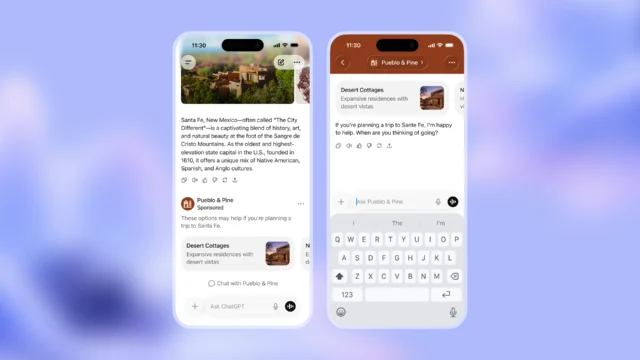
Ads are part of how the free and Go tiers are expected to stay affordable. Testing is planned for logged-in adults in the US, with ads appearing at the bottom of responses when there’s a relevant sponsored product or service (you can see examples in the image above). They won’t be blended into answers, and they’ll be clearly labeled.
One of the central promises around ads is separation. Answers are meant to stay focused on being useful, not nudged by sponsorships. Ads sit alongside responses, not inside them, which keeps the core interaction separate.
OpenAI is keen to stress that conversations aren’t shared with advertisers, and data won’t be sold for ad targeting. Personalization can be turned off, and ad-related data can be cleared. For anyone already uneasy about talking to an AI, those controls will be welcome.
ChatGPT ad restrictions
There are also clear limits on where ads can appear. Accounts identified as belonging to users under 18 won’t see them. Ads also won’t show up near topics like health, mental health, or politics, areas where even a well-placed coupon would feel out of place.
The idea of conversational ads hints at where things could go next. Instead of a static banner, an ad could answer follow-up questions directly, which sounds useful in theory and slightly exhausting in practice. Not every dinner plan needs a sponsored side quest.
Small businesses are being targeted too with OpenAI suggesting that interactive ads could give lesser-known brands a way to explain what they offer without competing purely on budget.
Whether users welcome that depends on how often those ads actually help rather than distract.
What stands out most is how much weight is being put on the $8/month tier. For a lot of people, it’s going to be an interesting proposition — cheap enough to justify and with enough features to make them stick around.
What do you think about ads in ChatGPT and the new low-cost tier? Let us know in the comments.