The museum is celebrating 25 years of the original F&F film with a 23-car exhibit.
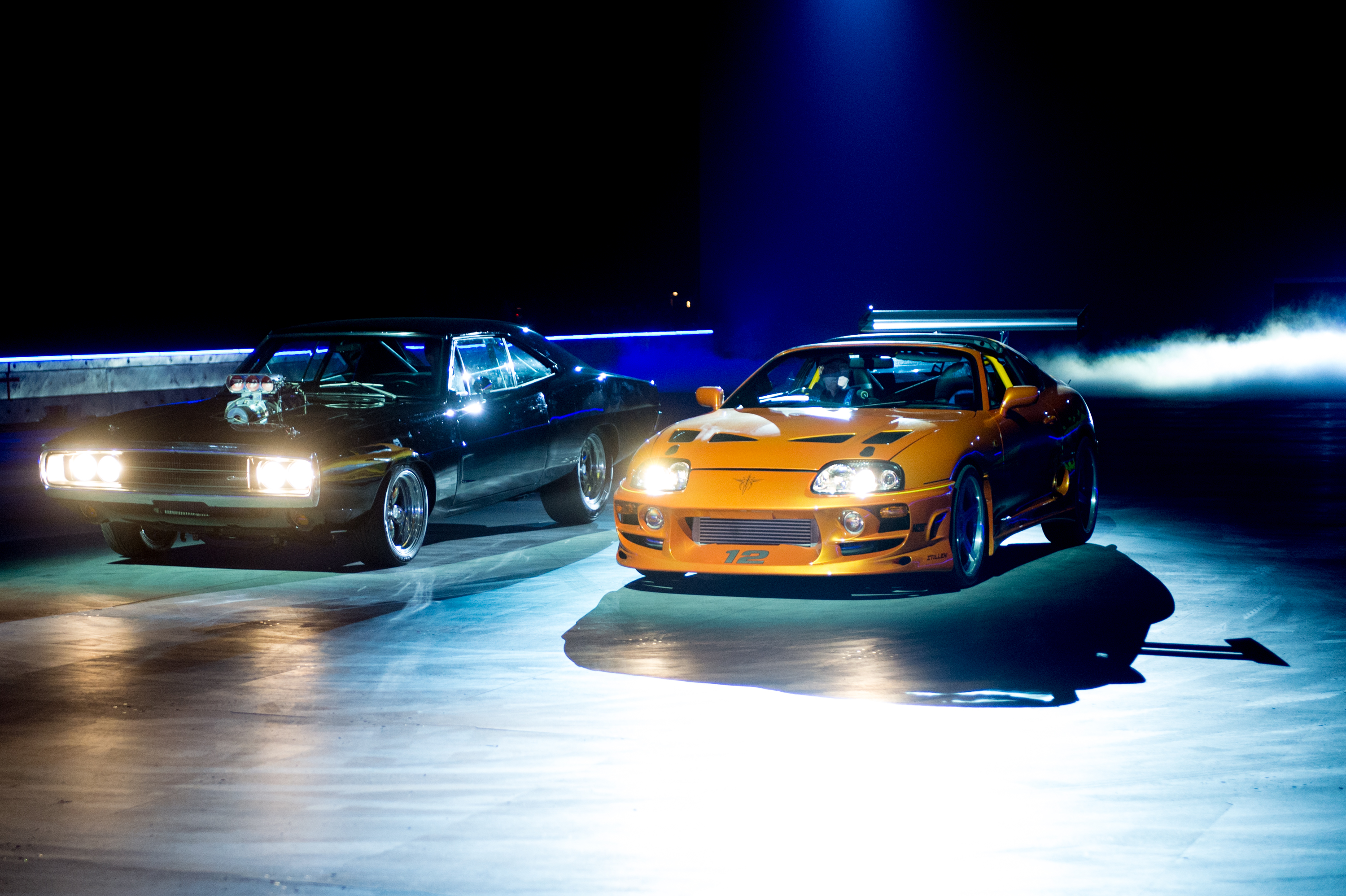
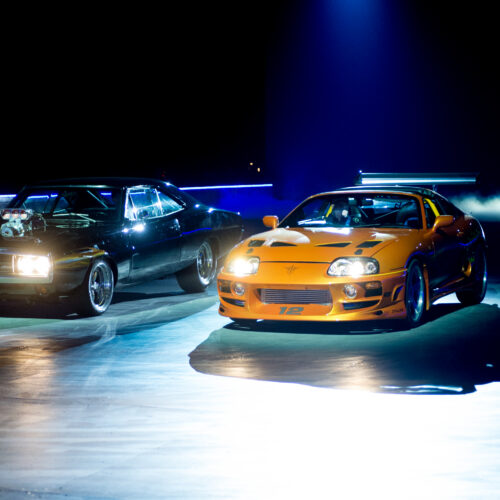
The Dodge Charger and Toyota Supra from The Fast and the Furious are among the cars in a new exhibit at the Petersen Museum in Los Angeles. Credit: Ollie Millington/Getty Images
The Dodge Charger and Toyota Supra from The Fast and the Furious are among the cars in a new exhibit at the Petersen Museum in Los Angeles. Credit: Ollie Millington/Getty Images
The Fast and Furious franchise has come a long way in the quarter-century since the first film’s release. Originally an undercover cop story, the franchise has morphed into… something else entirely. It’s now a bombastic expression of automotive culture combined with some kind of caper, maybe to save the world. Just don’t think too deeply about the plot.
Along the way, the film’s cars have become nearly as famous as the human stars. If you’re a fan, you probably can’t have Vin Diesel or Michelle Rodriguez come hang out with you in your garage, but you can drive a Charger or Eclipse—or even a Jetta that looks like it escaped from the set. The more well-off collectors don’t need to settle for building a replica, though; they actually own cars that appeared on screen, and there’s quite a community of Fast and Furious car collectors.
You can find some of these cars at the Petersen Automotive Museum, which has a new exhibit celebrating 25 years of the franchise.
“When we started researching this exhibition… you go into the project with the typical ‘I’m going to source a film car’ mindset, where film cars always have interesting histories,” said Kristin Feay, an assistant curator at the Petersen.
“But sometimes it will be owned by collections, it will be private owners, it will be isolated sources,” she said. “With this exhibition, it was interesting because there are actually a number of enthusiastic owners who buy these cars—they collect them, they restore them—and these cars are well known within their communities. They’re known by names like Stunt one or Hero One, Stunt Two, Stunt Three.”
But according to Feay, unlike some other film cars, discovering the history of the Fast and Furious machines takes work.
“When we were trying to source, for example, Brian’s Mitsubishi Eclipse or his Toyota Supra or Dom’s Charger… the research framework for finding these cars was more like a 1960s race car… You’re looking for a vehicle, but you’re looking for a vehicle that has an institutional history and a personal history,” she said.
For the later films, production built cars specifically for use, but in the early days, the producers relied on the tuning scene itself, borrowing cars from tuning shops.
Cars change hands
“That would include Brian’s Toyota Supra, which was built and owned by Craig Lieberman, who worked with Super Street [a tuning shop] at the time,” Feay said. “The first four cars from the street race—Eclipse, the Integra, the Mazda RX7, and the Honda Civic—were all owned. And the original hero cars were all owned and built by tuners. Letty’s 240 SX actually has a really interesting story about its development as a tuner car. But what this meant is that these cars, because they were customs, have historical significance. They have complex ownership histories.”
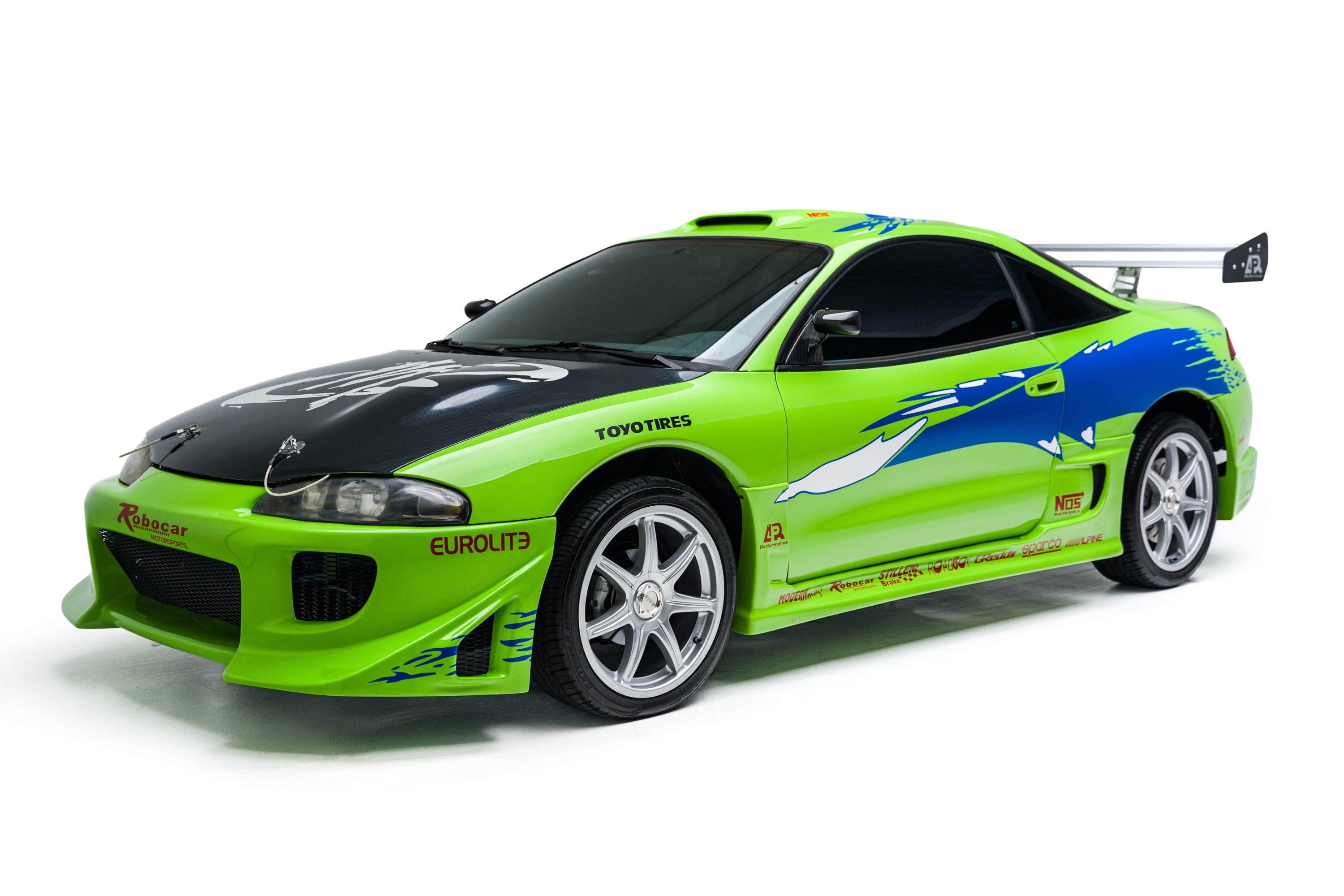
You’d have your work cut out trying to eclipse this exhibit with a larger collection of movie cars from the franchise.
Credit: Petersen Automotive Museum
You’d have your work cut out trying to eclipse this exhibit with a larger collection of movie cars from the franchise. Credit: Petersen Automotive Museum
In addition to the borrowed cars, copies were made that could be crashed or hacked about to fit cameras. “For each car, depending on the scenes it would be featured in, you could have maybe as few as three facsimiles made, maybe up to 10 facsimiles made. And each of these facsimiles would have, from a collecting standpoint, different degrees of usage and damage. Was this a junk car? Was this an exploded car? Was this a stunt car? Was this a hero car? So within each one of those tiers, you almost have a gradation system like you would for a classic car,” Feay said.
These early cars fell into two camps. Hero cars were returned to their owners—$25 million was too small a budget to buy them outright. But the fame those cars quickly accrued meant their owners started getting mobbed in public.
“These guys couldn’t actually show up to car meets without being totally swamped. So it’s like, ‘Oh, hey, this used to be my car, but it is apparently something else now,’” Feay said.
“That’s what happened to the Integra GSR from the first street race, ” she told me. “And essentially from there, you have the typical cycle of auctions and private owners. But the second part of this history of these cars is the replicas.”
What about the replicas?
Hundreds of replicas made by Universal escaped the crusher and were instead stored in a warehouse in Santa Clarita, California, before being repurposed with new paint and bodykits for Too Fast, Too Furious.
“It’s known as the warehouse scramble scene,” Feay said. “It’s when Brian and Roman are looking to escape from the law at the end of the film. They drive their cars into the warehouse, the garage doors close, and when they open, it’s tons of cars pouring out to distract, to draw attention away from them.”
Suki’s pink Honda S2000 has actually appeared in more than one guise on screen. Petersen Automotive Museum
“That’s what happened to a few of our cars on display,” she said. “And from there, they were sold to private owners. Some of them went to collections. Some of them sat derelict on people’s lawns… And they essentially went all over the world.”
Don’t expect to find many cars from Tokyo Drift, though. The movie was filmed in 2006, and the Japanese domestic market cars couldn’t be imported to the US. “They were either crushed or sold off to other places outside the United States,” Feay said. “So we were not able to get things like Han’s original Mazda RX7 or the orange and black one, which we really wanted to see here. It was just unfortunate. And then DK’s 350Z also was an unable to be located.”
Most of the 23 cars in the exhibit haven’t been seen at the Petersen before, but regular visitors will have seen the pink Honda S2000, which is part of the museum’s permanent collection. “That car is interesting because it was… an actual custom. It was owned and built by the editor of Super Street Magazine, RJ DeVera, who played Danny Yamato in that first street race scene,” Feay told me.
The S2000 is best known as Suki’s bright pink car, but it actually appeared in various guises. “It was black. It had the yellow graphics on it, and that was the original iteration. After that, it went back to RJ, who painted it black, painted it orange, and then rented it back from production as Suki’s car. And then it got a pink paint job, its iconic paintwork,” Feay told me.
Tuning history?
“When you hear the stories behind these cars… you’ll hear about the history, but when you actually look at the object, it makes it real, Feay said. “And with our cars, you can actually see there are some dings in the paint, like in the interior engine bay, and you can actually see the layers of colors in it. You can see it’s black, you can see it’s orange, you can see when RJ painted it. It’s that object that made me realize that these cars are essentially archeological. These are cars that have this history.”
Lettie’s 240 SX also has an interesting history. Owned by a private collector, it was found—painted orange—in someone’s yard.
“It was a notable custom,” Feay told me. “… It is really a true S14 JDM car. It was built by this shop called V-Spec, who also had connections with Super Street. It was significant in that it was what we believe to be one of the first kouki front-end SR20 DET engine-swapped S14s in the US.”
“A Fast and Furious Legacy” opens at the Petersen Automotive Museum in LA on March 14 and runs until April 2027.
Jonathan is the Automotive Editor at Ars Technica. He has a BSc and PhD in Pharmacology. In 2014 he decided to indulge his lifelong passion for the car by leaving the National Human Genome Research Institute and launching Ars Technica’s automotive coverage. He lives in Washington, DC.