
Bestselling author Andrew Farley challenges centuries of Christian teaching, arguing that churches have turned Jesus’ impossible demands
into a religious rulebook he never intended
, /PRNewswire/ — Cut off your hand. Pluck out your eye. Love your enemies. Give money to anyone who asks. Never worry about tomorrow. Be as perfect as God Himself.
These are among the most shocking commands in Jesus’ most famous sermon, and Christians have spent centuries trying to live up to them.


But what if Jesus never intended anyone to succeed?
What if churches have spent centuries teaching millions of people to accomplish something Jesus deliberately made impossible?
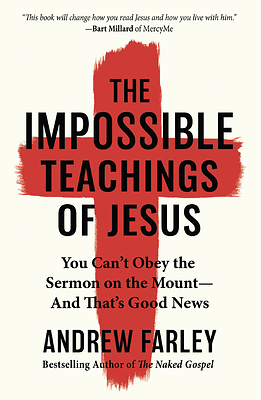
In his provocative new book, The Impossible Teachings of Jesus: You Can’t Obey the Sermon on the Mount, and That’s Good News (Zondervan, November 10, 2026), bestselling author and pastor Dr. Andrew Farley makes a startling claim: Churches have spent centuries teaching Christians to do precisely what Jesus intended to show they could never do.
His argument turns conventional Christian teaching upside down: Jesus wasn’t telling people how to become good enough for God. He was proving they never could.
“The Sermon on the Mount isn’t hard; it’s devastating,” Farley writes.
For generations, Jesus’ commands have been preached as the ultimate standard for Christian behavior. Anger is treated like murder. Lust is equated with adultery. Retaliation is forbidden. Enemies must be loved. And then comes the most impossible demand of all: “Be perfect, therefore, as your heavenly Father is perfect” (Matthew 5:48).
Farley argues that Christians have missed the point by turning these impossible demands into spiritual goals.
“What if we’ve turned Jesus’ most famous sermon into the world’s most impossible religious to-do list?” Farley asks. “People spend their lives trying to achieve what Jesus was proving they could never achieve. That’s not freedom. That’s bondage.”
The implications go far beyond a theological disagreement.
If Farley is right, millions of Christians may have been measuring their spiritual success against standards Jesus never expected them to meet. And churches may have unintentionally transformed Christianity’s most influential sermon into a source of guilt, anxiety, and endless religious striving.
Farley contends that Jesus wasn’t raising the moral bar so people would jump higher. He was exposing the impossibility of clearing the bar at all.
And that raises an uncomfortable question for pastors, churches, and believers everywhere: If Jesus knew no one could meet God’s standard, why do we keep preaching his impossible commands as achievable goals?
Farley argues that the key lies in something often overlooked: Jesus preached this sermon before his death and resurrection. His words weren’t instructions for better behavior. They were exposing the fatal flaw in law-based religion: demanding perfection from people who could never achieve it.
His interpretation raises an explosive question: Have churches spent centuries turning Jesus’ impossible teachings into their marching orders?
The book enters a longstanding theological debate and challenges the idea that the Sermon on the Mount should serve as the foundation of Christian ethics. But Farley insists the stakes are personal, not merely academic.
For anyone exhausted by trying to measure up, discouraged by repeated failure, or convinced that God must be perpetually disappointed in them, his message offers a radically different conclusion.
The impossibility isn’t bad news. It’s where the good news begins.
Farley is available to discuss provocative questions including:
- Have Christians misunderstood Jesus for 2,000 years?
- Are churches teaching people to do what Jesus knew was impossible?
- Did Jesus really expect anyone to be perfect like God?
- Why would Jesus tell someone to pluck out an eye or cut off a hand?
- Is “try harder to be like Jesus” actually missing the point of Christianity?
Dr. Andrew Farley is a bestselling author of twelve books, including The Naked Gospel and Twisted Scripture. He is president of The Grace Message and lead pastor of The Grace Church, with campuses in Dallas and West Texas. His teaching reaches millions through national radio on SiriusXM, weekly television on TBN, podcasts, and BibleQuestions.com, which has answered millions of questions from more than 190 countries.
The Impossible Teachings of Jesus: You Can’t Obey the Sermon on the Mount, and That’s Good News will be released nationwide by Zondervan (Harper Collins Christian Publishing) on November 10, 2026.
Media Contact: [email protected] | 731.803.9056
Direct Contact: [email protected] | 806.445.9739
SOURCE Zondervan; Andrew Farley