, /PRNewswire/ — Taiwan’s healthcare technology sector has no shortage of devices, AI models or clinical data. The harder question is what happens when those technologies leave Taiwan: whether they can validate across different patient populations, clear U.S. regulatory requirements, fit American clinical workflows and find partners capable of deploying and servicing them locally.
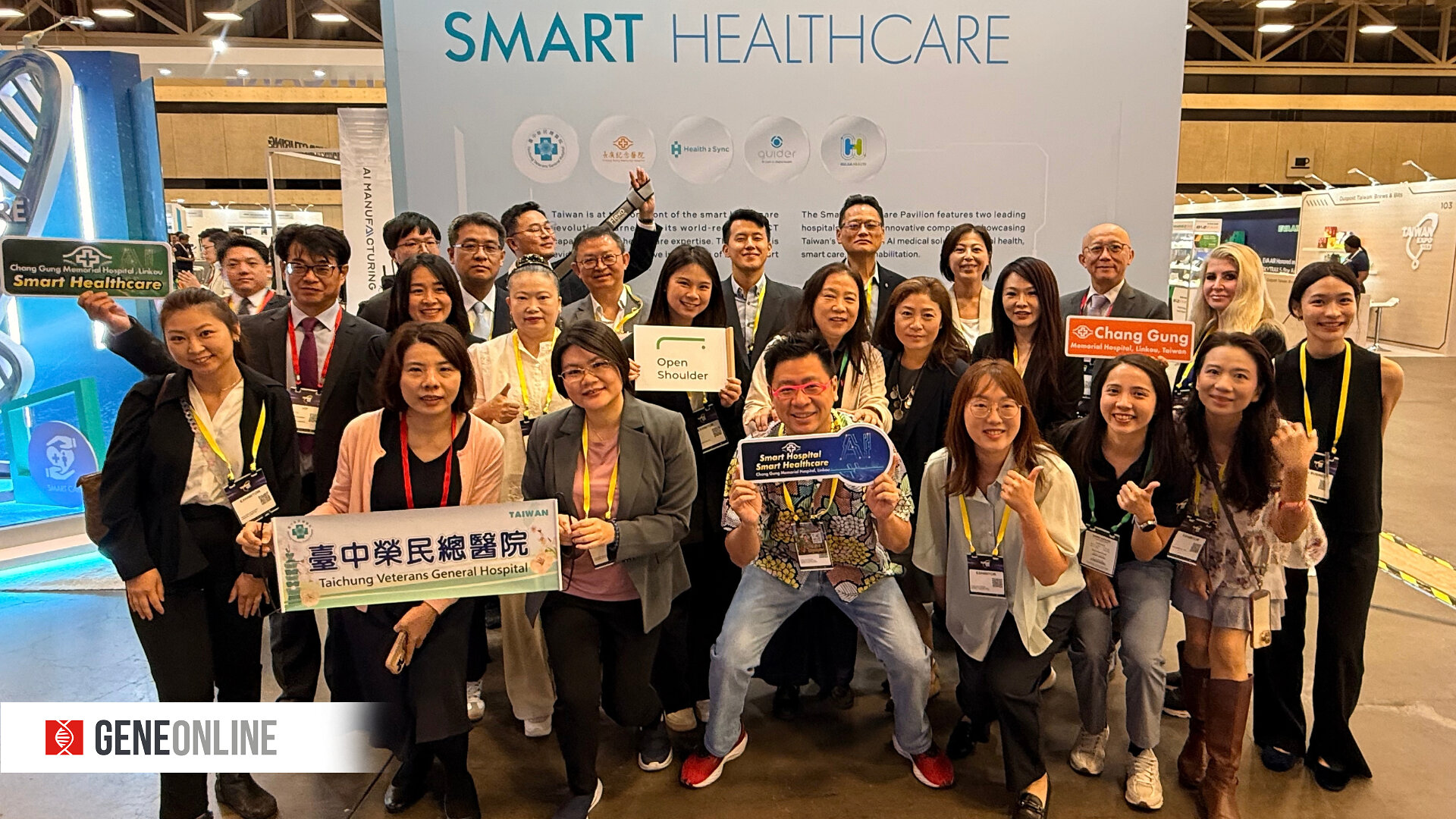
That challenge was at the center of the Smart Healthcare Pavilion at Taiwan Expo USA 2026, organized by the International Trade Administration (TITA), Ministry of Economic Affairs (MOEA), and implemented by the Taiwan External Trade Development Council (TAITRA) as reported live on-site by GeneOnline. The Expo was held September 24–26 at the Kay Bailey Hutchison Convention Center Dallas.
Ten Taiwanese hospitals and health-tech companies brought technologies spanning chronic-disease management, hospital AI, remote monitoring, elder care, medical computing and rehabilitation, but they arrived at markedly different stages of U.S. expansion. Some were looking for their first American clinical or commercial partners; others already had FDA-cleared or listed products, U.S. customers, pilots or operations on the ground.
TAITRA Chairman James C. F. Huang placed that effort within the Expo’s wider push toward U.S.–Taiwan industrial collaboration. “Texas stands as Taiwan’s premier U.S. investment hub, and Dallas is where we lay deep, shared foundations,” Huang said at the opening. “This is co-innovation in action.”
For healthcare, that co-innovation has practical requirements. A Taiwanese AI model may need American clinical data; a monitoring device may need FDA clearance; a care platform may require local installation and service; and even an established product still has to solve a problem important enough for hospitals to change existing workflows. The ten exhibitors in Dallas offered a cross-section of how Taiwan’s health-tech sector is approaching those barriers — and how its traditional strengths in hardware and manufacturing are increasingly being combined with software, clinical data and technologies developed inside hospitals.
Health Technology: Turning the Months Between Doctor Visits Into Usable Data
For H2 Inc., also known as Health2Sync, the problem begins between appointments. Patients with diabetes and other chronic conditions can generate months of glucose, blood-pressure, weight, diet and exercise data while physicians may have only minutes to assess their condition during a visit. “Most people with chronic diseases go back and see doctors once every two to three months,” said Erin Chung, Vice President of Business Development at Health2Sync.
The company’s platform combines a patient application with a cloud-based system for healthcare providers, aggregating information from connected devices while using AI to interpret some of the behavioral data generated at home. Its meal-analysis function, for example, can analyze food photographs and help users connect dietary choices with changes in glucose. The aim is not to replace the physician visit but to make the period between visits more visible, giving patients information they can act on while providing clinicians with a more organized longitudinal picture.
Health2Sync remains relatively early in its U.S. expansion and used Dallas to explore relationships with primary-care providers, clinics, accountable care organizations, software platforms and payers. Its experience in Taiwan is central to that proposition. “When it comes to technology, Taiwan is always known for hardware,” Chung said. “But when we talk about the healthcare industry, specifically digital health, I think that Taiwan provides a perfect environment for product development and innovation.”
That point extended beyond Health2Sync. Taiwan’s digitized healthcare environment gives companies an opportunity to develop products alongside healthcare providers and clinical data, but the U.S. question is whether those models can translate into a substantially different reimbursement and delivery system.
Smart Hospitals: Taking AI Beyond the Institutions That Developed It
For Taichung Veterans General Hospital (TCVGH) and Chang Gung Memorial Hospital, the challenge is different. Neither is a conventional technology vendor. Their systems emerged from problems encountered directly in clinical practice, making international validation and commercial partnerships critical if those technologies are to move beyond the hospitals that developed them.
At TCVGH, AI development has become an institution-wide strategy. “In my hospital, the policy is that we should ask every department to have at least one AI project,” said Deputy Superintendent Yuan-Hwa Chou, MD, PhD, noting that the hospital has 55 departments. That approach has produced applications spanning emergency care, urine analysis, sleep-related conditions and other specialties.
One system presented in Dallas uses contactless facial analysis to help assess pain and identify potentially acute illness in the emergency department. Its relevance is operational: high-volume emergency departments must continuously determine which patients require attention first, while clinicians cannot manually observe everyone at all times. TCVGH reported 86% specificity in recent data for identifying acute critical illness and is seeking further validation across different healthcare settings.
That next step exposes a central issue for hospital-developed AI. A model developed around Taiwanese patients and workflows cannot simply be assumed to perform identically in another population or healthcare system. As a public hospital, TCVGH can develop and clinically evaluate technologies, but bringing them beyond the institution requires external partners. “We have to collaborate with the company,” Chou said.
Chang Gung Memorial Hospital faces a similar validation question with an AI system for HER2 FISH assessment in breast cancer. Conventional assessment requires pathologists to manually examine a limited selection of cells, while Chang Gung’s approach analyzes cells across a broader slide area to better account for tumor heterogeneity. The technology has been developed predominantly using Taiwanese data, with additional Japanese cases.
“Our data currently only use the Taiwanese data, and some part of it we use Japanese, but it’s also Asian,” the Chang Gung team said. “We lack American and European data, so we also seek collaboration.”
Chih-Che Donti Lin, MD, PhD, Vice Superintendent and Professor of Surgery, described the hospital’s direction around both validation in American populations and partnerships capable of moving hospital-developed technologies toward the U.S. market. The HER2 technology has patent protection in Taiwan, while its U.S. patent process is underway. Chang Gung also used its Dallas presence to discuss advanced surgical capabilities and international medical collaboration, making its U.S. strategy as much about connecting hospitals, specialists and patient populations as exporting an individual technology.
Together, TCVGH and Chang Gung illustrate a distinctive part of Taiwan’s health-tech pipeline: hospitals are not simply end users of technology but sources of it. Their difficulty comes later, when a clinically useful system needs broader datasets, regulatory pathways and commercial partners to move outside the environment where it was created.
Smart Care: Extending Monitoring When Staff Cannot Be Everywhere
Workforce pressure connected the four companies in the pavilion’s Smart Care segment. Their technologies differed, but each addressed a variation of the same constraint: hospitals and care facilities cannot continuously increase staffing as the amount of patient information requiring attention grows.
Onyx Healthcare Inc. approached the problem through medical computing and workflow. Unlike several exhibitors still establishing their U.S. strategy, the company already has a substantial American presence. “We have actually been in the U.S. for ten years, so it’s been a while,” said Carol Tiernan of Onyx Healthcare USA.
Its Dallas portfolio included the Venus mobile nursing workstation, which combines computing, swappable batteries and configurable peripherals in a mobile system. The value lies less in any single hardware component than in reducing the number of separate systems nurses must navigate while delivering care. “We make medical AI practical and deployable,” Tiernan said. “We help hospitals improve workflow efficiency, reduce staff load and deliver safe patient care.”
Onyx also presented Casper AI, a contactless monitoring system that uses sensors around the patient environment to track movement, restlessness, bed exits and other indicators. Those signals can be converted into risk information for nursing teams without requiring another wearable on the patient. With Onyx equipment already present in U.S. hospitals, including VA facilities, Dallas was about expanding an existing footprint rather than testing whether a U.S. market exists.
VitalSigns Technology Co., Ltd. addresses the same staffing constraint after the patient leaves a continuously monitored environment. “Cardiac risk is always happening with or without you watching,” said CEO Rich Lee. “That is the key problem we are solving.”
Patients in intensive-care and telemetry beds have access to continuous cardiac monitoring, but someone discharged after treatment may remain at cardiovascular risk without the same infrastructure. VitalSigns’ device received U.S. FDA clearance in 2025, and the company said its first American rollout is underway in Texas through a local partner. It is now pursuing another U.S. clearance for its software platform while developing post-discharge and hospital-at-home applications.
“At home, you need something,” Lee said. “We are filling that gap right now.” That puts VitalSigns beyond initial regulatory entry and into the next question: how continuous monitoring can fit into post-discharge care without recreating the hospital around the patient.
For GuiderCare Co., Ltd., the issue is not continuous cardiac surveillance but deciding which people in a large care population need attention first. “We have hardware and software for saving manpower,” said Jennifer Chen, PhD, Chairman of GuiderCare. Its platform can collect blood pressure, oxygen saturation, body temperature and environmental information across large populations, with Chen saying it is already used in Japanese senior nursing homes and can manage information from “maybe 500 senior people at one time.”
The significance is prioritization rather than simply collecting hundreds of readings. Instead of asking nursing staff to manually check every resident with equal frequency, the software can surface those whose data indicate greater urgency. The company also sees applications beyond elder care, including occupational-health settings where large workforces need scalable health monitoring.
Huijia Health Life Technology Co., Ltd. removes the wearable altogether. Its optical-fiber sensor is positioned beneath a mattress and can detect signals including heartbeat, respiration, movement, coughing and patient turning. Frontline caregivers can receive simplified alerts, nursing stations can monitor current status, and physicians can review longer-term trends. The system can also record repositioning of bedridden patients, helping staff identify when a patient should be turned while documenting whether that care occurred.
“This one helps to solve the shortage of caregivers and human resources. That’s a global trend,” said HuiJia President Jean Yang. “The whole solution helps them reduce manpower input and increase care quality.”
HuiJia received Taiwan medical-device licensing in 2025 and is pursuing a U.S. FDA pathway for hospital applications, but its American strategy already extends beyond regulation. The company operates a showcase center in Phoenix and used its Texas visit to evaluate another potential location in Dallas or Houston. When asked which city was gaining more support, Yang’s answer was concise: “Dallas wins.”
Its requirements also demonstrate why entering a foreign healthcare market involves more than regulatory clearance. HuiJia needs partners with access to hospitals and care facilities, but also local providers capable of installation, wireless configuration, caregiver training and after-sales support. The sensor may be contactless; its business model is not.
Smart Medical Devices: Making Rehabilitation More Measurable
The Smart Medical Devices segment shifted the discussion from monitoring toward rehabilitation and product development, but the underlying issue remained similar: how to extend clinically useful information beyond the facility.
For Open Shoulder Inc., that gap occurs when patients go home with prescribed rehabilitation exercises. Clinicians have limited visibility into whether those exercises are performed correctly or consistently, so the company combines rehabilitation hardware with digital tracking. Patients can access prescribed exercises through a QR code, while activity is recorded for subsequent review by physicians or therapists.
Co-Founder Allen Hsu described that feedback loop as central to the system: home rehabilitation becomes something the clinical team can follow rather than an activity that disappears between appointments. Open Shoulder has also developed a smart shoulder wheel capable of tracking movement parameters and resistance, while a newer version synchronizes electrical stimulation with shoulder movement. The broader shift is from providing exercise equipment alone toward generating data about how recovery progresses outside the clinic.
The company is now looking for hospitals, rehabilitation clinics, insurers and health-technology partners while working toward its U.S. regulatory pathway.
FREE Bionics Taiwan Inc. is approaching the U.S. from a different stage. Although it sells internationally in more than 25 countries, the company is entering the American market with a rehabilitation system carrying a lower regulatory burden rather than immediately introducing its FREE Walk lower-limb exoskeleton. The strategy allows it to establish relationships with distributors, hospitals and clinics before taking its more complex technology through a Class II pathway requiring additional clinical work.
“The fastest is next year,” said Felicia Yeh, International Business Development Specialist at FREE Bionics Taiwan, discussing the potential timeline for the exoskeleton. “We want this to have some market in the U.S. first. We have some sales of this in the U.S. and then build out the relationship and bring the full solution.”
Yeh also raised a perception of Taiwan that surfaced elsewhere in the pavilion. “They only thought we do R&D or only the manufacturing,” she said of some U.S. conversations. “They didn’t connect that we’re doing R&D and manufacturing all in Taiwan.” For FREE Bionics, those capabilities sit together across a pipeline spanning robotic mobility, rehabilitation and assistive technologies for older adults.
Hukui Biotechnology Co., Ltd. represented the infrastructure behind that development model. Rather than focusing solely on an individual device, it provides capabilities spanning hardware, software, AI training, database development, manufacturing and regulatory support.
“In short, we can provide a one-stop service,” said James Li Chen, Sales Division Business Development Director at HUKUI Group. “From manufacturing to registration.”
The model draws on Taiwan’s concentrated electronics supply chain. Medical-device developers can use HUKUI for individual stages or a broader pathway encompassing engineering, verification, manufacturing and regulatory work that might otherwise be divided among several vendors. “We have a very close relationship with Taiwan’s electronic manufacturing supply chain,” Chen said. “We can actually build from zero to one hundred.”
The harder problem, he acknowledged, can be commercial rather than technical. “The difficult part is finding the right customers because most of the products we do are pretty new.” HUKUI therefore used Dallas to seek healthcare and biotechnology distributors and decision-makers capable of connecting development capabilities with clinical demand. Its presence widened the pavilion’s proposition beyond exporting Taiwanese-branded products: Taiwan can also provide the engineering and manufacturing infrastructure behind technologies developed with international partners.
From Taiwanese Development to U.S. Deployment
Taken together, the four sections of the Smart Healthcare Pavilion showed why “entering the U.S.” is not a single milestone. Health2Sync is determining how a chronic-care model developed in Asian healthcare systems fits American provider and payment structures. TCVGH and Chang Gung need diverse populations and institutional partners to validate hospital-developed AI. VitalSigns has crossed its first FDA threshold and is moving into deployment, while HuiJia needs local service infrastructure. FREE Bionics is sequencing its regulatory strategy, and Onyx is expanding from an established U.S. base.
The technologies are different, but the industry challenge is shared: moving from a product that works in Taiwan to one that can function clinically, commercially and operationally in the U.S. That requires more than hardware. It requires clinical evidence, software, regulatory strategy, local partners, service networks and, in some cases, new data.
That gives Huang’s broader description of Taiwan Expo particular relevance to healthcare. “Last year, Taiwan’s technology mothership made its first landing in Texas,” the TAITRA chairman said. “This year, it has returned with an entire fleet.” The 155-company “fleet” extended well beyond healthcare, but the Smart Healthcare Pavilion illustrated the idea at industry level: hospitals, digital-health developers, monitoring companies, rehabilitation specialists, medical-computing providers and manufacturers occupying different parts of the same ecosystem.
“Texas brings scale, Taiwan brings precision,” Huang said. “This is not technology simply being displayed. This is technology ready to work.”
Healthcare puts a particularly high bar on that claim. A technology can function technically and still fail clinically or operationally; an AI model needs appropriate validation, a medical device needs the right regulatory pathway, and a monitoring platform still has to fit the people and workflows expected to use it. The more significant proposition in Dallas was therefore not ten individual products, but the combination of clinical expertise, digital health, hospital-developed AI, sensing, medical hardware and manufacturing capacity behind them.
The next measure of progress will come away from the exhibition floor — through validation studies, regulatory clearances, hospital pilots, distribution agreements and local service networks. Some of the ten participants are still establishing U.S. market fit; others are already operating inside American hospitals, homes or care systems. The distance between technology developed in Taiwan and technology routinely used in U.S. healthcare is ultimately the more meaningful measure of where the sector is heading.
SOURCE GeneOnline