“This is definitely a case of environmental injustice,” she said. “If they had access to capital, to land, to nondiscriminatory regulations and practices, to financial assistance, they might be able to be farmers themselves. But they’re not.
“And if they had legal status and they weren’t being demeaned because of their immigration status, if they weren’t experiencing horrible conditions in their home countries, they might be farmers themselves. But they are relegated to being farmworkers because they are at the behest of government and the system.”
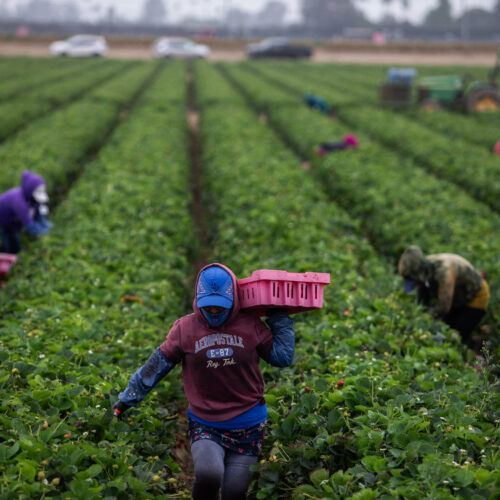
Farmworkers are at risk whether or not they work directly with pesticides, and field workers who do not directly handle the chemicals account for the majority of reported poisonings, the Union for Concerned Scientists said in its report. Many employers do not post adequate warnings about fields that recently were sprayed and fail to provide protective gear or trainings on how to use it, the report said. Other research shows that protective PVC gloves actually can break down as temperatures increase and become less impervious to the chemicals. Family members or other close contacts can be exposed when they encounter residue on farmworkers’ skin and clothing.
Chronic pesticide exposure is associated with cancer, depression, diabetes, neurodegenerative diseases, and reproductive issues, according to the Union for Concerned Scientists report.
“We tell people, don’t pick up your children when you get home until you take your clothes off and take a shower, because you’re going to contaminate your kids,” Economos said.
Heat is the leading weather-related killer in the United States. Every year, thousands of US workers suffer heat-related illnesses and injuries. A total of 1,042 worker deaths related to heat were documented between 1992 and 2022, an average of 34 annually, according to the Occupational Safety and Health Administration (OSHA), citing the Bureau of Labor Statistics.