, /PRNewswire/ — A news report from english.shanghai.gov.cn
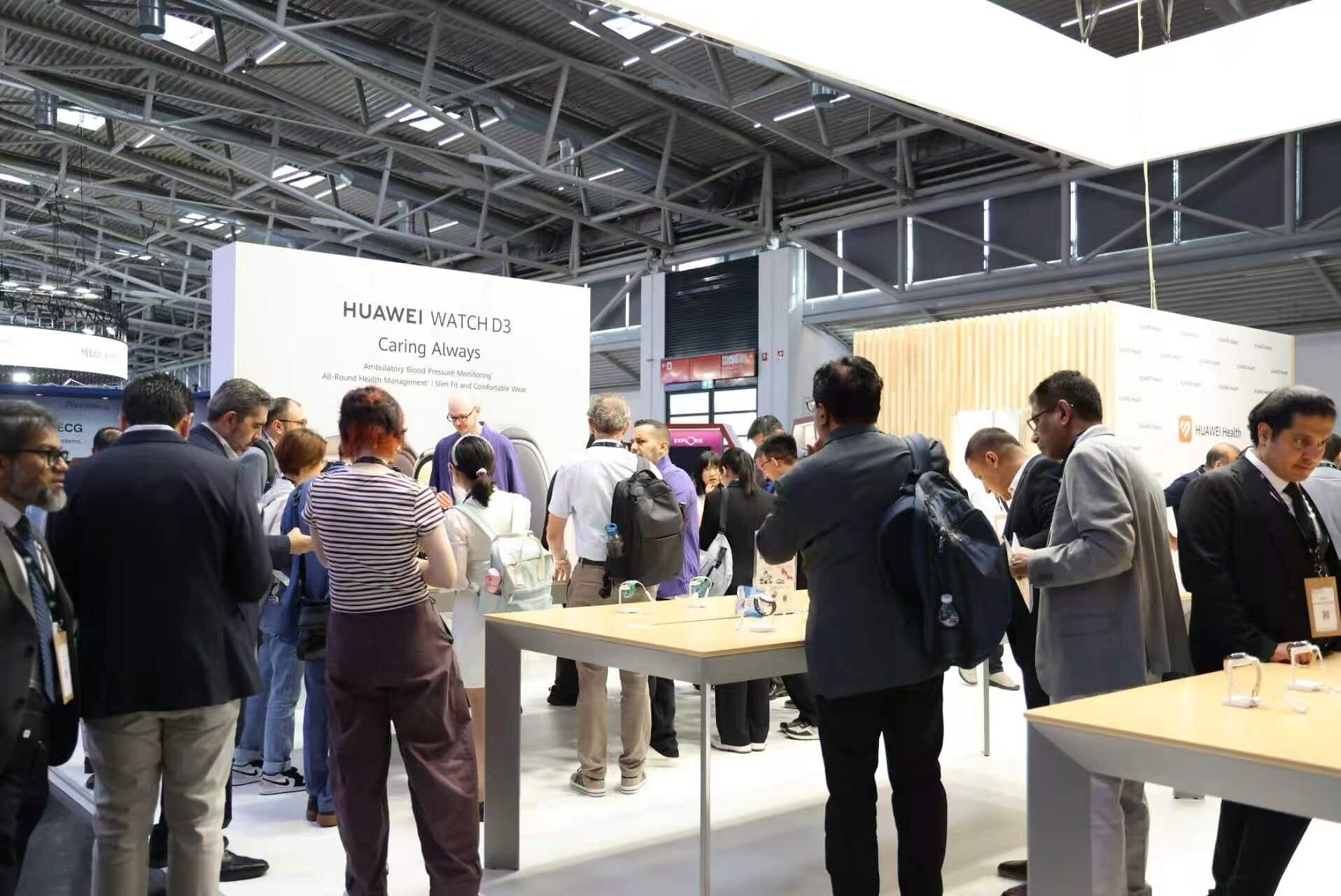
As Bill Reichert walked through the exhibition halls of the 2026 World Artificial Intelligence Conference (WAIC), AR glasses demonstrating real-time Chinese-English subtitles immediately caught his attention.
“It’s as if I were anywhere else in the world that actually speaks English,” said Reichert, a partner at US-based Pegasus Tech Ventures, describing the experience as a “wow moment”.
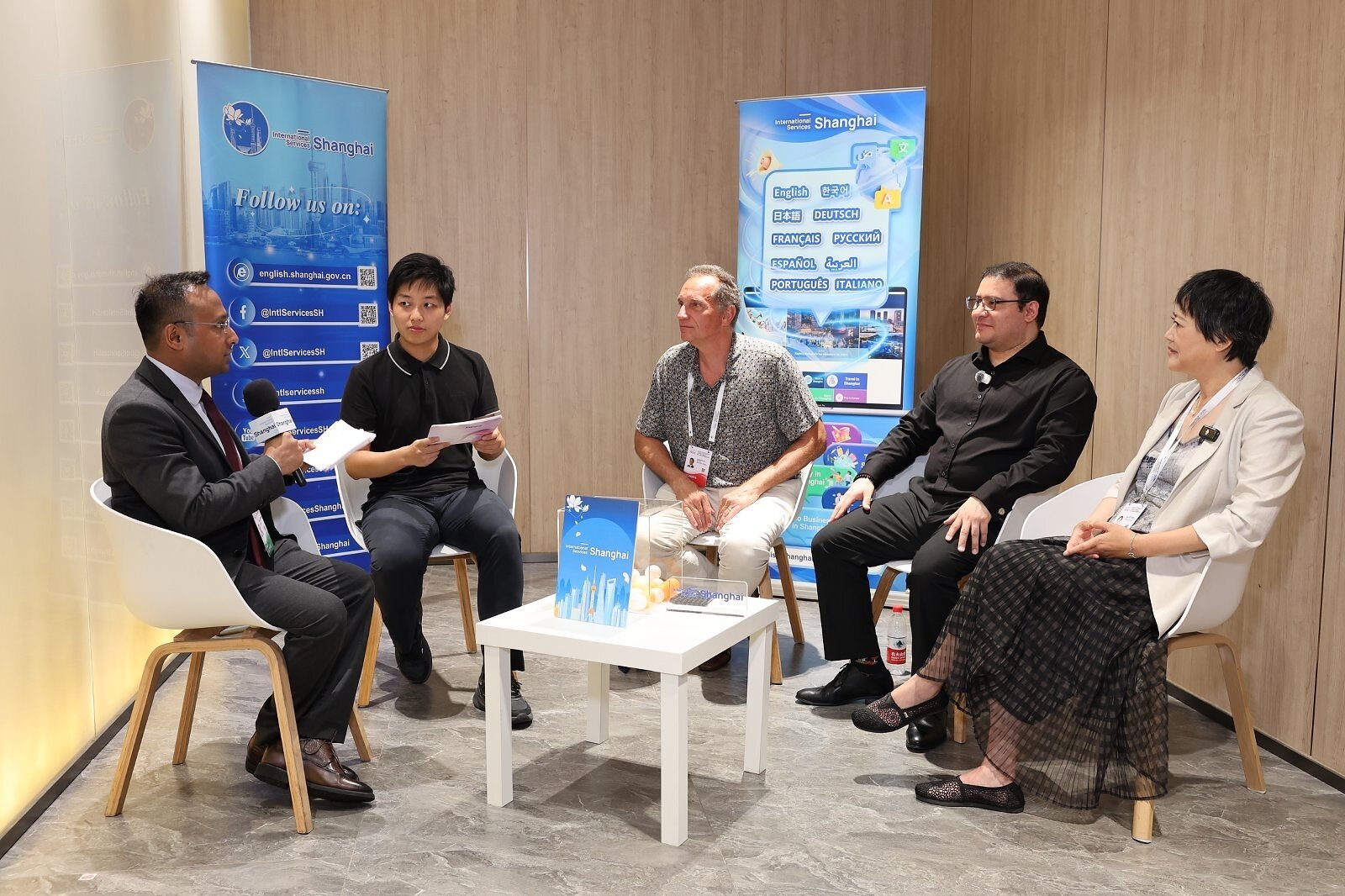
Reichert was among the featured speakers at the “WAIC UP! 2026 Youth Dialogue”, a side event of the 2026 WAIC and the High-Level Meeting on Global AI Governance, held in Shanghai from July 17 to 20.
Organized by China Daily’s Business Development Department and co-organized by International Services Shanghai, the dialogue brought together international thought leaders, entrepreneurs, and experts to discuss not only the frontiers of AI, but also the conditions that enable innovation to flourish, including access to talent, investor networks, policy support, and everyday services.
“AI is going to flatten the world, being able to connect with anyone in any language,” Reichert said.
For Reichert, who has visited China regularly since 2012, the real revelation lay beyond the technology itself. In that demonstration, he saw a metaphor for what Shanghai offers: a place where linguistic, cultural, and professional barriers are actively dismantled.
As the dialogue continued, participants reached a shared conclusion: As the host city of the annual WAIC, Shanghai is not merely adopting AI; it is building an environment where global talent can connect, create, and thrive without the friction often associated with cross-border collaboration.
AI as an enabler
Gary Dvorchak, managing director of The Blueshirt Group and head of its Asia practice, came to WAIC expecting to see impressive technology. The conference exceeded his expectations. AI had already reduced costs and accelerated workflows in his industry in ways he had not anticipated.
But what truly struck him was the prevailing attitude among the exhibitors, entrepreneurs, and visitors he met: an eagerness to experiment and adopt.
“There’s no fear of AI here,” he said. “Everyone is embracing it and thinking about how they can use it to make life better.”
Tong Huiqi, a clinical psychologist and clinical professor at Stanford School of Medicine, shared how she uses an AI-assisted documentation system to free herself from note-taking during consultations.
“My clients love it because AI allows me to be 100 percent connected with them,” Tong said.
For Costa Rican conductor Edwin Montealegre, AI has already become a creative collaborator.
“I use AI to brainstorm ideas,” he said. “It gives me more time for artistic inspiration, for connecting with people, and for myself.”
Shanghai as an incubator
Yet Montealegre was equally quick to praise Shanghai’s practical support systems. While establishing his company in the city, he encountered a bureaucratic hurdle he couldn’t resolve on his own. He turned to International Services Shanghai, a platform designed to help expatriates navigate work, business, and daily life, and the issue was resolved promptly.
“It helped me a lot at the beginning, when I was establishing our company,” he said.
For Montealegre, Shanghai’s appeal lies not only in its creative energy but also in the practical infrastructure that supports international professionals.
The sentiment was echoed by Tong.
“There’s the beauty, there’s the openness, there’s the romance,” she said, adding that the warmth of the city’s residents and the sense of connection she found there made Shanghai especially welcoming.
For Rupert Hoogewerf, chairman of Hurun Inc, Shanghai’s international outlook sets it apart. He pointed to the city’s universities, investor community, deep talent pool, and established companies as key pillars of an ecosystem where startups can launch, grow, and scale. Supportive policies for overseas returnees further strengthen its appeal.
“You can feel that the government is really encouraging young people to explore AI, understand it, use it, and think about how to make it better,” he said.
Having founded his business in Shanghai in 1999, Hoogewerf’s experience reflects the city’s ability not only to attract global talent but also to retain it. “The ability to build a company and draw on a deep pool of talent has helped me remain here over the long term,” he said.
Looking ahead, Hoogewerf believes the opportunities in China’s AI sector remain widely underestimated. He described Shanghai as “a great incubation platform” where talent, capital, established businesses, and policy resources converge. At WAIC, he met entrepreneurs running one-person companies using AI tools, alongside others applying AI to traditional sectors such as metals and minerals analysis.
“There is a massive transformation going on,” he said. “You can apply AI in lots of different places.”
SOURCE english.shanghai.gov.cn