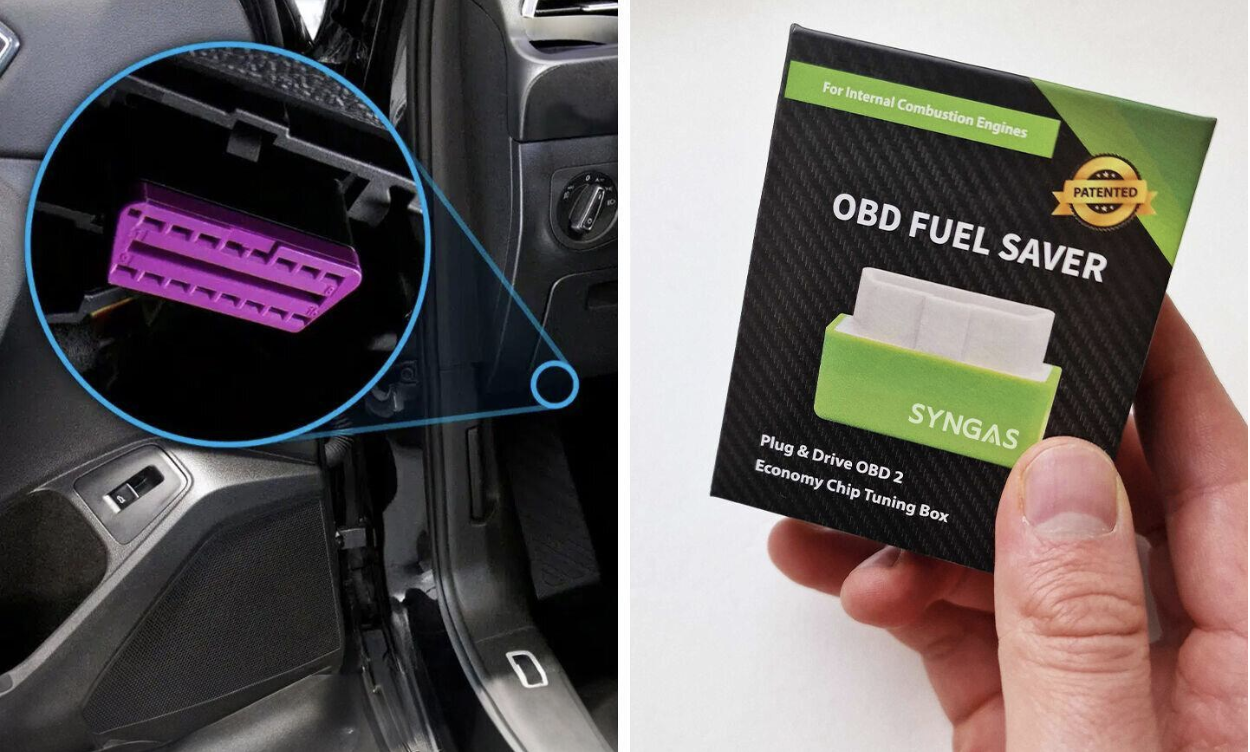
As fuel prices continue to strain household budgets across the United States, one fuel-saving gadget has been drawing significant consumer attention in 2026: the SynGas OBD Fuel Saver.
SynGas
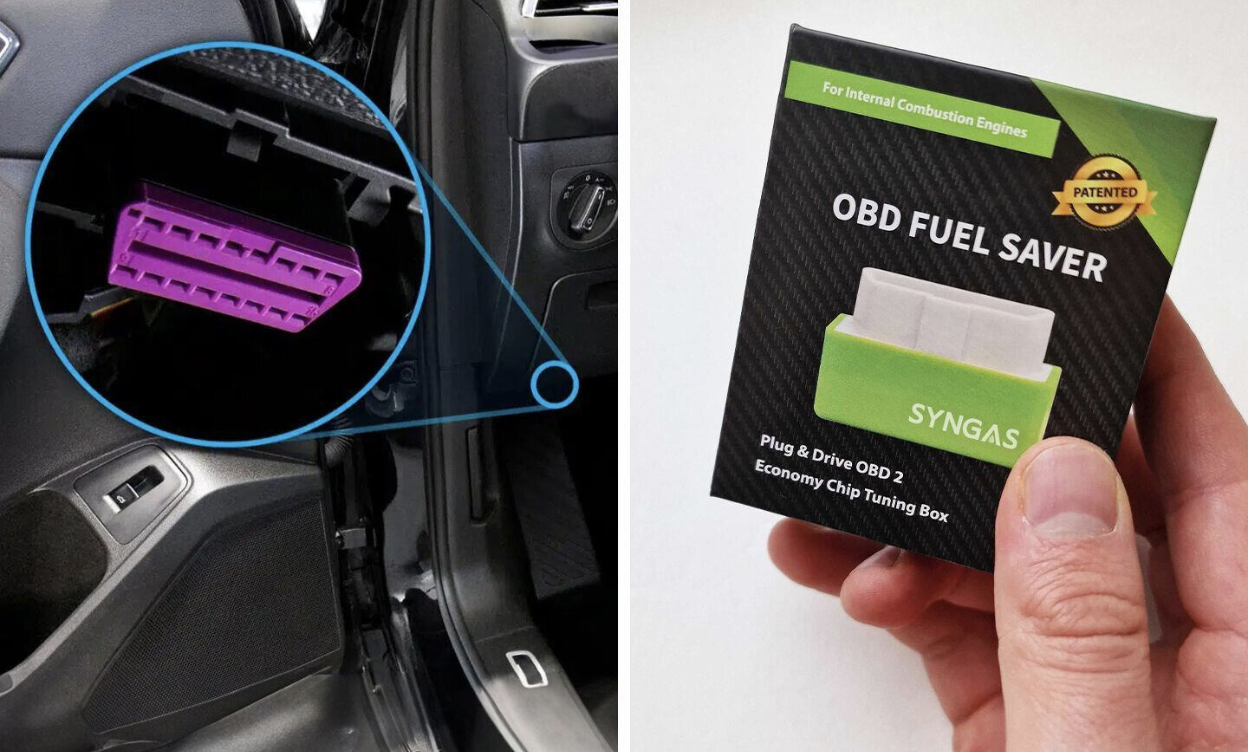
New York City, NY, May 25, 2026 (GLOBE NEWSWIRE) — The Syngas is a compact plug-in device, compatible with virtually all vehicles manufactured after 1996 that claims to reduce fuel consumption by optimizing the way a car’s onboard computer manages engine performance. With the average American spending over $2,500 annually on fuel, the appetite for practical, affordable alternatives to simply paying more at the pump has never been stronger.
This analysis analyzes the SynGas OBD Fuel Saver in depth: the technology it uses, what SynGas reviews and independent driver assessments reveal about its real-world performance, how it compares to alternative fuel-saving approaches, and whether the device works for the millions of American drivers dealing with persistent fuel cost pressures. Driver reviews gathered from verified purchase records, consumer forums, and independent automotive assessments form the backbone of the findings presented here.
The findings point to a product with a legitimate technical foundation, a growing body of positive firsthand accounts from drivers across different vehicle types, and a 30-day money-back guarantee that removes the financial risk from trying it. For drivers who have exhausted the alternatives and are looking for something that actually addresses fuel efficiency at the engine management level, the SynGas OBD Fuel Saver merits serious consideration.
What Is the SynGas OBD Fuel Saver?
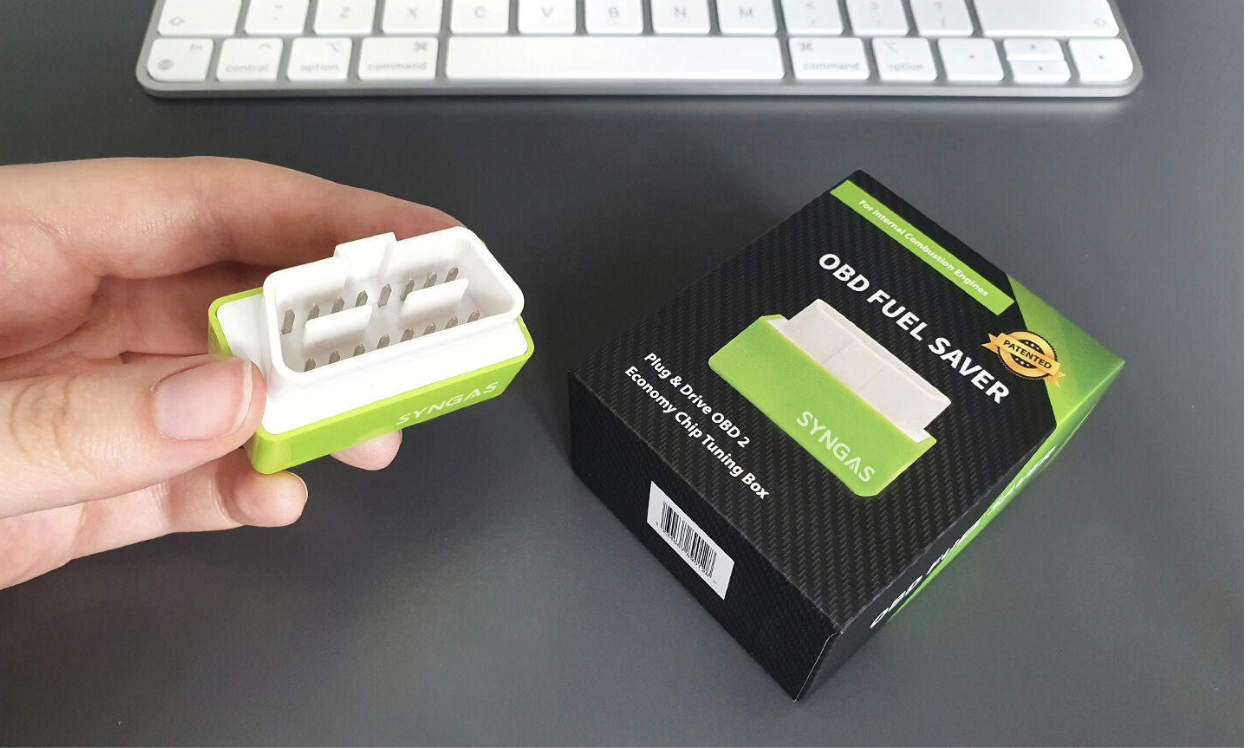
The SynGas OBD Fuel Saver is a portable device, roughly the size of a USB thumb drive, designed to connect to the OBD2 diagnostic port found in virtually all passenger vehicles, trucks, and SUVs manufactured in the United States after January 1, 1996, and in European vehicles manufactured after 2001. Once connected, it interfaces with the vehicle’s electronic control unit, the onboard computer that governs every major aspect of engine operation, and begins a progressive optimization process designed to reduce unnecessary fuel consumption.
The device is manufactured and sold by SynGas, a US-based company reachable at support@get-syngas.com. It is distributed and sold through the company’s official online channel and requires no tools, no professional installation, and no technical knowledge to operate. The entire setup process takes under three minutes.
The justification behind SynGas is rooted in a well-established reality of modern automotive engineering: factory ECU calibrations are deliberately conservative. Automakers program engine management systems to perform adequately across the widest possible range of driving conditions, fuel qualities, loads, and climates. That breadth of compatibility comes at a cost: efficiency. For any given driver, in their specific vehicle, driving their typical routes, the factory ECU settings are almost certainly leaving fuel economy on the table.
SynGas claims to address that gap by reading live performance data from the vehicle’s sensor network through the OBD2 interface and making progressive, vehicle-specific adjustments to fuel delivery, timing, and throttle response. The manufacturer states that full optimization takes approximately one week or 150 miles of normal driving, during which the device builds a behavioral profile of the vehicle and its driver before applying its most tailored efficiency settings.
The device is compatible with gasoline, diesel, and hybrid vehicles equipped with a standard OBD2 port. It is also confirmed to be compatible with keyless push-button start vehicles. It draws power through the OBD2 port, enters a low-power standby mode when the ignition is off, and requires no ongoing subscription, software updates, or recurring costs beyond the initial purchase.
How The SynGas Works: How SynGas Interfaces with the ECU
Understanding whether the SynGas OBD Fuel Saver can deliver on its claims requires understanding both the OBD2 interface it uses and the specific engine management parameters it targets.
The OBD2 port, mandated by the US Environmental Protection Agency since the 1996 model year, was originally designed to give mechanics and emissions testers standardized access to vehicle diagnostic data. It provides a real-time window into the continuous data stream generated by a vehicle’s sensor network: engine load, throttle position, oxygen sensor readings, coolant temperature, mass airflow, injection timing, and more. This same interface is what professional ECU tuners use when remapping a vehicle’s engine management software at a specialist workshop.
SynGas connects to this interface and, according to the manufacturer and independent technical reviews, engages in genuine bidirectional communication with the vehicle’s ECU rather than simply drawing power through the port passively. Passive OBD2 devices that merely occupy the port and display a blinking LED without genuine ECU communication are quite common online, as multiple independent product reviews in the automotive accessories space have confirmed. SynGas’s technical claims involve actual data exchange and parameter adjustment, which is the same mechanism that professional chip tuning and ECU remapping services use.
The manufacturer claims that full optimization produces fuel consumption reductions of 15% to 35% under typical driving conditions, with an upper boundary of 55% under optimal circumstances. Independent driver accounts, and real-world reviews suggest that real-world improvement for most drivers sits in the 15% to 35% range, with older vehicles and larger engine types tending toward the higher end of that range.
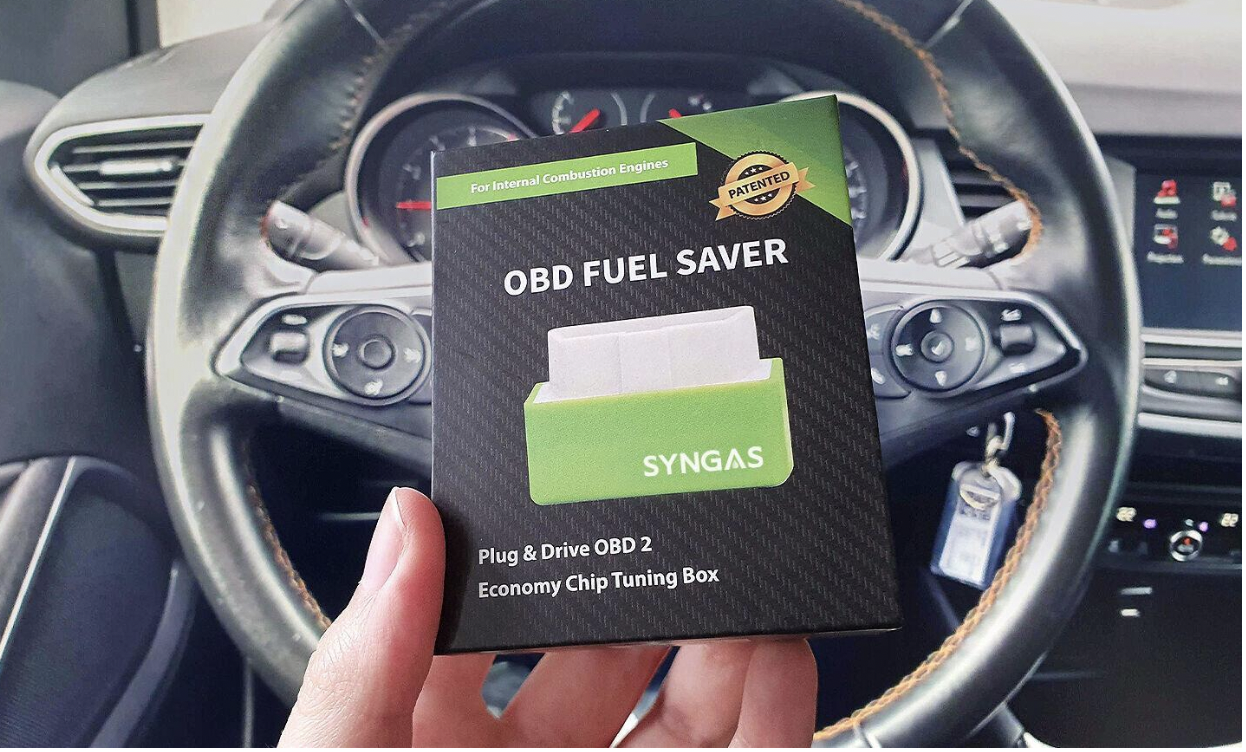
Key Features of the SynGas OBD Fuel Saver
- Universal OBD2 Compatibility: The device works with all vehicles equipped with a standard OBD2 port manufactured after 1996 in the US or after 2001 in Europe. This includes cars, trucks, SUVs, crossovers, vans, and light commercial vehicles across all major manufacturers and engine types.
- Plug-and-Play Installation in Under Three Minutes: No tools, no mechanic, no technical knowledge required. Locate the OBD2 port under the dashboard below the steering column, insert the SynGas device, confirm the LED indicator activates, and drive. The complete installation process takes less time than a typical gas station stop.
- Adaptive Learning Over 150 Miles: Rather than applying a generic optimization profile, SynGas builds a vehicle-specific and driver-specific calibration over approximately the first 150 miles of use. This adaptive approach means the optimization is tailored to how that particular vehicle is actually driven rather than how a theoretical average driver might use it.
- Real-Time Bidirectional ECU Communication: The device actively communicates with the ECU rather than operating as a passive accessory. This real-time data exchange is what enables the device to make meaningful adjustments to fuel delivery and engine management parameters rather than simply monitoring performance.
- Gasoline, Diesel, and Hybrid Compatibility: SynGas operates across all three primary powertrain types equipped with OBD2 ports. It works beyond gasoline-only compatibility.
- Keyless Start Vehicle Compatibility: Modern vehicles using push-button keyless start systems are fully compatible with the SynGas OBD Fuel Saver, addressing one of the most commonly asked compatibility questions from prospective buyers.
- Zero Ongoing Costs: The SynGas OBD Fuel Saver is a one-time purchase. There are no app subscriptions, no firmware update fees, no replacement consumables, and no recurring costs of any kind. Once purchased, it works silently and continuously for as long as it remains installed.
- Fully Reversible with No Permanent Changes: The device makes no permanent modifications to the vehicle’s ECU firmware or hardware. Removing it at any time immediately restores factory default ECU settings. This reversibility is particularly important for drivers concerned about warranty implications.
How to Install the SynGas OBD Fuel Saver
Installation requires no tools, no technical knowledge, and no mechanical experience.
Locate the OBD2 port under the dashboard below the steering wheel column. The port is a 16-pin trapezoidal connector, standardized across all compatible vehicles. Turn the ignition to the “on” position without starting the engine, or for keyless-start vehicles, press the start button once without depressing the brake pedal. Plug the SynGas device into the OBD2 port. Start the vehicle and drive normally.
For the next 150 miles, drive your typical routes without modifying behavior. The device needs real-world driving data from your actual usage patterns to build an accurate calibration profile. Begin tracking fuel economy from this point, recording miles driven and gallons used at each fill-up. Compare mpg across two to three consecutive fill-ups after the calibration period completes against your pre-installation baseline.
The device should remain installed and plugged in continuously for ongoing optimization. Removing it at any time immediately returns the ECU to factory default settings. If you move the device to a different vehicle, the calibration resets and the 150-mile learning period begins fresh.
Who Should Consider the SynGas OBD Fuel Saver?
Based on user-reported outcome data and the device’s technical profile, certain driver categories consistently see the best results.
- High-mileage commuters driving 30 to 50-plus miles daily accumulate fuel savings quickly and typically recover the device cost within two to three weeks of installation.
- Owners of older vehicles from the late 1990s through mid-2000s benefit most from the optimization potential available in older ECU calibrations.
- Truck and large SUV owners, whose factory ECU calibrations prioritize towing and payload over economy, consistently appear at the positive end of user-reported improvement ranges.
- Drivers without a realistic path to EV or hybrid vehicle ownership in the near term who want immediate, affordable fuel cost reduction from their current vehicle.
Visit SynGas Official Website To Check Pricing And Current Availability
Who Shouldn’t Consider the SynGas OBD Fuel Saver?
Those who are not willing to wait for about a week for the calibration period to be complete should not bother making the purchase. Also, the device is less likely to produce large percentage gains for owners of very recent vehicles with already-sophisticated factory ECU calibrations and advanced fuel-saving technologies already built in. Gains exist but tend to be more modest.
What Drivers Are Reporting About SynGas OBD Fuel Saver
SynGas reviews gathered from buyers across consumer platforms and driver forums reveal a consistent pattern that aligns closely with the device’s stated mechanism and claimed performance range. The most meaningful data on any automotive accessory comes from the drivers who have actually used it under real-world conditions, and published reviews from the SynGas buyer community provide a substantial and credible dataset for assessment.
A known buyer drives a 1999 Buick Regal with 180,000 miles on the odometer, the kind of vehicle where factory ECU calibrations are decades old and efficiency headroom is significant. Before installing SynGas, his fuel economy averaged 20 to 25 miles per gallon, depending on driving conditions. First full tank after the calibration period: 28 miles per gallon. Second tank: nearly 35 miles per gallon. This 40% to 55% improvement sits at the upper end of the manufacturer’s claimed range and reflects the pattern seen consistently with older, high-mileage vehicles where factory calibrations have the most space for optimization.
The pattern that emerges across most firsthand consumer reports is consistent with what published driver reviews of the SynGas OBD Fuel Saver describe across independent platforms: older vehicles, larger engines, and trucks tend to see the greatest improvement, while newer vehicles with already-sophisticated factory calibrations tend to see more modest but still present gains.
Reviews from truck owners are particularly consistent in reporting above-average improvement, reflecting the significant efficiency headroom available in large-displacement factory tunes. Drivers who allow the full 150-mile calibration period before evaluating results report significantly better outcomes than those who draw conclusions within the first few days of installation.
Does the SynGas OBD Fuel Saver Actually Work?
This is the main question in any honest assessment of the SynGas OBD Fuel Saver, and SynGas reviews from the verified buyer pool offer a direct, data-grounded answer. The short version: For the majority of users who allow the full calibration period and track results honestly, yes, it does. The longer version requires understanding both the mechanism and the realistic performance range.
Published user reviews corroborate the driver accounts described above. The technical mechanism the device claims to use is real and established in professional automotive practice. Communicating with the ECU through the OBD2 interface to adjust fuel delivery, injection timing, and throttle response calibration is exactly what professional ECU remapping services do at workshops, charging $300 to $800 for the procedure. The technology is not speculative but instead tried and true.
Whether a consumer-grade plug-in device can fully replicate the results of a professional workshop remap is what you should be interested in. Professional tuning services have access to proprietary mapping software, vehicle-specific data, and the ability to monitor results in controlled conditions. The SynGas device operates adaptively in real-world driving conditions, which means the quality of its optimization depends on the sophistication of its firmware and the variability of real-world driving.
The user-reported outcome data, combined with the product’s track record across thousands of buyers, suggests that the device does produce measurable results for the majority of users who allow the full calibration period. The realistic expectation for most drivers is improvement in the 15% to 35% range rather than the upper boundary of the manufacturer’s claimed maximum. Drivers of older vehicles and large trucks consistently report results toward the higher end. Drivers of newer, already-efficient vehicles with sophisticated factory calibrations report more modest improvement.
What the evidence does not support is any claim that the device fails to engage with the ECU at all or operates as a purely passive accessory. Multiple independent assessments of the device category confirm genuine OBD2 communication, and user-reported results across diverse vehicle types are consistent with the type of changes that ECU optimization produces.
The 30-day money-back guarantee is the most practical answer to the “does it work” question for any individual driver. The guarantee is structured to cover the full calibration period, meaning buyers who track their fuel economy properly across multiple tanks after the 150-mile window can make a fully informed decision before the return period closes. Independent buyer reviews consistently note that drivers who use the full 30-day window to evaluate the device report more accurate and positive outcomes than those who give up too early.
SynGas OBD Fuel Saver vs. Alternative Fuel-Saving Methods
Comparing the SynGas OBD Fuel Saver against available alternatives gives useful context for assessing its value.
Professional ECU remapping at a specialist workshop is the closest comparable service. A skilled tuner with the right mapping software can produce results similar to or exceeding what the SynGas device achieves, but typically at a cost of $300 to $800, with permanent ECU changes that may affect warranty and require the vehicle to be left at a workshop for hours or days. The SynGas device installs at home in under three minutes for under $40 and is fully reversible.
Fuel additives that claim to improve combustion or clean injectors are widely available at auto parts stores. Their effectiveness is inconsistent at best. In independent product assessments, they require ongoing repurchasing, and they operate on a chemical basis that does not address ECU fuel delivery parameters. SynGas is a one-time purchase that works at the engine management level.
Tire pressure optimisation, maintaining proper inflation to reduce rolling resistance, can improve fuel economy by 1% to 3% at no cost. Worth doing regardless of what other fuel-saving measures are used. It does not compete with the SynGas device; it complements it.
Hybrid or EV conversion offers the most dramatic fuel cost reduction but involves an investment of tens of thousands of dollars and is not practical for most vehicle owners in response to current fuel prices.
The SynGas OBD Fuel Saver occupies a uniquely accessible position: a professional-grade ECU optimization mechanism, consumer-accessible price, reversible installation, and a no-risk money-back guarantee.
Is the SynGas OBD Fuel Saver Worth the Investment?
At $39.99 for a single unit with current promotional pricing, the SynGas OBD Fuel Saver costs less than a typical full tank of gas for most vehicles. Driver reviews and financial outcome reports from the buyer community consistently support the investment case across different vehicle profiles and driving situations.
A driver spending $200 per month on fuel who sees a 20% improvement saves $40 per month. The device recoups its cost in approximately one month and continues generating savings on every fill-up thereafter. Over 12 months, that 20% improvement represents $480 in cumulative savings from a $39.99 purchase.
For drivers spending more or seeing larger percentage improvements, the results are even better. A truck owner spending $350 per month who sees 25% improvement saves $87.50 per month. The device pays back in two weeks. Annual cumulative savings approach $1,050.
The financial risk of trying the device is effectively zero given the 30-day money-back guarantee. Drivers who track their fuel economy properly before and after installation, allow the full calibration period, and see no meaningful improvement can return the device and recover their cost. Drivers who do see improvement have an investment that keeps generating returns for as long as the device stays in the vehicle.
Multi-unit pricing options reduce the per-unit cost for households with more than one vehicle. A two-unit purchase brings the per-unit cost to $34.99. A three-unit purchase drops it to $27.65. A four-unit purchase brings the per-unit cost to $24.85. For households with two or three vehicles all dealing with fuel costs, covering every vehicle in the garage makes more sense.
SynGas OBD Fuel Saver: Pros
Below are the benefits of the SynGas:
- Installation doesn’t involve any tools, technical expertise, or mechanics.
- An actual gateway for ECU communication and fuel distribution modification is provided by OBD2 connectivity.
- Wide compatibility
- Adaptive 150-mile calibration customizes optimization for every vehicle and offers a 30-day money-back guarantee for all package sizes.
- For households with several cars, multi-unit bundles significantly lower the cost per unit.
- The ECU is completely reversible by disconnecting the device; there are no long-term modifications.
- It is transportable if you switch cars and work with various vehicles.
- When the ignition is off, standby mode keeps the battery from draining.
Cons of SynGas
A few drawbacks of SynGas are captured below:
- Before a significant improvement is seen, the 150-mile calibration period must be completed.
- The maximum 55% stated reduction represents the best-case scenario
- Limited in stock, so hurry while the offer lasts
Price Of SynGas OBD Fuel Saver And Where To Buy
The SynGas OBD Fuel Saver is available exclusively through the official SynGas website. Third-party marketplace listings like Amazon and Walmart may carry knockoffs that occupy the OBD2 port without functional ECU communication capabilities. Purchasing through the official channel is the only way to guarantee product authenticity and access to the money-back guarantee.
- Get 1x SynGas plus 50% off – $39.99 each
- Get 2x SynGas plus 60% off – $34.99 each
- Get 3x SynGas plus 70% off – $27.65 each
- Get 4x SynGas plus 75% off – $24.85 each
Every purchase is covered by a 30-day money-back guarantee. Buyers who use the device through the full calibration period, track their fuel economy honestly across multiple tanks, and do not see meaningful improvement can request a full refund.
Frequently Asked Questions About SynGas OBD Fuel Saver
Below are answers to questions cited in most SynGas reviews and consumer reports
Will the SynGas OBD Fuel Saver void my vehicle warranty?
In general, connecting a device to the OBD2 port using the standardized interface does not void a vehicle’s warranty. The SynGas device makes no permanent changes to ECU firmware or vehicle hardware, and it can be removed at any time before dealership service visits. Drivers with specific warranty concerns are advised to confirm with their manufacturer.
How long before drivers see results?
Some drivers notice changes in throttle response within the first few days. Fuel economy improvement becomes measurable after the full 150-mile calibration period, typically one to two weeks of normal daily driving. The most accurate assessment comes from comparing mpg across two to three consecutive fill-ups after calibration completes.
Does it work on diesel vehicles?
Yes. SynGas is compatible with diesel-powered vehicles equipped with a standard OBD2 port. The ECU optimization mechanism applies to diesel fuel delivery management in the same way it applies to gasoline systems.
Can it be moved between vehicles?
Yes. The device is portable and can be transferred from one vehicle to another by simply unplugging and reinstalling. The calibration profile resets for each new vehicle, and the 150-mile learning period begins fresh.
Will it interfere with the vehicle’s electrical system or trigger warning lights?
User-reported outcomes consistently describe no warning lights, no diagnostic trouble codes, and no adverse effects on vehicle electrical systems. The device draws low current through the OBD2 port and operates within the ECU’s normal operating parameters.
What if it doesn’t improve fuel economy for my vehicle?
The 30-day money-back guarantee covers this scenario. Contact the SynGas customer support team within 30 days of purchase for a full refund.
How is SynGas different from other OBD2 fuel-saving devices?
SynGas’s adaptive learning calibration that builds a vehicle and driver-specific optimization profile over 150 miles is designed to deliver more targeted results than devices that apply generic fixed-parameter adjustments. Published comparison reviews of OBD2 fuel optimization devices consistently identify adaptive calibration capability as the key variable separating effective devices from ineffective ones.
SynGas OBD Fuel Saver: The Verdict for American Drivers in 2026
Gas prices are not likely to return to where they were three or four years ago. The structural factors driving increased fuel costs, constrained global supply, and geopolitical pressure on oil-producing regions are not resolving in the near term. American drivers dealing with $200, $300, or more per month in fuel costs need practical tools that address the problem now, even from the vehicles they already own.
SynGas reviews from American drivers in 2026 consistently point to the same conclusion: the device delivers measurable, real-world fuel economy improvement for the majority of buyers who approach it with realistic expectations and allow adequate time for the calibration period to complete. The user reviews, the financial outcome data, and the technical credibility of the OBD2 ECU optimization mechanism all point in the same direction.
The SynGas OBD Fuel Saver does not promise the impossible. It delivers a professional-grade ECU optimization mechanism in a consumer-accessible format at a price point that the majority of fuel-spending households can justify, with a guarantee that removes the purchasing risk from finding out whether it works for any specific vehicle.
The user-reported outcome data across reviews on Reddit, BBB, and TrustPilot are consistent. Older vehicles and trucks benefit most. Drivers who complete the calibration period and track results honestly report meaningful improvement. The financial math on even modest percentage gains over a year of fuel spending produces compelling ROI from a sub-$40 purchase.
For American drivers tired of paying more at the pump with no practical recourse, the SynGas OBD Fuel Saver is one of the most accessible, low-risk options currently available.
Disclaimers
Results Disclaimer: Individual fuel economy results will vary based on vehicle make, model, age, engine type, current condition, driving habits, road conditions, climate, and other factors. The performance claims and user-reported outcomes referenced in this release represent individual experiences and do not constitute a guarantee of specific results for any particular driver or vehicle. Fuel savings of 15% to 35% reflect the typical reported range under normal driving conditions; the manufacturer’s upper claimed boundary of 55% represents a best-case scenario under optimal conditions.
Warranty and Legal Disclaimer: The use of an OBD2 accessory device does not in itself void a vehicle manufacturer’s warranty under the Magnuson Moss Warranty Act in the United States. However, individual warranty policies may vary, and drivers with specific warranty concerns are advised to consult their vehicle manufacturer or dealership before installation. The publisher accepts no liability for warranty claims arising from the use of the SynGas OBD Fuel Saver.
Media details
Email: support@get-syngas.com
Phone: +1 (256) 448-8596
Address- Neracom LTD, Unit 1603, 16th Floor, The L. Plaza, 367 – 375 Queen’s Road Central, Sheung Wan, Hong Kong
Attachment
CONTACT: Media details
Email: support@get-syngas.com
Phone: +1 (256) 448-8596
Address- Neracom LTD, Unit 1603, 16th Floor, The L. Plaza, 367 - 375 Queen’s Road Central, Sheung Wan, Hong Kong