In almost every case, the WWA researchers found “human-induced climate change has a much greater influence on the likelihood and intensity of extreme weather events” than El Niño cycles, she said. One of their assessments showed that human-caused warming “far eclipsed” the effects of a strong El Niño on extreme rains in the Horn of Africa at the end of 2023.
Jemilah Mahmood, director of the Sunway Centre for Planetary Health at Sunway University in Indonesia, said during the press conference that the scientific projections for serious climate impacts from a combination of long-term warming and El Niño this year can be measured in terms of life and death, especially regarding extreme heat.
“Heat is exactly the kind of crisis that our systems are designed to ignore until it’s too late,” Mahmood said.
“It doesn’t arrive with a named storm or a visible floodline. It kills quietly, in homes, in open fields, in the bodies of workers who have no choice but to be outside,” she said, tallying grim statistics like the estimated 546,000 total annual heat-related global deaths.
“We have normalized a public health emergency by failing to name it as one,” she said. “Those who contributed the least to this crisis are often those paying the highest health costs, but that is the equity scandal at the heart of everything we are discussing today.”
“Severe year” for wildfires
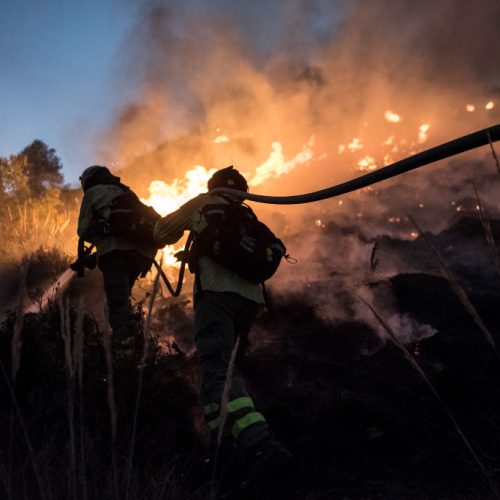
Hotspots at the confluence of El Niño-driven droughts and ongoing planetary heating are expected in wildfire-prone regions, including the Amazon, Canada, the western United States, and Australia, the researchers said during the briefing.
Theodore Keeping, a wildfire researcher at the University of Reading in England, said firefighters in those regions are bracing for a severe year, potentially facing some of the most damaging fire conditions seen in recent history. He noted that the combination of El Niño on top of ongoing warming has driven a “whiplash” between extreme moisture and extreme drought in some regions. Grasses and brush thrive during heavy rains, then dry out quickly when the heat returns, turning into combustible fuel.