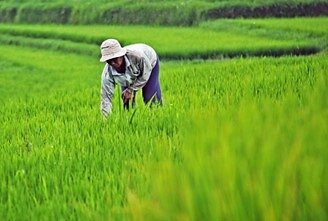
, /PRNewswire/ — Most of Indonesia’s population relies heavily on rice as a staple food. Needless to say, for rice supply to meet the rising demand on account of population and income growth, rice production needs to witness a sustainable rise. However, the land available for its cultivation has been shrinking as rice fields are converted into housing, industrial zones, and non-rice crops. Between 2020 and 2024, rice production in the country declined despite rising demand, raising concerns about the country’s food security.
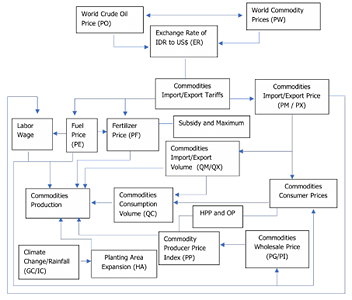
In response, the government launched the Planting Area Expansion (PAT) program to boost rice production by expanding harvest area and land optimization through irrigation improvements and farm-level support systems. To assess its effectiveness and further its development, a research team led by Dr. Andi Amran Sulaiman, Minister of Agriculture, Indonesia and affiliated with Hasanuddin University conducted their first comprehensive analysis of the program’s impact on rice production and published it in Volume 48, Issue 1 of AGRIVITA Journal of Agricultural Science on February 1, 2026.
Using structured vector autoregression (SVAR) and monthly data spanning 32 years (January 1993 to March 2025), the study analyzes production, prices, imports, climate patterns, and global markets. It projects that rice production could reach 58.43 million tons in 2025, nearly 10% higher than 2024, with the PAT program contributing about 30% of this increase (1.62 million tons). Existing rice fields account for 33% of the growth, alongside contributions from fertilizer subsidies and price-related measures.
“These findings underscore that boosting rice production in Indonesia depends on policy continuity, land protection, stronger farmer support, and technology adoption. Further research will help advance the UN’s Sustainability Development Goal of Zero Hunger (SDG 2),” Dr. Sulaiman highlights.
Reference
DOI: https://doi.org/10.17503/agrivita.v48i1.5029
Media Contact
Dr. Andi Amran Sulaiman
+917559059538
[email protected]
SOURCE Hasanuddin University