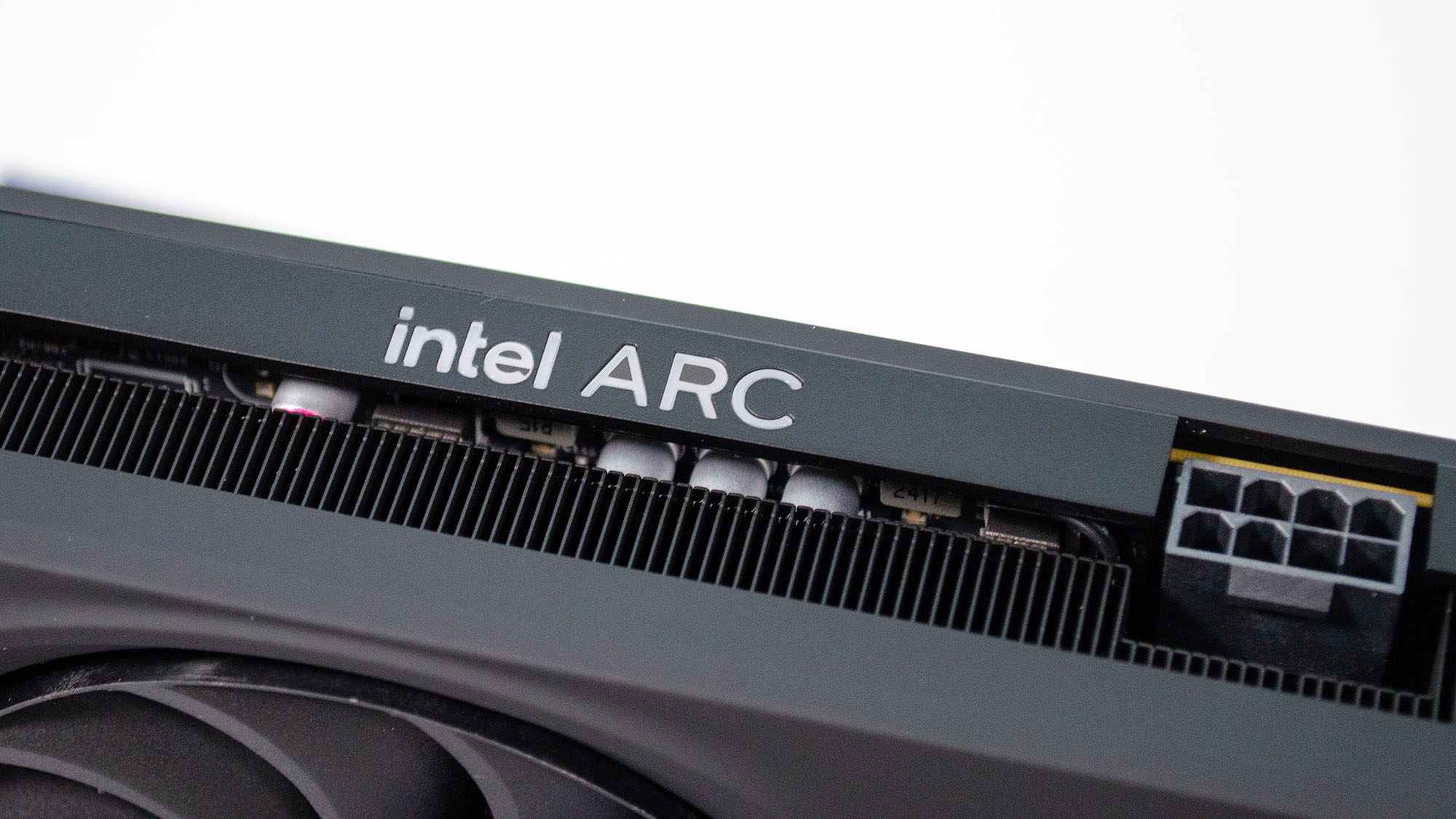
- Intel has released a new Arc graphics driver
- It introduces a Precompiled Shaders feature to help supported games load faster
- This is a situational benefit, but it’ll apply more often than you think
Intel has introduced a new trick for some of its Arc GPUs, which helps supported games load a lot more swiftly (albeit in certain situations only, and I’ll come back to that point).
Wccftech reports (via Tech PowerUp) that Intel’s Precompiled Shaders feature is available with the latest Arc driver, and can be used by Intel Battlemage desktop GPUs, as well as Xe2 and Xe3 integrated graphics (in Core Ultra Series 3 and 200V chips for thin-and-light laptops, or handhelds).
How it works is this: normally, when you load a game for the first time, compiling shaders can take a long time and really slow things down. So what Intel does is precompile these shaders, and it has these stored in the cloud — then when its graphics app examines your installed games, and sees one it has shaders for, they’re automatically downloaded and put in place.
Article continues below
Effectively, all that compiling work is being done beforehand, so when you launch the game, it loads far more snappily. We’re talking about loading times that are typically twice or three times as fast, but some games can receive massive boosts — like God of War Ragnarok, which is 21x faster on an Arc B580 (or a mind-boggling 37x faster with the B390 integrated graphics on the new Panther Lake flagship).
As mentioned earlier, the game must be supported by Intel to allow for Precompiled Shaders, and only 13 titles are right now, but more are coming in the future. Further note that the games must be installed on Steam, and the current list of supported titles is:
- Black Myth: Wukong
- Borderlands 4
- Call of Duty: Black Ops 6
- Call of Duty: Black Ops 7
- Cyberpunk 2077
- God of War Ragnarok
- Gotham Knights
- Hogwarts Legacy
- NBA 2K26
- Starfield
- S.T.A.L.K.E.R. 2: Heart of Chornobyl
- The Elder Scrolls IV: Oblivion Remastered
- The Outer Worlds 2
Note that this is Intel’s implementation of a broader tech coming from Microsoft known as Advanced Shader Delivery, which has been promised to Windows 11 gamers for later in 2026.
Intel clarified the situation for Tech PowerUp: “Intel Precompiled Shaders is custom-built and run by Intel. We are also working with Microsoft on launching Advanced Shader Delivery later this year. Together, both services will provide users of supported Arc GPUs with more game and game store coverage of technologies that reduce waiting times and in-game stutters due to shader compilation.”
So this won’t be limited to Steam in the future, as you might expect.
Analysis: a notable caveat

If you’re thinking that Precompiled Shaders — which is still labelled as a beta feature at this point — is just going to speed up things in a once-and-done kind of way, that’s not strictly true. Yes, the game goes through this sometimes seriously demanding shader compilation process when you first run it, and that’s all done and dusted thereafter — well, sort of.
The trouble is that the game may need to recompile the shaders in certain scenarios, such as after a new GPU driver update or game update. And when a game has a particularly lengthy compilation process, this can be a major annoyance. On top of that, compiling shaders can happen on-the-fly in the game, which can lead to stuttering, something that the Precompiled Shaders feature avoids entirely.
You can see why this is a very useful advance, then, even if it only applies in certain scenarios (and with supported games). And it’s really useful for some handhelds, too — like the MSI Claw 8 AI+, which has an Intel Lunar Lake processor — where shader compilation can be a draining task that hits the battery hard if you’re away from a power socket.

Follow TechRadar on Google News and add us as a preferred source to get our expert news, reviews, and opinion in your feeds. Make sure to click the Follow button!
And of course, you can also follow TechRadar on YouTube and TikTok for news, reviews, unboxings in video form, and get regular updates from us on WhatsApp too.
” data-join-the-conversation-text=”Join the Conversation”>
You must confirm your public display name before commenting
Please logout and then login again, you will then be prompted to enter your display name.