No iPhone return for Musi
Judge tosses Musi case against Apple, sanctions lawyers for “mak[ing] up facts.”
Musi streaming app. Credit: Musi
Musi, a free music streaming app that had tens of millions of iPhone downloads and garnered plenty of controversy over its method of acquiring music, has lost an attempt to get back on Apple’s App Store. A federal judge dismissed Musi’s lawsuit against Apple with prejudice and sanctioned Musi’s lawyers for “mak[ing] up facts to fill the perceived gaps in Musi’s case.”
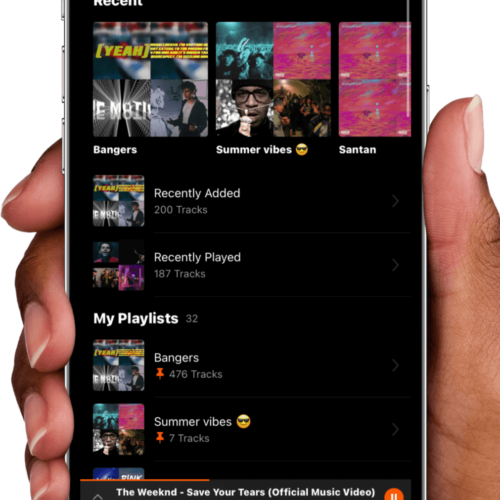
Musi built a streaming service without striking its own deals with copyright holders. It did so by playing music from YouTube, writing in its 2024 lawsuit against Apple that “the Musi app plays or displays content based on the user’s own interactions with YouTube and enhances the user experience via Musi’s proprietary technology.” Musi’s app displayed its own ads but let users remove them for a one-time fee of $5.99.
Musi claimed it complied with YouTube’s terms, but Apple removed it from the App Store in September 2024. Musi does not offer an Android app. Musi alleged that Apple delisted its app based on “unsubstantiated” intellectual property claims from YouTube and that Apple violated its own Developer Program License Agreement (DPLA) by delisting the app.
Musi was handed a resounding defeat yesterday in two rulings from US District Judge Eumi Lee in the Northern District of California. Lee found that Apple can remove apps “with or without cause,” as stipulated in the developer agreement. Lee wrote:
The plain language of the DPLA governs because it is clear and explicit: Apple may “cease marketing, offering, and allowing download by end-users of the [Musi app] at any time, with or without cause, by providing notice of termination.” Based on this language, Apple had the right to cease offering the Musi app without cause if Apple provided notice to Musi. The complaint alleges, and Musi does not dispute, that Apple gave Musi the required notice. Therefore, Apple’s decision to remove the Musi app from the App Store did not breach the DPLA.
Apple terms hold up, judge rules
Musi argued that more was required of Apple because of other provisions in the agreement, such as one stipulating that Apple may stop offering an app download if it “reasonably believes,” based on a human or systematic review, that the application infringes intellectual property rights.
“According to Musi, Apple was required to (1) conduct a ‘human and/or systematic review’ of YouTube’s complaint, and (2) based on that review, form a reasonable belief that the Musi app infringed intellectual property rights,” Lee wrote. “The problem with Musi’s construction of the DPLA is that the ‘reasonable belief’ clause expressly does not ‘limit[] the generality’ of Apple’s right to cease offering an application ‘at any time, with or without cause.’ When a contract’s plain language expressly states that a clause is not limiting, a court should not construe the clause as a limitation.”
Lee granted Apple’s motion to dismiss the complaint. She ordered it to be dismissed with prejudice and without leave to amend.
Some Musi devotees have been able to keep using the app via workarounds or because they downloaded it before its removal from the App Store, discussions on the Reddit community dedicated to Musi indicate. The app’s interface has been described as utilitarian, letting users simply listen to music and make playlists.
“Musi claims not to host the music videos its users stream, instead emphasizing that these videos come from YouTube,” a May 2024 Wired profile said. “Those videos appear within Musi’s own barebones interface, but some flaunt their origins with watermarks from YouTube or Vevo. Users have to sit through video ads right when they open Musi and can then stream uninterrupted audio, but video ads play silently every few songs while the music continues.” Launched in 2013 by two Canadian teenagers, Musi was reportedly downloaded more than 66 million times over a decade despite questions about its legality and the amounts artists are paid when a song streams via Musi instead of being played directly on YouTube.
Law firm “not at liberty to make up facts”
In addition to dismissing the lawsuit, Lee partially granted Apple’s motion for sanctions of Musi’s law firm for a violation of Federal Rule of Civil Procedure 11(b), which requires that factual contentions have evidence to support them or “will likely have evidentiary support after a reasonable opportunity for further investigation or discovery.”
Lee called this “one of the rare cases in which Rule 11 sanctions are necessary and appropriate.” Musi’s complaint in general “gives misleading impressions and stretches the limits of vigorous advocacy” and crossed the line by claiming that Apple “admitted” to relying on false evidence, Lee wrote. This claim advanced by Musi law firm Winston & Strawn “is so factually baseless that it violates Rule 11.”
Lee ordered the law firm to pay Apple’s costs related to litigating the motion for sanctions. The order on sanctions also strikes the offending “admitted” passage from Musi’s first amended complaint, although that’s moot now given that Apple won the case.
“After taking two months of discovery, including deposing Apple witnesses and reviewing Apple documents, Winston & Strawn was not at liberty to make up facts to fill the perceived gaps in Musi’s case,” Lee wrote.
Musi said it doesn’t use YouTube API
While the court is usually reluctant to issue Rule 11 sanctions, “this is not a case where counsel merely pressed a novel but unsuccessful legal position, or where a lack of factual support became clear in hindsight,” Lee’s order said. “Here, Musi had the benefit of two months of discovery to develop a factual basis for its claims in the first amended complaint. Winston & Strawn drafted one of the core allegations in a manner that affirmatively misrepresents facts obtained in discovery to bolster Musi’s claim that Apple acted in bad faith.”
Musi alleged that Apple knowingly relied on a false claim from the National Music Publishers Association (NMPA) that Musi violated YouTube terms through use of the YouTube API. “Apple knew that this ‘evidence’ was false, as it has since admitted,” Musi wrote.
Musi said it does not use the YouTube API and is therefore not subject to the API terms of service. It says Apple knew this because of an email from Sony Music Entertainment. The email said that Sony “worked with YouTube to remove API access from Musi, but the app finds ways to access [Sony’s] content through technological means that are more difficult for Google to action.”
Lee wrote that the Sony email “does not state that Musi stopped using YouTube’s API” and “does not establish that Apple ‘knew’ that the evidence offered by the NMPA was false. Instead, Musi infers Apple’s knowledge based on an assumption that the Sony email was inconsistent with the detailed evidence offered by the NMPA.”
The fact that Apple possessed two pieces of inconsistent evidence does not prove “that Apple ‘knew’ one to be false,” Lee wrote. “Apple may have credited one piece of evidence over the other, or it may have determined that the presence of some evidence of intellectual property infringement was sufficient to remove the Musi app from the App Store.”
Musi presented “tenuous” theory as “undisputed fact”
Musi’s theory is “tenuous” and “requires several inferential steps, and not one of them is directly supported by facts uncovered in discovery,” Lee wrote. While an Apple witness admitted to receiving an email, that is not the same as admitting to having knowingly relied on false evidence, the judge wrote.
“Admitting to receiving an email is materially different from admitting to Musi’s conclusion from the email—that Apple knowingly relied on false evidence,” Lee wrote.
Musi’s law firm presented the theory as an undisputed fact. But the judge determined that an attorney conducting an objectively reasonable inquiry would not have found the allegation to be well-founded.
“Accordingly, the Court finds that Musi’s counsel violated Rule 11 because it was factually baseless to allege that Apple ‘admitted’ that evidence from the NMPA regarding Musi’s intellectual property infringement was false, or that Apple knew that the evidence was false,” Lee wrote.
Lee assessed the awarding of fees and costs in full against the Winston & Strawn law firm, rather than Musi, stating that “counsel is more directly responsible for the Rule 11 violation, and counsel asked the Court not to sanction Musi directly.” Musi is represented by Winston & Strawn lawyers Jennifer Golinveaux, Samantha Looker, and Jeff Wilkerson.
In another wrinkle, Musi asked for an award of attorneys’ fees for defending against Apple’s motion for sanctions. Lee called this request “audacious,” pointing out that “Musi is not the prevailing party, and Apple’s motion has substantial merit.” Moreover, while Lee found that some of the Musi allegations challenged by Apple were not violations of Rule 11, she concluded that each Musi allegation challenged by Apple “was on the verge of baselessness.”
We contacted Musi and its lawyers today and will update this article if we get a response.

Jon is a Senior IT Reporter for Ars Technica. He covers the telecom industry, Federal Communications Commission rulemakings, broadband consumer affairs, court cases, and government regulation of the tech industry.